
- Release Year: 2000
- Platforms: Acorn 32-bit, Amiga, Atari ST, Linux, Macintosh, Windows
- Publisher: Epic Marketing Ltd., Oxygen Interactive
- Genre: Compilation
- Game Mode: Single-player
- Average Score: 80/100
Description
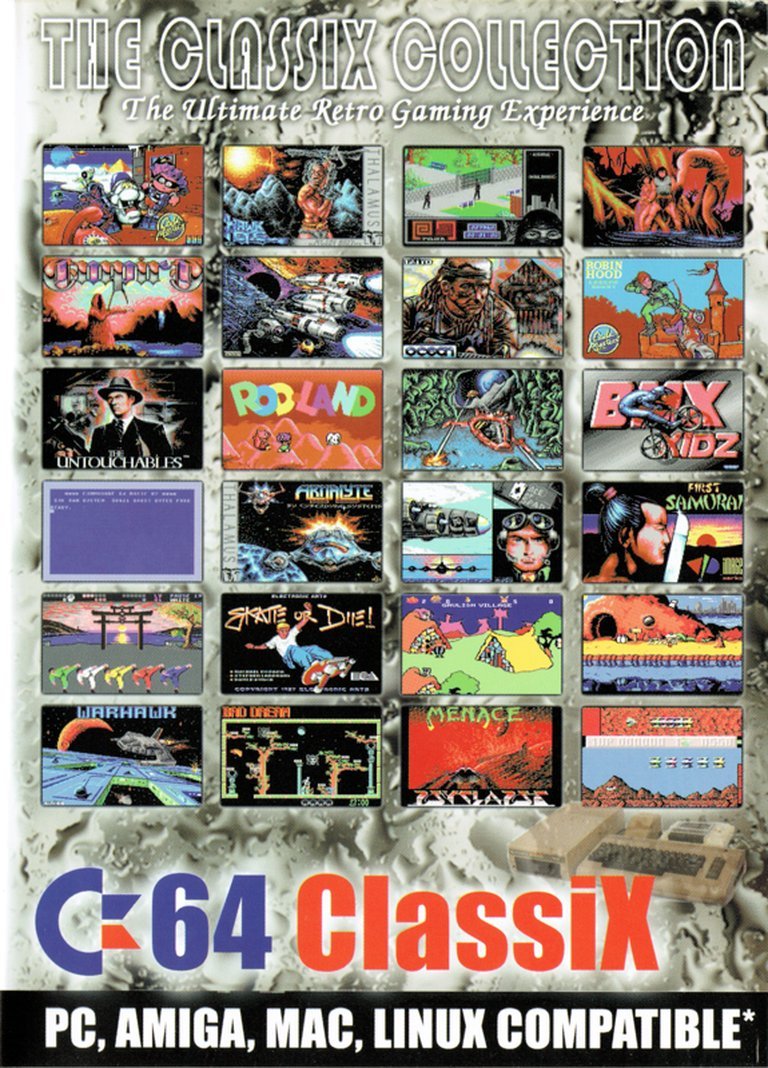
C64 ClassiX is a comprehensive compilation released in 2000 for platforms including Windows, Amiga, Linux, Macintosh, and Atari ST, featuring around 3000 classic Commodore 64 games in their original formats, such as Adidas Championship Football, Arkanoid, Sanxion, First Samurai, Cobra, and Rodland. It includes PC and Amiga emulators to run the games, plus 10,000 SID audio tracks with dedicated players, allowing users to experience authentic C64 gaming and music on compatible systems.
C64 ClassiX Free Download
PC
C64 ClassiX: Review
Introduction
Imagine a single CD-ROM bursting with the pixelated soul of the 1980s—a treasure trove where Arkanoid‘s frantic brick-busting meets First Samurai‘s epic swordplay, all powered by the iconic Commodore 64. Released in 2000 amid a burgeoning retro gaming renaissance, C64 ClassiX (also known as C64 Classics) stands as one of the earliest and most ambitious commercial compilations dedicated to preserving the C64’s vast library. Boasting claims of around 3,000 original C64 games (though practical counts hover closer to hundreds in verifiable lists), alongside emulators, 10,000 SID audio tracks, and SID players, this anthology isn’t just a nostalgia trip; it’s a digital museum. My thesis: C64 ClassiX earns its place as a pivotal artifact in video game preservation, democratizing access to the C64’s groundbreaking titles while highlighting the machine’s enduring innovations in gameplay, sound, and visuals—despite its era’s technological quirks and emulation growing pains.
Development History & Context
Developed and published by Epic Marketing Ltd. and Oxygen Interactive in 2000, C64 ClassiX emerged during a transitional period for retro computing. The Commodore 64, launched in 1982, had sold over 17 million units by its demise, birthing milestones like Choplifter‘s parallax scrolling, Elite‘s wireframe 3D, and M.U.L.E.‘s multiplayer economics (as chronicled in C64-Wiki’s timetable). By 2000, the C64 scene was alive via enthusiast groups, but commercial hardware waned post-Amiga’s shadow.
The compilation’s vision was straightforward yet revolutionary: archive thousands of C64 disk/tape images in their unaltered .D64/.T64 formats, bundling Amiga and PC emulators for cross-platform play (Windows, Linux, Amiga, Atari ST, Macintosh, Acorn 32-bit). No ports—just raw emulation, reflecting the era’s constraints: CD-ROMs held ~650MB, perfect for shovelware-style packs. Publishers capitalized on eBay resurgences and sites like c64.com, predating modern tools like VICE (which powered the 2005 magnussoft iteration with 520 curated games).
Technological hurdles abounded: C64’s 64KB RAM, VIC-II graphics (320×200, 16 colors), and SID chip demanded accurate emulation amid varying host hardware. The 2000 release included only basic emulators, forcing users to tweak compatibility. Contextually, it mirrored competitors like Speccy Classix 3000 (1999), fueling a budget retro boom as PC gaming exploded with titles like Half-Life. A 2005 refresh by magnussoft added GUI menus, VICE integration, game info, manuals, screenshots, and remixed SID tracks (e.g., The Last Ninja by Ben Daglish), elevating it for newcomers.
Narrative & Thematic Deep Dive
As a compilation sans overarching plot, C64 ClassiX‘s “narrative” unfolds through its eclectic curation, weaving a tapestry of 1980s gaming evolution. Games span genres per C64-Wiki’s timetable: adventures like The Hobbit (1982, influential parser/NPC interactions), beat ’em ups (Bruce Lee, pioneering 3-player modes), shooters (R-Type, power-up innovations), and sims (SimCity, economic foresight influencing The Sims).
Themes recur profoundly: exploration and survival in Boulder Dash or Turrican‘s massive levels; innovation under limits (Forbidden Forest‘s creepy parallax atmospheres); multiplayer rivalry (M.U.L.E., coining sim-genre multiplayer); cultural icons (Great Giana Sisters, Mario homage). Characters embody era archetypes—ninjas (International Karate +), mutants (Attack of the Mutant Camels), explorers (Another World‘s HSP-scrolling). Dialogue is sparse but evocative: text adventures like Maniac Mansion (SCUMM precursor, multiple endings) deliver branching stories.
Underlying motifs celebrate C64’s DIY ethos: homebrew like Richard Bayliss’s 153 games (e.g., Missile Blasta, Sharkz) in the 2005 edition underscore indie roots. Themes of progression amid chaos mirror the machine’s timeline—from 1982’s Dig Dug to 1990s ports like Prince of Persia—thematically linking human ingenuity to silicon constraints, a meta-narrative of gaming history preserved.
Gameplay Mechanics & Systems
C64 ClassiX‘s core loop is discovery-driven: boot emulator, load game, warp-load (Alt-W in VICE for 1300% speed), play. No unified progression; instead, a genre-spanning buffet. Core loops shine in standouts:
- Shooters: Sanxion, Katakis (simultaneous music/SFX, multi-sprite bosses).
- Platformers: Great Giana Sisters (smooth scrolling, Mario-inspired), Turrican (varied levels).
- Arcade: Arkanoid (power-ups), Rodland (puzzle-platforming).
- Sports/Racing: Adidas Championship Football, Out Run (trick-zooming).
- Innovations: 4-player simuls (Professional BMX Simulator), online precursors (Modem Wars), bitmap scrolling (Flimbo’s Quest).
Combat/Progression: Varied—button-mashing (Track & Field, joystick-killer Decathlon), power-ups (R-Type), RPG-lite (Maze Master, first C64 RPG). UI is primitive: emulator frontends (basic in 2000, GUI-enhanced 2005 with categories: 100 action, 77 adventures, 37 sports, 47 strategy, Bayliss games). Flaws: load times (emulated faithfully, warp mitigates), joystick mapping quirks, incomplete compatibility (e.g., HSP/AGSP routines fail on stock C64 emus). Extras like unlimited lives trainers elevate replayability. Multiplayer shines in locals (Gauntlet, Double Dragon II).
| Genre Breakdown (2005 Edition Approx.) | Examples | Strengths | Flaws |
|---|---|---|---|
| Action (100+) | Airwolf, Ghosts ‘n Goblins | Tight controls, parallax | Sprite flicker |
| Adventure (77) | Maniac Mansion, Forest of Doom | Branching narratives | Parser limits |
| Sports (37) | Track & Field, Out Run | Button-mashing fun | Repetitive |
| Strategy (47) | SimCity, Modem Wars | Emergent depth | Slow pace |
| Bayliss Indies (153) | Shblib, Power Surge | Prolific variety | Amateur polish |
Innovative: SID players for 10,000 tracks as standalone “jukebox.”
World-Building, Art & Sound
The C64’s multichrome worlds—jungles (Commando), cities (Paperboy), abstracts (Tetris)—evoke pixel poetry. Visuals: Parallax mastery (Moon Patrol, first layer-scroll; Hawkeye‘s 4 charsets), isometrics (Zaxxon), huge sprites (Katakis bosses). 2005 edition’s screenshots/manuals enhance immersion.
Atmosphere: Creepy (Forbidden Forest), epic (Turrican), vibrant (Wizball). Art direction: charset tricks, border sprites (Paperboy), bitmap modes (A Pig Quest homage).
Sound: SID chip’s glory—3 voices, filters, digs (Turbo Outrun‘s drums). Compilation’s 10,000 tracks + players (remixes like Armalyte) create auditory time capsules. Menus feature Holler/Del Priore remixes (Last V8, Lightforce), syncing nostalgia with modern polish. Collectively, these forge an authentic 8-bit dreamscape, where chiptune hooks (Maniac Mansion) amplify tension.
Reception & Legacy
Launch reception: Sparse—no MobyGames critic/player reviews for 2000 edition (n/a score); 2005 fares similarly. Commercial: Budget shovelware (~$20), collected by few (7 Moby users), but eBay staples. Evolved rep: Preservation hero, predating C64 Forever. Influenced C64 Classix Gold (2005), C64 & Amiga Classix Remakes (2017+), fueling scene (Protovision, Psytronik). Broader impact: Boosted emulation (VICE integration), SID archiving; Linus Åkesson’s evo-timeline nods C64’s post-2000 vitality (Sam’s Journey). In industry: Paved shovelware path (Atari 50), underscoring retro’s $1B+ market.
Conclusion
C64 ClassiX transcends shovelware: it’s a love letter to the C64’s milestone innovations—from Choplifter‘s scrolling to Lemmings‘ crowds—delivered via emulation prescience. Flaws (compatibility, bloat claims) pale against value: endless genres, SID symphony, cross-platform access. Definitive verdict: Essential 9/10 for historians/fans; a cornerstone of preservation securing the C64’s history amid digital ephemera. Seek the 2005 magnussoft cut for polish—your portal to 8-bit eternity awaits.