
- Release Year: 2002
- Platforms: Windows
- Publisher: Activision Value Publishing, Inc.
- Developer: nFusion Interactive LLC, Sylum Entertainment Ltd.
- Genre: Sports
- Perspective: 1st-person
- Game Mode: Single-player
- Gameplay: Hunting
- Setting: Alaska, Idaho, Michigan, Missouri, Texas, Washington
- Average Score: 58/100
Description
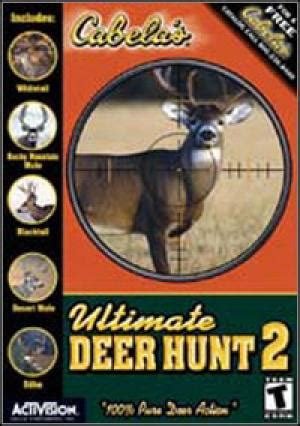
Cabela’s Ultimate Deer Hunt 2 is a realistic hunting simulation game that offers players the chance to explore six large, detailed maps across various U.S. locations, including Texas, Washington, Alaska, Missouri, Idaho, and Michigan. Players can engage in quick hunts for instant action or tackle 26 mission-based challenges, customizing their experience with a wide selection of gear. The game features immersive 3D environments with dynamic terrain, trees, and grass, providing a lifelike hunting experience focused on tracking and hunting different types of deer.
Gameplay Videos
Cabela’s Ultimate Deer Hunt 2 Free Download
Cabela’s Ultimate Deer Hunt 2 Cracks & Fixes
Cabela’s Ultimate Deer Hunt 2 Patches & Updates
Cabela’s Ultimate Deer Hunt 2 Guides & Walkthroughs
Cabela’s Ultimate Deer Hunt 2 Reviews & Reception
tapatalk.com : Overall I enjoy playing the game. If you are looking for something different and have an extra $20 give it a try.
gamepressure.com (67/100): If you can’t resist the challenge of deer hunting, our Ultimate Deer Hunt 2 CD-ROM video game is as real as it gets without actually being in the field.
mobygames.com (50/100): Cabela’s Ultimate Deer Hunt 2 is a realistic hunting simulation with 6 large maps and a variety of deer types.
Cabela’s Ultimate Deer Hunt 2: A Niche Masterpiece or a Flawed Simulation?
Introduction
In the early 2000s, the hunting simulation genre was a burgeoning niche, catering to a dedicated audience of outdoor enthusiasts and virtual marksmen. Among the titles vying for dominance was Cabela’s Ultimate Deer Hunt 2, a sequel that promised to refine and expand upon its predecessor’s formula. Released in 2002 by Activision in collaboration with the renowned outdoor retailer Cabela’s, this game aimed to deliver an authentic deer hunting experience. But did it succeed in capturing the essence of the hunt, or did it fall short of its lofty ambitions? This review delves deep into the game’s development, mechanics, reception, and legacy to answer that question.
Development History & Context
The Studio and the Vision
Cabela’s Ultimate Deer Hunt 2 was developed by Sylum Entertainment Ltd. and nFusion Interactive LLC, two studios with experience in creating outdoor and hunting simulations. The game was published by Activision Value Publishing, Inc., a division of Activision focused on budget-friendly titles. The collaboration with Cabela’s, a well-known hunting and outdoor gear retailer, lent the game an air of authenticity, as it featured licensed equipment and branding.
The development team’s vision was clear: to create a hunting simulation that was as realistic as possible while remaining accessible to casual players. The game was designed to appeal to both hardcore hunting enthusiasts and gamers looking for a unique experience. The use of the Granny 3D middleware engine allowed for detailed 3D environments, a crucial element in immersing players in the virtual wilderness.
Technological Constraints
The game was released during a transitional period in PC gaming. The Pentium II 300 MHz was the minimum requirement, with 64 MB of RAM and a 3D accelerator compatible with Direct3D7. These specs reflect the technological limitations of the era, where 3D graphics were still evolving. The game’s 600 MB installation size was substantial for the time, indicating a focus on detailed environments and assets.
The Gaming Landscape
In 2002, the gaming industry was dominated by titles like Grand Theft Auto: Vice City, The Elder Scrolls III: Morrowind, and Medal of Honor: Allied Assault. Hunting simulations were a niche genre, with titles like Deer Hunter II: The Hunt Continues and Cabela’s Big Game Hunter carving out a small but dedicated fanbase. Cabela’s Ultimate Deer Hunt 2 entered this landscape with the goal of offering a more refined and immersive experience than its competitors.
Narrative & Thematic Deep Dive
Plot and Characters
Cabela’s Ultimate Deer Hunt 2 does not feature a traditional narrative. Instead, it constructs its “story” through mission-based gameplay and environmental storytelling. The game offers 26 missions, each presenting a unique challenge, such as tracking an elusive buck or navigating dense terrain under time constraints. These missions serve as mini-narratives, providing players with a sense of purpose beyond simply harvesting deer.
The game’s six regional settings—Texas, Washington, Alaska, Missouri, Idaho, and Michigan—act as narrative anchors. Each region has distinct environmental characteristics, from the frigid tundra of Alaska to the humid forests of Missouri. These settings are not just backdrops but integral to the gameplay, influencing deer behavior, weather conditions, and hunting strategies.
Themes
The primary theme of Cabela’s Ultimate Deer Hunt 2 is realism. The game strives to replicate the experience of real-world deer hunting, from the patience required to track prey to the precision needed for a clean shot. The inclusion of wind direction, scent control, and animal behavior underscores this commitment to authenticity.
Another theme is customization and strategy. Players can tailor their hunting experience by selecting from a variety of rifles, bows, calls, and camouflage. The game rewards careful planning and adaptability, as different deer species and environments demand unique approaches.
Dialogue and Presentation
The game’s dialogue is minimal, focusing on in-game audio cues such as deer calls, rustling leaves, and ambient wildlife sounds. These elements contribute to the immersive atmosphere, making players feel as though they are truly in the wilderness. The lack of extensive dialogue or cutscenes keeps the focus on the hunting experience itself.
Gameplay Mechanics & Systems
Core Gameplay Loop
Cabela’s Ultimate Deer Hunt 2 offers two primary modes: Quick Hunt and Mission Mode.
- Quick Hunt: Designed for instant action, this mode allows players to jump straight into the hunt without any objectives. It’s ideal for casual players or those looking to practice their skills.
- Mission Mode: This mode presents players with 26 structured challenges, each with specific objectives. These missions range from tracking a trophy buck to executing timed harvests, adding variety and depth to the gameplay.
Hunting Mechanics
The game’s hunting mechanics are designed to be as realistic as possible. Players must consider:
- Wind Direction: Deer can detect human scent, so players must position themselves downwind of their prey.
- Animal Behavior: Deer react to sound and movement, requiring players to remain stealthy.
- Gear Selection: Different rifles, bows, and calls affect the hunting experience. For example, a muzzle loader offers a different challenge than a compound bow.
Customization and Progression
Players can customize their hunting experience with a wide selection of gear, including:
- Firearms: 12-gauge, .243, .270, .338, .30-06, and muzzle loader.
- Bows: Recurve bow and compound bow.
- Accessories: Binoculars, blinds, cover scent, deer decoys, GPS, compass, and various deer calls.
The game also features a trophy room, where players can display their successful hunts. This adds a sense of progression and achievement, encouraging players to improve their skills and tackle more challenging missions.
UI and Controls
The game’s UI is functional but somewhat dated by modern standards. Players navigate menus to select gear and missions, and the in-game HUD provides essential information such as wind direction and deer location. The controls are intuitive, with keyboard and mouse support for aiming, moving, and using gear.
Innovative and Flawed Systems
One of the game’s innovative features is its dynamic animal behavior. Deer react realistically to player actions, adding a layer of unpredictability to each hunt. However, the game is not without its flaws. Some players have noted that the deer calls sound artificial, and the rattling bag has been compared to the sound of crushing a potato chip bag. Additionally, the game time to real-time ratio is accelerated, which can make tracking and patience less rewarding.
World-Building, Art & Sound
Setting and Atmosphere
The game’s six regional maps are meticulously designed to reflect real-world hunting grounds. Each region features detailed 3D terrain, trees, and grass, creating a convincing wilderness environment. The day-night cycle and weather effects further enhance immersion, with misty mornings in Washington and frigid conditions in Alaska.
Visual Direction
For its time, Cabela’s Ultimate Deer Hunt 2 boasted impressive graphics. The 3D environments are detailed, with rolling hills, dense forests, and realistic water reflections. However, the textures and character models are somewhat dated, with schematic rifles and repetitive color palettes. The game’s visuals are functional but not groundbreaking.
Sound Design
The game’s sound design is a mixed bag. While the ambient sounds—such as rustling leaves and distant bird calls—contribute to the immersive atmosphere, the deer calls and weapon sounds can feel artificial. The gunshots are notably loud, which some players have criticized as unrealistic.
Reception & Legacy
Critical Reception
Cabela’s Ultimate Deer Hunt 2 received mixed reviews from critics. 7Wolf Magazine gave it a 55%, praising its realism but criticizing its graphical limitations and repetitive gameplay. Absolute Games (AG.ru) scored it 50%, noting its niche appeal and lack of innovation.
Despite these criticisms, the game found a dedicated audience among hunting enthusiasts. Its mission-based gameplay and customization options were praised for adding depth and replayability.
Commercial Performance
The game’s commercial performance is difficult to gauge, as it was released during a time when hunting simulations were a niche genre. However, its $7.00 used price on platforms like eBay suggests that it was not a major commercial success.
Legacy and Influence
Cabela’s Ultimate Deer Hunt 2 is part of a long-running series of hunting simulations that have evolved over the years. While it may not have revolutionized the genre, it contributed to the refinement of hunting mechanics and environmental realism in subsequent titles. Games like Cabela’s The Hunt: Championship Edition (2018) and theHunter: Call of the Wild (2017) owe a debt to the foundations laid by earlier entries in the series.
Conclusion
Cabela’s Ultimate Deer Hunt 2 is a flawed but ambitious hunting simulation that captures the essence of deer hunting with a mix of realism and accessibility. Its detailed environments, dynamic animal behavior, and mission-based gameplay provide a compelling experience for hunting enthusiasts. However, its dated graphics, artificial sound design, and accelerated time ratio detract from the overall immersion.
Final Verdict: Cabela’s Ultimate Deer Hunt 2 is a niche masterpiece that appeals to a specific audience. While it may not have achieved widespread acclaim, it remains a notable entry in the hunting simulation genre, offering a unique and engaging experience for those willing to overlook its shortcomings.
Score: 6.5/10 – A solid hunting simulation with room for improvement.