
- Release Year: 2015
- Platforms: Linux, Macintosh, Windows
- Publisher: PixaelSoft
- Developer: PixaelSoft
- Genre: Adventure
- Perspective: 1st-person
- Game Mode: Single-player
- Gameplay: Visual novel
- Setting: Anime, Manga
- Average Score: 60/100
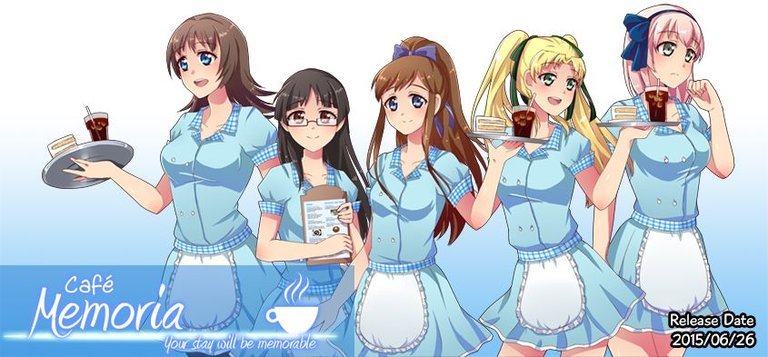
Description
Café Memoria is a charming visual novel set in a cozy café, where players step into the shoes of a customer who stumbles upon the establishment after forgetting to buy breakfast. The game blends lighthearted romance, anime-inspired artwork, and full voice acting to create a heartwarming experience. As you interact with the café’s quirky staff and patrons, you uncover their stories and forge memorable connections, all while enjoying the café’s inviting atmosphere. Developed by PixaelSoft and released in 2015, the game emphasizes humor, character-driven narratives, and a polished presentation, making it a delightful choice for fans of slice-of-life visual novels.
Gameplay Videos
Café Memoria Reviews & Reception
vndb.org (60.7/100): A short and charming visual novel with a fun restaurant setting and five lovely waitresses.
Café Memoria: A Cozy, Overlooked Gem in the Visual Novel Landscape
Introduction: The Allure of the Everyday
In an era where visual novels often chase grand narratives—epic fantasies, dystopian futures, or high-stakes romances—Café Memoria (2015) stands as a quiet rebellion. Developed by the indie studio PixaelSoft, this free-to-play visual novel eschews melodrama in favor of something far rarer: a slice-of-life experience that finds beauty in the mundane. Set entirely within the confines of a charming café, the game invites players to step into the shoes of Ryne Reyes, a young man who, after forgetting to buy groceries, stumbles into a local eatery only to find his friends working as waitresses. What follows is not a tale of world-ending stakes or convoluted romance, but rather a warm, lighthearted exploration of friendship, service, and the small joys of human interaction.
At its core, Café Memoria is a love letter to the visual novel genre’s potential for intimacy. It strips away the genre’s usual trappings—branching narratives, high-stakes choices, and overt romantic pursuit—in favor of a linear yet deeply polished experience that prioritizes atmosphere, character, and charm. While it may not have left a massive commercial footprint, its cult following and enduring appeal speak to its unique place in gaming history. This review will dissect why Café Memoria remains a hidden treasure, examining its development, narrative depth, gameplay mechanics, and lasting influence.
Development History & Context: A Labor of Love in the Indie Renaissance
The Rise of PixaelSoft and the Visual Novel Boom
Café Memoria emerged during a pivotal moment for Western visual novels. The mid-2010s saw a surge in indie developers embracing the genre, thanks in part to accessible tools like Ren’Py (the engine used for Café Memoria) and platforms like itch.io and Steam democratizing distribution. PixaelSoft, a small but ambitious studio, was among those riding this wave. Founded by Ryne Dorig (who served as director, writer, and composer), the team consisted of a passionate, tight-knit group of artists, voice actors, and writers—many of whom were volunteers or freelancers.
The game’s development was crowdfunded and community-driven, with early demos released in 2014 to gauge interest. This grassroots approach allowed PixaelSoft to refine the game’s tone and mechanics based on player feedback, a rarity in an era where many indie projects either overpromised or faded into obscurity.
Technological Constraints and Creative Workarounds
Given its 2015 release, Café Memoria was constrained by the technological limitations of its time. The Ren’Py engine, while powerful for visual novels, lacked the fluidity of modern game engines. Yet, PixaelSoft leveraged its strengths:
– Fixed/flip-screen visuals created a theatrical, stage-like presentation, reinforcing the café’s cozy, intimate setting.
– Anime/manga-inspired art (courtesy of artist Ezri) gave the game a distinctive, vibrant aesthetic that stood out among Western visual novels, which often leaned toward more realistic or minimalist styles.
– Full voice acting—a rarity for indie visual novels at the time—elevated the game’s immersion, with standout performances from Trina Deuhart (Anna), Skyler Davenport (Mikaela), and Sayaka Mashiro (Aurelia).
The team also employed 3D SketchUp models (credited to Uncle Mugen) for background assets, a cost-effective way to achieve detailed, dynamic environments without the need for hand-drawn backgrounds. This hybrid approach—mixing 2D character sprites with 3D-rendered café interiors—gave Café Memoria a unique visual identity that felt both polished and intimate.
The Gaming Landscape in 2015: A Niche Within a Niche
At the time of its release, Café Memoria entered a crowded but fragmented market. Visual novels were still largely associated with Japanese imports (Clannad, Fate/Stay Night) or erotic dating sims, leaving little room for Western-developed, non-romantic, slice-of-life experiences. Meanwhile, the indie scene was dominated by narrative-driven adventures (Undertale, Life is Strange) and roguelikes (The Binding of Isaac), making Café Memoria’s low-stakes, dialogue-heavy approach a gamble.
Yet, its free-to-play model and cross-platform availability (Windows, Mac, Linux) ensured it reached a broad audience. Sites like JayIsGames and itch.io became crucial for its visibility, catering to players seeking short, charming experiences rather than hundred-hour epics.
Narrative & Thematic Deep Dive: The Art of the Everyday
Plot Overview: A Simple Premise, Richly Executed
Café Memoria’s story is deceptively simple:
– Ryne Reyes, a laid-back college student, forgets to buy groceries and decides to visit Café Memoria, a new restaurant in town.
– Upon entering, he’s surprised to find his female friends working as waitresses, each with their own reasons for being there.
– The game unfolds over multiple visits, with Ryne interacting with each waitress, ordering food, and rating their service—a mechanic that subtly influences their mood and future interactions.
There is no overarching conflict, no villain, no grand romance. Instead, the narrative thrives on character-driven vignettes, each waitress representing a different personality archetype and slice-of-life theme:
| Character | Role | Personality | Thematic Focus |
|---|---|---|---|
| Anna Pervova | Shy daughter of the owner | Clumsy, self-conscious | Overcoming insecurity |
| Mikaela Kier | Childhood friend | Tsundere, protective | Friendship and loyalty |
| Tristina Hamilton | Otaku waitress | Moody, socially awkward | Misunderstood passions |
| Aurelia Alvarez | Airheaded beauty | Kind but ditzy | Beauty vs. intelligence stereotypes |
| Julia Sakuraba | Glasses-wearing cook | Polite, altruistic | Humility and hidden talents |
Themes: Finding Meaning in the Mundane
Café Memoria’s greatest strength lies in its subtle, humanistic themes:
1. The Value of Small Interactions
– The game argues that memorable experiences aren’t always grand—they can be as simple as a well-made cup of coffee or a waitress’s nervous smile.
– The “Rate Your Waitress” mechanic reinforces this, as Ryne’s feedback (positive or negative) subtly shapes the characters’ confidence over time.
-
Work as a Form of Self-Discovery
- Each waitress has a personal reason for working at the café:
- Anna is there to build confidence (at her mother’s insistence).
- Mikaela is paying off a debt (after breaking something expensive).
- Tristina mistakenly thinks it’s a cosplay job.
- Their jobs become a microcosm for personal growth, a rare depiction of part-time work as meaningful in gaming.
- Each waitress has a personal reason for working at the café:
-
The Illusion of Choice in Social Dynamics
- While the game appears to offer branching paths (via menu choices and ratings), the narrative is largely linear.
- This design choice mirrors real-life social interactions—where small choices (like what you order) matter, but the broader trajectory of relationships is often predetermined by personality and circumstance.
Dialogue & Writing: Charm Over Complexity
The writing in Café Memoria is deliberately lightweight, prioritizing warmth and humor over philosophical depth. Some lines veer into corny territory (e.g., Ryne’s oddly aggressive warning about diabetes), but the voice acting sells the charm, making even the most trope-heavy exchanges feel endearing.
- Anna’s nervous stammering (voiced by Trina Deuhart) is painfully relatable for anyone who’s ever struggled with social anxiety.
- Mikaela’s tsundere outbursts (Skyler Davenport) walk the line between annoying and amusing, leaning into the character’s overprotective nature.
- Aurelia’s airheadedness (Sayaka Mashiro) could have been grating, but her genuine kindness makes her one of the most likable characters.
The game’s biggest narrative flaw is its lack of true romance or drama, which may disappoint players expecting a traditional dating sim. However, this is also its greatest strength—by avoiding those tropes, Café Memoria carves out a unique identity as a platonic, feel-good experience.
Gameplay Mechanics & Systems: The Illusion of Agency
Core Gameplay Loop: Order, Interact, Rate
Café Memoria’s gameplay is minimalist by design, consisting of:
1. Choosing a waitress (unlocked sequentially).
2. Ordering food/drinks from a menu.
3. Engaging in dialogue (with occasional choices).
4. Rating the waitress’s service at the end.
This loop is repetitive by nature, but the game elevates it through polish:
– Menu variety: Players can order breakfast, lunch, or dinner items, each with unique reactions from the waitresses.
– Dynamic responses: Characters remember past interactions, creating a sense of continuity.
– Unlockable routes: Completing one waitress’s story unlocks the next, encouraging replayability.
The “Rate Your Waitress” Mechanic: A Double-Edged Sword
The rating system is Café Memoria’s most innovative (and controversial) feature:
– Positive ratings boost the waitress’s confidence and mood in future playthroughs.
– Negative ratings make them more nervous or defensive.
– Neutral ratings have minimal impact.
While clever in theory, the mechanic suffers from:
– Limited long-term consequences: Ratings don’t drastically alter the story.
– Moral ambiguity: Players may feel guilty for giving bad ratings, even if it’s just a game.
– Repetition: After a few playthroughs, the novelty wears off, exposing the game’s linear nature.
UI & Accessibility: A Model of Simplicity
The game’s menu-driven interface is intuitive and clean, with:
– Large, readable text (a rarity in visual novels).
– Clear navigation between scenes.
– Save/load functionality that works seamlessly.
However, the lack of a skip button for repeated dialogue can make replaying routes tedious, a missed opportunity for quality-of-life improvements.
World-Building, Art & Sound: Crafting a Cozy Atmosphere
Setting: The Café as a Character
Café Memoria’s entire world is the café itself—a bold creative choice that forces the game to maximize its setting’s potential. The restaurant is more than a backdrop; it’s a living, breathing space where:
– The layout (counter, tables, kitchen) feels authentic, thanks to the 3D-rendered backgrounds.
– Ambient sounds (clinking dishes, soft chatter) enhance immersion.
– Time of day (breakfast vs. dinner) subtly changes the mood.
Visual Design: Anime Aesthetics Meet Western Sensibilities
The game’s art style is a fusion of anime and Western indie aesthetics:
– Character designs (by Ezri) are expressive and vibrant, with distinctive color palettes for each waitress.
– Backgrounds use 3D models to create a semi-realistic café, avoiding the static feel of many visual novels.
– UI elements (menus, dialogue boxes) are clean and unobtrusive, ensuring the focus remains on the characters.
Sound Design & Music: The Unsung Hero
The audio experience is where Café Memoria truly shines:
– Voice acting is consistently strong, with each actress embodying their character’s quirks.
– Background music (composed by Ryne Dorig) is soft, jazzy, and unobtrusive, perfectly matching the café’s relaxed vibe.
– Ambient sounds (footsteps, pouring coffee) add layers of realism, making the world feel tactile.
Reception & Legacy: The Quiet Impact of a Niche Game
Critical Reception: Praised for Polish, Criticized for Depth
Café Memoria received modest but positive attention upon release:
– JayIsGames praised its polish and charm, calling it “worth a visit” for fans of lighthearted visual novels.
– Players on itch.io rated it 4.8/5, highlighting its voice acting and cozy atmosphere.
– VNDB users gave it a 6.07/10, with criticisms focused on its linearity and lack of romance.
The game’s biggest strength—its simplicity—was also its biggest weakness for some. Players expecting deep branching narratives or romantic payoff were disappointed, while those seeking a relaxing, low-stakes experience found it refreshing.
Commercial Performance: A Free Game’s Reach
As a free-to-play title, Café Memoria didn’t generate direct revenue, but it boosted PixaelSoft’s reputation, leading to:
– A sequel attempt (Café Memoria Deux, ultimately unfinished).
– Collaborations with other indie devs (e.g., Seduce Me, Dating Sim! Re:Mastered).
– A loyal fanbase that still discusses the game nearly a decade later.
Legacy: Influencing the “Cozy Games” Movement
While Café Memoria wasn’t a commercial blockbuster, its design philosophy foreshadowed the rise of “cozy games”—titles like Stardew Valley, Animal Crossing, and Coffee Talk that prioritize relaxation and human connection over challenge or conflict.
Its successful blend of:
– Slice-of-life storytelling
– Minimalist gameplay
– High production values
proved that visual novels didn’t need romance or drama to resonate. Later games like If My Heart Had Wings and Coffee Talk would expand on this formula, but Café Memoria remains a pioneering example of the genre’s potential.
Conclusion: A Memorable Stay in a Forgettable Genre
Café Memoria is not a perfect game. Its linearity, repetitive mechanics, and lack of narrative ambition will frustrate players seeking depth or replayability. Yet, its charm, polish, and heart elevate it above its flaws, making it a standout example of what visual novels can achieve when they embrace simplicity.
In an industry obsessed with bigger, louder, and more complex experiences, Café Memoria is a gentle reminder that sometimes, the most memorable moments are the quiet ones—a well-brewed cup of coffee, a nervous smile from a friend, the warmth of a place that feels like home.
Final Verdict: 7.5/10 – “A Cozy Masterpiece for the Right Audience”
Best For:
– Fans of slice-of-life and cozy games.
– Players who enjoy character-driven narratives over plot-heavy stories.
– Those looking for a short, relaxing experience (under 2 hours per playthrough).
Not For:
– Gamers expecting deep romance, branching paths, or high stakes.
– Players who dislike repetitive gameplay loops.
– Those who prefer fast-paced or action-oriented experiences.
Café Memoria may not have rewritten the rules of visual novels, but it perfected a niche—and in doing so, created something truly memorable.
Where to Play:
– itch.io (Free)
– Official Site
Sequel Status:
– Café Memoria Deux (2019 demo) was abandoned, but the original remains a cult classic.
Final Thought:
If you’ve ever wanted to sit in a café, chat with friends, and enjoy the little things, Café Memoria is worth your time. Just don’t expect it to change your life—only to brighten your day.