
- Release Year: 2014
- Platforms: Macintosh, Windows
- Publisher: Big Fish Games, Inc
- Developer: Taba Games
- Genre: Adventure
- Perspective: 1st-person
- Game Mode: Single-player
- Gameplay: Hidden object, Puzzle elements
- Setting: Mexican
- Average Score: 33/100
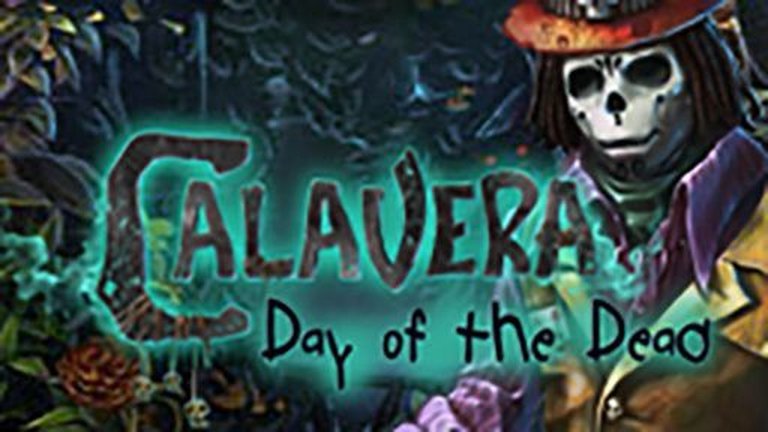
Description
Calavera: Day of the Dead (Collector’s Edition) is a first-person hidden object adventure with puzzle elements, set in a Mexican town during the Day of the Dead festival. The game follows Alan and Catalina as they travel to seek her father’s blessing for their wedding, only to confront supernatural horrors and intricate puzzles that intertwine with the holiday’s traditions, blending horror and cultural exploration.
Gameplay Videos
Where to Buy Calavera: Day of the Dead (Collector’s Edition)
PC
Calavera: Day of the Dead (Collector’s Edition) Guides & Walkthroughs
Calavera: Day of the Dead (Collector’s Edition): A Forgotten Borderland of the Casual Horror Genre
Introduction: A Spectral Puzzle in the Casual Landscape
In the bustling marketplace of casual and hidden object games (HOGs) that dominated the 2010s, countless titles flickered into existence and faded just as quickly. Calavera: Day of the Dead (Collector’s Edition), developed by the obscure studio Taba Games and published by Big Fish Games—a titan of the casual distribution model—is one such title. It represents a specific, curious intersection: the attempt to graft the rich, visually symbolic aesthetics of Mexico’s Día de los Muertos onto the tried-and-true, often Western-centric framework of the hidden object puzzle adventure. This review argues that while Calavera is a mechanically competent but ultimately unremarkable entry in the HOG canon, its significance lies in its inadvertent case study of cultural surface-level appropriation within the casual gaming industry, and its reflection of the technological and business constraints that defined the era. It is a game remembered not for its artistry or innovation, but as a data point in the Evolution of the “Festive Horror” sub-genre and the ephemeral nature of digital-only casual titles.
Development History & Context: The Big Fish Ecosystem & Technological Shackles
The Studio and the Publisher: Taba Games remains a minimally documented entity, a common trait for studios operating within the “contract developer” model for major casual publishers. Their output, as listed on MobyGames, consists almost entirely of hidden object games for Big Fish Games, Inc. This relationship is crucial: Big Fish was not just a publisher but a dominant platform and curator for the casual audience, using a subscription model and frequent “Collector’s Edition” releases to drive recurring revenue. Calavera’s dual release—first on Macintosh (September 15, 2014) and later on Windows via Steam (May 24, 2017)—exemplifies the staggered, multi-platform strategy common for maximizing reach in this market, though the Mac version’s 32-bit incompatibility (noted on MacGameStore) foreshadowed its technical fragility.
The 2013-2017 Casual Gaming Landscape: The game’s core development likely occurred around 2013-2014, a peak period for the hidden object genre but also a time of stagnation. The formula was set: a first-person, point-and-click interface, a list of items to find in cluttered static scenes, and inventory-based puzzles stretching a thin narrative over 4-6 hours of gameplay. Innovation was rare; success depended on compelling themes, atmospheric art, and a steady stream of new content. Calavera’s theme—Day of the Dead—was a clear attempt to diversify the genre’s usual gothic European or American Halloween settings. However, the technological constraints were real. The “Minimum Requirements” (1 GHz processor, 1GB RAM, DirectX 9) speak to a game built for low-end PCs and integrated graphics, prioritizing accessibility over graphical fidelity. This also meant a limited scope for animation and complex systems, confining the “Land of the Dead” to a series of 2D illustrated scenes.
The Collector’s Edition Business Model: The “Collector’s Edition” moniker was a cash cow for Big Fish. It wasn’t about physical collectibles but digital “extras”: concept art, a strategy guide, bonus chapters, and “unlockable arcade mini-games.” For Calavera, these included “Festive collectables and achievements!” and the promise to “Travel to the Land of the Dead!”—a夸大 (overstatement) of what was essentially a new visual palette. This model commodified completionism within a casual audience willing to pay a premium ($3.99-$19.99) for what was essentially the same core game with a few digital trinkets.
Narrative & Thematic Deep Dive: A Bargain with the Baron
The plot, as distilled from the Steam store description and TV Tropes analysis, is a classic HOG narrative framework with a supernatural twist:
* The Setup: protagonist Alan and his fiancée Catalina travel to her hometown in Mexico for a Day of the Dead celebration to seek her father’s blessing. The father is absent.
* The Inciting Incident: Catalina is abducted by a “skeletal stranger” (the Baron) and taken to the Land of the Dead.
* The Quest: Alan must follow a talking “Guidebook” (an Animate Inanimate Object trope) to navigate the underworld and rescue her.
* The Backstory Revelation: The Baron’s claim on Catalina stems from a Deal with the Devil made by her father to save her life when she was young, stipulating she would be his upon coming of age. This is a direct transposition of the “Faustian bargain” into a Mexican mythological context.
* The Climax: Alan must execute a plan involving collecting the essences of the Seven Deadly Sins (Wrath, Sloth, Gluttony, Lust, Pride, Greed, Envy) within the town of Pecados (“Sins”). Each essence is retrieved from a location thematically tied to the sin (e.g., Gluttony in the bar, Greed in the casino). This is the game’s primary structural device, segmenting the adventure into distinct locations.
* The Resolution: While not detailed in the sources, the tropes Rescued from the Underworld and Determinator (Alan’s relentless pursuit) imply a successful rescue, likely resolving the father’s bargain.
Thematic Analysis: The game superficially engages with Día de los Muertos iconography—calacas (skeletons), festive decorations, the border between life and death. However, its understanding is aesthetic, not cultural. The “Land of the Dead” is a generic spooky realm populated by skeleton masks and a “Baron” (a European-style demonic figure), not Mictlan or any specific Aztec/Mayan underworld. The “quirky atmosphere and funny characters” mentioned in the blurb suggest a tonal mismatch, attempting to balance horror (Narrative: Horror per MobyGames) with casual comedy—a difficult balance that likely results in a soft, non-threatening “spooky” vibe. The use of the Seven Deadly Sins, a Catholic-European concept, further dilutes the Mexican setting, creating a syncretic but culturally flat mythological soup. The game’s core theme is the Meet the In-Laws trope, twisted into a supernatural rescue, but it misses an opportunity to explore deeper themes of family legacy, cultural identity, or the meaning of death as celebrated in the actual holiday.
Gameplay Mechanics & Systems: The Unseen Engine
As a first-person, point-and-click HOG, the gameplay loop is rigidly formulaic:
1. Hidden Object Scenes: The primary activity. Players are presented with a cluttered, beautifully illustrated but static scene. A list of items (e.g., “a green key,” “a sugar skull”) must be found. The art style, while festive, adheres to the genre’s need for visual chaos to hide objects, often leading to absurd placements that break immersion.
2. Inventory & Puzzle Solving: Found items are added to an inventory tray. These are used to solve environmental puzzles within the scene or in dedicated puzzle screens. The Seven Deadly Sins quests are the game’s major puzzles, each likely requiring a multi-step process to retrieve an essence.
3. Dialogue & “Talking” Objects: Interacting with characters (like the Guidebook) and objects advances the plot. The “did that book talk to you?” line from the blurb indicates a key gameplay moment where the Guidebook becomes an interactive character.
4. Progression: Players move between locations (the town of Pecados, the train to the Land of the Dead) by solving the scene’s puzzle or finding a specific exit item. There is no traditional character progression (stats, levels); advancement is purely narrative and puzzle-based.
5. UI & Interface: A standard HOG interface: scene in the center, list of objects on the side, inventory at the bottom. The “point and select” interface is simple but functional, though the Steam community reports crashes “as soon as you try to interact with anything,” indicating potential instability in the code or compatibility issues (with one user suggesting a Windows 95 compatibility mode workaround).
6. Innovation/Flaws: There is no evidence of mechanical innovation. The alleged “unlockable arcade mini-games” are likely simple, casual mini-games (matching, timing-based) included as bonuses. The game’s flaws, per user reviews, are its technical instability (“crashes,” “doesn’t run”) and, implicitly, its failure to rise above the crowded HOG pack. Its short average playtime (~6 hours according to PlayTracker Insight) is standard for the genre but suggests limited depth.
World-Building, Art & Sound: A Beautiful Surface, Hollow Core
Visual Direction & Art: The game’s strongest suit is its thematic art direction. The “festive” and “quirky” atmosphere is conveyed through a vibrant color palette (marigolds, papel picado, bright skeletal face paint) contrasting with the blues and greys of the Land of the Dead. The calacas are a constant sight, fulfilling the TV Tropes observation. However, the “hidden object” requirement forces artists to cram items into every nook, making scenes feel overstuffed and less like authentic locations and more like generic “festive clutter” sets. The jump from the Mexican town to the “Land of the Dead” likely involves a simple palette swap (more purples, ghosts, cobwebs) without deeper architectural or mythological differentiation.
Sound Design: The Steam store page lists “Full Audio” in English, but specifics are absent. The sound design is almost certainly atmospheric: light Mexican-inspired folk melodies (guitar, trumpet) for the town, and theremin-laden, ethereal drones for the underworld. Voice acting, if present for the Guidebook and key characters, would be in English with accents, a common (and often criticized) practice in casual games. The goal is mood, not authenticity.
Contribution to Experience: The art and sound create a cohesive, if superficial, “spooky holiday” mood. It successfully avoids being outright horror, aligning with the “Casual” and “Adventure” tags. It provides the sensory comfort food its audience expects: a familiar puzzle format wrapped in a novel visual skin. The disconnect between the festive theme and the horror narrative creates a tonal ambiguity that may be intentional for a broad audience but ultimately undermines any genuine unease.
Reception & Legacy: A Whisper in the Digital Void
Critical & Commercial Reception at Launch: Calavera existed almost entirely outside the mainstream critical gaze. MobyGames has no critic reviews (“Be the first to add a critic review”). Its commercial performance is inferred from digital footprints: a Steam release with only 9 user reviews as of 2026, a player count in the low thousands (PlayTracker Insight estimates ~5K total players, with a minuscule active player base), and a Steambase Player Score of 33/100 (from those 9 reviews, split 3 positive, 6 negative). The MacGameStore shows a slightly more positive 4.9/5 from 7 reviews, but these are likely self-selected fans.
User Review Analysis: The Steam reviews are damningly brief and technical: “Game crashes just after the girl talks for the very first time.” “Doesn’t run! It crashes out as soon as you try to interact with anything.” “A complete waste of money!” This suggests a fundamentally unstable release on Windows, a fatal flaw for a casual audience expecting effortless accessibility. The few positive reviews (“Enjoyable… because of the ambientation,” “Great Challenge… HOs and puzzles are delightfully challenging”) highlight the rare players who either got a working copy or were forgiving of bugs due to enjoying the theme and puzzle design.
Evolution of Reputation: The game has no reputation to evolve. It is a forgotten artifact. Its “legacy” is as a data point in several trends:
1. The Risks of Thematic Experimentation: It demonstrates that a unique cultural theme is not enough to overcome technical issues or genre fatigue. The market for Day of the Dead-themed games is niche, and without a strong execution (like Grim Fandango), it vanishes.
2. The Fragility of Digital-Only Casual Games: Without a physical Collector’s Edition box to anchor it, or a passionate community to uphold it, games like Calavera become unplayable due to compatibility obsolescence (the 32-bit Mac issue, potential Windows 10/11 issues noted by Steam).
3. The “Big Fish” Assembly Line: It exemplifies the reproducibility and interchangeability of many HOGs from that publisher. Swap the art assets and story beats, and the core game is identical to dozens of others. This model churned out volume but rarely cultivated lasting franchises.
Influence: There is none. It did not influence industry trends. At best, it may have provided a negative lesson on the importance of QA for casual titles.
Conclusion: A Faded Ofrenda for a Marginalized Genre
Calavera: Day of the Dead (Collector’s Edition) is not a lost masterpiece. It is a technically flawed, culturally superficial, and mechanically derivative hidden object game that failed to find an audience. Its existence is justified only as a historical specimen. It captures a moment when the casual gaming industry, hungry for fresh themes, briefly looked to non-Western traditions and flattened them into colorful backdrops for the same puzzle grind. Its digital decay—crashing on modern systems, with a pathetic 33/100 user score—is a metaphor for the disposability of the model that produced it.
For the game journalist and historian, its value is as a counter-example. It stands in stark contrast to games that successfully integrate culture into mechanics (like Mulaka or Coyote & Crow), or even to the more narratively ambitious HOGs like the Mystery Case Files series. Calavera sought only to decorate its familiar formula with the trappings of Día de los Muertos, missing the soul. In the grand museum of video game history, it does not deserve a prominent pedestal. It belongs, faintly etched, on a small plaque in the wing dedicated to “The Business of Casual Games: Experimentation and Erasure.” Its final verdict is one of profound mediocrity, a ghost of a game that never quite materialized into a satisfying experience, and whose only lasting tribute is the faint digital echo of its Steam store page and a handful of frustrated user reviews.