
- Release Year: 2022
- Platforms: PlayStation 4, PlayStation 5, Windows, Xbox One, Xbox Series
- Publisher: Activision Publishing, Inc.
- Developer: Infinity Ward, Inc.
- Genre: Action, Battle Royale
- Perspective: 1st-person
- Game Mode: Online PVP
- Gameplay: Shooter
- Average Score: 74/100
Description
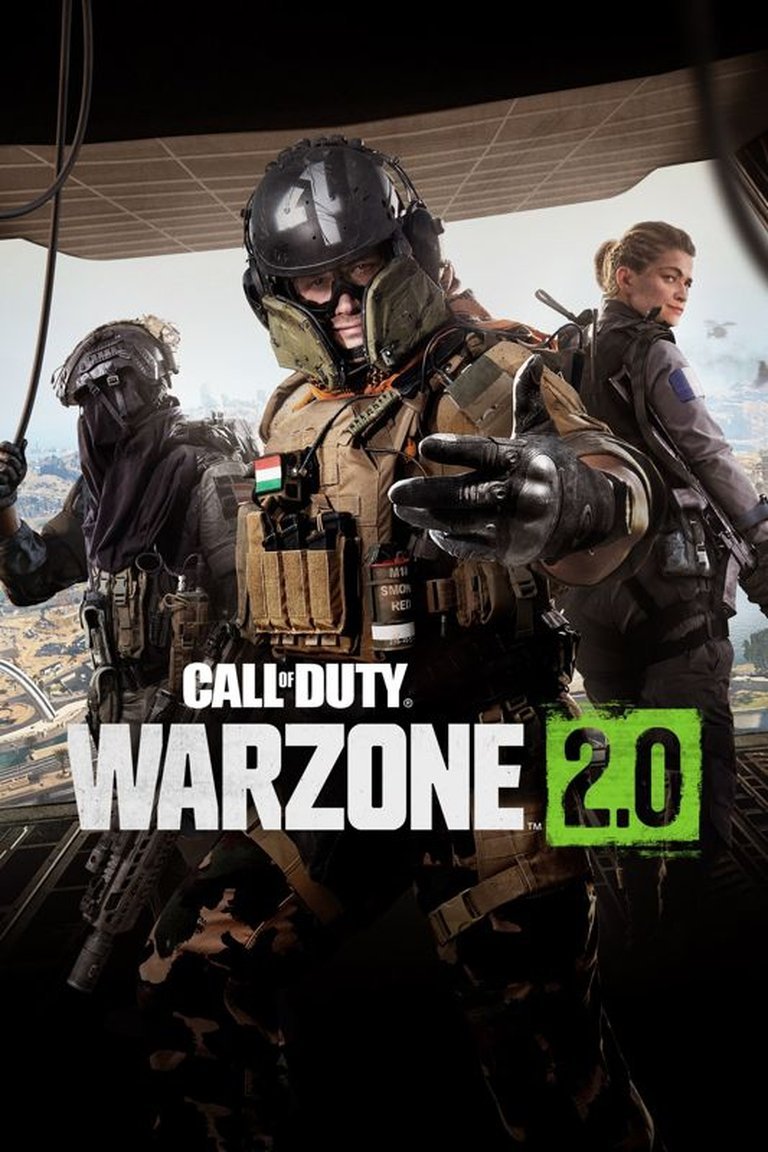
Call of Duty: Warzone 2.0 is a free-to-play battle royale shooter developed by Infinity Ward and published by Activision. Set in the modern Call of Duty universe, the game features a massive, tactical map called Al Mazrah, where players compete in large-scale matches with enhanced realism and strategic gameplay. It introduces new mechanics like the DMZ extraction mode, improved gunplay, and a more immersive looting system, building on the success of its predecessor while offering a fresh experience for both casual and competitive players.
Gameplay Videos
Call of Duty: Warzone 2.0 Guides & Walkthroughs
Call of Duty: Warzone 2.0 Reviews & Reception
opencritic.com (80/100): The heights of Warzone 2’s combat and stunning map design are held down by a rocky launch rife with issues.
ign.com (80/100): Call of Duty: Warzone 2.0’s revamp is reinvigorating thanks to the social fun of proximity chat and the excellent new DMZ extraction mode.
metacritic.com (79/100): Warzone 2.0 is an excellent sequel that builds on the very good foundations of its predecessor.
inverse.com (60/100): Warzone 2.0 is fun, but it’s also frustrating more often than it should be, due to some puzzling design choices.
Call of Duty: Warzone 2.0: A Tactical Evolution of the Battle Royale Genre
Introduction
Call of Duty: Warzone 2.0 (2022) is more than just a sequel—it’s a bold reimagining of the battle royale formula, blending the franchise’s signature gunplay with innovative mechanics, a sprawling new map, and a fresh extraction mode. Developed by Infinity Ward and Raven Software, Warzone 2.0 launched as a free-to-play experience tied to Modern Warfare II, offering a seamless integration of progression, weapons, and cosmetics across both titles. With over 25 million players in its first five days, the game quickly cemented itself as a titan in the battle royale landscape.
This review dissects Warzone 2.0 in exhaustive detail, analyzing its development, narrative context, gameplay systems, world-building, reception, and legacy. We’ll explore how it iterates on its predecessor, where it stumbles, and why it remains a defining entry in the Call of Duty saga.
Development History & Context
The Birth of a Sequel
Warzone 2.0 was born from the overwhelming success of the original Warzone (2020), which amassed over 125 million players. Unlike its predecessor, which was a standalone experience, Warzone 2.0 was designed as an extension of Modern Warfare II, sharing its engine (IW 9.0), weapons, and progression systems. This integration was a strategic shift, ensuring long-term player retention and cross-game synergy.
The game was officially revealed at Call of Duty: Next in September 2022, where developers touted it as “the most ambitious release in Call of Duty history.” Key innovations included:
– Al Mazrah: A massive, handcrafted map with diverse biomes.
– DMZ Mode: A new extraction-based experience blending PvP and PvE.
– Proximity Chat: Real-time voice communication between players.
– AI Combatants: NPC enemies guarding high-value loot zones.
Technological and Design Challenges
Warzone 2.0 faced significant technical hurdles:
1. Engine Limitations: The IW 9.0 engine, while powerful, struggled with the game’s scale, leading to early performance issues (e.g., stuttering, long load times).
2. Balancing AI: The inclusion of AI combatants in Strongholds and Black Sites was controversial. While they added tension, their unpredictable behavior disrupted the game’s flow, leading to their eventual removal in Modern Warfare II Season 4.
3. Cross-Platform Integration: Ensuring seamless progression between Warzone 2.0, Modern Warfare II, and later Modern Warfare III required extensive backend work.
The Gaming Landscape in 2022
Warzone 2.0 launched into a crowded battle royale market dominated by Fortnite, Apex Legends, and its own predecessor. Its success hinged on differentiating itself through:
– Tactical Depth: Slower pacing, realistic looting, and strategic gameplay.
– Extraction Hybrid: DMZ’s blend of PvP and PvE offered a fresh alternative to traditional battle royale modes.
– Narrative Tie-Ins: Deep connections to Modern Warfare II’s campaign and factions.
Narrative & Thematic Deep Dive
A World at War
Warzone 2.0’s narrative is woven into its maps and modes, primarily through:
1. Al Mazrah: A fictional city in the United Republic of Adal, serving as a battleground for factions like Al-Qatala, Shadow Company, and Las Almas Cartel. The map’s design reflects its lore—abandoned military bases, cartel hideouts, and urban ruins tell stories of conflict.
2. DMZ’s Faction Missions: Players align with groups like White Lotus, Legion, and Black Mous, uncovering secrets through extraction missions. For example, Season 2 introduced the Crown faction, tied to Modern Warfare II’s shadowy Shadow Company.
Themes of Survival and Espionage
The game explores themes of:
– Survival: The Gulag’s 2v2 (later 1v1) duels and Strongholds emphasize desperation and adaptability.
– Espionage: DMZ’s Building 21 and Vondel missions involve infiltrating enemy facilities, echoing Modern Warfare II’s covert ops.
– Consequence: Unlike traditional battle royales, DMZ’s permadeath for unextracted loot adds weight to every decision.
Dialogue and Atmosphere
Proximity chat and environmental storytelling (e.g., radio chatter, faction graffiti) immerse players in the world. However, the lack of a centralized narrative—outside of seasonal cinematics—means the lore often feels fragmented.
Gameplay Mechanics & Systems
Core Gameplay Loop
Warzone 2.0 refines the battle royale formula with:
1. Looting Overhaul:
– Backpack System: Initially, players carried limited inventory, forcing strategic choices. Later updates expanded capacity.
– Weapon Tiers: Ground loot is color-coded (Common to Ultra), with higher tiers offering more attachments.
– Strongholds/Black Sites: AI-guarded zones with guaranteed Loadout Drops, later removed due to balancing issues.
-
Combat and Movement:
- Gunplay: Inherited from Modern Warfare II, offering precise recoil and weighty feedback.
- Tactical Pacing: Slower than Warzone 1, encouraging positioning over run-and-gun play.
- Swimming and Vehicles: Expanded traversal options, though underwater combat remained clunky.
-
Gulag Evolution:
- Launched as a 2v2 arena with an AI Jailer boss. Reverted to 1v1 in Season 2 due to player feedback.
Innovations and Flaws
| Innovation | Impact | Flaw |
|---|---|---|
| Proximity Chat | Added tension and social dynamics (e.g., negotiating truces). | Often misused for toxicity or spam. |
| Circle Collapse | Multiple safe zones converging created dynamic endgames. | Confused players unused to the mechanic. |
| DMZ Mode | A fresh take on extraction shooters, with persistent progression. | Lacked depth at launch; later expanded with Faction Missions. |
| Assimilation | Allowed squads to recruit downed enemies. | Removed due to exploitation (e.g., griefing). |
UI and Progression
- Cluttered Menus: The Call of Duty HQ launcher and overlapping Modern Warfare II/III systems made navigation cumbersome.
- Battle Pass Integration: Shared progression with Modern Warfare II incentivized cross-play but diluted Warzone’s identity.
World-Building, Art & Sound
Al Mazrah: A Living Battleground
The map’s design is a masterclass in environmental storytelling:
– Diverse Biomes: From the urban sprawl of Al Mazrah City to the deserts of Sattiq Cave Complex, each area feels distinct.
– Dynamic Events: Sandstorms (Season 3), missile strikes (Season 5), and AI patrols (Strongholds) kept the map evolving.
– Sound Design: Distant gunfire, helicopter rotors, and the Gulag’s ominous announcer create a tense atmosphere.
Visual and Audio Fidelity
- IW 9.0 Engine: Delivered stunning lighting and textures, though performance issues persisted on lower-end PCs.
- Weapon Audio: Each gun has a unique acoustic profile, from the M4’s sharp cracks to the RPG’s thunderous blast.
- Music: The soundtrack, composed by Sarah Schachner, blends orchestral tension with electronic beats, heightening key moments (e.g., Gulag victories).
Reception & Legacy
Critical Consensus
Warzone 2.0 received “generally favorable” reviews (Metacritic: 80/100), with praise for:
– Al Mazrah: Hailed as the best Warzone map (GameSpot: “a real victory”).
– DMZ’s Potential: Called a “revelation” (GamingTrend) despite its rough launch.
– Proximity Chat: A standout feature (GamesRadar: “enhances the experience”).
Criticisms included:
– Technical Issues: Bugs, stuttering, and server instability plagued early months.
– Overcomplicated Systems: The backpack and Plate Carrier mechanics were later streamlined.
– Identity Crisis: Some felt it strayed too far from Warzone 1’s simplicity (Inverse: “a hodgepodge of ideas”).
Player Reception
Player scores on MobyGames (1.7/5) highlight frustration with:
– SBMM (Skill-Based Matchmaking): Felt overly punitive.
– Monetization: Aggressive Battle Pass and Store integration.
Industry Impact
Warzone 2.0 influenced subsequent battle royales by:
1. Popularizing Extraction Modes: DMZ inspired Escape from Tarkov-like experiences in other shooters.
2. Proximity Chat Adoption: Games like Helldivers 2 later implemented similar systems.
3. Map Rotation: Later Warzone updates introduced multiple maps (Verdansk, Rebirth Island), a trend adopted by Apex Legends.
Conclusion: A Flawed but Essential Evolution
Call of Duty: Warzone 2.0 is a paradox—a game that innovated boldly while stumbling over its own ambition. Its tactical depth, immersive world, and DMZ mode set new standards, but technical woes and overengineered systems held it back. As a free-to-play experience, it remains a cornerstone of the Call of Duty ecosystem, though its legacy is overshadowed by the original Warzone’s cultural impact.
Final Verdict: 8.5/10 – A must-play for battle royale fans, but not without its frustrations.
Warzone 2.0 proved that even giants must evolve—and sometimes, the growing pains are part of the journey.