
Description
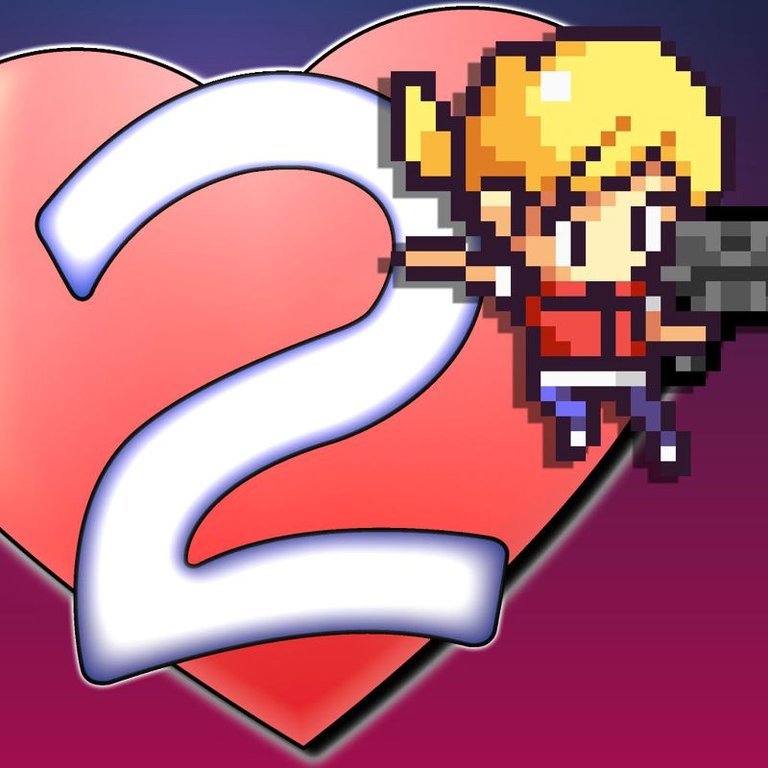
Cally’s Caves 2 is a 2D side-scrolling action platformer that follows the adventures of its female protagonist, Cally, as she explores mysterious caves filled with enemies and secrets. The game combines exploration with intense shooting mechanics and RPG elements, allowing players to upgrade their weapons and abilities while navigating challenging levels and defeating foes in this sequel to the popular indie title.
Gameplay Videos
Cally’s Caves 2 Guides & Walkthroughs
Cally’s Caves 2 Reviews & Reception
metacritic.com (70/100): If you’re feeling the itch for a platformer of yore, Callys Caves 2 is an easy recommendation.
pocketgamer.com : While it has a great sense of style, Callys Caves 2 still feels unfinished.
indiedb.com : Cally’s Caves 2 is fun and absorbing, with great music, responsive controls and a nice variety in weapons and enemies. It’s actually quite remarkable for a free game.
Cally’s Caves 2: Review
Introduction
In the golden age of mobile gaming, where bite-sized adventures and free-to-play models redefined player engagement, Cally’s Caves 2 (2014) emerged as a vibrant anomaly—a sprawling, challenging, and deeply rewarding side-scrolling action-platformer. As the sequel to Jordan Pearson’s 2013 debut, this title elevated its predecessor’s formula into a meticulously crafted odyssey, blending retro aesthetics with modern RPG mechanics. While its narrative—centered on six-year-old Cally’s quest to rescue her parents from the deranged Dr. Herbert—may seem deceptively straightforward, the game’s true genius lies in its intricate gameplay loop and relentless progression systems. This review dissects Cally’s Caves 2 as both a technical achievement and a testament to the indie spirit, examining how it carved a niche for itself in a crowded mobile landscape and why its legacy endures nearly a decade later.
Development History & Context
Cally’s Caves 2 was developed by VDO Games, a studio helmed by Jordan Pearson, with contributions from a small but dedicated team including artists Yal and 0HK0, and composer David Stanich. Built using GameMaker Studio, the project emerged from the fertile ground of the early 2010s mobile boom, where platforms like the App Store and Google Play democratized game development. Pearson’s vision was clear: create a “Level Up Everything” RPG-platformer hybrid that rewarded persistence.
Technological constraints shaped the game’s design. Mobile hardware limitations necessitated lightweight 2D sprites and procedural level generation to ensure smooth performance. The roguelike structure—where each run earns currency for permanent upgrades—was a brilliant response to mobile play patterns, allowing short sessions to contribute to long-term progression. Released on July 1, 2014, for iOS (with Android and Windows ports following), the game arrived during a period dominated by casual titles. Yet its unforgiving difficulty and deep mechanics stood in stark contrast, appealing to a niche audience craving challenge. It was later rebranded as Cally’s Trials for PC, underscoring its broader appeal beyond mobile.
Narrative & Thematic Deep Dive
The plot of Cally’s Caves 2 is deceptively simple: after Dr. Herbert kidnaps Cally’s parents, she descends into mutated caves to confront him. What elevates the narrative is its execution. The game is set before Cally’s Caves 3, positioning it as the origin story of a girl’s transformation into a hardened warrior. Herbert, a mad scientist archetype, has bio-engineered the caves into a labyrinthine nightmare, with experiments that warp ecology and spawn grotesque creatures. This creates a tension between the whimsical protagonist and the grim, Lovecraftian setting.
Characterization is sparse but effective. Cally’s courage contrasts with her youth, making her resilience compelling. Minor characters like the enigmatic Lloyd—who offers cryptic advice—add charm. The dialogue, penned by Pearson and George Gordon-Tenant, balances brevity with personality, especially in item descriptions that wryly acknowledge Cally’s absurd arsenal.
Thematically, the game explores growth through adversity. Cally’s journey from a vulnerable child to a conqueror mirrors RPG-leveling mechanics. Herbert’s lair symbolizes the corruption of nature by science, while the caves’ biomes reflect environmental decay. The absence of branching paths, however, limits narrative depth—players follow a linear descent, missing opportunities for richer storytelling.
Gameplay Mechanics & Systems
At its core, Cally’s Caves 2 is a masterclass in progression design. The gameplay loop revolves around exploration, combat, and incremental improvement:
-
Combat & Weapons: Players wield 12–16 distinct weapon classes (e.g., pistol, laser, boomerang), each with unique behaviors. Weapons “level up” through use, gaining damage and evolving at milestones (e.g., a standard pistol might transform into a shotgun). This creates a tangible sense of investment, turning every bullet fired into progression. Enemies—14–25 types, from bats to armored brutes—demand adaptability, requiring strategic weapon swaps.
-
RPG Elements: A permanent upgrade shop allows players to spend earned currency on permanent enhancements: triple jump, coin multipliers, health regeneration, and more. This fosters a risk-reward dynamic, as players must weigh spending coins mid-run versus saving for late-game upgrades. The roguelike structure ensures no run is wasted, even if failure occurs.
-
Level Design: 104–110 levels span six biomes (forest, ice, etc.), each with distinct enemy layouts and environmental hazards. Levels are short (~1 minute), encouraging repeated attempts. However, the checkpoint system—returning players to the start of a level upon death—softened difficulty compared to the first game, as noted by critics.
-
Exploitation & Balance: The game’s physics and enemy AI allow for emergent strategies. For example, players can farm bosses by luring them to stage exits or exploit gem placement for infinite coin runs. While unintended, these “cheese” tactics highlight the game’s flexibility. Yet, the lack of branching paths and the focus on single solutions to puzzles (e.g., harpoon guns for secret areas) can feel rigid.
The UI is clean and mobile-optimized, with virtual D-pad and buttons for jump, shoot, and sword. The sword’s ability to deflect projectiles adds a layer of skill, though upgrades like a Zelda-esque energy wave feel underutilized.
World-Building, Art & Sound
Cally’s Caves 2 thrives on its atmospheric presentation. The caves are a character themselves, evolving from verdant forests to bioluminescent abysses as players descend. Each biome is meticulously detailed: toxic pools bubble in the ice caverns, and fungal growths pulse with eerie light. Enemy designs are equally inventive, from spiky beetles to spectral apparitions, each distinct in behavior and visual flair.
The art direction leans into retro charm with pixelated sprites and parallax backgrounds, yet the attention to detail—like weapon evolution animations or environmental storytelling (e.g., broken lab equipment)—gives it a polished edge. Character sprites, especially Cally, express personality through subtle animations, like a confident smirk after defeating a boss.
Sound design complements the visuals. David Stanich’s 38-track soundtrack shifts dynamically: moody synth pads in shadowy caves give way to upbeat chiptune in safe zones. Sound effects—explosions, weapon discharges, enemy shrieks—are crisp and impactful, satisfyingly punctuating combat. The haunting “game over” screen, with its mournful melody and Cally’s defeated sprite, reinforces the stakes without being punitive.
Reception & Legacy
At launch, Cally’s Caves 2 earned a respectable 77% critic average (based on three reviews):
– Touch Arcade (80%) praised its “strong sequel” status, noting the checkpoint system’s accessibility trade-off.
– 148apps (80%) lauded its fusion of “exploration and firearms.”
– Pocket Gamer UK (70%) called it “rich and rewarding” despite being “a little rough.”
Players appreciated its free-to-play model, though some found the difficulty curve steep. Commercial success was modest, with 25 players collecting it on MobyGames, but its cult following grew through word-of-mouth.
Its legacy is twofold:
1. Influence on Mobile RPGs: The weapon-levelling system became a blueprint for games like Dead Cells, emphasizing progression through mastery. Its roguelike structure also paved the way for mobile titles with permadeath-lite mechanics.
2. Enduring Appeal: Decades later, it remains a benchmark for challenging mobile platformers. The Cally’s Caves series expanded to four entries, with Cally’s Caves 3 (2015) refining its formula. Fans celebrate its unapologetic difficulty and satisfying “flow state” gameplay.
Conclusion
Cally’s Caves 2 is a paradox: a game born from mobile constraints that transcends them. Its blend of accessible controls and punishing depth, wrapped in a charmingly dark narrative, makes it a standout in indie history. While it stumbles occasionally—be it its rigid level design or occasional rough edges—its brilliance lies in how it transforms failure into fuel. The weapon-levelling system remains a masterstroke of player agency, turning every run into a step toward godhood.
For modern players, its legacy endures as a reminder that challenge and creativity can coexist. It’s not just a game; it’s a time capsule of 2014’s indie renaissance. Verdict: An essential, if niche, classic—Cally’s Caves 2 is a meticulously crafted gem that proves even the smallest caves can hold epic adventures.