
- Release Year: 2016
- Platforms: Windows
- Publisher: Dogenzaka Lab
- Developer: 4th Cluster
- Genre: Adventure
- Perspective: 1st-person
- Game Mode: Single-player
- Gameplay: Visual novel
- Setting: Contemporary
- Average Score: 91/100
Description
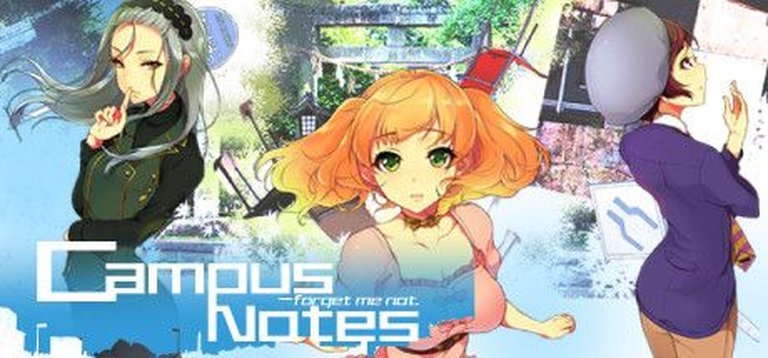
Campus Notes: Forget me Not is a first-person visual novel set in the contemporary University of Tsukuba, Japan. After a chance encounter with a silver-haired girl, transfer student Yuta Kiriha becomes trapped in a bizarre reality where everyone at the university forgets him each day. Forming The Chivalric Order of Bertha with other affected individuals, he investigates the sci-fi mystery of the IMA amnesia phenomenon, blending campus life with a surreal adventure in a realistically portrayed Japanese city.
Gameplay Videos
Where to Buy Campus Notes: Forget me Not
PC
Campus Notes: Forget me Not Guides & Walkthroughs
Campus Notes: Forget Me Not: A Cult Classic of Memory, Science, and the Sealing of a University
Introduction: The Echo in the Corridor
In the vast and often repetitive ecosystem of the visual novel, where archetypal high school settings and romantic tropes frequently dominate, Campus Notes: Forget Me Not emerges as a startlingly specific and grounded anomaly. Released in 2016 by the indie studio 4th cluster—a collective of University of Tsukuba alumni—the game is not merely set in a real Japanese city; it is a love letter, a supernatural mystery, and a philosophical inquiry built directly upon the bricks and biology of that institution. Its core premise—a protagonist systematically erased from the collective memory of his entire university campus each day—is a potent cocktail of existential horror and intimate campus drama. This review will argue that while Campus Notes stumbles under the weight of its own ambition and certain production constraints, its unwavering commitment to a unique setting, its clever sci-fi mystery, and its earnest emotional core cement its status as a fascinating, if flawed, cult classic. It is a game that understands that the most profound mysteries are not those of distant galaxies, but of the familiar hallway suddenly rendered alien.
Development History & Context: A Project Born of Place
The Studio and the Vision: 4th cluster is not a detached commercial entity but an extension of the very world they depict. Formed by graduates of the University of Tsukuba, their project is inherently autobiographical in setting, if not in plot. This insider perspective is the game’s greatest strength and most telling limitation. The “vision” was clearly one of verisimilitude: to create a visual novel where the backgrounds were not generic anime stock but photorealistic renders of actual campus locations—the library, the dormitories, the iconic central plaza. This desire for authenticity extended to the narrative, which seeks to weave a speculative fiction into the fabric of a real-world scientific community (Tsukuba is known as a “Science City”).
Technological and Genre Context: Released in 2016, the game utilized the KiriKiri engine (specifically with the KAG scripting system), a popular, accessible tool for doujin (self-published) and indie visual novels in Japan. This placed it firmly in the tradition of low-budget, high-ambition indie VNs. The “Fixed / flip-screen” perspective and pre-rendered backgrounds were standard for the genre’s budget tier, contrasting sharply with the sprite-based animation of major commercial titles. The year 2016 was also a period of quiet ferment for the genre internationally, following the breakout success of Steins;Gate localizations and preceding the wave of major titles like AI: The Somnium Files and Paranormasight. Campus Notes existed at this intersection, hoping to capture an English-speaking audience with its unique hook.
The Publishing Bridge: Its Western release was handled by Dogenzaka Lab, a publisher known for bringing niche Japanese indie titles to Steam, often in collaboration with localizers like Flyhigh Works. This partnership was crucial for the game’s survival outside Japan, as its entire appeal hinges on a specific, real-world Japanese location that would be meaningless without explanation.
Narrative & Thematic Deep Dive: The Physics of Forgetting
Plot Architecture and the IMA Phenomenon: The narrative is a delicate structure built on a single, devastating premise: Yuta Kiriha, a transfer student, discovers he is subject to Idiopathic Mass Amnesia (IMA). Every 24 hours, all memories of him—newly formed friendships, conversations, even physical evidence like photos—vanish from the campus’s collective consciousness. He is a ghost in the machine of his own life. The plot’s engine is his desperate, recursive search for others immune to IMA, leading to the formation of “The Chivalric Order of Bertha” (a name evoking Arthurian round-table knights on a quixotic quest). The mystery is twofold: the mechanism of IMA (involving parallel worlds and quantum-like observer effects) and the human cost—the profound loneliness of being eternally forgotten.
The Steam discussion hints at the core mechanic: “If you don’t choose the correct answer, you will go the route of time loop.” This is not a Groundhog Day for fun, but a narrative and punitive system. Fail state choices don’t just lead to a bad ending; they often trigger a literal reset of the day, with Yuta alone remembering the cycle, deepening his psychological torment. This transforms gameplay into a ritual of accumulation—not of stats, but of shared, fragile experience.
Characters as Anchors in the Storm: Yuta’s companions are not just romance options; they are fellow survivors, each representing a different response to existential erasure.
* The Silver-Haired Girl (Aika? The initial catalyst): She is the “first spark,” the unknown variable that sets Yuta’s quest in motion. Her own connection to IMA is a central mystery.
* The Other “Affected” Students: The group becomes a surrogate family. Each member’s personal story—why they are immune, what they lost—explores themes of identity (“Who am I if no one remembers me?”), the social contract of memory, and the value of connection in a deterministic universe. The game’s strength is in making these theoretical stakes feel viscerally personal.
Philosophical Underpinnings: The narrative transcends a simple “solve the mystery” plot. It engages with:
1. Phenomenology of Self: Drawing from thinkers like Derek Parfit, the game asks if personal identity is a narrative construct dependent on others’ memories. Yuta’s struggle is against the dissolution of his narrative self.
2. The Burden of Knowledge: The “Bertha’s Knights” are cursed with knowledge. Their isolation is intellectual and emotional. The game often frames their clubroom as a sanctuary where the “truth” can be spoken, a space outside the amnesiac norm.
3. Parallel Worlds as Metaphor: The sci-fi explanation (parallel worlds bleeding into each other) serves as a literal mechanism for “forgetting.” It suggests that our reality is one of many, and memory is the bridge between them. To be forgotten is to be severed from a potential branch of existence.
Gameplay Mechanics & Systems: The Visual Novel as Puzzle Box
Core Loop and Branching Narrative: As a visual novel with “point and select” interaction, the primary gameplay is reading and making choices. However, Campus Notes treats choices with unusual gravity. The “time loop” feedback loop means players must learn from failed cycles. Certain choices trigger the IMA reset, forcing the player to piece together clues across attempts, akin to The Sexy Brutale or early Roop titles, but without explicit “hints.” The game expects note-taking and pattern recognition.
Progression and Achievement Design: The 54 Steam achievements are a window into its design philosophy. They are not trivial (“Read 100 lines”) but milestone-based (“It’s called IMA,” “Fighter,” “Service office”). They track major decision paths and conclusions, acting as a breadcrumb trail for the player seeking all endings and the “true” resolution. This achievement structure encourages—indeed, almost requires—multiple playthroughs to map the narrative web.
User Interface and Flaws: The UI is functional, typical of KiriKiri titles. However, a significant criticism cited by players is the lack of voice acting. In a genre where voice often sells the emotional beats, the silent text delivery can flatten pivotal moments, making the already slow pacing feel more lethargic. The “boring pacing” noted in review analyses is a direct consequence of this, combined with a text-heavy script that may drag in less compelling routes. The “unresolved plot points” are a double-edged sword: they can feel like frustrating gaps or as intentional, haunting ambiguities left by the fractured reality.
World-Building, Art & Sound: Tsukuba as Protagonist
The City as a Character: This is the game’s singular, defining feature. All graphics are based on real scenery from Tsukuba Science City. When Yuta walks from the dorm to the university cluster, the player is seeing a meticulously recreated, real-world location. This does more than add “atmosphere”; it grounds the fantastic premise in a tangible reality. The uncanny effect of seeing a familiar, mundane campus become a site of supernatural erasure is profound. It makes the horror intimate and the eventual hope (if any) feel earned.
Visual Direction: The art is anime/manga-styled sprites for characters, contrasted with photographic, full-HD backgrounds. This stylistic clash can be jarring—some might see it as cheap, others as a deliberate emphasis on the “digital overlay” of memory and identity onto a real world. The character designs are competent but not exceptional, serving their narrative purpose. The real win is the environmental storytelling: the specific trees, buildings, and layouts of Tsukuba University.
Sound Design: The original Japanese theme song “IMAGINE THE FUTURE.” (a registered trademark of the university) is a poignant, anthemic piece that underscores the game’s central irony: a place dedicated to building the future has its present perpetually undone. The soundtrack is functional, supporting scenes without always elevating them. The absence of full voice acting is the soundscape’s greatest missed opportunity, leaving emotional weight solely on the text and static sprites.
Reception & Legacy: A Niche Resounding with the Affected
Launch and Commercial Fate: Released quietly on Steam in April 2016, Campus Notes flew under the radar. Its “Very Positive” (89%) rating from ~64 reviews on Steam indicates a satisfied, if small, player base. The “Collected By 1 players” stat on MobyGames is a stark reminder of its obscurity. It was, and remains, a niche title even within the visual novel niche. Its commercial model was straightforward: a one-time purchase ($11.99), with DLC for the OST.
Critical and Player Analysis: Steam reviews (and aggregates like Steambase’s 88/100 score) repeatedly highlight:
* Strengths: “Interesting Story,” “Beautiful Art” (referring to the real backgrounds), “Engaging Characters,” and its “Philosophical Themes.”
* Criticisms: “Lack of Voice Acting,” “Boring Pacing,” and “Unresolved Plot Points.” The “Language Barrier” is a significant factor, as the game’s nuance is tied to Japanese university culture and the specific lore of Tsukuba.
* The Unresolved Plot Point Dilemma: This is the game’s most debated aspect. For some, the lingering questions about the ultimate origin of IMA and the fates of certain routes feel like an unfinished draft. For others, it is an authentic reflection of the theme: some memories, some truths, remain just out of reach, permanently fragmented.
Influence and Series Place: Campus Notes appears to be part of a loose shared universe or thematic series by 4th cluster. The “Related Games” list on MobyGames (Forget Me Not: My Organic Garden, Never Forget Me, etc.) suggests the studio revisits the “forgetting” motif. However, most predecessors are Japan-only titles. Its primary influence is likely as a proof-of-concept for hyper-localized setting in VNs. It demonstrates that a real-world location, with all its specific geography and culture, can be a more compelling fantasy land than any invented high school. This approach would later be seen in titles like Muv-Luv Alternative’s use of real Kanagawa prefecture locales, though not directly attributable.
Historians’ Note: For game historians, Campus Notes is a vital data point in the 2010s indie VN renaissance and the increasing globalization of the genre via Steam. It represents the “doujin spirit” transitioning to a global digital storefront—a small, passionate university project finding its audience through sheer specificity of vision. It also stands as an early example of “location-based storytelling” in interactive media, predating the widespread use of Google Maps-style APIs in games.
Conclusion: A Haunting, Incomplete Memorial
Campus Notes: Forget Me Not is not a flawless masterpiece. Its pacing can dawdle, its lack of voice work is a glaring omission, and its narrative ambition arguably outstrips its execution, leaving some players with the very frustration its theme explores: the ache of an incomplete memory. Yet, to dismiss it for these reasons is to miss its monumental achievement. It dared to ask “What if the most terrifying thing that could happen at university wasn’t a horror movie, but that you ceased to exist in the social and mnemonic fabric of the place?” It then had the courage to set that question in a place it knew intimately, rendering the horror with photographic realism.
Its place in history is secure as a cult classic of hyper-localized speculative fiction. It is a testament to the power of setting not as backdrop, but as active participant. For the few thousand players who have journeyed through its looped days and formed their own “Chivalric Order of Bertha” in the comments, it is a profoundly affecting experience. It is a game about the desperate, daily act of remembering, and in doing so, it ensures that it, at least, will not be forgotten. It earns its place as a curious, heartfelt, and philosophically rich artifact from a specific corner of the Japanese indie scene—a note, beautifully composed, that lingers long after the screen goes dark.
Final Verdict: 7.5/10 – A flawed but fascinating and deeply human mystery, essential for enthusiasts of narrative-driven games and those fascinated by the intersection of place and story.