
- Release Year: 2008
- Platforms: Windows
- Publisher: Dekovir, Inc.
- Developer: Dekovir, Inc.
- Genre: Adventure
- Perspective: Fixed
- Game Mode: Single-player
- Gameplay: Cryptogram, Drag and drop, Hidden object, Hints, Memory match, Puzzle elements, Riddles, Time limit, Zoom
- Setting: Toy shop
Description
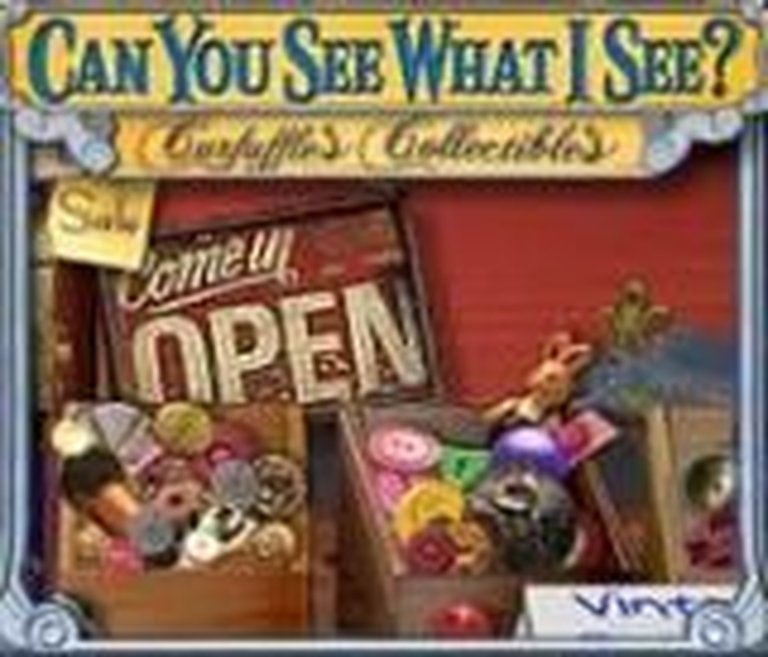
Can You See What I See?: Curfuffle’s Collectibles is a hidden object adventure game adapted from Walter Wick’s book, set in a whimsical toy shop. Players search for cleverly concealed objects within detailed, zoomable scenes, using hints and solving riddles, while enjoying polished visuals and engaging mini-games like cryptograms and memory matches, making it enchanting for children and challenging for adults.
Gameplay Videos
Can You See What I See?: Curfuffle’s Collectibles Guides & Walkthroughs
Can You See What I See?: Curfuffle’s Collectibles Reviews & Reception
retro-replay.com : With every satisfying click and hidden find, Can You See What I See? delivers hours of playful exploration and mental challenge.
Can You See What I See?: Curfuffle’s Collectibles: Review
Introduction: A Niche Gem in the Hidden Object Pantheon
At first glance, Can You See What I See?: Curfuffle’s Collectibles appears to be just another entry in the late-2000s casual gaming boom—a competent, if unremarkable, hidden object game riding the coattails of a popular children’s book series. Yet, to dismiss it as merely derivative is to overlook a title that embodies a fascinating confluence of artistic adaptation, mechanical refinement, and the very specific cultural moment of “casual” PC gaming. Released in March 2008 by Dekovir, Inc., this game is a meticulous digital translation of Walter Wick’s celebrated photographic puzzle books, transforming static, densely packed tableaus into interactive scavenger hunts. Its legacy is not one of blockbuster sales or genre-redefining innovation, but of faithful craftsmanship and a quiet understanding of its audience’s desires. This review posits that Curfuffle’s Collectibles is a significant, if understudied, artifact: a game that successfully bridges the worlds of children’s literature and interactive entertainment, offering a mechanically sound and aesthetically pleasing experience that, while not revolutionary, perfected a specific, satisfying loop within the hidden object genre. It is a testament to the power of source material integrity and the enduring appeal of pure, unadulterated “spot-the-difference” gameplay, elevated by a charmingly whimsical context.
Development History & Context: From Page to Pixels in the Casual Era
The Studio and the Vision
The game was developed and published by Dekovir, Inc., a studio whose own portfolio, as glimpsed through MobyGames credits, reveals a pattern of working on licensed casual titles and puzzle games (Can You See What I See? Dream Machine, Letter Lab, Etch A Sketch). This context is crucial; Dekovir was not attempting an auteur-driven project but was instead executing a specific brief: to adapt the visual puzzles of Walter Wick’s Can You See What I See? book series—specifically drawing from the “Toy Shop” and “Cool Collections” books—into a functional video game. The executive producer, Mick Donahoo, and designer/producer, Craig Holland, were tasked with translating Wick’s intricate, real-world photographic compositions into a digital format that retained their magical, cluttered detail. Key programming was handled by Denis Shishkin, art by Mark Brashear, and audio by Bad Citrus, with special thanks to Walter Wick himself, indicating a direct collaboration or licensing agreement that ensured visual fidelity to the source material.
Technological Constraints and Innovations
The game was built for the Windows PC market of 2008, an era dominated by the “casual games” boom, spearheaded by companies like Big Fish Games and PopCap. Constrained by the need for broad accessibility (low system requirements, simple mouse controls), Dekovir made a technically astute decision: they used high-resolution static photographs as their foundation. The most celebrated innovation, cited in multiple sources, was the seamless zoom functionality without loss of detail. In a genre often plagued by pixelation when zooming, this feature was a major technical and experiential boon, allowing players to scrutinize every corner of Wick’s elaborate sets. The “fixed / flip-screen” visual style (as cataloged by MobyGames) speaks to a design choice focused on artistic composition over 3D exploration, prioritizing the integrity of each Wick photograph as a curated puzzle box.
The Gaming Landscape of 2008
2008 was the peak of the hidden object game’s mainstream popularity. Titles like Mystery Case Files: Return to Ravenhearst and Dream Chronicles were bestsellers. Curfuffle’s Collectibles entered a crowded market. Its differentiation strategy was clear: instead of generic fantasy or mystery themes, it offered authentic, high-art visual puzzles based on a beloved, award-winning photographic series. It was a “premium” casual title, leveraging established intellectual property to attract both parents familiar with the books and puzzle enthusiasts. The business model was shareware, a common distribution method for casual games at the time, allowing a free trial before purchasing the full experience, often through portals like Big Fish Games.
Narrative & Thematic Deep Dive: The Shop of Lost Chances
The narrative framework is intentionally thin, serving primarily as a justification for the gameplay loop, but it is rich with thematic suggestion. The story, as detailed on Metacritic and LaunchBox, introduces Clyde Curfuffle, the proprietor of the eponymous collectibles shop. Clyde has suffered a calamitous string of bad luck: a fire, a flood, and a nasty fall that has landed him in the hospital. His shop, a wonderland of curiosities, is in disarray, and he needs the player’s help to “save his collectibles shop.” The central mystery is that one of his favorite collectibles may sell for a lot of money, and the player must figure out which one by fulfilling customer “order forms.”
Characters and Persona
* Clyde Curfuffle: Though absent, his presence is felt. He is the archetypal quirky, unlucky toymaker/collector. His name itself—a playful spoonerism or portmanteau—suggests whimsy and gentle confusion.
* Seymour: The red and yellow doll is the game’s most memorable character. Described as “mischievous” and cleverly hidden in each scene, Seymour functions as both a secret bonus and a playful guide. Finding him rewards the player with extra hints, making him a sought-after “easter egg” that encourages exhaustive exploration of Wick’s compositions.
* The Customers: The “order forms” are lists of whimsical items. The player never meets the customers, but their imagined desires (a child’s teddy bear, a collector’s rare gear) breathe life into the shop’s inventory, giving each found object a pseudo-narrative purpose.
Themes and Structure
The core theme is restoration through observation. The player’s act of finding and “selling” items (marked with a bold SOLD tag) is an act of reordering chaos, of imposing value and clarity on a disordered world. It mirrors Clyde’s own need to salvage his life’s work. The substitution of a riddle for an object list on some stages is a key thematic and mechanical shift. It moves the game from pure visual search to deductive reasoning, aligning perfectly with the “puzzle” aspect of the series’ title. These riddles (“I see something that begins with B and ends withALL”) are playful, often punning, and feel like direct communications from the absent Curfuffle, reinforcing his personality as a lover of wordplay. The interstitial mini-games—the cryptogram (arranging alphabet blocks) and the memory match—are not just diversions but are thematically integrated as “whimsical routines,” perhaps representing the sorting and remembering required to run a collectibles shop.
Gameplay Mechanics & Systems: The Satisfying Click
The game’s genius lies in its mastery and subtle refinement of the hidden object formula.
Core Loop and the “SOLD” Mechanic
Each stage is an “order form”—a list of objects to find within a Wick photograph against a time limit. The foundational innovation is the persistence of found objects. Instead of vanishing from the scene, they are overlaid with a bold, red SOLD tag. This serves three brilliant purposes:
1. Visual Feedback & Satisfaction: The “snap” of the tag is a moment of tangible gratification. It’s a stamp of approval, a physical marker of success in the digital space.
2. Clutter Management: On Wick’s famously dense tablescapes, leaving objects in place with a tag prevents the scene from becoming emptier and easier, maintaining the visual challenge and the “busy” aesthetic that is part of the appeal.
3. Progress Tracking: The tags act as a clear, at-a-glance progress tracker, crucial on complex screens.
Hint Economy and Exploration
The game employs a smart, layered hint system that encourages both careful searching and strategic use of resources.
* Five Free Hints: Each stage begins with a bank of five hints, a generous start that reduces initial frustration.
* Seymour: Finding the hidden Seymour doll is the primary method for earning extra hints. This incentivizes players to study the scene intimately before the timer starts or during lulls, treating the environment itself as a puzzle to be decoded.
* The Jumble Jar Mini-Game: This is a standout secondary mechanic. A jar filled with assorted objects requires the player to drag and drop them into correctly labeled bins. Successfully sorting the jumble awards bonus hints. This tactile, simple sorting game breaks the monotony of clicking and directly feeds into the main game’s resource management, creating a rewarding meta-loop.
Mini-Games as Breaks and Flavor
Between major “order forms,” the game presents two simple but effective mini-games:
1. Alphabet Block Cryptogram: A sliding-block puzzle where players arrange lettered blocks to spell out a word. It’s a literal, tactile translation of code-breaking, fitting the shop’s mysterious vibe.
2. Memory Match: A classic concentration-style game using cards with toy imagery. It’s a pure cognitive palate cleanser, exercising a different part of the brain than visual search.
These are not complex, but they are thematically appropriate and vary the pace perfectly. They are clearly designed as short, rewarding intermissions, not as grinding barriers.
UI and Accessibility
The interface is minimalist: a list of objects/riddles, a hint button, a timer, and the zoom controls. The zoom feature is paramount. Its lossless implementation means the player can always achieve the level of detail needed, making the difficulty curve fair rather than artificially steep. The “riddle” mode replaces the list with text, requiring a mental translation from word to visual—a delightful escalation in challenge.
World-Building, Art & Sound: The Wickian Toy Shop
This is where the game transcends its genre peers. The entire experience is a love letter to Walter Wick’s photographic artistry.
Visual Direction and Fidelity
Every scene is a direct, high-fidelity adaptation of Wick’s work. His signature style—hyper-detailed, brightly lit, chaotic yet composed collections of toys, tools, and trinkets against a shallow depth of field—is faithfully rendered. The color palette is vibrant and nostalgic, evoking the feel of a magical, cluttered toy store from childhood. Lighting is used masterfully; shafts of light illuminate dust motes and gloss on wooden surfaces, adding depth and a sense of lived-in wonder. The “fixed / flip-screen” approach means each scene is a perfectly composed painting, encouraging the player to absorb it as a whole before diving into the details.
Atmosphere Through Detail
The world-building is entirely environmental. The shop feels real because every shelf, pegboard, and drawer is filled with logically grouped objects (clockworks, stuffed animals, building blocks). The personality of Curfuffle is expressed not through dialogue but through the objects themselves—a punny sign here, a mechanically intricate toy there. The act of finding Seymour among these items makes him feel like a genuine denizen of this world.
Sound Design
The composed audio by “Bad Citrus” is similarly understated and effective. It features a light, melodic, music-box或casual piano soundtrack that is unobtrusive yet whimsical, perfectly matching the toy shop aesthetic. Sound effects are precise and satisfying: the click of a correct find, the snap of the SOLD tag, the clatter of objects in the jumble jar. There is no voice acting, which keeps the focus squarely on Wick’s visuals and the player’s own internal monologue.
Reception & Legacy: A Cult Success in the Casual Canon
Contemporary Reception
Critical reception was limited but positive. The sole critic review on MobyGames, from GameZebo (80%), is telling: “the scenes in the game really are spectacular with clever and meticulously arranged objects, and colors that pop like in a glossy magazine. A good dose of humor and polished production values bring the whole thing to life convincingly. Children will likely find the game enchanting… it holds more than enough challenge for adults as well – in fact, it’s the perfect game to be played as a team.” This encapsulates the game’s dual appeal: artistic spectacle and social, collaborative challenge. Player reception, as seen on Amazon and eBay listings, is mixed but passionate. Positive reviews praise the zoom feature, the tangible objects, the nostalgic feel, and the difficulty curve (“Got more difficult as it went along”). A negative review succinctly states, “Not fun to play. I dumped it from my computer after playing for 5 minutes,” highlighting the genre’s inherent niche appeal—if you don’t enjoy meticulous visual search, the game has nothing else to offer.
Commercial Performance and Legacy
Commercially, it was a niche title within the crowded casual market. Its association with the successful Can You See What I See? book series likely provided a built-in audience. Its later appearance as part of a Target-branded bundle (including Jewel Quest and MahJong Quest, per the Internet Archive entry) suggests it was used as value-add inventory, a common practice for mid-tier casual games. Its legacy is twofold:
1. A High-Water Mark for Licensed Hidden Object Games: It demonstrated that a licensed property, when treated with fidelity and respect (i.e., not just slapping a brand on a generic engine), could result in a game that felt authentic and elevated.
2. An Example of “Pre-Digital Native” Adaptation: It captures a moment where print-based puzzle concepts (Wick’s books) were being faithfully translated into digital interactivity before the medium’s own visual languages became dominant. It’s a pure “interactive illustration.”
Its relative obscurity today is a symptom of the casual gaming market’s fickleness and the difficulty of preserving shareware titles, as noted by its presence on the Internet Archive’s Vintage Software Collection. It is a game more discussed in forums of nostalgic casual gamers than in mainstream gaming histories.
Conclusion: A Defensible Classic of Its Kind
Can You See What I See?: Curfuffle’s Collectibles is not a game that will change your understanding of interactive storytelling or push technological boundaries. Instead, it is a masterclass in execution within a defined scope. It takes a simple premise—find objects in a picture—and surrounds it with such a coherent aesthetic vision (Walter Wick’s photography), such a satisfying core feedback loop (the persistent SOLD tag), and such a thoughtfully integrated hint and mini-game system that the whole becomes greater than the sum of its parts.
Its weaknesses are the weaknesses of its genre: a lack of narrative depth beyond the premise, repetitive core loop, and a difficulty that depends entirely on one’s visual acuity. Yet, its strengths are profound. It offers a tactile, beautiful, and mentally engaging experience that is genuinely accessible to all ages while providing a genuine puzzle for adults. The zoom feature set a standard for clarity; the use of Seymour and the Jumble Jar created meaningful exploration and resource management; the integration of riddles and mini-games showed an understanding that pacing is key.
In the grand history of video games, its place is modest but specific. It is a touchstone title for the “high-quality casual” movement of the late 2000s, a prime example of successful transmedia adaptation, and a beautifully preserved slice of Walter Wick’s artistic world. For historians, it represents a peak of a certain subgenre’s design philosophy: that a game could be a digital frame for exquisite pre-existing art, and that the joy of play could be found simply in the act of looking, seeing, and clicking with purpose. It may not be essential, but it is exemplary. To play Curfuffle’s Collectibles is to step into a meticulously crafted toy shop and lose oneself in the pure, timeless pleasure of the hunt. For that reason, it deserves recognition as a well-crafted and endearing classic of the hidden object genre.