
- Release Year: 2021
- Platforms: Macintosh, Windows
- Publisher: Erabit Studios
- Developer: ACE Entertainment LLC
- Genre: Strategy, Tactics
- Perspective: Diagonal-down
- Game Mode: Single-player
- Gameplay: Tower defense
- Setting: Fantasy
- Average Score: 80/100
Description
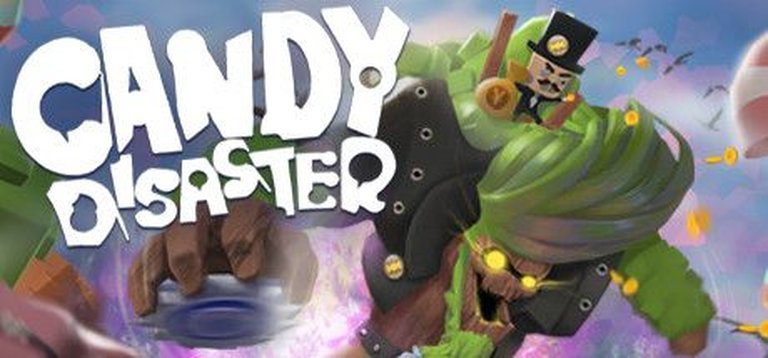
Candy Disaster is a 3D strategy tower defense game where players assist the mad scientist Jick in recovering the M89KD energy candies scattered across various planets. The game features a fantasy setting with diverse environments, including forests, deserts, and ice worlds. Players must strategically place traps and use the terrain to their advantage to defend the candies against alien creatures. The game offers a variety of traps that can be combined to create powerful chain reactions, adding depth to the gameplay. Candy Disaster is developed by ACE Entertainment LLC and published by Erabit Studios, and it was released on November 12, 2021.
Gameplay Videos
Where to Buy Candy Disaster
PC
Candy Disaster Free Download
Candy Disaster Cracks & Fixes
Candy Disaster Patches & Updates
Candy Disaster Guides & Walkthroughs
Candy Disaster: A Sugar-Coated Trap Symphony in the Tower Defense Pantheon
Introduction
In an era where tower defense games oscillate between minimalist mobile fare and grimdark RTS hybrids, Candy Disaster (2021) carves out a niche as a whimsical, physics-driven playground of cartoon carnage. Developed by ACE Entertainment and published by Erabit Studios, this 3D trap-defense title asks a deliciously absurd question: What if Wile E. Coyote designed a Home Alone-style gauntlet to protect sentient candy from alien thieves? While not without flaws, the game’s Frankensteined charm—a fusion of Orcs Must Die!’s environmental traps and Plants vs. Zombies’ irreverence—offers a potent thesis: strategy games need not take themselves seriously to demand tactical depth.
Development History & Context
The Indie Alchemists at ACE Entertainment
ACE Entertainment, a studio with no prior flagship titles, bet heavily on Candy Disaster as a passion project. Reddit devlogs reveal a four-year gestation (2019–2023), with early prototypes leaning into 2D grid-based defense before pivoting to Unity-engine-powered 3D chaos. The shift allowed for dynamic physics interactions—arrows ricocheting off fans, enemies catapulted into lakes—that became the game’s signature.
A Crowded Market, a Sweet Spot
Launched in 2021 amidst a tower defense resurgence (Bloons TD 6, The Riftbreaker), Candy Disaster sidestepped direct competition by embracing slapstick over seriousness. Its $13.99 price point and modest specs (2GHz Dual Core, 2GB RAM) targeted casual PC gamers, while Steam Early Access (January 2021–November 2021) let ACE refine difficulty curves based on player feedback.
Narrative & Thematic Deep Dive
Mad Science with a Side of Dad Jokes
The plot is wafer-thin: players assist Jick, a manic “genius” scientist voiced with excessive glee, in reclaiming M89KD energy candies stolen by interstellar raccoon-like aliens. Dialogues drip with puns (“Let’s turn these goons into smoothies!”), and environmental logs paint the candy as quasi-mystical MacGuffins.
Thematic Layers: Sugar-Coated Darwinism
Beneath the candyland veneer lies a subtle critique of consumerism—the aliens’ relentless candy lust mirrors our own sugar addiction. Yet the game never lectures; it revels in cartoonish excess, making its themes digestible (pun intended).
Gameplay Mechanics & Systems
The Trap Combinatorics
Candy Disaster’s brilliance lies in its systemic interplay:
– Elemental Synergies: Flame grills ignite wood arrows; poison gas clouds transform them into venomous projectiles.
– Physics-Driven Chaos: Fans alter projectile trajectories, while springboards launch enemies into insta-kill zones.
– Tiered Experimentation: Early levels teach basics (e.g., spike traps), while later stages demand Rube Goldberg-esque sequences (e.g., cannon-loaded goons colliding mid-air).
Terrain as Tactical Canvas
Each biome—forest, desert, ice world—introduces terrain-specific hazards. Desert quicksand slows enemies, letting players layer fire traps for prolonged damage. Ice worlds, meanwhile, demand careful trap placement to avoid slippage misfires.
Enemy Ecology: 46 Flavors of Mayhem
Enemy design shines:
– Swarmers: Cheap, numerous, vulnerable to area-of-effect traps.
– Tanks: Armored brutes requiring freeze traps to enable damage.
– Flyers: Bypass ground traps, demanding precision-guided arrows.
Each type forces players to adapt their “trap loadouts,” though late-game levels occasionally over-index on bullet-sponge hordes.
UI & Progression: A Double-Edged Lollipop
The clean UI highlights trap ranges and combo potentials, but the progression system falters. Unlocking traps via linear campaign milestones feels restrictive—a sandbox mode could have empowered creative play.
World-Building, Art & Sound
Aesthetic: DreamWorks Meets Dr. Seuss
The art style merges Pixar-level polish with absurdist flair: candy forests burst with neon foliage, while alien designs evoke Minions crossbred with Gremlins. Particle effects sell the chaos—poison clouds billow cartoonishly, and explosions shower glitter.
Sound Design: Looney Tunes Logic
Voicelines skew grating (Jick’s fourth-wall-breaking quicks grow stale), but the soundscape excels elsewhere: arrows thunk satisfyingly into targets, and trap activations sync with jazzy percussion stings. The OST, a mashup of electro-swing and klezmer, echoes Untitled Goose Game’s mischievous vibe.
Reception & Legacy
Launch Window: A Sugar Rush of Praise
With an 81% “Very Positive” Steam rating (246 reviews), players lauded the trap creativity and humor, though some critiqued repetitive late-game pacing. Metacritic and MobyGames lack critic scores, reinforcing its niche status.
The Ripple Effect
While no genre revolution, Candy Disaster influenced indie hybrids like Loop Hero and Meet Your Maker, proving that physics-driven systems and humor can coexist with strategic depth. ACE’s post-launch support—adding leaderboards and pirate-themed loot—showed commitment, though a sequel seems unlikely.
Conclusion
Candy Disaster is the gaming equivalent of a meticulously crafted Jenga tower: teetering on the edge of chaos yet delivering joy in every collapsing piece. It stumbles in pacing and progression, but its core—a playground of trap-driven creativity—remains irresistible. For tower defense aficionados seeking levity, it’s a cult classic in the making; for others, a sugary snack best enjoyed in bites.
Final Verdict: A flawed but fiercely original entry in the tower defense canon—8/10, with a side of cavity-inducing charm.