
- Release Year: 2006
- Platforms: iPhone, Windows
- Publisher: Twin Bottles
- Developer: Twin Bottles
- Genre: Action
- Perspective: Side view
- Game Mode: Single-player
- Gameplay: Beat ’em up, Boss battles, Platformer, Shooting, Side-scrolling
- Setting: Sci-fi
- Average Score: 85/100
Description
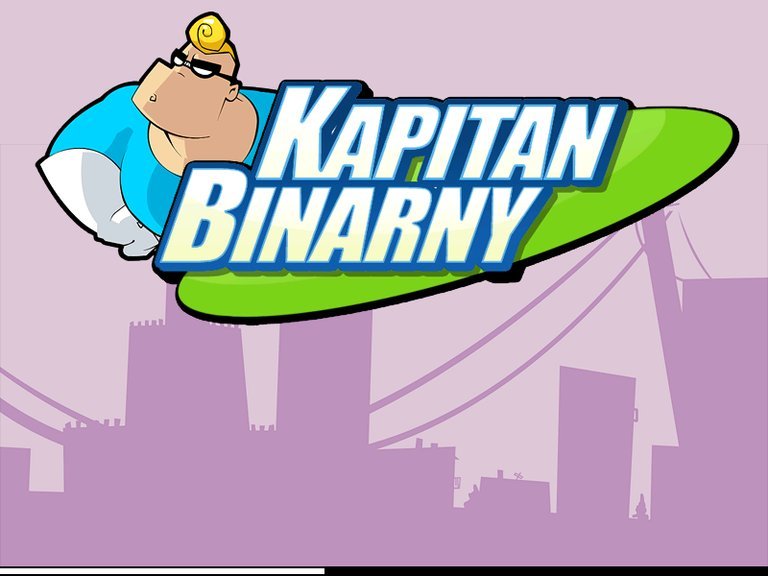
Captain Binary is a Polish-developed side-scrolling action game where players control a superhero fighting an alien invasion, moving continuously to the right while shooting waves of enemies, jumping on buildings to dodge fire or collect weapons, and battling bosses at the end of each level. The hero starts with a weak pistol but can find more powerful weapons with limited ammo and grenades, though losing a life results in the loss of any equipped weapon. Created by students of the Polish-Japanese Institute of Information Technology, the game features classic beat ’em up mechanics.
Captain Binary Free Download
Captain Binary Reviews & Reception
mobygames.com (85/100): Overall shoddy execution
curlysworld.com : Superb, but very difficult shooter with great graphics.
mobygames.com (85/100): Overall shoddy execution
Captain Binary: Review
Introduction
In the pantheon of freeware gaming artifacts, few titles embody the spirit of ambitious, unpolished student development quite like Captain Binary. Released in 2006 by the Polish studio Twin Bottles—a collective of students from the Polish-Japanese Institute of Information Technology—this side-scrolling action game emerged as a curious fusion of superhero tropes, alien invasions, and raw coding passion. Yet, Captain Binary is far more than a mere footnote; it’s a study in stark contrasts. On one hand, it boasts striking comic-book visuals and a commendable musical score; on the other, it’s plagued by crippling technical flaws, punitive difficulty, and narrative thinness. This review delves into the game’s development, dissect its mechanics, and evaluate its legacy, arguing that Captain Binary stands as a quintessential example of how ambition and execution can diverge spectacularly—a cult curiosity that resonates more for its quirks than its gameplay.
Development History & Context
Captain Binary was born from the academic crucible of the Polish-Japanese Institute of Information Technology, where a six-person student team—led by programmers Konstanty Kalicki and Filip Starzyński—sought to craft a freeware action experience. Their vision was clear: emulate the frenetic energy of arcade classics like Double Dragon and the stylish chaos of contemporary hits such as Alien Hominid and Metal Slug. Released in 2006 as a 42MB Windows download (later ported to iPhone in 2009), the game operated within the constraints of limited resources and a student timeline. The developers openly displayed their institutional pride, embedding the Polish-Japanese Institute’s logo in the opening credits and even featuring a campus building in the first level.
The 2000s indie landscape was a fertile ground for such projects. Freeware platforms like Curly’s World of Freware and indie gaming blogs fostered communities where raw creativity could flourish, alongside commercial successes like Alien Hominid (2004) that proved smaller studios could compete. However, Captain Binary arrived without polish: no difficulty settings, no gamepad support, and a reliance on readme files for control instructions—a stark reminder of its academic origins. The team’s pride in their work is palpable, yet it underscores the game’s central tension: enthusiasm without mastery.
Narrative & Thematic Deep Dive
The plot of Captain Binary is gloriously straightforward, serving as a satirical springboard for action. Earth faces an alien invasion, but Superman is “too busy doing next movie about himself,” leaving salvation to the titular hero—a blue-clad, pixelated superhero armed with a pistol. The narrative unfolds through minimal text in the intro, where the protagonist’s name and mission are established. Dialogue is nonexistent beyond the readme’s fragmented English (“its good idea to play agressively”), which, coupled with the Gothic font in credits, adds unintentional humor.
Characters are archetypal: Captain Binary is a blank-slate hero, while aliens are faceless foes wielding lasers and machine guns. The core theme is heroism subverted by satire—Captain Binary’s necessity highlights the absurdity of superhero tropes. The Polish-Japanese Institute’s cameo adds a meta-layer, framing the game as a student’s earnest attempt to “save the day” through coding. Yet, this pride feels ironic; the narrative’s thinness mirrors the gameplay’s lack of depth, reducing the alien invasion backdrop to a mere obstacle course.
Gameplay Mechanics & Systems
Captain Binary’s core loop is deceptively simple: move right, shoot aliens, jump on buildings, and survive. Players control Captain Binary with arrow keys, using CTRL (or E) to shoot and SHIFT (or W) for grenades. The protagonist starts with a weak pistol but can upgrade to more powerful weapons like tommy guns or lasers—each with limited ammo. Grenades are also scarce, forcing resourceful play. Lives are plentiful, but each death costs a weapon, adding risk to aggressive playstyles. Bosses cap each of the three levels, though their mechanics remain underexplored.
The system reveals fundamental flaws. Controls are clunky, with diagonal aiming impractical and no ducking option—forcing players to jump constantly to dodge projectiles. Enemy placement is punitive: aliens spawn off-screen, guaranteeing instant kills if Captain Binary lingers near screen edges. The most glaring issue is flickering: dying enemies and respawning Captain Binary strobe violently, inducing migraines. As one player lamented, “Survival isn’t an easy thing; with everything flickering, tons of projectiles… you’ll find the good Captain dying quickly and then resuming his post-mortem flickering.” These issues are compounded by the absence of an in-game help menu, relegate controls to a readme—a barrier to accessibility.
World-Building, Art & Sound
Captain Binary excels in visual design, embodying a vibrant comic-book aesthetic. Environments feature detailed, cartoonish buildings with interactive elements, like platforms for dodging fire or collecting weapons. Aliens are diverse—armored troopers, flying saucers, laser-wielding foes—each rendered with exaggerated, chunky sprites. The hero’s blue suit and heroic stance evoke classic superhero tropes, while the Gothic font in credits adds a playful, if jarring, contrast. This artistry is consistently praised: one review lauded “surperb” graphics, noting they “don’t have to hide behind hundreds of commercial games.” The first level’s nod to the Polish-Japanese Institute grounds the fantastical invasion in a tangible locale, enhancing immersion.
Sound design, however, is mixed. The musical score is a standout, with upbeat, retro-inspired tracks that elevate the action. One player called it “quite nice,” while Polish critics highlighted its quality. Sound effects—from weapon fire to explosions—are competent but unspectacular. The audio-visual harmony creates an atmosphere of chaotic fun, yet it cannot compensate for gameplay failures. The flickering graphics, meanwhile, sabotage immersion, turning scenes into disorienting strobe lights.
Reception & Legacy
At launch, Captain Binary received a bifurcated reception. Critics in Poland embraced it, awarding an 85% average (90% from PlnéHry.cz, 80% from VictoryGames.pl). Reviews praised its graphics, humor, and addictive loops, with one calling it “vysoce návykovým dílkem” (highly addictive). Internationally, however, the response was harsh. The lone English player review (2.2/5) condemned its “terrible English,” “shoddy execution,” and “unplayable flickering.” Forums like Curly’s World echoed these sentiments, noting its difficulty “on par with Doom II on nightmare.”
Over time, Captain Binary evolved into a cult curiosity. Its reputation shifted from a polished freeware gem to a cautionary tale of ambition over polish. Players debated its merits: some celebrated its challenge as “a must for hardcore gamers,” while others dismissed it as “unfair.” The developers moved on to more refined projects like Book of Demons (2017), but Captain Binary remains their most infamous work. It influenced the freeware scene by highlighting the risks of student development and left a legacy as a meme-worthy example of “so bad it’s good” gaming.
Conclusion
Captain Binary is a paradox—a game that captivates with its visual flair and music yet repels with its punishing mechanics. It stands as a testament to the passion of student developers, who poured creativity into a project constrained by time and technical expertise. While its comic-book art and catchy score are undeniable strengths, they are overshadowed by flickering visuals, unfair design, and a complete lack of accessibility.
In the annals of gaming history, Captain Binary occupies a unique niche. It is not a forgotten masterpiece but a fascinating artifact, a relic of 2000s freeware culture that encapsulates both the promise and peril of indie development. For players seeking a masochistic challenge, it offers fleeting thrills; for historians, it provides a window into unbridled ambition. Ultimately, Captain Binary earns its place not as a great game, but as a great conversation piece—a reminder that even the most flawed creations can leave an indelible mark on those willing to endure their flickering chaos.