
- Release Year: 2018
- Platforms: Windows
- Publisher: Dead Inside Studio
- Developer: Dead Inside Studio
- Genre: Adventure
- Perspective: Diagonal-down
- Game Mode: Single-player
- Gameplay: Graphic adventure, Puzzle elements
- Setting: Horror
- Average Score: 92/100
Description
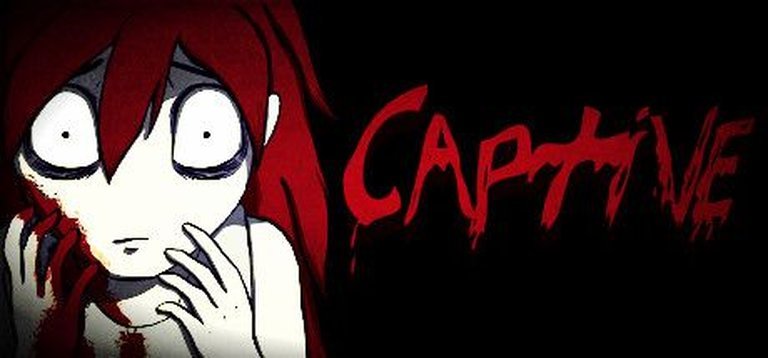
Captive is a horror graphic adventure game built in RPG Maker, featuring diagonal-down perspective, puzzle elements, and direct control gameplay. Players explore a chilling narrative of mystery and dread, embodying a character plagued by memory loss amid gruesome murders and dismemberments, culminating in a controversial confrontation in the woods where dark truths about the protagonist’s past as a potential killer are revealed.
Where to Buy Captive
PC
Captive Guides & Walkthroughs
Captive Reviews & Reception
store.steampowered.com (92/100): A simple, yet fun horror game you have to finish in under half an hour accompanied by a fitting and mysterious soundtrack.
steambase.io (92/100): Very Positive with a Player Score of 92/100.
Captive: Review
Introduction
Imagine waking up in a dimly lit cell, blood pooling beneath you, with no inkling of who you are or how you got there—the heartbeat of classic horror gaming pulses through Captive‘s veins from its very first frame. Released in 2018 by the indie outfit Dead Inside Studio, this bite-sized RPG Maker horror adventure distills the essence of escape-room tension and psychological dread into a frantic 30-minute sprint. As a game journalist with a penchant for unearthing overlooked gems from the indie archives, I’ve revisited Captive amid its quiet cult following on Steam, where it boasts a “Very Positive” 92% approval rating from 83 reviews. My thesis: Captive is a masterclass in concise horror design, proving that brevity can amplify terror more effectively than sprawling epics, cementing its place as an underappreciated artifact of the late-2010s RPG Maker renaissance.
Development History & Context
Dead Inside Studio, a small Brazilian indie team led by visionary Igor Zanetti, birthed Captive in 2018 against the backdrop of a booming RPG Maker scene. Zanetti wore multiple hats—writing, design, development, and even contributing to pixel art—transforming what began as a passion project into a polished release. The core team was lean: pixel artists Glauber Campos and Uriel Gonzaga handled animations, while Darby Machin (as Vexed Enigma) provided tilesets and fonts, and musicians Michael Dorsett (MDP), Scythus, and Thales Grasso scored the eerie soundscape. A whopping list of RPG Maker MV plugins from luminaries like Yanfly, Moghunter, and others (Yanfly alone credited on 129+ games) underscores the era’s plugin ecosystem, enabling sophisticated mechanics on modest hardware.
Launched on April 8, 2018, via Steam for a paltry $1.99, Captive emerged in a post-Undertale world where RPG Maker titles like Yume Nikki and Ib had elevated pixel-horror to mainstream curiosity. The 2010s indie landscape favored short, replayable experiences amid mobile gaming’s rise and AAA bloat—think Celeste‘s precision platforming or Doki Doki Literature Club‘s meta twists. Technological constraints? RPG Maker MV’s limits fostered creativity: diagonal-down perspective, direct control, and lightweight assets kept it running on Intel Core 2 Duo rigs with 2GB RAM. Yet, ambition shone through permadeath and multiple endings, teased by developer “The Professor” in Steam forums, who responded to feedback with updates expanding content despite solo-dev strains. This context positions Captive as a testament to grassroots ingenuity, dodging the 1990 Captive (a sci-fi sim) naming overlap to carve its niche.
Narrative & Thematic Deep Dive
Plot Unraveled: Amnesia and Ambiguous Guilt
Captive‘s narrative is a taut psychological thriller, unfolding through fragmented clues in a gore-soaked dungeon. You embody an unnamed woman—let’s call her “Protagonist”—who awakens shackled in a cell, gravely wounded and hemorrhaging. Memory loss is absolute: no name, no past, just a ticking clock as blood loss mounts. Escape demands puzzle-solving amid lurking threats, with environmental storytelling via notes, corpses, and hallucinatory “Bad Trip” sequences revealing flashes of brutality—chopped bodies, surgical tools, a sinister lab vibe.
The plot crescendos in ambiguity. Steam discussions erupt over the finale: emerging bloodied into woods, Protagonist confronts a cop and a mysterious girl (“Red” or “Blonde”). Accusations fly—is Protagonist the killer, her memories suppressed by trauma or drugs? One path sees the cop gun her down on the girl’s word, unarmed and desperate, sparking debates on police overreach (“BOI! That cop was bad at his job!”). Developer hints confirm multiple endings, including “bad” ones, with planned expansions for epilogues (cop charged?) and alternates (Blonde as killer, evil smiles, post-credits experiments). Permadeath enforces replayability, each run peeling layers: was the needle a sedative or hallucinogen? Woods escape hints at a larger conspiracy—experimentation? Serial murders?
Characters: Shadows of Doubt
Protagonist is a cipher, her silence amplifying vulnerability; player choices humanize her through desperation. Antagonists blur: jumpscare “two guys” (perhaps guards), the accusing girl (victim or manipulator?), and the cop (justice or trigger-happy?). No dialogue-heavy cast—narrative thrives on implication, evoking Silent Hill‘s introspection.
Themes: Identity, Survival, and Moral Grayness
At its core, Captive probes identity’s fragility amid survival horror. Bleeding mechanics literalize existential drain—amnesia as metaphor for guilt repression. Gore underscores human monstrosity: are you victim or perpetrator? Themes echo SOMA‘s selfhood crises or Resident Evil‘s viral paranoia, but compressed. Multiple endings philosophize free will vs. fate, with forum theories (Protagonist’s crowbar mistaken for threat?) critiquing snap judgments. It’s a grim meditation on unreliable narration, rewarding paranoia.
Gameplay Mechanics & Systems
Core Loop: Puzzles Under Pressure
Direct-control top-down movement (arrow keys/mouse) drives an escape-room core: search cells for keys, needles (staunch bleeding), crowbars; combine items intuitively. Bleeding HUD ticks down health—ignore it, permadeath resets. Loops blend urgency (dodge threats) with cognition: orange doors, out-of-reach holes, “big key” puzzles demand backtracking.
Survival and Progression
No traditional leveling; progression is inventory-based. Needle injects temporary relief but risks “Bad Trip” hallucinations (clues or red herrings?). Jumpscares from “two guys” feel cheap initially but tie to mechanics (needle side-effects?). Achievements (13 total, per Steam) guide replays: “Pochi” (hidden dog?), “Pain,” full escapes. UI is minimalist—RPG Maker clean, with interaction prompts—but bugs (crashy orange doors, Tab muting music) plagued early versions, patched via dev responsiveness.
Innovations and Flaws
Permadeath elevates stakes, forcing speedruns; multiple endings add narrative branches. Flaws? Short length (~30 mins) risks shallowness, controls laggy on 32-bit (post-update issue), jumpscares player-focused over diegetic. Yet, bleeding timer innovates survival horror, blending Outlast‘s vulnerability with The Room‘s puzzles—flawed but fresh.
World-Building, Art & Sound
Setting and Atmosphere
A labyrinthine dungeon—cells, labs, woods finale—evokes Saw traps meets pixelated asylum. Diagonal-down view enhances claustrophobia; gore (dismembered limbs, blood trails) builds visceral dread without excess.
Visual Direction
Original pixel art shines: crisp sprites by Zanetti/Campos/Gonzaga, Vexed Enigma tilesets craft moody palettes (crimson reds, shadowy blues). Animations fluid for RPG Maker—staggers from wounds feel weighted. Atmosphere peaks in hallucinatory warps, fog-shrouded woods.
Sound Design
Thales Grasso et al.’s OST—eerie synths, dissonant stings—mirrors tension, swelling during bleeds. SFX (drips, screams) amplify isolation; no voice acting preserves mystery. Collectively, they forge immersion, turning pixel simplicity into nightmare fuel.
Reception & Legacy
At launch, Captive flew under radar—no Metacritic score, MobyGames lacks reviews (despite 309k+ games cataloged). Steam’s 92% positive (115 total, 106 thumbs-up) praises brevity (“perfect break-game”), puzzles, story (3rd Strike: 9/10). Criticisms: abrupt ending, cheap scares, bugs. Dev engagement—newsfeed updates, alternate endings promised—fostered loyalty; forums buzz with theories, guides (walkthroughs, achievements).
Commercially modest (collected by 2 on MobyGames), its legacy endures in RPG Maker horror: influences short-form indies like Ib sequels or Escape the Ayuwoki. No direct successors, but embodies 2018’s plugin-driven boom (Yanfly’s ubiquity). Evolving rep: from “ehhh” endings to cult replay fodder, it highlights indie’s power—low barrier, high heart.
Conclusion
Captive masterfully condenses horror’s primal fears—loss, pursuit, doubt—into a permadeath puzzle sprint, flaws like bugs and brevity notwithstanding. Igor Zanetti’s vision, bolstered by a collaborative credits roll, births a gem rewarding multiple plays for its branching truths. In video game history, it claims a niche as the ultimate “quick horror fix,” akin to P.T.‘s demo legend but accessible eternally. Verdict: Essential for pixel-horror aficionados; 8.5/10—a captive worth setting free in your library. Play it, bleed out, uncover the truth, repeat.