
- Release Year: 2019
- Platforms: Windows
- Publisher: MyDreamForever
- Developer: MyDreamForever
- Genre: Role-playing (RPG), Strategy, Tactics
- Perspective: 1st-person
- Game Mode: Single-player
- Gameplay: Cards, Point and select, RPG elements, Tiles, Turn-based strategy (TBS)
- Setting: Fantasy
- Average Score: 68/100
Description
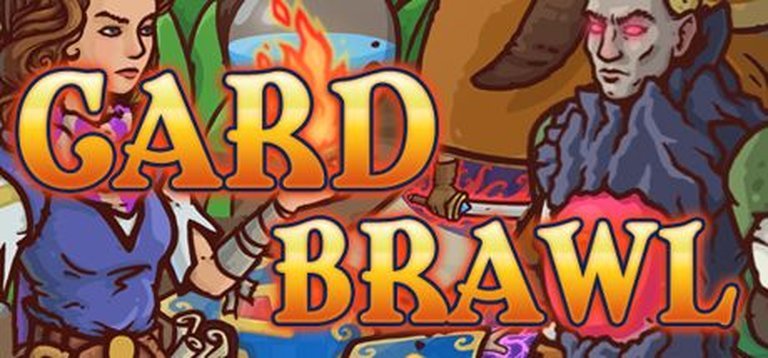
Card Brawl is a fantasy-themed deckbuilding game that blends card-based strategy with roguelike elements. Players choose from four unique starting decks or build one from scratch, crafting powerful card combinations to battle monsters and bosses in turn-based combat. The game features varied raids of increasing difficulty, requiring adaptive strategies to exploit enemy weaknesses, all set against a backdrop of charming 2D visuals and a relaxing soundtrack.
Where to Buy Card Brawl
PC
Card Brawl Patches & Updates
Card Brawl Guides & Walkthroughs
Card Brawl Reviews & Reception
steambase.io (69/100): Card Brawl has earned a Player Score of 69 / 100.
store.steampowered.com (66/100): All Reviews: Mixed (66% of 27)
steamcommunity.com : Less spectacular than Solitaire on Windows 95
datahumble.com (69/100): Card Brawl has a Steam rating of 68.97%.
stmstat.com (68/100): Card Brawl has garnered a total of 28 reviews, with 19 positive reviews and 9 negative reviews, resulting in a ‘Mixed’ overall score.
Card Brawl: A Flawed but Fascinating Experiment in Deckbuilding
Introduction: The Promise and Pitfalls of a Budget Roguelike
Card Brawl (2019) is a curious artifact in the deckbuilding roguelike genre—a game that, on paper, should have been a modest success but instead became a cautionary tale about the dangers of underdevelopment. Released in the shadow of Slay the Spire (2017), it attempted to carve out its own niche by blending turn-based card combat with fantasy-themed monster hunting. Yet, despite its charming pixel-art aesthetic and low price point ($1.99), it failed to resonate with critics and players alike, earning a “Mixed” reception on Steam (66% positive from 27 reviews).
This review dissects Card Brawl in exhaustive detail, examining its development, mechanics, narrative (or lack thereof), and legacy. Was it a diamond in the rough, or a half-baked imitation of greater games? Let’s find out.
Development History & Context: A Game Born in the Wrong Era
The Studio Behind the Cards: MyDreamForever and Nehaew
Card Brawl was developed by MyDreamForever (a small indie studio) and Nehaew, with publishing handled by the same entity. Little is known about the team’s background, but their use of GameMaker suggests a modest budget and a focus on accessibility over technical ambition. The game’s Steam page lists it as a “mix of card games and roguelikes,” a description that, while accurate, undersells its aspirations.
The Post-Slay the Spire Landscape
2019 was a pivotal year for deckbuilding games. Slay the Spire had already redefined the genre, and competitors like Monster Slayers (2017) and Dream Quest (2014) had set high standards for depth and replayability. Card Brawl entered this crowded space with a fantasy monster-hunting premise, but its execution lacked the polish and innovation of its peers.
Technological Constraints and Design Philosophy
Built in GameMaker, Card Brawl was constrained by its engine’s limitations. The game features:
– 2D scrolling with fixed/flip-screen perspectives
– Turn-based combat with a point-and-select interface
– A lack of save functionality (a baffling omission in 2019)
The developers likely prioritized quick iteration over refinement, resulting in a game that feels unfinished—a sentiment echoed in player reviews.
Narrative & Thematic Deep Dive: A World Without Story
The Absence of Plot and Character
Card Brawl is, at its core, a mechanics-first experience. There is:
– No protagonist (your avatar is nameless)
– No overarching narrative (just a series of raids)
– No dialogue or lore (enemies are generic fantasy tropes)
The closest thing to a story is the “Great Hunt”—a final raid against the Dark Paladin, who has “imposed infection on these lands.” But this is merely window dressing; the game offers no context for why you’re fighting or what’s at stake.
Themes: Survival and Adaptation
If Card Brawl has a thematic throughline, it’s resource management under pressure. Every decision—whether to buy a new card, heal, or upgrade max HP—carries weight because progress is lost on death. This creates a tense, if repetitive, loop that some players found engaging despite the lack of narrative depth.
Gameplay Mechanics & Systems: A Study in Simplicity
Core Gameplay Loop: Raids, Cards, and Combat
Card Brawl structures its gameplay around raids—sequences of battles with escalating difficulty. Each raid consists of:
1. Choosing a starting deck (or building one from scratch)
2. Fighting monsters (each with unique behaviors)
3. Earning gold to purchase upgrades between battles
Deckbuilding: Limited but Functional
- Four pre-built decks (with an option for a custom empty deck)
- Cards fall into three categories:
- Attack (direct damage, debuffs)
- Armor (defensive buffs)
- Boost (temporary stat increases)
The system is easy to grasp but lacks depth. Unlike Slay the Spire, there are no synergies between cards—just basic arithmetic (e.g., “deal 5 damage” or “gain 3 armor”).
Combat: Turn-Based with a Mana System
- Mana regenerates each turn (capped at 10)
- No card draw mechanics (a major flaw—players often run out of cards)
- Enemies have predictable but punishing patterns (e.g., goblins backstabbing through armor)
Flaws in Design: The Missing Reshuffle and Other Oversights
One of the most glaring issues is the lack of a reshuffle mechanic. Once your deck is exhausted, you’re stuck with a single 6-damage card—a design choice that frustrates players and breaks the game’s flow.
Other criticisms include:
– No save system (progress is lost if you quit mid-raid)
– Poorly explained mechanics (e.g., “poison” vs. “burn” effects)
– Over-reliance on RNG (bad card draws can doom a run)
World-Building, Art & Sound: Aesthetic Charm vs. Functional Flaws
Visual Design: Pixel-Art with Personality
Card Brawl’s bright, cartoonish pixel-art is its strongest asset. The monsters (goblins, mushrooms, werewolves) are colorful and expressive, though animations are stiff and repetitive.
Sound Design: A Relaxing but Repetitive Soundtrack
- Acoustic guitar melodies create a calm atmosphere
- Sound effects are functional but unremarkable
- The music loops endlessly, becoming grating over time
Atmosphere: A Missed Opportunity
The game’s fantasy setting is underutilized. There’s no world map, NPCs, or environmental storytelling—just a series of abstract battles.
Reception & Legacy: A Game That Could Have Been More
Critical and Commercial Reception
- Steam Reviews: 66% positive (27 reviews)
- Player Score (Steambase): 69/100 (“Mixed”)
- Common Praise:
- “Easy to learn”
- “Charming art style”
- “Cheap and accessible”
- Common Criticisms:
- “Too simplistic”
- “Lacks depth”
- “Repetitive and frustrating”
Legacy: A Footnote in Deckbuilding History
Card Brawl is not remembered as a classic, but it serves as a case study in how small design oversights (like missing a reshuffle mechanic) can sink an otherwise decent game. It remains a cult curiosity—a game that could have been great with just a little more polish.
Conclusion: A Flawed Gem Worth a Look (But Not Much More)
Card Brawl is not a bad game, but it’s far from great. Its charming art, low price, and simple mechanics make it an easy recommendation for casual players, but hardcore deckbuilding fans will find it shallow and frustrating.
Final Verdict: 6/10 – “A Budget Slay the Spire with Potential”
- Pros: Charming visuals, easy to learn, cheap.
- Cons: Lack of depth, no save system, repetitive.
If you’re curious about deckbuilders and want something lightweight, Card Brawl is worth a try. But if you’re looking for strategic depth, you’re better off playing Slay the Spire or Monster Train.
Final Thought: Card Brawl is like a rough sketch of a masterpiece—it has the right ideas, but the execution is too barebones to leave a lasting impact.