
- Release Year: 1995
- Platforms: Windows 16-bit, Windows
- Publisher: Expert Software, Inc.
- Developer: Blue Rock Ranch, Inc.
- Genre: Gambling, Strategy, Tactics
- Perspective: Top-down
- Game Mode: Single-player
- Gameplay: Cards, Tiles, Turn-based
- Average Score: 40/100
Description
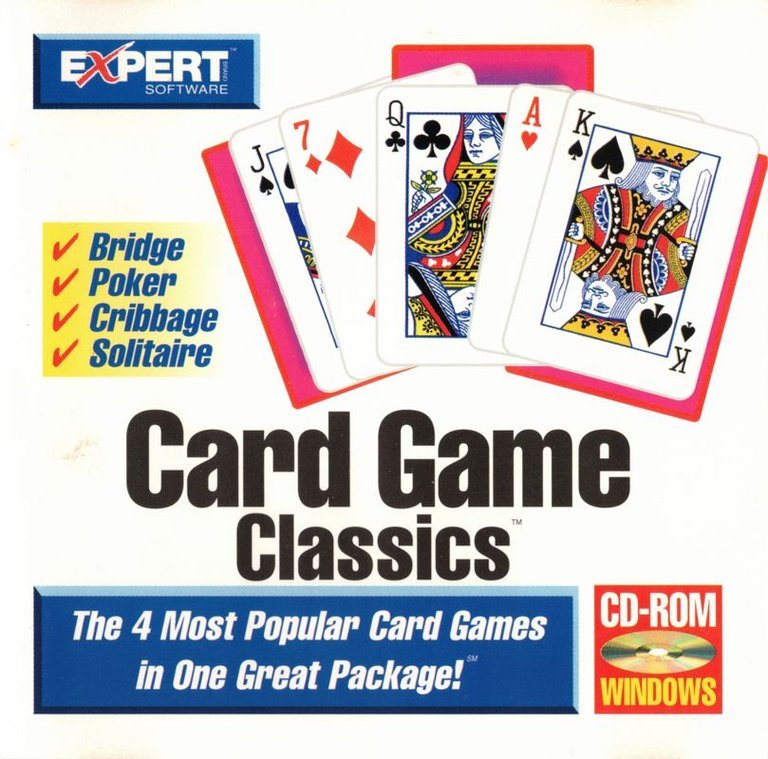
Card Game Classics, released in 1995 for Windows, is a comprehensive collection of classic card games featuring four families: Poker variants like Five Card Draw, Five Card Stud, and Seven Card Stud; Solitaire games including Klondike, Pyramid, and Canfield; Cribbage with Six Card Cribbage and Losing Crib; and Contract Bridge. Players enjoy a top-down, turn-based experience with point-and-click controls, customizable table colors and card backs, save/load functionality, and adjustable computer opponents, all supporting solo human play against AI.
Card Game Classics: Review
Introduction
In the mid-1990s, as Windows PCs began transitioning from niche productivity tools to gaming powerhouses, Card Game Classics emerged as a humble yet ambitious digital tribute to timeless parlor pursuits. Released in 1995 by the obscure developer Blue Rock Ranch, Inc., and published by Expert Software, Inc., this compilation bundled four venerable card game families—Poker, Solitaire, Cribbage, and Bridge—into a single, accessible package for Windows (both 16-bit and 32-bit variants). Amid a gaming landscape dominated by groundbreaking 3D adventures like Quake and real-time strategy epics like Warcraft II, Card Game Classics carved out a niche for turn-based strategy and gambling simulations, appealing to an older demographic craving virtual renditions of felt-top tables and shuffling decks. My thesis: While technically proficient for its era and a commendable effort at digitizing tradition, the game’s rudimentary AI, lack of multiplayer depth, and visual austerity prevent it from transcending its status as a utilitarian curiosity, though it holds value as a historical artifact in the evolution of digital board and card games.
Development History & Context
Blue Rock Ranch, Inc., a small-scale developer with scant historical footprint beyond this title, crafted Card Game Classics during a pivotal moment in PC gaming. The year 1995 marked Windows 95’s late-summer debut, ushering in Plug and Play ease and DirectX foundations, but Card Game Classics targeted the lingering Windows 3.1 ecosystem (16-bit version) and early 32-bit Windows, relying on point-and-click interfaces without leveraging emerging 3D acceleration. Expert Software, Inc., known for budget-friendly edutainment and utilities, positioned this as an “evergreen” product—timeless games unbound by hardware escalation.
The creators’ vision appears straightforward: faithfully replicate analog card play in software, emphasizing accessibility over innovation. Technological constraints were pronounced—no hardware acceleration meant fixed top-down visuals with flip-screen card reveals, and CPU limitations restricted AI sophistication. Sound design likely leaned on basic MIDI or WAV files, if any, given the era’s modest audio capabilities on non-Sound Blaster setups.
The broader gaming landscape was explosive yet stratified. While CCGs like Magic: The Gathering expansions (Ice Age) and newcomers (Star Wars Customizable Card Game, Legend of the Five Rings) ignited collectible fervor, traditional card sims were rare. Consoles hosted fighters (ClayFighter 2) and adventures (Fade to Black), but PC thrived on simulations. Card Game Classics filled a void left by arcade ports and early shareware, predating polished collections like 2001’s Card Games Classics. Its development reflects indie pragmatism: repurpose public-domain rulesets into a save/load-enabled suite, adjustable for solo players against AI bots.
Narrative & Thematic Deep Dive
Card Game Classics eschews narrative entirely, embodying a pure mechanical ethos where “story” emerges from procedural gameplay rather than scripted drama. There are no characters, dialogue, or plot—merely archetypes: the solitary Solitaire player, the bluffing Poker shark, the scoring Cribbage tactician, and the bidding Bridge partnership (simulated via AI). This absence underscores its thematic core: the timeless tension of chance versus skill, a microcosm of human gambling psychology.
Poker variants (Five Card Draw, Five Card Stud, Seven Card Stud) evoke high-stakes deception, though sans real cash or bluffing AI, themes of risk feel neutered. Solitaire (Klondike, Pyramid, Canfield) delves into introspective puzzle-solving, symbolizing patience amid entropy—Pyramid’s triangular discards mirroring life’s layered obstacles. Cribbage (Six Card Cribbage, Losing Crib) highlights combinatorial strategy and pegboard progression, thematizing accumulation and setback. Bridge (Contract Bridge) stands as the intellectual pinnacle, demanding partnership logic, but its “unintelligent” AI (per critics) flattens cooperative intrigue.
Underlying motifs draw from 19th-century origins: Poker’s Wild West grit, Solitaire’s Victorian solitude, Cribbage’s English pub camaraderie, Bridge’s elite auctioneering. In 1995’s context—amid CCG lore explosions (Middle-earth Collectible Card Game)—this narrative vacuum is both strength (pure play) and flaw (no emotional hook). Themes of customization as agency shine through table color swaps and card back selections, letting players imprint personality on sterile digital felts.
Gameplay Mechanics & Systems
At its heart, Card Game Classics is a turn-based card sim with point-and-select controls, structured around four robust families. Core loops are faithful adaptations: draw/discards in Poker, stock/talon maneuvers in Solitaire, pegging/hand-scoring in Cribbage, and bid/trump/lead cycles in Bridge.
Poker offers adjustable opponent counts (1-3 AI), with variants emphasizing different reveals—Draw for swaps, Stud for incremental opens. Flaws emerge in AI’s inability to bluff, rendering pots predictable and “piles of cash” joyless, as noted in contemporary reviews.
Solitaire shines in variety: Klondike’s cascading builds, Pyramid’s pair-sum clears (to 13), Canfield’s stock-limited redeals. No timers enforce relaxed pacing, with save/load mitigating frustration.
Cribbage innovates “Losing Crib” (misplay penalties), deepening Six Card norms. Pegboard visuals track 121-point races, adjustable AI scaling difficulty via opponent smarts.
Bridge simulates full contracts but falters on conventions (e.g., no Stayman bids), with solo human vs. AI partners/opponents feeling lopsided.
UI is era-typical: crisp card art on fixed screens, mouse-hover highlights, intuitive menus for backs/tables (greens, woods, leathers implied). Save/load is a standout, rare for 1995 non-RPGs. Progression lacks levels/stats—mastery via muscle memory. Innovations: opponent scaling; flaws: no tutorials, hotseat multiplayer, or voiceovers. Pacing suits casual dips, but repetition exposes AI shallowness.
| Game Family | Variants | Key Mechanics | Strengths | Weaknesses |
|---|---|---|---|---|
| Poker | Five Card Draw, Stud, Seven Card Stud | Betting, draws/reveals | Adjustable opponents | No bluffing AI |
| Solitaire | Klondike, Pyramid, Canfield | Builds, pairs, redeals | Varied puzzles | Solitary only |
| Cribbage | Six Card, Losing Crib | Pegging, crib discards | Scoring depth | Basic visuals |
| Bridge | Contract | Bidding, tricks | Full ruleset | Dumb AI/conventions |
World-Building, Art & Sound
No expansive world here—just evocative tabletops evoking smoky dens or sunlit parlors. Settings are abstract: customizable felts (color swaps for immersion) host card backs (classic patterns, perhaps jokers or motifs). Top-down perspective with flip-screen reveals mimics physical play, fostering tactile illusion despite 256-color limits.
Visual direction prioritizes legibility—large, readable pips/suits on fixed screens, minimal animations (deals, flips). 1995 tech yields blocky but charming 2D: no ray-tracing, just scalable bitmaps. Atmosphere builds via familiarity; Pyramid’s apex evokes ancient mysteries, Bridge tables suggest country clubs.
Sound design, unmentioned in sources, likely features subdued MIDI shuffles, flips, and victory chimes—non-intrusive, evoking Windows solitaire beeps. No voice acting or music loops, prioritizing focus. These elements coalesce into a cozy minimalism, enhancing strategic zen but lacking sensory punch compared to 1995’s FIFA Soccer 96 roars.
Reception & Legacy
Launch reception was tepid: PC Review (UK) awarded 40% (4/10) in April 1995, lauding “fine” Cribbage/Solitaire while slamming Poker’s unbluffable AI and Bridge’s “total dead loss.” No aggregated MobyScore (n/a), zero player reviews on MobyGames, collected by one user—obscurity incarnate. Commercially, eBay listings (new sealed ~$6-20) suggest niche collector appeal, not blockbuster sales amid 1995 giants.
Reputation evolved minimally; added to MobyGames in 2024, it persists as a footnote. Influence is indirect: paved for Card Games Classics (2001), Board Game Classics (2005 GBA). In CCG-dominated 1995 (OverPower, Shadowfist), it preserved traditionalism, prefiguring app-era solitaires. No Metacritic, but parallels budget sims. Legacy: vital preservation amid digital ephemera, influencing casual Windows gaming before Steam.
Conclusion
Card Game Classics endures as a no-frills digital archive of card mastery—strong in mechanical fidelity and customization, weak in AI vitality and sensory flair. Its 1995 context amplifies virtues: a salve for pre-internet gamers seeking offline ritual. Yet, flaws cement it as B-tier. Verdict: 7/10—essential for historians emulating Windows 95 nostalgia, a modest milestone in card game digitization, but eclipsed by modern revivals. In video game history, it whispers tradition’s quiet persistence against spectacle’s roar.