
- Release Year: 2019
- Platforms: Nintendo Switch, PlayStation 4, PlayStation 5, Windows, Xbox One
- Publisher: Kodobur Yazilim Bilişim Tasarim Arge Sayayi Ticaret Ltd. Şti., Playstige Interactive Information and Trade Limited Liability Company, PulseTense Games
- Developer: PulseTense Games
- Genre: Action
- Perspective: 1st-person
- Game Mode: Single-player
- Gameplay: Puzzle elements, Survival horror
- Average Score: 48/100
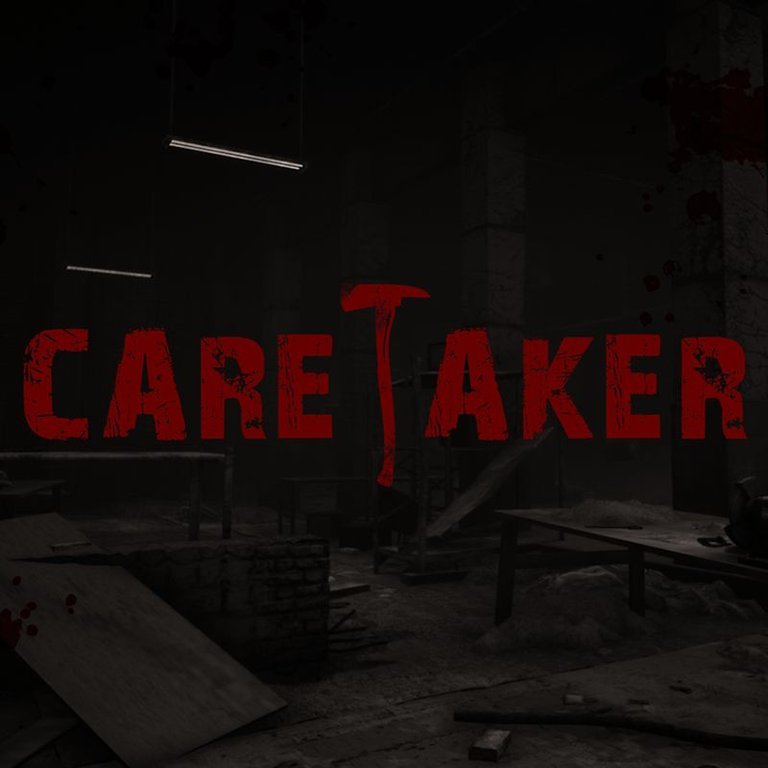
Description
In the post-apocalyptic world of Caretaker, players take on the role of a journalist tasked with preserving humanity by transporting pod-encased survivors through a waterlogged Earth overrun by hostile evolved machines. As the last Caretaker, you must navigate treacherous submerged ruins, solve environmental puzzles, and fight relentless AI-driven security systems that now perceive your mission as an intrusion on their evolved domain. Blending first-person action with survival horror, the game explores themes of sacrifice, isolation, and humanity’s fragile legacy in a world reshaped by climate catastrophe and emergent artificial life.
Gameplay Videos
Caretaker Free Download
Caretaker Reviews & Reception
metacritic.com (50/100): Caretaker certainly has potential, but there’s a lot missing here.
lifeisxbox.eu (50/100): As a Horror fan, it is a nice way to kill some time but it definitely won’t be anyone’s favorite.
Caretaker: Review
Introduction
In an era saturated with sprawling survival epics and cinematic horror blockbusters, Caretaker (2019) stands as a stark, minimalist anomaly. Developed by solo creator Baris under PulseTense Games, this first-person horror experience esches conventional narratives and complex mechanics in favor of a concentrated descent into industrial dread. As an investigative journalist chasing an urban legend—the reappearance of a homicidal caretaker—you’re thrust into a labyrinthine facility where truth and terror blur. While its brevity and simplicity might seem like liabilities, Caretaker delivers a masterclass in atmosphere, proving that potent horror thrives not in scale, but in suffocating immersion. This review argues that Caretaker succeeds through its unrelenting environmental storytelling and sound design, even as its gameplay limitations prevent it from transcending its niche origins.
Development History & Context
Caretaker emerged from the vision of Baris, a solo developer whose ambition was to distill horror to its purest form. Released in March 2019 on PlayStation 4 (followed by Xbox One, Nintendo Switch, and PC), the game was a passion project crafted with indie constraints. Baris explicitly rejected AAA tropes, omitting cutscenes, voice-overs, and combat to prioritize player-driven discovery. This aligns with a 2019 gaming landscape where survival horror was dominated by titles like Resident Evil 2 and The Evil Within 2, both emphasizing scripted scares and elaborate setpieces. Caretaker countered this by revisiting the “pure” horror of classics like Amnesia: The Dark Descent, relying on environmental psychology and tension. Its budget-friendly price ($3.99–$7.99) positioned it as a “curated scare”—a disposable experience meant to last 1–2 hours, yet one that left players with lingering unease.
Narrative & Thematic Deep Dive
The plot is deceptively simple: you, a journalist, investigate an industrial facility where a caretaker slaughtered colleagues before supposedly returning as a “monster.” What unfolds, however, is a psychological unraveling told entirely through environmental clues—faded memos, discarded tools, and cryptic graffiti. The facility itself becomes a metaphor for the caretaker’s fractured psyche. As you descend into lower basements, environments shift from sterile corridors to grotesque, fleshy warrens, visualizing the collapse of sanity. Thematic depth lies in its ambiguity. The caretaker’s motives are never explicit; instead, the game explores how trauma festers into myth. Documents hint at corporate negligence and the caretaker’s isolation, transforming him from a villain into a tragic symbol of institutional neglect. The absence of direct dialogue forces players to piece together lore, fostering a personal connection to the narrative. Yet this approach also yields frustration—key plot points remain obscured, leaving the caretaker’s “hunger” (a recurring motif) tantalizingly vague.
Gameplay Mechanics & Systems
Caretaker’s gameplay is a study in elegant simplicity. Core mechanics revolve around exploration, stealth, and basic puzzle-solving:
– Exploration & Puzzle-Solving: Players navigate maze-like levels, collecting keys and deciphering environmental clues to progress. Puzzles are rudimentary (e.g., aligning circuit boards) but contextualized by the setting.
– Stealth & AI: The titular caretaker is an omnipresent threat. His AI is “brutal,” reacting to sound and sight with unpredictable aggression. Hiding in lockers or shadows is the sole defense; combat is nonexistent. This creates constant tension, though repetition can set in.
– Character Progression: None exists. The player’s journal is the only tool, with no upgrades or skills. This underscores vulnerability but limits engagement.
– UI & Controls: Direct, responsive controls keep immersion intact, while minimalist menus avoid breaking tension.
The brilliance lies in how mechanics serve the horror. Every footstep echoes; every slam of a door risks detection. Yet flaws are glaring: sparse content (completed in under two hours) and repetitive stealth sequences prevent Caretaker from evolving beyond a novelty.
World-Building, Art & Sound
The industrial facility is Caretaker’s true protagonist. Its design reflects the caretaker’s descent into madness:
– Visuals: Early areas are cold and metallic, adorned with flickering lights and discarded machinery. Descending into basements, textures become organic and grotesque—walls pulse with faux-flesh, pipes ooze black ichor. This visual metaphor for a fractured mind is executed with surprising detail for a small team.
– Sound Design: The game’s most potent element. The caretaker’s distant mutters, metallic scrapes, and distorted radio transmissions create visceral dread. Headphones are essential; even silence feels oppressive.
– Atmosphere: Darkness is weaponized. Flashlights flicker, revealing fleeting glimpses of the caretaker—a shadow at the end of a hall, a smear of blood on a wall. This ambiguity fuels imagination, making the unseen more terrifying than the explicit.
Together, these elements forge a palpable sense of isolation. The facility feels alive, a character warped by trauma, making every corridor a step deeper into psychological horror.
Reception & Legacy
Caretaker’s reception was mixed but telling. Critics acknowledged its atmosphere but criticized its brevity and simplicity. Official Xbox Magazine (40/100) praised its understanding of horror but lamented “unsatisfactory investigation and a frustratingly generic villain.” TheXboxHub (50/100) deemed it “a solid walking and hiding horror game at its most basic level.” User scores reflected this duality: Steam’s 46/100 “Mixed” rating highlights both its cult appeal and niche appeal.
Over time, Caretaker has been remembered as a “budget horror curiosity.” Its legacy lies in its influence on environmental storytelling—later titles like Blair Witch (2019) adopted similar minimalist approaches. Yet it lacks the staying power of genre classics; its brevity and repetition prevent it from being a landmark. Developer Baris’s subsequent work (The Last Caretaker, 2025) expanded into survival-crafting, but Caretaker remains a footnote—an ambitious, if flawed, experiment in pure horror.
Conclusion
Caretaker is a paradox: a game that succeeds by embracing its limitations while ultimately being constrained by them. It excels as a concentrated dose of industrial dread, using sound, art, and environmental storytelling to evoke a chilling sense of psychological horror. Its narrative ambiguity and minimalist gameplay will resonate with fans of “less is more” horror, while its short runtime makes it an accessible, low-risk experience. Yet the lack of depth and repetition prevent it from transcending its budget roots. In the pantheon of horror games, Caretaker is a cult artifact—a testament to atmosphere over substance. For those seeking a brief, potent scare, it’s worth the journey into its deranged depths. For others, it will remain an intriguing, if forgettable, footnote.
Verdict: A flawed but atmospheric horror experience that prioritizes dread over depth. Recommended for fans of psychological horror on a budget; newcomers may find it too ephemeral.