
- Release Year: 2013
- Platforms: Gloud, PlayStation 3, Windows
- Publisher: Digital Dreams Entertainment LLC, Vogster Entertainment, LLC
- Developer: Digital Dreams Entertainment LLC, Vogster Entertainment, LLC
- Genre: Action
- Perspective: 1st-person
- Game Mode: Single-player
- Gameplay: Hunting, Shooter
- Setting: Fantasy
Description
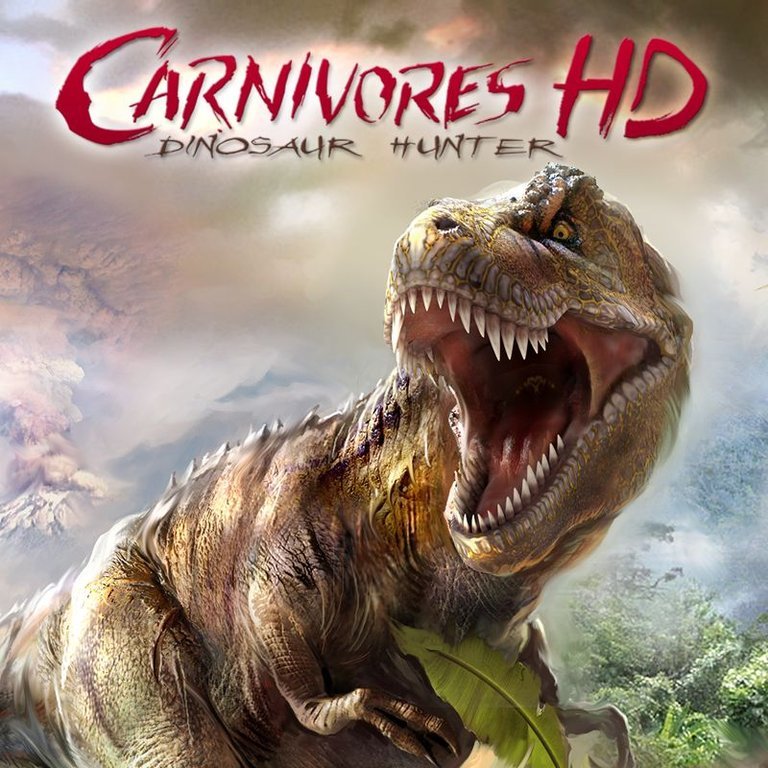
Carnivores: Dinosaur Hunter HD is a high-definition reboot of the 1998 classic, immersing players in a first-person hunting experience across diverse island environments like jungles, forests, beaches, and deserts. Using radar, binoculars, and stealth to avoid detection by sight, sound, and smell, hunters track and pursue six dinosaur species, including Stegosaurus, Triceratops, and T-Rex, with some fleeing and others attacking. Completing hunts earns points to unlock new areas, tougher prey, and better equipment, such as shotguns, crossbows, and sniper rifles, while a trophy room displays successful kills.
Gameplay Videos
Carnivores: Dinosaur Hunter HD Reviews & Reception
ign.com : slow, aimless, bland, and not nearly as exciting as the name would have us believe.
gamingbolt.com : Hunting the dinosaurs themselves is pretty fun… but the unlock system is where problems start.
pushsquare.com : It may be a simple premise, but the title can provide a lot of dumb fun if you’re willing to accept it for what it is.
Carnivores: Dinosaur Hunter HD: A Tense Lizard Blaster Gone Bland
Introduction: The Allure and Agony of the Hunt
The premise of Carnivores: Dinosaur Hunter HD is a siren’s call to any child of the 1990s who ever mixed Jurassic Park VHS tapes with Deer Hunter floppy disks. Here, finally, was the fantasy realized: you, a wealthy interstellar sportsman, stalk the primordial wilds of a dinosaur-populated planet for trophies. It promised a sophisticated, atmospheric hunt where your senses—not just your trigger finger—determined success. Developed by Vogster Entertainment and released in 2013 for the PlayStation 3, this “HD reboot” of the 1998 cult classic Carnivores arrived with the weight of nostalgia and a “HD” sticker that promised a modernized execution of a beloved, idiosyncratic formula. Yet, as history would record, this noble attempt to revive a pioneering hunting simulator became a fascinating case study in how a game’s fundamental design can conflict with player expectations, resulting in a title that critics largely panned for being “slow, aimless, bland,” yet which retains a dedicated cult following that champions its unique, if flawed, vision. This review will dissect Carnivores: Dinosaur Hunter HD not merely as a product of its time, but as a pivotal, troubled bridge between a genre’s innovative past and its uncertain future, arguing that its true legacy lies in its unwavering commitment to a specific, punishing design philosophy that ultimately limited its appeal.
Development History & Context: From Ukrainian Basements to PlayStation Network
The story of Carnivores: Dinosaur Hunter HD is intrinsically linked to the peculiar history of its progenitor. The original Carnivores (1998) was developed by Action Forms, a small Ukrainian studio operating under severe financial and technological constraints. Tasked with creating a hunting game that didn’t feel like a generic shooter, they built a custom engine from scratch, prioritizing vast, open levels and sophisticated AI that simulated dinosaur behaviors through sight, sound, and smell—a radical departure from the “run-and-gun” norms of the era. Despite its budget origins and dated graphics, it sold well as a $20 shareware title and spawned two sequels (Carnivores 2, Carnivores: Ice Age), cultivating a passionate niche audience. The series languished until 2010, when Tatem Games (founded by Action Forms’ Igor Karev) ported the first game to iOS as Carnivores: Dinosaur Hunter. This mobile revival, later adapted for PSP/PS3 by Beatshapers, demonstrated enduring demand but highlighted the aging engine’s limitations on modern platforms.
Enter Vogster Entertainment, a studio with experience in mobile-to-console ports. Their project, Carnivores: Dinosaur Hunter HD, was explicitly positioned as a “high-definition reboot” for the PS3, aiming to leverage PSN’s digital distribution to reach a new audience. The development, a collaboration between Vogster (financing, console adaptation) and Tatem (IP, core design), faced the core challenge of the Carnivores engine: it was built for expansive, low-polygon worlds. The team opted for a “remake from scratch” approach for the PS3, rebuilding environments and creatures in HD while preserving the original’s deliberate pacing and simulation-heavy mechanics. Crucially, they incorporated feedback from the mobile versions, adding features like a Trophy Room, tranquilizer darts, and the “Observer Mode.” The release strategy was purely digital ($12.99 NA, €9.99 PAL), and post-launch, Vogster actively gathered player feedback to issue a patch (1.01) before the European release—a rare show of iterative care for a niche title. Yet, the game arrived in a 2013 market saturated with cinematic, action-packed shooters, fundamentally misaligning its slow-burn simulation with contemporary player expectations for pacing and reward.
Narrative & Thematic Deep Dive: The Excuse Plot as Thematic Anchor
Carnivores: Dinosaur Hunter HD possesses what is often derisively called an “excuse plot,” but within the context of the series, it is a thematically rich and consistent one. The narrative is not delivered in-game but through the manual and PSN store description, framing the player as a client of “DinoHunt Corp.” in the year 2190. Following the discovery of planet FMM UV-32—a world teeming with dinosaur-like creatures but deemed uninhabitable for colonists—a corporation commercializes interplanetary big-game hunting. You are a wealthy, presumably thrill-seeking elite purchasing a license to hunt.
This setup is a masterclass in economical world-building that directly informs gameplay. It justifies:
1. The Lack of Story: You are not a soldier or a survivor; you are a paying tourist. Your purpose is singular and self-serving, explaining the absence of a narrative campaign or NPCs beyond the faceless corporation.
2. The Gameplay Loop: The entire progression system (earning “gems” and “trophy points” to unlock weapons and areas) is a literal representation of a corporate transaction. You are not saving the world; you are accumulating capital and access in a mercantile ecosystem.
3. The Core Tension: The theme of “The Most Dangerous Game” is inverted. While the manual’s lore positions humans as the apex hunters, the gameplay immediately establishes you as vulnerable prey. The planet is a “Death World” not because it’s actively malicious, but because its ecosystem operates on natural, lethal principles that the hunter has foolishly inserted themselves into. The abandoned settlement of Fort Ciskin (referenced in later series entries and TV Tropes) is a chilling piece of environmental storytelling—a failed human colonization effort crushed by a T. rex rampage—that underscores the planet’s indifference to human ambition.
Thematically, the game is a subtle critique of egomaniacal trophy hunting and colonial exploitation, albeit one buried under the surface of its mechanics. The ability to “evacuate” at any moment, the business-like trophy room, and the sterile, consequence-free extraction of beasts (“beamed up” by your ship) all frame the activity as a sanitized, high-risk sport for the ultra-wealthy. The “tranquilizer” option adds a thin veneer of ethical choice, but the core loop remains the commodification of life for personal gratification. In this light, the game’s procedural, grindy nature isn’t just a flaw—it’s a thematic mirror of repetitive, capital-driven exploitation.
Gameplay Mechanics & Systems: The Calculus of Caution
At its mechanical heart, Carnivores: Dinosaur Hunter HD is a first-person stealth-hunting simulation built on a loop of reconnaissance, approach, and execution, with an economy that gatekeeps progression.
Core Loop & Stealth Systems: The player selects a “hunting license” (dinosaur target) and an environment (Delapheus Hills, The Great Forest, Basmachee Rocks, each with Day/Dusk/Fog variants). Armed with a starting rifle and the all-important M.I.S.T. (Multi-purpose Information Sensing Tool) “Gadget,” the hunt begins. The Gadget is the game’s central innovation, displaying a map, wind direction (critical for scent), noise meters, and—once upgraded with gems—a radar ping. Success hinges on mastering three detection vectors:
* Sight: Dinosaurs have a cone of vision. Crouching in tall grass or behind terrain breaks line-of-sight.
* Sound: Player footsteps, weapon discharges, and running generate noise. The Gadget alerts when detected.
* Smell: Wind direction is paramount. Moving downwind of a dinosaur prevents it from catching your scent, a rule enforced by the Gadget’s “scent bar.”
This creates a tense, methodical pacing. A successful hunt involves using binoculars to spot prey, planning a downwind stalk, holding breath to steady the shot (L1 to aim), and landing a decisive, often single, shot. The scoring system incentivizes efficiency: fewer shots, unused equipment (like beepers or cover scent), and quick kills yield more “gems” (for weapons/gear) and “trophy points” (to unlock new levels).
Combat & The T. rex Problem: The roster (Ankylosaurus, Ceratosaurus, Parasaurolophus, Stegosaurus, Triceratops, Tyrannosaurus rex) splits into herbivores (flee on detection) and carnivores (attack). All dinosaurs, upon being shot, have a chance to be “spooked” and flee. If a carnivore reaches the player, it’s an instant, ragdoll-style death with a fade-to-black—a stark, consequence-free reset that removes tension but enforces the “you are prey” philosophy. The Tyrannosaurus rex is the game’s systemic outlier and infamous challenge. As noted in TV Tropes and criticized by IGN, it possesses immense health (around 1000 vs. ~30 for others) and is only killable via a precise shot to the eye before it charges. Once enraged, it is a “Super-Persistent Predator” that will chase the player across the map until death or evacuation. This binary difficulty (everything else is manageable, the T. rex is a near-permanent executioner if spotted) defines the late-game experience and frustrates players seeking gradual, scalable challenge.
Progression & The Grind: This is the game’s most criticized system. Unlocks are brutally expensive. A sniper rifle might cost $250, a radar upgrade $100, and a new level requires thousands of trophy points. A “perfect” kill on a Stegosaurus might net $6-8. This creates a grind loop: replay the same small, familiar maps hundreds of times to afford incremental progress. Crucially, using hunting aids (like cover scent or a beeper) reduces the trophy point bonus, punishing players for relying on tools and forcing a “purist” grind for efficiency. The system is designed for long-term engagement but feels punitive and repetitive in the short term. The ability to “evacuate” at any moment, while thematically sound (calling your ship), removes any risk of losing progress, further neutering stakes and encouraging safe, repetitive play rather than bold, risky hunts.
Innovations & Flaws: The game innovated by making the Gadget central, adding tranquilizers and Observer Mode, and streamlining carcass retrieval (walk to the body to collect gems, then call the ship). Its flaws are systemic: the grindy economy, the stark lack of level variety (9 levels are 3 environments x 3 time/fog settings), the repetitive dinosaur roars, and the complete absence of music or in-game story, which Push Square called “cheap and tacky.” The “HD” label was particularly contentious; IGN lambasted “truly awful” and “outdated” textures, especially on foliage and terrain, which felt like low-poly assets upscaled rather than true remasters.
World-Building, Art & Sound: Atmosphere Amidst Technical Deficits
The game’s atmosphere is its greatest strength and its most inconsistent element. Sound design is minimalist and brilliant. There is no musical score. Instead, the islands are saturated with ambient noise: distant, echoing dinosaur calls, the chirping of unseen birds and insects, the crunch of footsteps, and the deep, controller-rumble-inducing tread of approaching giants. This silence, punctuated by sudden roars, creates profound tension and a sense of occupying a living, breathing world. It directly serves the stealth mechanics, making the player hyper-aware of audio cues.
Visual Design presents a dichotomy. The environmental art can be majestic. The skyboxes are beautiful, the fog Effects and dusk lighting effectively moody, and the silhouettes of dinosaurs against sunsets are genuinely memorable. The sense of scale—hiking across vast mesas or dense forests—is palpable. However, the texture work and model detail are undeniably dated, even for 2013. Rocks and ground foliage are flat and low-resolution. Dinosaur animations, while functional, can be stiff and roller-skate-like during movement, as IGN noted. This technical roughness undercuts the “HD” branding and makes the beautiful vistas feel like a veneer over a rudimentary engine.
The UI and menus were universally panned as “cheap and tacky” (Push Square) and “arthritic” (OPM-UK), lacking the polish expected of a console release. The narrative presentation is nonexistent; the world is told, not shown, through brief manual text and environmental fragments like the ruins of Fort Ciskin, hinting at a lost alien civilization that once worshipped dinosaurs—a “Precursors” thread left tantalizingly undeveloped. The overall effect is of an immersive, atmospheric simulation wrapped in a technically unimpressive and aesthetically uneven package.
Reception & Legacy: A Cult Curiosity in aCritical Wasteland
Upon release, Carnivores: Dinosaur Hunter HD was critically savaged. It holds a Metacritic score of 50/100 for the PS3, indicating “mixed or average” reviews, but the individual scores were harsh: IGN 4/10, Hardcore Gamer 2.5/5, PlayStation Official Magazine – UK 6/10. The consensus was damning: the game was “slow, aimless, bland” (Plagge, IGN), “boring, repetitive and empty” (Cooper, Hardcore Gamer), and marred by a “miserly” unlock system that made progression a chore. The “HD” moniker was seen as a misnomer due to poor textures. Only a few, like OPM-UK’s Meikleham, found a “charming depth” for the patient, calling it a “slow-burning” experience.
Commercially, its digital-only, PSN-exclusive release on PS3 limited its reach, though exact sales figures are unavailable. Its legacy is paradoxical:
1. As a Series Bridge: It successfully revived the dormant Carnivores brand, directly leading to Carnivores: Dinosaur Hunter Reborn (2015, PC) and the modern Carnivores: Dinosaur Hunt (2021, multi-platform). These later entries, developed by Digital Dreams Entertainment with original Action Forms personnel, refined the formula with better graphics and adjusted economies.
2. As a Cult Artifact: Within the dedicated Carnivores fan community, the HD version is viewed with ambivalence. It preserved the core tension and AI of the original but is often criticized for its grind and lack of content compared to the more robust Carnivores 2 or Ice Age. The active modding scene, primarily for the PC titles, largely bypasses the HD/PS3 version due to engine constraints.
3. As an Industry Footnote: It stands as a cautionary tale about remastering niche classics. It proved that updating visuals alone cannot modernize a game whose design is intrinsically tied to a slower, more simulationist pace that clashes with mainstream expectations for action and progression. It highlighted the difficulty of translating a PC/shareware mindset to a console digital storefront.
Conclusion: A Flawed Relic That Preserved a Philosophy
Carnivores: Dinosaur Hunter HD is not a good game by any mainstream critical metric. Its economy is punishing, its presentation is uneven, its content is thin, and its pacing is glacial. It fails as a modern dinosaur hunting game. Yet, to dismiss it entirely is to ignore its pivotal role in gaming’s ecological niche.
It is the last, awkward attempt by the original series’ spiritual heirs to bring their unique, tension-first design philosophy to a console audience before the series found a more sustainable home on PC and modern platforms via Dinosaur Hunt. It is a pure, uncut distillation of the 1998 game’s vision: the hunt is a slow, cerebral duel of observation and patience, where the thrill is in the stalk, not the shoot, and where the environment and AI are your true antagonists. The frustration it generates is, in part, a byproduct of that uncompromising design. For better or worse, there is no hand-holding, no power fantasy, and no guarantee of fun—only the stark, consequence-free possibility of failure and the slim, earned triumph of a perfect, silent shot from a hundred yards away.
Its place in history is thus secured not as a classic, but as a faithful, flawed time capsule. It represents the moment a cult PC simulation, built on a shoestring budget in Ukraine, was forcibly translated into the glossy, grind-heavy ecosystem of the PlayStation Network, where its idiosyncrasies became glaring faults. For the initiated—the patient, the nostalgic, the hunters who yearn for a game where dinosaurs feel like dangerous animals rather than XP fodden—it remains a curious, atmospheric oddity. For everyone else, it is a textbook example of how a brilliant core concept can be undermined by a suffocating grind and a failure to meet the technical and pacing standards of its era. It is, in the end, the digital equivalent of a beautifully rendered but ultimately barren island: awe-inspiring in moments, but a place you’ll likely be glad to evacuate from.