
- Release Year: 2021
- Platforms: Windows
- Publisher: Neoclassic Games
- Developer: Neoclassic Games
- Genre: Adventure, Visual novel
- Perspective: Fixed / flip-screen
- Game Mode: Single-player
- Gameplay: Point and select
- Setting: Classical antiquity, Fantasy
- Average Score: 79/100
Description
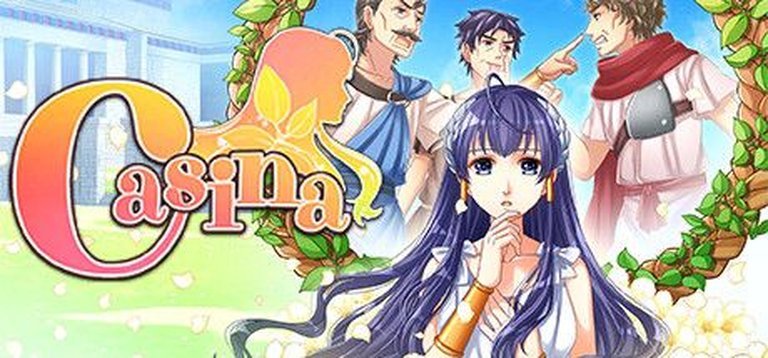
Casina: The Forgotten Comedy is a fully voiced and animated visual novel that adapts Plautus’ ancient Roman play into a modern interactive experience. Set in classical antiquity with a fantasy twist, the game blends humor, romance, and mythology as players navigate a comedic tale filled with multiple endings and cultural insights. Its anime/manga-inspired art style and point-and-select interface create an engaging, story-rich adventure that offers a lighthearted yet historically inspired journey.
Where to Buy Casina: The Forgotten Comedy
PC
Casina: The Forgotten Comedy Patches & Updates
Casina: The Forgotten Comedy Reviews & Reception
steambase.io (86/100): Casina: The Forgotten Comedy has earned a Player Score of 86 / 100.
store.steampowered.com (76/100): Casina was a fun surprise produced by Neoclassic Games. They created this new version, produced with a good artistic and sound quality, featuring several comical and fun moments and making it a pleasant experience for all who wish to read this story.
steamhunters.com (76/100): Mostly Positive SteamDB Rating 76.26%.
Casina: The Forgotten Comedy: A Modern Revival of Ancient Hilarity
Introduction: Rediscovering a Classical Gem
In the vast landscape of visual novels, Casina: The Forgotten Comedy stands as a rare and ambitious experiment—a digital resurrection of a 2,200-year-old Roman comedy. Developed by Neoclassic Games and released in May 2021, this title adapts Titus Maccius Plautus’ Casina, a farcical play from 184 BC, into a fully voiced, animated visual novel. At first glance, the premise seems niche: a classical Latin comedy transformed into a modern interactive experience. Yet, beneath its unassuming surface lies a game that bridges millennia, blending ancient humor with contemporary storytelling techniques.
This review will dissect Casina in exhaustive detail, exploring its development, narrative depth, gameplay mechanics, artistic direction, and cultural significance. We will examine how Neoclassic Games navigated the challenges of adapting a static, centuries-old text into an interactive medium, and whether the final product succeeds as both a faithful adaptation and an engaging game. By the end, we will determine whether Casina is a forgotten masterpiece or a curious footnote in the annals of visual novel history.
Development History & Context: A Labor of Love
The Studio Behind the Revival
Neoclassic Games, the Italian studio responsible for Casina, is a small but passionate team specializing in historical and mythological visual novels. Their portfolio includes titles like Elisa: The Innkeeper and Pre-Odyssey: Love at First Quack, all of which share a common thread: a deep reverence for classical literature and a desire to make it accessible to modern audiences. Casina is their most ambitious project to date, not only because of its historical significance but also due to the technical and creative hurdles involved in adapting a Roman comedy into a visual novel.
The Vision: Why Plautus? Why Now?
The choice of Plautus’ Casina as the source material is fascinating. Plautus, often regarded as the “Shakespeare of Rome,” was a master of farce, known for his witty dialogue, slapstick humor, and social satire. Casina itself is a tale of love, deception, and mistaken identity, revolving around a young woman caught in a web of romantic entanglements. Neoclassic Games saw in this play an opportunity to introduce modern audiences to classical humor while leveraging the interactive nature of visual novels to enhance the comedic experience.
In interviews and developer logs, the team emphasized their goal of staying true to the spirit of Plautus’ work while modernizing its presentation. This meant preserving the play’s core themes—lust, jealousy, and the absurdity of human behavior—while adapting its structure to fit a branching narrative format. The challenge was to make a linear, dialogue-driven play feel dynamic and engaging in a medium where player agency is often expected.
Technological Constraints and Innovations
Casina was developed using Unity, a choice that allowed Neoclassic Games to create a visually appealing product with relatively modest resources. The game’s art style is a blend of anime and classical Greek aesthetics, a fusion that gives it a unique identity. The team also invested heavily in voice acting, hiring professional actors to bring the characters to life—a rarity for indie visual novels.
One of the most notable technical achievements is the game’s lip-syncing system, which dynamically matches character animations to the voice acting. This feature, though not flawless (as noted in some reviews), adds a layer of immersion that elevates the experience beyond static text and images. The game also supports multiple languages, including English, Italian, German, Spanish, Russian, and Simplified Chinese, making it accessible to a global audience.
The Gaming Landscape in 2021
Casina entered a market dominated by Japanese visual novels and Western indie darlings like Doki Doki Literature Club and Ace Attorney. The visual novel genre, while niche, has a dedicated fanbase that appreciates strong narratives and character-driven stories. However, historical adaptations—especially those rooted in classical literature—are rare. This uniqueness was both an advantage and a risk: it set Casina apart but also made it a harder sell to audiences unfamiliar with Plautus or Roman comedy.
Narrative & Thematic Deep Dive: A Comedy of Errors and Desires
Plot Overview: Love, Deception, and Farce
Casina follows the story of its eponymous heroine, a young woman whose hand in marriage is sought by two men: her father’s slave, Olympio, and her father’s friend, Chalinus. The play’s humor arises from the absurd lengths to which the characters go to secure Casina’s affections, including cross-dressing, mistaken identities, and elaborate schemes. The narrative is a classic farce, relying on timing, wit, and the escalation of ridiculous situations.
Neoclassic Games’ adaptation retains the core plot but expands it with additional dialogue choices and branching paths. Players can influence the outcome of certain scenes, though the overall structure remains faithful to Plautus’ original work. The game’s narrative is divided into chapters, each focusing on a different character’s perspective, which adds depth to the story and allows players to see the events from multiple angles.
Character Analysis: A Cast of Classical Archetypes
The characters in Casina are archetypal figures from Roman comedy, each embodying a specific role:
– Casina: The innocent maiden whose beauty drives the plot.
– Olympio: The cunning slave who schemes to win Casina’s hand.
– Chalinus: The lovestruck friend of Casina’s father, equally determined to marry her.
– Lisidamus: Casina’s father, whose lustful desires complicate the situation.
– Cleostrata: Lisidamus’ wife, who becomes entangled in the deception.
Each character is voiced by a professional actor, and their performances are a highlight of the game. The voice acting brings out the humor and personality of each role, making the ancient dialogue feel fresh and engaging. However, some players have noted that the characters lack depth, a criticism that stems from the source material’s reliance on archetypes rather than complex personalities.
Themes: Timeless Humor and Human Folly
At its core, Casina is a satire of human desires and social conventions. Plautus’ original play mocked the hypocrisy of Roman society, particularly the double standards surrounding love, marriage, and class. Neoclassic Games’ adaptation preserves these themes, using humor to highlight the absurdity of the characters’ actions.
The game’s humor is a mix of slapstick, wordplay, and situational comedy. Some jokes are directly lifted from Plautus’ text, while others are modernized to appeal to contemporary audiences. The result is a narrative that feels both timeless and fresh, a rare achievement for an adaptation of this nature.
Dialogue and Writing: A Delicate Balance
Adapting a 2,200-year-old play into modern English (and other languages) is no small feat. The game’s script walks a fine line between faithfulness to the original text and accessibility for modern players. The dialogue is witty and fast-paced, though some players have criticized the translation for occasional awkwardness. The writing shines in its comedic moments, where the absurdity of the situations and the characters’ reactions create genuine laughter.
Gameplay Mechanics & Systems: Interactivity in a Classical Framework
Core Gameplay Loop: Choices and Consequences
Casina is, at its heart, a visual novel, and its gameplay revolves around reading dialogue, making choices, and experiencing the story. The game features multiple endings, though the branching paths are relatively limited compared to more complex visual novels. Players can influence the outcome of certain scenes, but the overall narrative remains largely linear, a deliberate choice to preserve the integrity of Plautus’ original work.
The game’s interface is simple and intuitive, with a point-and-click system that allows players to navigate through the story. The UI is clean and unobtrusive, ensuring that the focus remains on the narrative and characters. However, some players have noted that the choices feel inconsequential, a criticism that highlights the tension between interactivity and faithful adaptation.
Character Progression and Dynamics
Unlike many visual novels, Casina does not feature a traditional character progression system. Instead, the game’s depth comes from its dynamic character expressions and the evolving relationships between the characters. The game’s lip-syncing system and animated expressions add a layer of immersion, making the characters feel more alive and responsive.
Innovations and Flaws
One of the game’s most innovative features is its use of multiple perspectives. By allowing players to experience the story from different characters’ viewpoints, Neoclassic Games adds depth to the narrative and encourages replayability. However, the limited branching paths and the linear nature of the story may disappoint players expecting a more open-ended experience.
Technical issues, such as occasional bugs and lip-syncing mismatches, have also been noted by players. While these flaws do not detract significantly from the overall experience, they are a reminder of the challenges faced by small indie teams working with limited resources.
World-Building, Art & Sound: A Classical Aesthetic
Setting and Atmosphere
Casina is set in ancient Greece, a world of togas, marble columns, and bustling marketplaces. The game’s art style blends anime and classical aesthetics, creating a visual identity that is both familiar and unique. The backgrounds are richly detailed, evoking the grandeur of ancient Greek architecture, while the character designs are colorful and expressive.
The game’s atmosphere is lighthearted and comedic, reflecting the tone of Plautus’ original play. The setting is not just a backdrop but an active participant in the story, with the characters’ surroundings often playing a role in the humor and plot developments.
Visual Direction: A Fusion of Styles
The visual direction of Casina is one of its strongest aspects. The game’s art style is a fusion of anime and classical Greek influences, resulting in a look that is both modern and timeless. The character designs are expressive and dynamic, with a wide range of facial expressions that enhance the comedic moments.
The game features over 30 CGs (computer graphics), each depicting key moments in the story. These CGs are beautifully rendered, with a level of detail that showcases the team’s artistic talent. The use of color is particularly noteworthy, with vibrant hues that bring the ancient world to life.
Sound Design and Music
The sound design in Casina is minimal but effective. The game’s soundtrack, composed by Vindsvept Fantasy Music, is a mix of classical and fantasy-inspired tracks that complement the setting and tone. The music is unobtrusive, allowing the voice acting and dialogue to take center stage, but it adds depth to the atmosphere when needed.
The voice acting is a standout feature, with professional actors bringing the characters to life. The performances are lively and engaging, capturing the humor and personality of each role. However, some players have noted that the lip-syncing occasionally mismatches the dialogue, a technical issue that detracts slightly from the immersion.
Reception & Legacy: A Niche Success
Critical and Commercial Reception
Casina: The Forgotten Comedy received a “Mostly Positive” rating on Steam, with 76% of reviews being positive. Players praised the game’s engaging story, visual quality, and humor, though criticisms were leveled at its limited choices, translation issues, and technical problems. The game’s short playtime (around 1.8 hours) was noted by some as a positive, making it a quick and enjoyable experience, while others felt it was too brief.
The game’s reception highlights the challenges of adapting classical literature into a modern interactive format. While the narrative and humor resonated with many players, the limited interactivity and technical flaws held it back from wider acclaim.
Influence and Legacy
Casina is a unique entry in the visual novel genre, standing out for its historical roots and ambitious adaptation. While it may not have achieved mainstream success, it has carved out a niche for itself as a culturally significant experiment. The game’s blend of ancient humor and modern storytelling techniques offers a template for future adaptations of classical works, proving that even the oldest stories can find new life in interactive media.
Conclusion: A Forgotten Comedy Worth Remembering
Casina: The Forgotten Comedy is a fascinating experiment—a bridge between ancient literature and modern gaming. Neoclassic Games’ adaptation of Plautus’ play is a labor of love, blending faithful storytelling with innovative interactive elements. While the game’s limited branching paths and technical flaws may disappoint some players, its engaging narrative, vibrant art style, and professional voice acting make it a standout experience.
In the grand tapestry of video game history, Casina may not be a masterpiece, but it is a remarkable achievement—a testament to the enduring power of classical humor and the potential of interactive storytelling. For fans of visual novels, history, or comedy, Casina is a hidden gem worth discovering.
Final Verdict: 8/10 – A delightful and ambitious adaptation that brings ancient humor to life.