
- Release Year: 2003
- Platforms: Windows
- Publisher: dtp digital tainment pool GmbH
- Developer: Casual Games
- Genre: Gambling, Strategy, Tactics
- Perspective: Top-down
- Game Mode: Single-player
- Gameplay: Cards, Mini-games, Tiles
- Average Score: 50/100
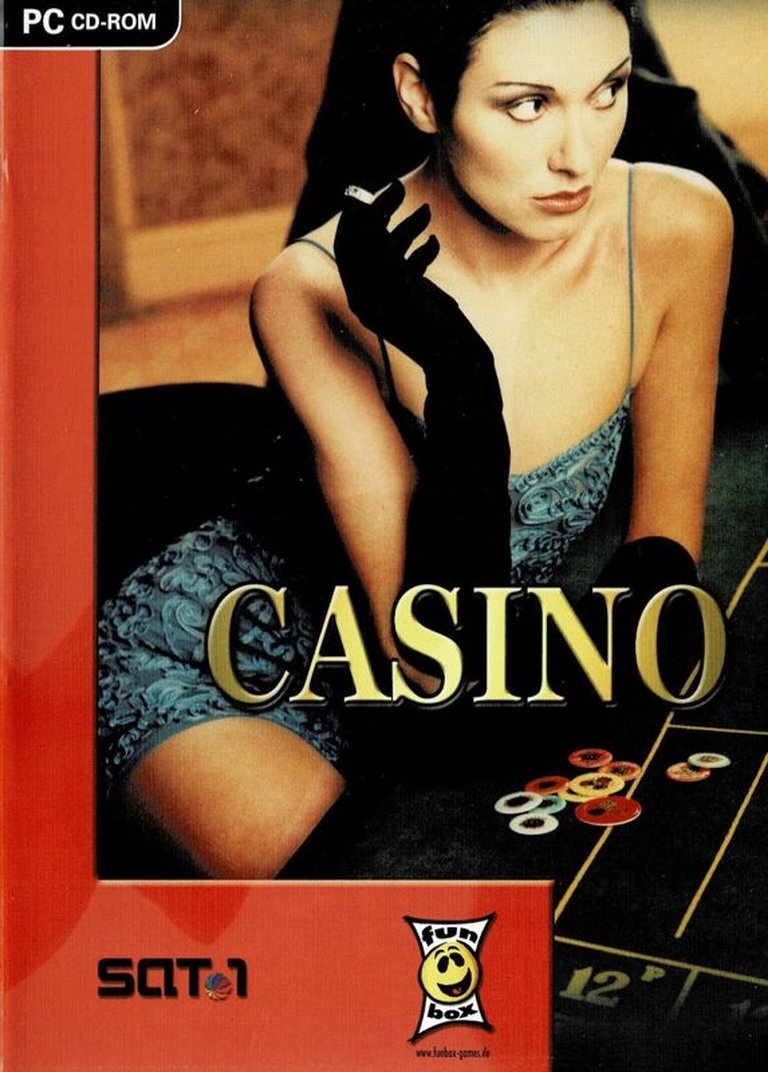
Description
Casino is a gambling and strategy video game released in 2003 for Windows. Players can engage in five authentic casino games: Roulette, Blackjack, Slot Machine, Baccarat, and Poker, each adhering to real-world rules. The game offers four distinct modes where participants compete against computer-controlled opponents. Developed by Casual Games and published by dtp digital tainment pool GmbH, Casino provides a classic casino experience with a focus on traditional gameplay mechanics and strategic decision-making.
Gameplay Videos
Where to Buy Casino
PC
Casino Patches & Updates
Casino Reviews & Reception
mobygames.com (50/100): A poor attempt at a decent idea
Casino Cheats & Codes
Hoyle Casino 2003 (PC)
| Code | Effect |
|---|---|
| P | Win the slot machine jackpot after a few spins (must adjust speed settings first) |
| FF C9 9A 3B 63 | Edit user log with hex editor at offsets 0x380-0x384 to set money to $999,999,999.99 |
Casino: Review
Introduction
In the ever-evolving landscape of video games, few genres capture the glitz and tension of risk quite like casino simulations. Among the myriad of early 2000s gambling titles, Casino (2003) stands as a stark example of a no-frills digital casino experience. Developed by Casual Games and published by dtp digital tainment pool GmbH, this Windows-exclusive title promised authenticity in its replication of five classic casino games but left critics and players questioning its depth and innovation. This review dissects Casino’s legacy as a functional yet uninspired entry in the gambling genre, examining its design choices against the backdrop of a booming era for casino games—and finding it a relic of missed opportunities.
Development History & Context
Released in 2003, Casino emerged during a transitional period for digital gambling games. The early 2000s saw a surge in casino simulations, driven by advancements in PC hardware and growing mainstream interest in poker and blackjack culture post-Rounders (1998) and Ocean’s Eleven (2001). Studios like MumboJumbo (Hard Rock Casino, 2003) and FarSight Studios (PlayStation Casino titles) competed to blend licensed IPs and multiplayer features, while Casino opted for minimalist, single-player-focused design.
Casual Games, the developer behind Casino, prioritized accessibility over ambition. With no prior notable titles, the studio faced technological constraints typical of the era: limited 3D rendering capabilities and rudimentary AI for opponent behavior. The game’s development likely leveraged pre-existing casino game templates, evidenced by its lean feature set. Unlike Hard Rock Casino, which featured story-driven career modes and branded soundtracks, Casino stripped away context, presenting itself as a straightforward digital parlor for purists. This approach mirrored the broader trend of budget-friendly casino titles flooding the market, often sacrificing polish for practicality.
Narrative & Thematic Deep Dive
Casino eschews narrative entirely—a stark contrast to contemporaries like Hard Rock Casino, which integrated a progression system where players “earned” access to high-stakes tables. There are no characters, no stakes beyond virtual currency, and no thematic cohesion. The absence of context reduces the experience to a sterile simulation: players select from Roulette, Blackjack, Slot Machine, Baccarat, or Poker, then compete against AI opponents in four unnamed “modes” devoid of personality.
Thematically, Casino leans into the illusion of control—a core tenet of gambling itself. Its adherence to “authentic rules” (per MobyGames’ description) mirrors the industry’s obsession with realism, yet the lack of atmospheric storytelling or emotional hooks (e.g., The Cooler’s 2003 film narrative about casino luck manipulation) renders it emotionally inert. Dialogue is nonexistent; the game communicates through win/loss notifications and chip counters, reducing human interaction to binary outcomes. This minimalist approach may appeal to players seeking pure mechanics, but it forfeits the drama that defines real-world casino culture.
Gameplay Mechanics & Systems
At its core, Casino is a compilation of five casino staples:
1. Roulette
2. Blackjack
3. Slot Machine
4. Baccarat
5. Poker
Each game replicates standard rules faithfully, with no deviations or house variants. The UI is utilitarian: a top-down perspective with static menus and rudimentary chip-stacking animations. Players choose from four modes (presumably varying bet limits or opponent difficulty, though specifics are undocumented), all against AI opponents with predictable behaviors.
Key Systems:
– Core Loop: Earn virtual currency through wins, rinse, repeat. No meta-progression (e.g., unlocking new tables or cosmetic upgrades).
– AI Flaws: Opponents lack adaptability. In Poker, for instance, they follow rigid betting patterns, making bluffing ineffective.
– Innovation?: Compared to Hard Rock Casino’s 22-game roster and character customization, Casino feels archaic. It omits popular mechanics like multiplayer, tutorials, or risk-reward minigames (e.g., Crave Entertainment’s slot-machine bonus rounds).
– UI Critique: The point-and-click interface works but feels sluggish. No tooltips explain rules for novices—a baffling omission for a game touting “authenticity.”
The lack of a save system or persistent stats further limits engagement, relegating Casino to a digital time-killer rather than a compelling simulation.
World-Building, Art & Sound
Casino’s aesthetic is where its budget constraints glare brightest. The game employs a fixed top-down view with bland, pre-rendered backgrounds mimicking generic casino floors. Tables are minimally detailed, lacking the atmospheric lighting or crowd noise of titles like Hoyle Casino (2000). Visual feedback is minimal: winning at slots triggers a basic animation, while Poker lacks even card-flopping sounds.
Sound design is equally sparse. A looped MIDI track approximates casino ambiance but lacks dynamism—no crescendos for big wins or tension-building motifs during all-in bets. Slot machines emit tinny jingles, and Roulette’s ball clicks are passable at best. Compared to Hard Rock Casino’s licensed rock soundtrack and voice-acted dealers, Casino’s audiovisual package feels like a placeholder.
Reception & Legacy
Upon release, Casino garnered little critical attention. No professional reviews exist on MobyGames or Metacritic, suggesting it was overshadowed by higher-profile competitors. Player anecdotes describe it as “functional but forgettable”—a sentiment echoed in Hard Rock Casino’s lukewarm reception (MetaScore: 44–45/100), which critics panned for “repetitive gameplay” and “flash game-tier UI” (Eurogamer).
Casino’s legacy is negligible. It neither innovated nor catastrophically failed, instead embodying the glut of low-risk casino sims flooding the market pre-online gambling boom. Its sole contribution was preserving “authentic rules” at a time when experimental titles like Pokémon Gold/Silver’s Celadon Game Corner blended gambling with RPG mechanics. Today, it’s a footnote, outshined by narrative-driven titles (House of Fata Morgana’s casino chapter) and live-dealer online platforms.
Conclusion
Casino (2003) is a relic of early-aughts design philosophy: utilitarian, unpretentious, and ultimately unremarkable. Its commitment to rule-based realism will resonate with purists, but its lack of innovation, narrative, and audiovisual polish relegates it to the margins of gaming history. In an era where even casino games strive for cinematic stakes (Red Dead Redemption 2’s poker tables) or roguelike tension (Balatro), Casino serves as a reminder that authenticity alone cannot compel. For historians, it’s a curious artifact; for players, a dispensable diversion.
Final Verdict: A mechanically sound but soulless simulator—best left to collectors of gambling ephemera.