
- Release Year: 2015
- Platforms: Windows
- Publisher: Snails Animation
- Developer: Snails Animation
- Genre: Puzzle
- Perspective: Side view
- Game Mode: Single-player
- Gameplay: Arcade, City management, construction simulation
- Setting: Medieval
- Average Score: 73/100
Description
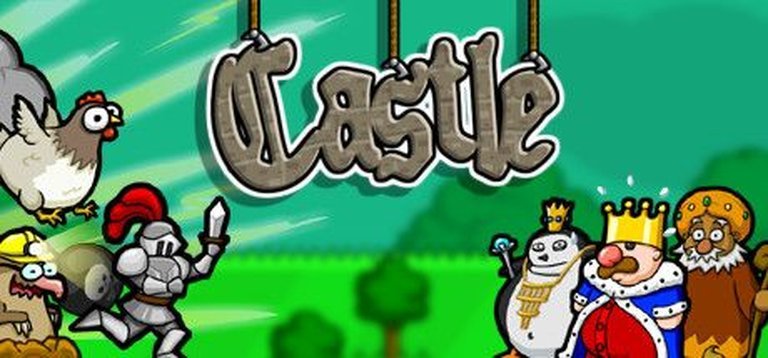
Castle is a real-time puzzle game developed and published by Snails Animation, released in 2015 for Windows. Set in a medieval world, players engage in arcade-style city building and construction simulation from a side-view perspective with fixed or flip-screen visuals, incorporating comedic narrative elements as they construct and manage fortifications in a humorous take on castle defense and expansion.
Gameplay Videos
Where to Get Castle
PC
Reviews & Reception
metacritic.com (68/100): Mixed or Average
cgmagonline.com (80/100): an enjoyable, cordial, and charming single-player strategy tower defense game
hardcoregamer.com : technically proficient but lacks distinctive elements
store.steampowered.com (72/100): Mostly Positive
Castle: Review
Introduction
In the vast landscape of indie games that emerged during the early 2010s indie boom, few titles capture the whimsical yet challenging essence of medieval castle-building quite like Castle (2015), developed and published by Snails Animation for Windows PC. Released on January 7, 2015, this addictive puzzle-arcade hybrid stands out not just for its unique blend of construction and defense, but for embodying the era’s DIY spirit—where small teams could craft engaging experiences with limited resources. Drawing from a rich tapestry of influences like the blocky creativity of Minecraft and the strategic tension of tower defense classics, Castle tasks players with meticulously building dream fortresses while fending off mischievous enemies. Its legacy, however, is intertwined with the broader “castle” genre, including troubled siblings like Castle Story and The Castle Game, highlighting both innovation and the pitfalls of indie development. My thesis: Castle excels as a compact, replayable gem that prioritizes clever problem-solving over bombast, offering timeless appeal in an oversaturated market, though it occasionally stumbles on depth and polish.
Development History & Context
Snails Animation, a modest indie studio, brought Castle to life in 2015 amid the post-Minecraft explosion of voxel-based and building-focused games. The studio, comprising a small team focused on casual indie titles, drew inspiration from the era’s gaming landscape: the Kickstarter-fueled hype of projects like Castle Story (Sauropod Studio’s 2012 campaign, which raised over $700,000 but devolved into years of drama) and the console strategy surge seen in The Castle Game (Neptune Interactive’s 2015 PS4 release). Technological constraints played a key role; developed for Windows with minimal requirements (512 MB RAM minimum, 70 MB storage), Castle leveraged Unity-like simplicity to create fixed/flip-screen puzzles without needing high-end hardware. This was the mid-2010s PC indie scene—Steam Greenlight was booming, and games like Castle thrived on affordability ($3.99 launch price, now often $0.67 on sale).
The creators’ vision centered on a “unique concept” of simultaneous building and protection, as per the official Steam description, blending arcade city-building simulation with real-time defense. Unlike Castle Story‘s ambitious voxel strategy, which suffered scope creep under Sauropod’s inexperienced leads (François Alain and Germain Couët), Snails kept Castle lean: 18 normal levels, 15 in “King Mode” (extra hard), and survival rounds. Development was straightforward, avoiding the mismanagement that imploded Sauropod—irregular updates, subreddit bans, and a 2019 shutdown after Mirador‘s failed Kickstarter. Similarly, The Castle Game emerged from Toronto’s Neptune Interactive, a three-person team (programmer, artist, audio wizard) inspired by Warcraft and Game of Thrones, emphasizing slick PS4 controls for tower defense. Snails, however, released quietly without major crowdfunding drama, fitting the era’s shift toward direct Steam launches. The result? A game that punches above its weight, unburdened by overambition.
Narrative & Thematic Deep Dive
At its core, Castle weaves a lighthearted comedy narrative around medieval monarchy and chaotic construction, where players embody a beleaguered architect serving demanding rulers. Monarchs arrive with “specific castle requests,” tasking you to assemble their “dream palace piece by piece before the deadline without making mistakes.” This setup evokes themes of precision under pressure—mirroring real-world project management—while enemies (burning imps, exploding bombers, thieving goblins) symbolize disruptive forces like deadlines or sabotage. Dialogue is sparse but punchy: quirky voice lines and cartoonish events (e.g., villains “stealing pieces”) inject humor, with 20 unlockable “atlas pages” providing character bios and tips, like descriptions of a “pesky Barrel Bomber” who screams “incooooming!” before detonating.
Thematically, Castle explores creation versus destruction in a medieval fantasy setting, contrasting the player’s methodical building with enemies’ anarchic interruptions. It’s comedic rather than epic—no deep lore like The Castle Game‘s Lord of the Rings-inspired battles against “armies of darkness”—but it shines in its absurdity. Protect-the-castle survival mode flips the script: pre-built fortresses must endure “swarms of enemies,” emphasizing resilience over invention. Characters are archetypal yet endearing—greedy kings, bumbling foes—fostering a sense of underdog triumph. Compared to Castle Story‘s Bricktrons (loyal builders defending against Corruptrons in a voxel world), Castle‘s narrative is more intimate, focusing on individual builds rather than grand sieges. Flaws emerge in its simplicity: no branching plots or character arcs, just escalating chaos. Yet this restraint amplifies the comedy, turning frustration into farce, much like how The Castle Game uses “quirky voice overs” for levity during tense defenses.
Gameplay Mechanics & Systems
Castle‘s core loop is a masterful deconstruction of puzzle-building fused with real-time arcade defense, demanding split-second multitasking. In normal mode, you drag and place bricks to match a blueprint while deploying items (traps, catapults, archers) against intruders—enemies burn, explode, or pilfer pieces, forcing adaptive strategies. The UI is intuitive: a side-view perspective with fixed/flip-screen visuals lets you zoom and rotate easily, though early levels teach via trial-and-error. Upgrades are key—collect gems to enhance “castle-building equipment,” like faster placements or stronger defenses—unlocking 30 Steam achievements (e.g., “Perfect Build” for error-free levels).
Combat is arcade-simple: select tools from an inventory (unlimited in survival mode) to counter specific threats, like lightning spells for bombers or spikes for ground troops. Character progression ties to modes: normal builds skills for King Mode’s punishing timers, while survival tests endurance with endless waves. Innovative systems include “reclaim control” mechanics—stolen pieces can be recovered, adding risk-reward—and destructible environments, echoing The Castle Game‘s repairable structures. Flaws? Pacing can feel grindy; real-time pressure leads to cheap deaths, and the lack of multiplayer (unlike Castle Story‘s co-op dreams) limits replay beyond leaderboards. Controls are PC-optimized (mouse/keyboard), but no gamepad support hurts accessibility. Overall, it’s engaging: witty instincts over rote strategy, with difficulty ramping from casual puzzles to “good kind of challenging” (per Indie Game Reviewer).
- Core Loop Breakdown:
- Building Phase: Blueprint-matching with time limits; errors deduct progress.
- Defense Integration: Enemies spawn dynamically; wrong tool use escalates chaos.
- Progression: Gems fund global upgrades (e.g., arrow speed, trap potency); atlas unlocks lore/tips.
Compared to Castle Story‘s slow voxel commands or The Castle Game‘s FPS-style navigation, Castle innovates in hybridity—build accurately or perish—making it addictive for short bursts.
World-Building, Art & Sound
Castle‘s medieval setting is a vibrant, cartoonish playground: blocky castles rise on flat terrains, dotted with whimsical biomes (implied forests, kingdoms) that evoke LEGO fantasies. Atmosphere builds tension through escalating sieges—sunny starts turn frantic as night falls and hordes swarm—contributing to a “sumptuous medieval” feel akin to The Castle Game‘s inspired landscapes. Visual direction is fixed-screen simplicity: bold colors, exaggerated animations (exploding barrels, fleeing imps), and no frills, running smoothly on low specs. It’s not voxel-detailed like Castle Story‘s brick-by-brick worlds, but the charm lies in minimalism—castles feel personal, not epic.
Sound design amplifies immersion: jaunty medieval tunes swell into urgent percussion during attacks, with “funny characters” delivering cartoonish quips (e.g., enemy screams). Audio cues are crucial—hear a bomber’s wail to react—mirroring The Castle Game‘s “danger cues” for tactical depth. No voice acting overload, but quirky effects (brick clunks, trap snaps) create a lively soundscape. These elements unify the experience: visuals reward clever builds, sounds heighten chaos, fostering a cozy yet thrilling vibe. Drawbacks? Repetitive audio loops in long sessions, and art lacks the polish of bigger titles, but it suits the indie ethos.
Reception & Legacy
At launch, Castle garnered “Mostly Positive” Steam reviews (72% of 98), praised for uniqueness (“I hadn’t ever played anything like it” – Wake and Game, 9/10) and challenge (4/5 from Indie Game Reviewer). No Metacritic aggregate, but user scores hover at 5.5/10 on sites like VG Times, citing addictive gameplay amid sparse content. Commercially, it sold modestly—collected by 25 MobyGames players, low wishlist traction—but endures on sales ($0.67). Critically, empty MobyGames reviews highlight its obscurity, overshadowed by contemporaries.
Legacy evolves through the “castle” genre’s shadow: Castle Story (2013 early access, 2017 full release) started strong (Kickstarter darling) but soured via delays, moderation scandals, and Sauropod’s 2019 implosion—leaving it buggy and unsupported (Steam discussions lament “development just stopped”). The Castle Game fared better (Metacritic 68/100, 6.6 user score), lauded for PS4 controls and content (8/10 CGMagazine: “charming tower defense”) but critiqued for saturation (60/100 Hardcore Gamer). Castle influenced hybrids like voxel builders (Castle Constructors, 2021), emphasizing compact design over scope creep. Its influence? Subtle but enduring—teaching indies to scope small, amid a wave of Kickstarters that burned bright and fast. Today, it’s a cult pick for puzzle fans, preserved on Steam amid genre nostalgia.
Conclusion
Castle (2015) distills the joy of medieval creation into a taut, hilarious package: build meticulously, defend frantically, repeat with upgrades. Its strengths—innovative mechanics, comedic themes, charming art—outweigh flaws like mechanical simplicity and solo focus, delivering 5-10 hours of engaging play across modes. Synthesizing the era’s indie trials (from Castle Story‘s drama to The Castle Game‘s polish), it carves a niche as an underappreciated survivor. In video game history, Castle claims a modest throne: not revolutionary, but a delightful reminder that small teams can craft enduring fun. Verdict: 8/10 – Highly recommended for casual strategists seeking wit over war.