
- Release Year: 2019
- Platforms: Windows
- Publisher: Sedoc LLC
- Developer: Domo Games
- Genre: Simulation
- Perspective: Side view
- Game Mode: Single-player
- Gameplay: Business simulation, Managerial, Tower defense
- Setting: Medieval
- Average Score: 67/100
Description
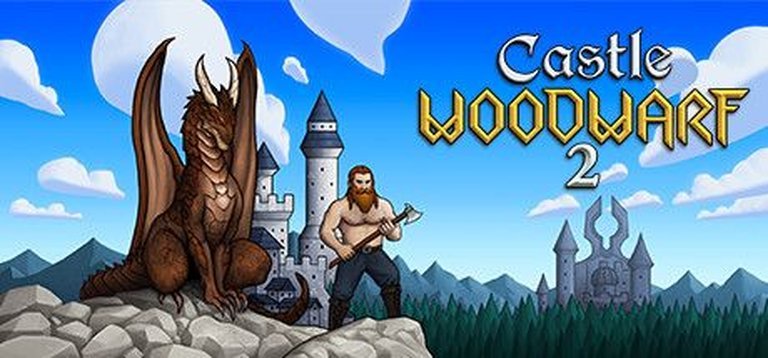
Castle Woodwarf 2 is a medieval-themed simulation game where players defend their dragon and dwarven city Woodwarf by managing resources, upgrading their base, and commanding an army through underground battles. Players balance three types of dwarves (gatherers, lumberjacks, and fishers) to fuel their economy while deploying three unit types (tank, archer, and mage) against 25 diverse enemies and 5 bosses across 17 levels with adjustable difficulty.
Gameplay Videos
Where to Buy Castle Woodwarf 2
PC
Castle Woodwarf 2 Patches & Updates
Castle Woodwarf 2 Guides & Walkthroughs
Castle Woodwarf 2 Reviews & Reception
emeraldrangers.com (60/100): A great little title with genuine fun gameplay, despite some repetition.
Castle Woodwarf 2: Review
Introduction
In the pantheon of indie strategy games, few titles bridge the gap between casual accessibility and addictive depth as effectively as Castle Woodwarf 2. Developed by Domo Games and published by Sedoc LLC in 2019, this sequel to a free Armor Games flash game expands upon its predecessor’s simple yet compelling premise. At its core, the task is deceptively straightforward: protect a dragon egg and the dwarven city of Woodwarf from relentless waves of monsters. Yet beneath this veneer lies a meticulously crafted loop of resource management, tactical combat, and progression that elevates it beyond mere tower defense. This review posits that Castle Woodwarf 2 succeeds not through narrative ambition or graphical spectacle, but through its mastery of incremental complexity and satisfyingly paced challenge, making it a hidden gem for enthusiasts of old-school strategy simulations.
Development History & Context
Castle Woodwarf 2 emerged from the small-scale, collaborative ethos of indie development. The five-person team—led by Domagoj Bulat (lead design, programming, animation) and Theodoros Mavrogonatos (art, UI, game design)—operated under significant constraints, leveraging the Stencyl engine to create a 2D real-time experience. The game’s genesis lies in its 2019 predecessor, Castle Woodwarf, a free browser game that served as a “high score chaser” with minimalist mechanics. The sequel’s vision was to transform this into a full-fledged premium experience, adding depth through progression systems, varied enemy encounters, and a more robust economic model.
Released on October 4, 2019, the game entered a saturated indie strategy market dominated by titles like Dungeon Keeper clones and mobile tower defense ports. Its timing coincided with a resurgence of accessible, low-budget strategy games on platforms like Steam and Itch.io, where players sought bite-sized yet challenging experiences. The decision to price it at $6.99 (later $6.99 on Steam) was a strategic one: a premium entry point for a sequel to a free game, justified by expanded content and polish. Critics noted this duality, with the Emerald Rangers review acknowledging the “bit of salt” in paying for a sequel to a free title, while defending its value through gameplay depth.
Narrative & Thematic Deep Dive
Castle Woodwarf 2 makes no pretenses of storytelling. The narrative, confined to the Steam store description, is a barebones fantasy premise: “Keep your dragon and city of Woodwarf safe with the help of your dwarven army.” There are no named characters, no dialogue beyond repetitive catchphrases, and no overarching plot twists. The dwarves—whether gatherers, soldiers, or managers—shout generic exclamations (“Yer gold’s safe with me!” “For the dragon!”) upon spawning, a choice that injects fleeting humor but quickly wears thin.
This minimalism is a deliberate design choice, focusing the experience on gameplay over narrative immersion. Thematically, the game leans into archetypal fantasy tropes: dwarven resilience (represented by the city’s incremental upgrades), the guardian dragon (a symbol of hope that evolves from egg to ally), and the cyclical threat of invasion. The absence of complex lore allows players to project their own narratives onto the struggle, reinforcing the game’s core appeal: the satisfaction of incremental progress against overwhelming odds. The dragon’s journey from vulnerable egg to fiery protector mirrors the player’s own growth, creating a subtle emotional tether to the gameplay loop.
Gameplay Mechanics & Systems
The brilliance of Castle Woodwarf 2 lies in its dual-layered gameplay, which fuses tower defense with resource management.
Core Loop
The game unfolds across two vertically divided levels:
– Upper Level: A forested landscape where dwarves gather resources. Three economic dwarf types—Gatherers (collect gold), Lumberjacks (chop trees), and Fisher Dwarves (fish)—automatically perform tasks once deployed. Food sustains dwarves, while gold funds new units.
– Lower Level: A subterranean cavern where the dragon egg resides. Here, players deploy three military dwarf types—Tanks (melee), Archers (ranged), and Mages (area damage/heal)—to defend against 25 distinct enemy types, including ghosts that nullify arrows and flying units that bypass ground defenses.
Defeat occurs when the dragon’s hearts (representing its health) deplete. Hearts drain from direct attacks or if food supplies run out, adding resource starvation as a strategic risk.
Progression & Depth
- Levels and Difficulty: 17 cities (levels) span 15 campaign stages, 15 challenge modes, an endless wave mode (City 16), and a sandbox (City 17). Each level offers three difficulty tiers, with challenges unlocked upon completion.
- Upgrade System: Stars earned from clearing levels fuel a robust upgrade shop. Players can invest in five categories (e.g., Dwarf capacity, dragon growth speed, cooldown reductions), each with six tiers, totaling 30 upgrades. This transforms early-game struggles into late-game dominance, rewarding persistence.
- Dragon Mechanics: The dragon evolves through seven upgrades, eventually breathing fire to scorch enemies. Its mobility allows players to reposition it tactically, adding a layer of active defense beyond static dwarf placement.
- Shop and Items: A gem shop lets players purchase consumables (bombs, freeze bombs) or enhance resources (e.g., “extra life” hearts). This introduces temporary tactical advantages without breaking the core economy.
UI and Innovation
The interface is utilitarian and efficient, with direct controls for deploying dwarves and using the dragon’s abilities. While the Stencyl engine limits technical flair, the game innovates within its constraints: the dual-layer design creates spatial strategy absent in traditional tower defense, and the dragon’s evolving role bridges passive defense with active player agency.
World-Building, Art & Sound
Castle Woodwarf 2’s world is a study in contrasts: rich thematically but visually sparse. The setting—Medieval fantasy with dwarven and dragon motifs—is conveyed through environment and mechanics rather than explicit lore. The city of Woodwarf starts as a humble camp, evolving into a fortress with seven house types (from tents to castles) and environmental upgrades (e.g., 7 tree/fish/vegetable varieties). This progression fosters a sense of player-driven development, even as the levels themselves remain static.
Art Direction
The art is unapologetically retro, with pixel-art sprites evoking early 2000s flash games. Dwarves are charmingly simplistic—stocky, bearded figures—and enemies range from skeletal archers to ethereal ghosts. Backgrounds, however, are a notable weakness: most levels reuse a single forest cave, with only time-of-day shifts (dawn to dusk) and minor environmental clutter altering the scenery. This repetition, acknowledged by the Emerald Rangers review, undermines the game’s otherwise appealing aesthetic.
Sound Design
Greg Magee’s soundtrack is a triumph of medieval ambiance, with lute-driven melodies and percussive rhythms that evoke a sense of cozy, rustic danger. Sound effects—from clashing swords to dragon roars—are crisp and impactful. The voice acting, however, is a double-edged sword: dwarves’ three repeated catchphrases are initially amusing but become grating in late-game spam. Thankfully, volume controls mitigate this, though it remains a missed opportunity for personality.
Reception & Legacy
Castle Woodwarf 2 launched to modest critical acclaim, holding a 70% score on Metacritic (based on one review). The Emerald Rangers lauded its “genuine fun” and value at $5 (later $6.99), criticizing repetition but praising its “old school strategy” purity. Player reviews on Steam were more polarized, with a “Mostly Positive” rating (75/100) from 83 users. Positive reviews highlighted its addictive loop and low barrier to entry, while negatives cited level reuse and the free original as value propositions.
Commercially, it succeeded as a niche title, appealing to fans of incremental strategy. Its legacy lies in its influence on the indie genre: it exemplified how small teams could deliver polished, focused experiences on limited budgets. The game’s emphasis on replayability (via endless modes and challenge levels) predated trends in roguelite-lite design, and its dual-layer gameplay inspired hybrids like Lost Castle 2 (2024). Though not a landmark title, it remains a respected entry in the tower defense/real-time strategy fusion canon.
Conclusion
Castle Woodwarf 2 is a testament to the power of focused design. It eschews narrative flair and graphical ambition for a ruthlessly efficient gameplay loop that balances accessibility with depth. Its strengths—the satisfying resource economy, the evolving dragon, the progression systems—far outweigh its flaws, from repetitive visuals to grating voice lines. For fans of Dungeon Keeper or Plants vs. Zombies, it offers a compact, rewarding experience that honors its flash game origins while justifying its premium price. While unlikely to redefine the strategy genre, its place in video game history is secure as a charming, well-crafted indie gem that proves complexity can thrive within simplicity. Verdict: A must-play for strategy enthusiasts seeking bite-sized, addictive gameplay.