
- Release Year: 2021
- Platforms: Windows
- Publisher: 5TH Cell Media, LLC
- Developer: 5TH Cell Media, LLC
- Genre: Strategy, Tactics
- Perspective: Diagonal-down
- Gameplay: Cards, Tiles, Turn-based strategy
- Setting: Fantasy
Description
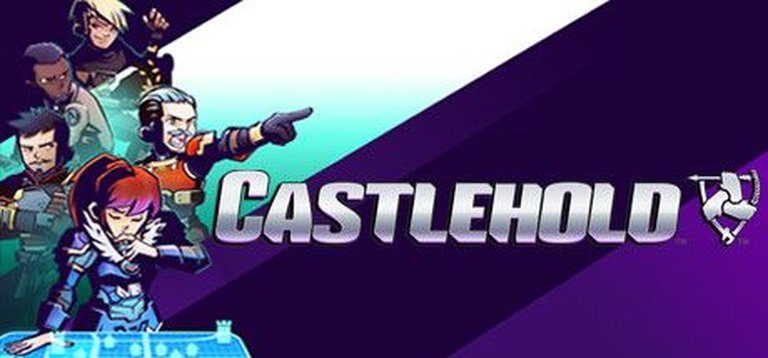
Castlehold is a fantasy-themed turn-based strategy game that introduces the innovative Active Resource Control (ARC) System, allowing players to build custom armies using cards or tiles and engage in tactical, resource-focused PvP combat. Set in a dynamic battlefield, it emphasizes strategic depth and fast-paced multiplayer matches with features like deckbuilding and ranked ladders.
Gameplay Videos
Where to Buy Castlehold
PC
Castlehold: Review – A Fractured Kingdom of Promise and Neglect
By [Your Name], Game Historian & Journalist
Introduction: The Drift Awaits… And Awaits
In the annals of 2021’s bustling free-to-play and early-access landscape, few titles arrived with as peculiar and compelling a pedigree as Castlehold. From 5TH Cell, the studio that redefined creative problem-solving with the Scribblenauts series, came a declaration of war across time and space. Here was a developer synonymous with linguistic innovation turning its gaze to the cold calculus of turn-based strategy and deck-building. The thesis of Castlehold was audacious: to condense the grand, sprawling scope of a real-time strategy or a collectible card game into a tense, intimate, 19-hexagon battlefield governed by a novel “Active Resource Control” (ARC) system. It promised a game “simple to learn, but difficult to master,” a crucible where positioning, probability, and persistent deck erosion would create narratives of desperate comeback and strategic collapse. This review is not merely of the game that launched into Steam Early Access on March 3, 2021, but of a fascinating, frozen artifact—a compelling design hypothesis trapped in a state of suspended animation, its ultimate fate a testament to the perilous economics of niche competitive gaming.
Development History & Context: 5TH Cell’s Calculated Gamble
5TH Cell Media, LLC, carved its niche by transforming player ingenuity into core mechanics. Scribblenauts (2009) was a watershed moment, leveraging a vast lexical database to empower players. Lock’s Quest (2008) showed their ability to blend tower defense with action-RPG elements. By 2021, the studio was at a crossroads. The deck-building/roguelike boom of the 2010s (Slay the Spire, Monster Train) had matured, and the competitive TCG/auto-battler scene was dominated by behemoths (Hearthstone, Legends of Runeterra). Enter Castlehold—not a direct clone, but a hybrid. It married the asymmetric, unit-synergy depth of a deck-builder with the territorial control and objective-focused gameplay of a tactics game like Fire Emblem or Advance Wars, all rendered in Unreal Engine 4 with a stylized, accessible aesthetic.
The “technological constraints” were less about hardware and more about design philosophy. The 19-hex grid (as noted in the Hardcore Gamer preview) was a deliberate limitation, a sandbox meant to force intense, meaningful decisions in a confined space. The era’s gaming landscape was saturated with live-service models. 5TH Cell’s decision to go free-to-play was a pragmatic necessity for a competitive title, but their public statements (from the Steam page and press releases) reveal a conscious effort to differentiate their monetization. They explicitly positioned themselves against “gambling” loot boxes, proposing a “re-roll” system for unit acquisition—a sensible, if not revolutionary, middle ground that acknowledged player fatigue with pure RNG rewards.
Narrative & Thematic Deep Dive: The Cataclysm of the Drift
Castlehold’s narrative is less a story told and more a lore-laden premise provided as contextual flavor, a common approach for competitive strategy games. The official description, repeated across storefronts, is our primary source:
“A cataclysmic event shatters space and time. Champions from all eras of history find themselves struggling to survive in a mysterious realm known as the Drift. Remnants of kingdoms and cities, both modern and old, have spread across islands over a vast ocean… Latent powers have awoken within humanity… Now it is time for you to raise an army and liberate the Remnants from their tyrannical oppressors.”
This is a classic multiversal “collapse” trope, seen in properties like Heroes of the Storm or the Mortal Kombat film series. The theme is one of anarchic possibility and tyrannical order. The Drift is pure chaos, a realm where samurai, vikings, cybersoldiers, and druids coexist in fractured geography. The “tyrannical oppressors” are vague, serving as a universal motivator for the player’s “liberation” campaigns. The narrative’s function is purely justificatory: it explains the anachronistic army composition and provides a non-linguistic (a key distinction from Scribblenauts) reason for conflict. It offers no character arcs, no dialogue trees, no identifiable protagonist or villain beyond the abstract concepts of “Champion” and “Oppressor.” The depth lies not in the story, but in the implication of each unit’s history—the speculative fiction a player constructs when placing a “cowgirl” next to a “buccaneer.” It’s a narrative of selection, not of sequence.
Gameplay Mechanics & Systems: The Elegant Clutch of the ARC
This is where Castlehold stakes its claim to historical interest. Its core loop is deceptively simple: two players, each with a Captain (a unique hero unit with a special ability) and a deck of 12 Unit cards, battle on one of four symmetrical “Battlefield” maps. The win condition is to capture and hold the opponent’s castle tile for one full turn. The genius, and the source of all tension, is the Active Resource Control (ARC) System.
1. The Resource is the Battlefield: Unlike traditional TBS games where resources are abstract (gold, mana) or gathered from specific map features, Castlehold’s gold is generated automatically each turn by every Village hex your units occupy. You don’t build a gold mine; you hold ground. This creates a constant, palpable tug-of-war. Expanding to capture an enemy Village is an investment—it costs a unit’s action and positioning, but secures future income. Sacrificing a Village to deny it to a fast, aggressive opponent is a valid defensive play. The “Active” in ARC means resource generation is never passive; it’s a direct consequence of board state, making every hex a potential economic engine.
2. The Finite Deck – A Game of Attrition: This is the system’s most brutally elegant feature. As confirmed in the Hardcore Gamer preview, your 12-card deck does not refresh. When a unit is defeated, it is permanently removed from your pool for that match. This transforms the game from a typical “summon creatures” affair into a high-stakes war of attrition. You cannot simply out-swarm an opponent; you must manage a finite pool of assets. A “late-game” powerful unit is useless if your early-game skirmishers are exhausted. This design inherently favors patient, defensive strategies where unit preservation is paramount, rewarding players who can trade favorably and whittle down the opponent’s available forces. The preview’s observation that “playing the long game… is a viable strategy” is not a feature, but a consequence of this core rule.
3. Positioning & Synergy: The Web of Buffs: Unit stats and abilities are heavily influenced by adjacency and board position. Some units gain attack/defense boosts for being near allies of certain types (e.g., “Historical” units buffing other “Historical” units). The limited board size means these positioning puzzles are concentrated and critical. Moving a unit one hex can break a crucial synergy chain or enable a devastating combo. This creates a feeling of interconnected fragility, where the whole deck’s efficacy depends on a delicate, spatial geometry.
4. Captains & Asymmetry: The five free Captains provide asymmetric starting conditions and unique active abilities (e.g., a Captain that can teleport, or one that generates extra gold). They act as the “class” or “face” of your deck, shaping your early-game strategy and win condition. The free-to-play model suggests more Captains would be monetized or unlockable.
5. Flaws and Frictions: The system is not without documented pain points. Steam community discussions highlight concerns about “Attackers Advantage”—a perceived imbalance where the player initiating combat has a significant edge, potentially leading to snowballing. The tutorial’s explanation of this mechanic was notably confusing for some players. Furthermore, the design choice that defense numbers cannot be “dog-piled” (multiple units attacking a high-defense target not reducing its defense) means certain tanky units become almost untouchable without specific counter-units or abilities, potentially leading to stagnant, unwinnable board states if not addressed by deck composition. The monetization model, while praised for avoiding blind loot boxes, still relies on unit acquisition (via “Currents” currency or real money) and daily selects, which can gate powerful synergies for free-to-play users.
World-Building, Art & Sound: Aesthetic Minimalism
With no documented narrative campaigns or explorable environments, Castlehold’s world-building is entirely diegetic and unit-based. The “Drift” is a concept, not a place you see. The visual presentation is clean, stylized 3D on a fixed, diagonal-down perspective. Units are clearly readable archetypes: a knight in plate armor, a cowboy with a revolver, a cybernetic soldier with glowing lenses. The art direction prioritizes silhouette and color-coded factions (likely split by the two unit “factions” mentioned in the Steam description: “150×2”) over deep historical or technological detail. The four “Battlefields” are the only settings, presumably themed (e.g., a medieval castle courtyard, a futuristic city ruin), but they function purely as tactical grids with Village and Castle placement. There is no ambient world to explore; the world is the battlefield.
The sound design is not documented in sources, but typical for the genre: unit-specific attack sounds, spell effects, and a UI-driven interface. The atmosphere is one of sterile, focused confrontation. The music, if any, would likely be tense, strategic underscoring rather than epic fantasy sweeps. The overall aesthetic supports the design philosophy: remove all extraneous fat. There are no animations of armies marching across continents, only the clash of 12-unit warbands on a postage-stamp island. It’s a world reduced to its tactical essence.
Reception & Legacy: The “Mostly Positive” Abyss
Critical & Commercial Reception at Launch: Castlehold did not chart on Metacritic’s critic list, and IGN’s only coverage was a brief news item at launch (Tom Marks, “5th Cell returns with a new take on a tactic game”). The critical voice was thus largely emergent from the community. Steam user reviews, as of the latest data (Steambase, Feb 2026), show a “Mostly Positive” rating (73% of 88 reviews). This is a solid but not spectacular score for a free-to-play competitive title. Positive reviews likely praised its unique ARC system, depth, and fair monetization. Negative reviews, visible in Steam community discussions, cite game-breaking balance issues (e.g., “This game can end in 1 turn. unbalance pos lmfao. who design this game?”), confusing mechanics, and most damningly, a perceived lack of developer activity.
The Stasis of Early Access: This is the defining, tragic element of Castlehold’s legacy. The Steam Early Access page, as of 2026, carries a chilling note: “The last update made by the developers was over 4 years ago.” The developers’ own stated timeline (6-12 months to full release) has been catastrophically missed. Community posts from 2021 lament bugs (“Game crashing when launching”), question if ranked matches are against bots, and beg for balancing. A developer account (5TH Cell) posted a single “BALANCING” thread in June 2021, which received no further official comment. The game exists in a perpetual beta, a ghost town with a functional lobby and matchmaking system but a dead development road.
Influence & Industry Place: Castlehold’s direct influence is negligible due to its obscurity and abandonment. However, its core hypothesis—territory-based resource generation in a micro-tactical deck-builder—remains intellectually significant. It represents a specific, almost antithetical, design branch to the common “lane-based” (e.g., Dave the Diver) or “auto-battler” (e.g., TFT) trends. Its finite deck attrition model is a hard counter to the typical “refreshing hand” mechanic, creating a permanent consequence system rarely seen in competitive card games. Had it been nurtured, it might have been cited alongside projects like The Hand of Fate (which blends deck-building with a board game) as an innovative hybrid. Instead, it serves as a cautionary tale. It demonstrates that even with a novel, sound core loop from a respected studio, the live-service ecosystem is unforgiving. A niche competitive game requires constant balancing, new content (the promised “more Modes and Additional Troops”), and community management. Without these, even a “Mostly Positive” score and a clever gimmick cannot sustain a player base. The “war across time” was won not by a liberator, but by entropy.
Conclusion: A Fascinating Relic, Not a Finished Masterpiece
Castlehold is not a great game in the traditional sense of a completed, polished, influential classic. It is, however, a profoundly interesting design document made playable. Its Active Resource Control system is a masterstroke of elegant, interconnected game design, turning every hex into a volatile economic asset and creating a strategic depth disproportionate to its tiny board. The finite deck attrition is a brutally clever mechanic that promotes preservation and long-term planning over aggression.
Yet, this brilliance is locked in amber. The severe lack of post-launch support, the apparent abandonment by its developer, and the resulting stagnant meta have turned it into a museum piece. You can still play its matches, experience the tense pull-and-push of its village control, and feel the unique dread of watching your last elite unit fall, knowing your deck is now empty. But you do so in a graveyard of lost potential.
Final Verdict: Castlehold is a 7/10 design idea trapped in a 4/10 released product. As a historical artifact, it scores higher—a brilliant, punctured hypothesis from a creative studio that couldn’t or didn’t see it through. Its place in video game history is not as a landmark title, but as a compelling case study in the fragility of innovative design in the live-service era. It deserves to be studied in game design courses for its ARC and deck-attrition systems, but it must also be cited as a warning about the运营 costs of competition. Play it now not to experience a living, breathing competitive scene, but to engage with a ghost—the spirited, clever ghost of a strategy game that could have been.