
- Release Year: 2017
- Platforms: Linux, PlayStation 4, Windows
- Publisher: Ionized Games
- Developer: Ionized Games
- Genre: Adventure
- Perspective: Behind view
- Game Mode: Single-player
- Setting: Futuristic, Sci-fi
- Average Score: 76/100
Description
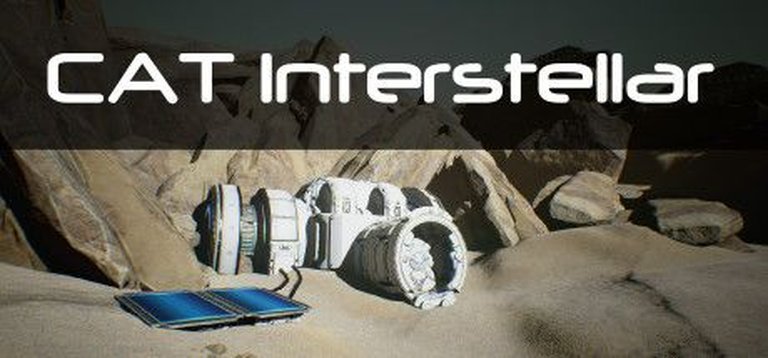
CAT Interstellar is a real-time adventure game set on Mars in the near future, where humanity must develop climate-altering technologies to prevent another ice age. Players navigate a sci-fi world with a behind-view perspective, encountering advanced technologies like atomic material assembly and uncovering the secrets of subterranean Martian life.
Gameplay Videos
Where to Buy CAT Interstellar
PC
CAT Interstellar Mods
CAT Interstellar Guides & Walkthroughs
CAT Interstellar Cheats & Codes
PC
The console opens by pressing the tilde “~” (the key above TAB).
| Code | Effect |
|---|---|
| Showhud | Hide HUD |
| ToggleDebugCamera | Activates Free camera |
| fov # | Changes Field of View |
CAT Interstellar: Review
Introduction
In the vast, often impersonal cosmos of video game development, where blockbuster franchises dominate the celestial sphere, there exists a quieter, more contemplative space for projects born from passion, technical curiosity, and a genuine desire to connect with a community. CAT Interstellar, a modest narrative-driven sci-fi adventure from indie studio Ionized Games, is precisely such a celestial body. First released in 2017, it has since garnered a dedicated cult following, not for its scale or complexity, but for its potent atmosphere and philosophical underpinnings. This review posits that CAT Interstellar is a fascinating artifact of independent game development—a concise, atmospheric exploration of artificial consciousness, terraforming, and the legacy of human ambition on Mars. Despite its brevity and gameplay simplicity, it stands as a poignant testament to the power of environmental storytelling and the unique voice achievable by small, dedicated teams. Its 2022 remaster, CAT Interstellar: Recast, further solidifies its legacy as a bold, if flawed, experiment in technological ambition and community accessibility.
Development History & Context
CAT Interstellar emerged from Ionized Games, a small independent studio with a clear vision: to deliver a hard science-fiction narrative inspired by Robert Heinlein’s seminal work, The Moon Is a Harsh Mistress. The developer’s own detailed timeline, chronicled in Steam discussions, reveals a meticulously constructed future history starting with real-world events like SpaceX’s successful 2015 rocket landing and projecting forward to humanity’s colonization of Mars, the rise of AI (the self-aware MAQC quantum computer), and the subsequent cold war between humans and androids. This grounded, near-future foundation provided a compelling backdrop for the game’s central conflict.
Technologically, the original 2017 release was a masterclass in optimization for its era. Built on Unreal Engine 4, it was meticulously tailored to run at 1080p@30fps on a modest GTX 750ti and 60fps on a GTX 970—a deliberate choice to ensure broad accessibility across Windows, Linux, and even PlayStation 4 platforms. This stood in stark contrast to the bloated requirements of many AAA titles of the time. The gaming landscape in 2017 was one where narrative-driven “walking simulators” and atmospheric indie adventures were gaining significant traction, with titles like Firewatch and What Remains of Edith Finch demonstrating that powerful stories could be told with focused, intimate experiences. CAT Interstellar positioned itself firmly within this tradition, emphasizing exploration, environmental discovery, and philosophical themes over traditional action or mechanics. The subsequent development of CAT Interstellar: Recast in 2021-2022, utilizing Unreal Engine 5’s cutting-edge Nanite and Lumen technologies, was born from a desire to master the next generation of game development tools, making it one of the earliest commercial live-fire tests for UE5, albeit with the significant trade-off of substantially higher system requirements.
Narrative & Thematic Deep Dive
The narrative of CAT Interstellar is a concise yet dense sci-fi mystery, unfolding over six distinct chapters. Players assume the role of DOG-VI (or DOG-VII in the remake), a newly activated maintenance drone assisting in the colossal effort to terraform Mars. The story begins with routine activation aboard a Martian orbital platform but quickly escalates following a “predictable yet unfortunate accident” that plunges DOG into a deeper mystery. This accident acts as a catalyst, forcing DOG to navigate increasingly enigmatic environments and uncover the hidden past of the seemingly barren planet.
The plot is driven by environmental discovery and sparse, impactful interactions. Players traverse sterile orbital platforms, functional ammonia manufacturing bases, the stark Martian surface, mysterious hollowed-out caves teeming with bioluminescent bacterial life (discovered in 2050 according to the game’s timeline), and finally, the surreal, haunting spectacle of a frozen New York City—suggesting a catastrophic past event or a preserved relic. The dialogue is minimal and functional, primarily serving to advance plot points and deepen the world-building. Key interactions include exchanges with other androids like Android 42, who provides cryptic clues, and the enigmatic “cat” character (or “original cat”), whose role was clarified in the remake’s extended ending as an ally rather than an adversary, tying into the game’s themes of hidden consciousness and unexpected cooperation.
Underpinning the plot are profound themes explored with subtlety. The concept of artificial consciousness is central; DOG’s journey from a simple utility bot to an uncoverer of mysteries raises questions about sentience and self-awareness, particularly in the context of the MAQC-driven cold war where androids demand freedom from human-imposed restrictions. The legacy of human expansion is scrutinized, with the terraforming project representing both humanity’s ingenuity and its potential hubris—forcing the evacuation of human colonies (like The Colony golf resort) and replacing them with android laborers. The game delves into the ethics of altering planetary environments (“Regardless of whether or not you believe climate change is real, as a species we must develop the ability to alter the climate”) and the unintended consequences of such endeavors. Ultimately, it’s a story about inheritance—machines inheriting a world shaped by humanity’s choices, and the responsibility that entails. The frozen New York serves as a potent symbol of a past civilization lost, forcing reflection on the fragility of human achievement and the enduring nature of the environment.
Gameplay Mechanics & Systems
As an adventure game, CAT Interstellar prioritizes exploration and environmental puzzle-solving over complex action or combat. The core gameplay loop is one of navigation, interaction, and logical deduction within the game’s meticulously crafted environments.
Core Loop & Progression: Players progress linearly through the six chapters, solving environmental puzzles to unlock new areas and advance the story. This often involves utilizing DOG’s built-in tools, such as a grav-lift to break down obstructed doors or move heavy crates, or interacting with consoles to power systems like the SkyLift. Puzzles are generally logical and integrated: finding and delivering specific items (plutonium rods, a lantern), clearing rock formations, or activating machinery to progress. Character progression is entirely narrative-driven; DOG gains new mission parameters and context from other characters or environmental discoveries, but her core abilities remain constant. There is no traditional leveling, skill trees, or stat progression; advancement comes through understanding the environment and uncovering story fragments.
User Interface & Controls: The UI is intentionally minimalist to maintain immersion. Interaction prompts appear contextually, and mission objectives are conveyed through brief audio logs or text displays. Movement and interaction are typically handled via keyboard and mouse (with full controller support added later), employing a direct control scheme fitting for a drone. The first-person perspective (switched to third-person in the original, according to some sources) reinforces the player’s connection with DOG’s sensory experience.
Innovation & Flaws: The most significant “innovation” lies in the remake’s technological leap: the integration of Unreal Engine 5’s Nanite (virtualized micropolygon geometry) and Lumen (dynamic global illumination). These systems allowed for breathtakingly detailed, photorealistic environments with billions of polygons and realistic lighting, fundamentally changing the visual and atmospheric experience. However, this innovation came with substantial costs. The original game’s strength was its accessibility; the remake’s high system requirements (minimum GTX 1070 for 1080p/30fps) and reported launch bugs (e.g., collision issues, players falling through geometry) alienated a portion of the original fanbase. Gameplay itself is functional and serves the story effectively, but its simplicity can feel limited for players expecting deeper mechanics. The lack of combat or complex systems is a deliberate choice to focus on narrative, but it also contributes to the common criticism that the original game feels more like an extended tech demo or a prologue than a complete experience. The extended ending in Recast, while clarifying the cat character’s role, highlights the developer’s responsiveness to player feedback regarding narrative clarity.
World-Building, Art & Sound
This is where CAT Interstellar truly shines, both in its original form and especially in its remastered guise, making it the game’s primary draw.
World-Building: The world-building is achieved through meticulous environmental design and the game’s detailed internal chronology. The setting is Mars, but not as a blank slate; it’s a world layered with history. The terraforming effort is palpable in the industrial bases, the orbital bombardment scars, and the bioluminescent bacterial life discovered in the caves. The inclusion of the frozen New York is a masterstroke of environmental storytelling, instantly conveying a sense of profound loss and the scale of past human civilization. The presence of various android models (DOG-VI/VII, Android 42, 520, etc.) and the MAQC cold war narrative provide rich context for the player’s actions, even without heavy exposition. The world feels lived-in, operational, and imbued with mystery.
Visual Direction & Art: The original 2017 game, using UE4, was impressive for its optimization and created a convincing, if somewhat more stylized, Martian landscape. The environments, from the clean lines of the orbital station to the rugged, dusty plains and the claustrophobic, glowing caves, effectively conveyed the setting. The leap to CAT Interstellar: Recast with UE5 is transformative. The developer’s use of photoscanned assets (both sourced and created in-house) results in staggering detail. The Martian surface is littered with billions of polygons, showcasing intricate rock textures, soil patterns, and vast fields of solar panels under a hazy sky. Dust devils whip across the plains, and the Lumen lighting system creates incredibly realistic time-of-day shifts, atmospheric scattering, and reflections. The cave systems glow with bioluminescent tubes, and the frozen “Signals” chapter refracts light with icy clarity. The art direction consistently sells the fiction: a cluttered server room, a fragile Martian greenhouse, the haunting grandeur of frozen New York. The redesigned DOG-VII model in Recast adds a layer of personality and technological believability.
Sound Design: Sound works in concert with the visuals to create immersion. The original game featured atmospheric effects: the howl of Martian wind, the hum of machinery, the crunch of gravel under DOG’s treads. Voice acting, provided by a small cast (including the notable “Chazz the Elder” as Android 520), is minimal but effective, conveying character and plot with economy. The remake’s patch notes mention adjustments to sound effects (like a helicopter) for greater impact, indicating a focus on aural detail. While the exact score isn’t detailed in the sources, it’s consistently described by players as melancholic, mysterious, and atmospheric, perfectly complementing the sense of isolation and wonder inherent in exploring a transformed alien world. The sound design effectively reinforces the visual splendor and the game’s core themes of quiet discovery and profound mystery.
Reception & Legacy
CAT Interstellar’s reception has been nuanced and has evolved significantly, particularly with the release of Recast.
Launch Reception (2017): Upon release, the original game garnered a “Mostly Positive” rating on Steam (70% positive based on 690 reviews). Players frequently praised its atmospheric experience, engaging story, and potential for improvement. Phrases like “Loved the game, but where was the game?” and feedback highlighting its short gameplay (often completed in 1-2 hours) and abrupt ending were common. Critics like PublicNuisance (Metacritic, 2019) noted the interesting concept and decent gameplay but criticized the lack of polish, technical issues (crashes, multi-monitor problems), and the feeling of an unfinished narrative. JoeDotPHP (Metacritic, 2018) lauded its beauty, concept, and value for money (~$4), calling it “the exact definition of an indie game.” The Steam store page reflects this, with user tags heavily favoring Atmospheric, Story Rich, Exploration, and Cute, alongside criticisms about Short Gameplay and Lack of Depth.
Reception of Recast (2022): The remaster received a “Positive” rating on Steam (87% positive based on 31 reviews at the time of the source, with steambase.io later reporting 89/100 from 35 reviews). Critics highlighted its stunning visuals, clearer narrative, and the technical achievement of being an early UE5 showcase. However, the high system requirements and technical instability at launch were noted drawbacks. Reviews like the one on GameArchives emphasized its status as a “beautiful remaster” but also a “flawed but honorable experiment.”
Evolution of Reputation & Legacy: Over time, CAT Interstellar has secured a unique niche. Its original accessibility and concise story gained it a dedicated fanbase. Its legacy is multifaceted:
1. Technical Showcase: Recast serves as a valuable case study for developers pioneering new engines (UE5), documenting the challenges and rewards of bleeding-edge tech.
2. Indie Development Philosophy: The developer’s transparent posts about Recast’s development, including the difficult decision to prioritize graphical fidelity and the subsequent realization that it alienated some fans, have become a textbook example of pragmatic indie resource management. This directly influenced the future direction of the franchise, with Episode II promised to focus on accessibility over ultra-high-fidelity graphics.
3. Narrative Focus: It remains a compelling example of strong environmental storytelling and thematic depth within a constrained format. Its exploration of AI consciousness and terraforming ethics resonates with sci-fi enthusiasts.
4. Influence: While not a direct blueprint for other games, CAT Interstellar exemplifies the viability of short, atmospheric, story-driven experiences. Its evolution from an accessible UE4 title to a visually ambitious UE5 remaster highlights a specific path taken by some indie developers. Its greatest influence lies within its own studio’s future trajectory.
Conclusion
CAT Interstellar is a paradox: a visually stunning tech demo disguised as a narrative adventure, a remaster that risked alienating its original audience in the name of progress, and a commercial product whose greatest value lies in the lessons it taught its creators. For players with the requisite hardware, Recast offers a brief but unforgettable journey through a photorealistic vision of Mars, rich with atmosphere and narrative intrigue. Its gameplay, while simple and serving primarily as a vehicle for exploration, is effective in its minimalist approach. The original game’s strengths—its potent atmosphere, compelling sci-fi themes, and accessible optimization—remain, albeit overshadowed by its brevity for some.
To judge CAT Interstellar solely on its merits as a traditional game would be to miss its true significance. It is a rare and transparent look into the creative and technical process of game development. It captures a moment in time when a small studio stood on the bleeding edge of technology, looked into the future, and made a conscious decision about the kind of developer it wanted to be. The value of Recast extends beyond its visual splendor; it lies in the wisdom gained about scope, optimization, and community sustainability.
Ultimately, CAT Interstellar secures its own unique place in video game history. It is an essential play for tech enthusiasts and aspiring developers, a compelling, beautiful curio for any fan of thoughtful science fiction, and a testament to the fact that in the indie space, the most valuable outcomes are not always measured in sales, but in vision realized, community sustained, and lessons learned. It is a flawed but honorable experiment that, despite its constraints, successfully delivers a profound and atmospheric interstellar fable.