
Description
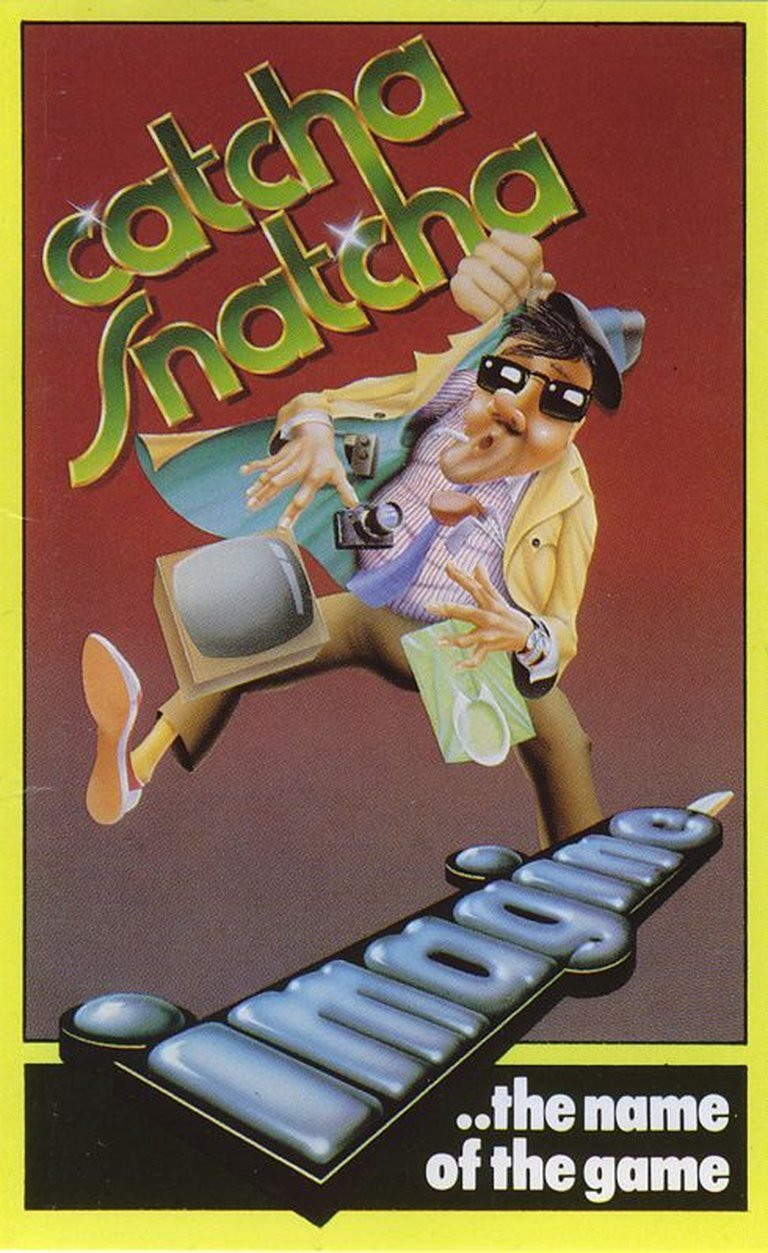
In Catcha Snatcha, players take on the role of Barney Bootlace, a store detective patrolling a department store in a single top-down screen. Your duties include guiding lost children to their parents, returning misplaced items to the lost property office, catching shoplifters, and swiftly removing bombs from the premises. Success is tracked through a manager approval rating (0-99%), where effective task completion boosts approval, while failures lower it. Reaching 99% approval promotes Barney to harder levels, but dropping to 0% earns a demotion and written warning—three warnings result in game over, though advancing two levels removes one warning.
Where to Buy Catcha Snatcha
PC
Catcha Snatcha Mods
Catcha Snatcha Reviews & Reception
everygamegoing.com (30/100): A very clever idea with excellent graphics. Unfortunately, it fails in too many areas.
uvlist.net (61/100): A fun game, although a little infuriating after a while but a good example of an Imagine game title – very unique.
Catcha Snatcha: Review
In the annals of video game history, few titles stand out as uniquely quirky and ahead of their time as Catcha Snatcha. Released in 1983 for the VIC-20, this arcade-style game tasked players with the mundane yet chaotic duties of a store detective. Despite its humble origins and the technological constraints of the era, Catcha Snatcha offers a fascinating glimpse into the early days of gaming and the creative potential of its developers. This review will delve into the game’s development history, narrative depth, gameplay mechanics, world-building, reception, and lasting legacy, ultimately arguing that Catcha Snatcha deserves a place in the pantheon of classic video games.
Development History & Context
The Studio and Creators’ Vision
Catcha Snatcha was developed by Imagine, a British software house known for its innovative and often experimental titles. The game was the brainchild of Eugene Evans, a prolific developer who contributed to nearly 50 other games. Evans’ vision for Catcha Snatcha was to create a game that blended the excitement of arcade action with the mundane tasks of everyday life, resulting in a unique and engaging experience.
Technological Constraints
The VIC-20, released in 1980, was one of the first widely available personal computers. With its limited graphical capabilities and 5KB of RAM, the VIC-20 presented significant challenges for game developers. Despite these constraints, Evans managed to create a game with impressive graphics and a complex gameplay mechanic, showcasing the creative potential of the platform.
The Gaming Landscape
In 1983, the gaming industry was still in its infancy. Arcade games like Pac-Man and Donkey Kong had captured the public’s imagination, but home consoles and computers were just beginning to gain traction. Catcha Snatcha stood out in this landscape by offering a unique blend of arcade action and simulation, predating the likes of The Sims and other life simulation games by decades.
Narrative & Thematic Deep Dive
Plot and Characters
Catcha Snatcha casts the player as Barney Bootlace, a store detective tasked with maintaining order in a bustling department store. The game’s narrative is simple but effective, focusing on the day-to-day challenges of Barney’s job. Players must guide lost children back to their parents, return lost items to the lost property office, apprehend shoplifters, and diffuse bombs, all while keeping their manager’s approval rating high.
Dialogue and Themes
The game’s dialogue is minimal, consisting mainly of on-screen prompts and instructions. However, the themes it explores are universal and timeless. Catcha Snatcha touches on the struggles of everyday life, the importance of responsibility, and the challenges of maintaining order in a chaotic world. These themes, coupled with the game’s unique setting, make it a standout title in the early days of gaming.
Thematic Analysis
At its core, Catcha Snatcha is a game about responsibility and consequence. Players must make quick decisions and prioritize tasks, with their success or failure directly impacting Barney’s career. This focus on consequence and responsibility is a recurring theme in many of Imagine’s games, reflecting the studio’s commitment to creating meaningful and engaging experiences.
Gameplay Mechanics & Systems
Core Gameplay Loop
The core gameplay loop of Catcha Snatcha is deceptively simple. Players control Barney, moving him around the store to complete various tasks. Each task completed successfully increases Barney’s approval rating, while failures decrease it. The goal is to maintain a high approval rating to advance through the levels and ultimately achieve promotion.
Combat and Character Progression
Unlike many arcade games of the era, Catcha Snatcha does not feature traditional combat. Instead, players must outmaneuver shoplifters and diffuse bombs, requiring quick reflexes and strategic thinking. Character progression is tied to Barney’s approval rating, with higher ratings leading to promotions and increased difficulty.
User Interface
The game’s user interface is straightforward, with on-screen prompts and a status bar displaying Barney’s approval rating, the time of day, and the current floor level. This minimalist approach allows players to focus on the gameplay, making Catcha Snatcha accessible to both casual and experienced gamers.
Innovative and Flawed Systems
Catcha Snatcha introduced several innovative systems for its time, including the use of a top-down perspective and the focus on task management. However, the game is not without its flaws. The speed difference between Barney and the shoplifters can be frustrating, and the lack of variety in levels can make the game feel repetitive. Despite these issues, Catcha Snatcha remains a testament to the creative potential of early game developers.
World-Building, Art & Sound
Setting and Atmosphere
The setting of Catcha Snatcha is a bustling department store, filled with shoppers, lost children, and potential threats. The game’s top-down perspective allows players to take in the entire store at a glance, creating a sense of immersion and urgency. The atmosphere is one of controlled chaos, with players constantly juggling multiple tasks and priorities.
Visual Direction
Given the technological constraints of the VIC-20, Catcha Snatcha features impressive graphics. The store is depicted in detail, with counters, doors, and other obstacles adding depth and complexity to the gameplay. The character sprites are simple but effective, with Barney’s distinctive appearance making him easy to identify on the screen.
Sound Design
The sound design of Catcha Snatcha is minimalist, with a ticking clock and clicking footsteps providing the main audio cues. While these sounds may seem basic by today’s standards, they effectively convey the passage of time and the urgency of Barney’s tasks. The lack of more complex audio effects is a testament to the limitations of the VIC-20, but it also adds to the game’s retro charm.
Reception & Legacy
Critical and Commercial Reception
Upon its release, Catcha Snatcha received mixed reviews. Critics praised the game’s unique concept and impressive graphics, but many noted its frustrating gameplay and lack of variety. The average critic score was 62%, reflecting the game’s strengths and weaknesses. Despite its mixed reception, Catcha Snatcha sold well, thanks in part to the popularity of the VIC-20 and the innovative nature of the game.
Evolution of Reputation
Over the years, Catcha Snatcha‘s reputation has evolved. While it was initially seen as a novelty, the game has since gained a cult following among retro gaming enthusiasts. Its unique concept and historical significance have led to its inclusion in various compilations and re-releases, ensuring its place in video game history.
Influence on Subsequent Games
Catcha Snatcha has had a lasting influence on the gaming industry. Its focus on task management and simulation predated many modern games, including The Sims and other life simulation titles. The game’s unique setting and themes have also inspired countless developers, leading to a wealth of innovative and experimental titles.
Conclusion
Catcha Snatcha is a testament to the creative potential of early game developers. Despite its humble origins and the technological constraints of the era, the game offers a unique and engaging experience that stands the test of time. Its innovative gameplay mechanics, impressive graphics, and universal themes make it a standout title in the annals of video game history. While it may not have achieved widespread acclaim upon its release, Catcha Snatcha has since gained a cult following and a place in the hearts of retro gaming enthusiasts. Its legacy serves as a reminder of the power of innovation and the enduring appeal of classic gaming experiences.