
- Release Year: 2020
- Platforms: Windows
- Publisher: Gaming at Work
- Developer: Maestro Cinetik
- Genre: Strategy, Tactics
- Perspective: Diagonal-down
- Game Mode: Single-player
- Gameplay: Turn-based strategy (TBS)
- Setting: Europe, World War II
- Average Score: 90/100
Description
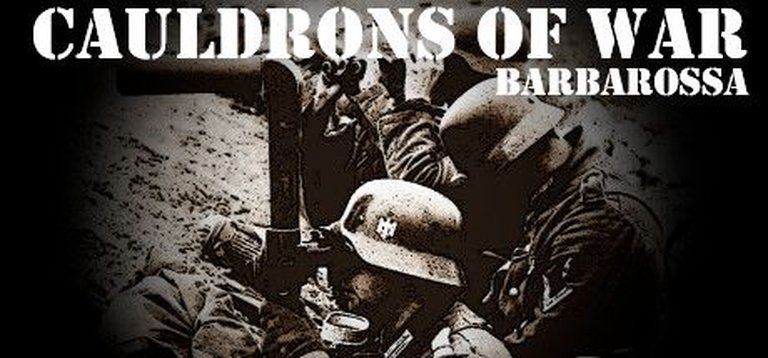
Cauldrons of War: Barbarossa is a turn-based strategic wargame set during World War II’s Operation Barbarossa (June 1941 to Battle of Moscow), allowing players to command either Axis or Soviet forces. Developed by Maestro Cinetik, it offers a streamlined, operation-focused alternative to traditional hex-based systems, providing distinct asymmetric gameplay for each side while maintaining historical accuracy and faster pacing.
Gameplay Videos
Where to Buy Cauldrons of War: Barbarossa
PC
Cauldrons of War: Barbarossa Guides & Walkthroughs
Cauldrons of War: Barbarossa: Review
Introduction
Operation Barbarossa, the Nazi invasion of the Soviet Union in June 1941, remains one of history’s most pivotal and brutal military campaigns. The Eastern Front has been endlessly dissected in strategy games, yet Cauldrons of War: Barbarossa (2020) distinguishes itself through radical design and uncompromising historical focus. Developed solo by Maestro Cinetik and published by Gaming at Work, this turn-based wargame eschews conventional hex grids and unit micromanagement in favor of an abstract, operation-centric approach. Its thesis is bold: to deliver a deeply strategic yet accessible WWII experience that honors history without demanding weeks of commitment. In this exhaustive analysis, we explore how Cauldrons of War succeeds in redefining operational warfare simulation while carving a unique niche in a saturated genre.
Development History & Context
Maestro Cinetik—essentially a one-man studio—conceived Cauldrons of War from a position of weary familiarity with wargame conventions. As articulated on the Itch.io page, the developer explicitly rejected “hexagons and regions,” seeking a system that would feel “more historic, simpler and faster.” This vision emerged from frustration with the genre’s entrenched complexity and a desire to create a “WWII shot” for time-strategists. Built on Unity and released on Windows after a six-month Early Access phase (May–September 2020), the game was a product of both technological accessibility and niche market opportunity. It arrived during a resurgence of indie WWII titles, standing apart from AAA behemoths like Company of Heroes through its minimalist design philosophy. The developer’s deep engagement with the community—visible through Discord interactions, frequent patches, and multilingual support (Russian, French, German, Chinese)—was instrumental in refining its ambitious mechanics into a polished, albeit niche, product.
Narrative & Thematic Deep Dive
Cauldrons of War abandons traditional linear storytelling in favor of emergent narratives forged by player decisions. The game spans the pivotal period from June 1941 to the Battle of Moscow, immersing players in the asymmetrical struggle between Axis blitzkrieg and Soviet resilience. Thematic depth arises from the simulation’s inherent mechanics: the relentless pressure of German logistics, the desperate attrition of Soviet defense, and the human cost of encirclements (“cauldrons”). Event texts—such as choices involving scorched-earth tactics or partisan activity—force players to confront moral quandaries inherent to the conflict. While lacking named characters, the game’s factions embody distinct “feelings”: the Axis player experiences the tension of high-stakes advances and fuel shortages, while the Soviet commander grapples with strategic retreats and leveraging terrain. This abstraction paradoxically heightens historical authenticity by emphasizing systemic realities over individual heroics. The absence of cinematic cutscenes underscores the game’s core theme: war as a brutal, impersonal machine driven by logistics and timing.
Gameplay Mechanics & Systems
At its heart, Cauldrons of War revolutionizes wargame design through its operational system. Players command army groups via abstract “operations”—arrow-based maneuvers representing broad strategic thrusts—rather than positioning individual units. This abstraction streamlines turns while preserving historical nuance: success hinges on balancing supply, weather, and unit cohesion. Combat is resolved through operation outcomes, with “cauldrons” (encircled enemy forces) serving as a central objective and penalty mechanic. The game’s genius lies in its asymmetric design: Axis forces prioritize rapid armored breakthroughs constrained by fuel, while the Soviets employ defensive depth, partisan warfare, and the “Maskirovka” (deception) ability (later expanded in the sequel).
Key systems include:
– Resource Management: Players allocate trucks, aircraft, and reserves to sustain offensives or shore up defenses.
– HQ Management (post-launch): Added via patches, this allows inter-army group resource transfers, simulating bureaucratic friction.
– Weather and Terrain: Mud and snow penalties dynamically alter campaign pacing.
– Event Decisions: Choices like executing partisans or withdrawing from Kiev trigger narrative and mechanical consequences.
The UI, initially sparse, was refined post-launch with tooltips, minimaps, and clearer unit displays—addressing early criticism. Yet, the game retains a high barrier to entry: its lack of hand-holding and reliance on player intuition (e.g., inferring unit strength from “?” markers) demands wargame literacy. This duality of accessibility and complexity defines Cauldrons of War: a game that welcomes newcomers with short scenarios but rewards veterans with punishing depth.
World-Building, Art & Sound
The game’s world-building is rooted in meticulous historical geography, with maps stretching from the Baltic to the Black Sea. Iconic locations like Kiev, Smolensk, and Moscow serve as strategic linchpins, their capture altering the campaign’s tempo. The atmosphere is unflinchingly stark: muted maps, sparse unit counters, and event text evoke the Eastern Front’s bleakness. Weather effects—snowfall overlays, rain symbols—visually and mechanically reinforce the campaign’s brutality.
Art direction is functional yet purposeful. Early maps were criticized for austerity, but updates introduced cleaner visuals, unit visibility toggles, and terrain distinctions (steppe, forests, mountains). Icons sourced from [game-icons.net] and self-deprecatingly labeled “Ugly Icons” by the developer maintain a utilitarian charm. Sound design is minimalist, with Yildun’s atmospheric score underscoring tension without overwhelming gameplay. The absence of voice acting or sound effects reinforces the game’s cerebral tone, framing war as a silent chess match of logistics and timing. Together, these elements create an immersive experience where austerity serves historical accuracy.
Reception & Legacy
Upon release, Cauldrons of War garnered critical acclaim for its audacious design. Rock Paper Shotgun hailed its AI as “competent and plausible,” while Wargamer lauded its “stark, yet fresh take” on the Eastern Front. Steam reviews are resoundingly positive (90–91% “Very Positive” across 160+ reviews), with players praising its “engaging gameplay” and “historical context.” Niklas Notes identified key strengths: replayability, developer responsiveness, and affordability ($14.99). However, criticism centered on UI opacity and a learning curve exacerbated by limited feedback.
Commercial performance was modest but sustainable, with ~7k units sold (per GameRebellion) and bundling in the Eastern Front Cauldrons of War collection. Its legacy endures through influence on Maestro Cinetik’s subsequent titles, notably Cauldrons of War: Stalingrad (2021), which refined its mechanics with HQ management and Maskirovka. The game also revitalized interest in operational wargames, proving that abstraction could coexist with depth. While it remains a niche product, its cult following and ongoing patches (e.g., the 2021 “Quality of Life Overhaul”) cement its status as a cult classic that reinvigorated a genre.
Conclusion
Cauldrons of War: Barbarossa is a triumph of focused design and historical integrity. By stripping wargames to their strategic core—operations, logistics, and asymmetric warfare—it delivers an experience that is both intellectually rigorous and refreshingly accessible. Its flaws—a steep learning curve and UI quirks—are overshadowed by its innovative mechanics and developer commitment. For history buffs and strategy purists, it offers an essential lens into Operation Barbarossa’s complexities, reframing the Eastern Front not as a series of battles, but as a vast, interconnected system of cause and effect. While it may not supplant genre titans, Cauldrons of War carves an indelible niche: a testament to the power of vision over scale. In the crowded landscape of WWII games, it stands as a bold, intelligent, and unforgettable reimagining of operational warfare.