
- Release Year: 2021
- Platforms: Windows
- Publisher: ImperiumGame
- Developer: ImperiumGame
- Genre: Action
- Perspective: Diagonal-down
- Game Mode: Single-player
- Average Score: 56/100
Description
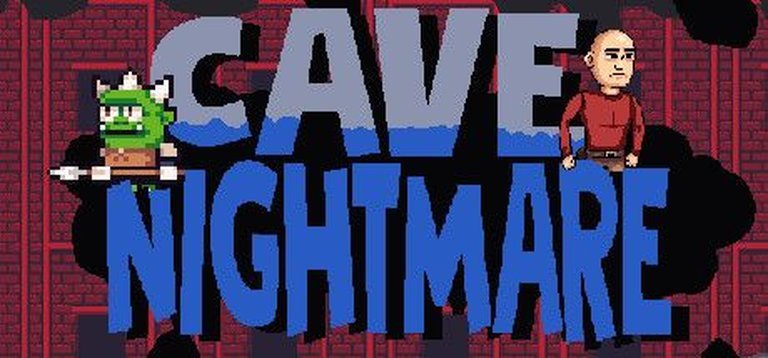
Cave Nightmare is an action game developed and published by ImperiumGame, released on April 1, 2021, for Windows. The game features a diagonal-down perspective with 2D scrolling visuals, immersing players in a challenging and atmospheric adventure. Set in a mysterious cave environment, players must navigate through treacherous terrain, battle enemies, and overcome obstacles to survive the nightmarish depths.
Cave Nightmare Guides & Walkthroughs
Cave Nightmare Reviews & Reception
steambase.io (56/100): Cave Nightmare has earned a Player Score of 56 / 100.
Cave Nightmare: A Descent into the Unknown – A Comprehensive Review
Introduction: The Enigma of Cave Nightmare
Cave Nightmare is a game shrouded in mystery. Released on April 1, 2021, by the obscure studio ImperiumGame, it emerged without fanfare, leaving players and critics alike to grapple with its cryptic design, minimalist presentation, and unsettling atmosphere. Unlike its spiritual predecessor, Cave Story—a beloved indie masterpiece that redefined the Metroidvania genre—Cave Nightmare offers no grand narrative, no charming characters, and no clear mechanical evolution. Instead, it presents a raw, almost experimental take on the action-platformer, stripping away conventions to deliver something far more abstract and disorienting.
This review seeks to unravel Cave Nightmare’s enigmatic design, exploring its development context, gameplay systems, and the eerie world it constructs. Is it a bold artistic statement, a flawed experiment, or simply an overlooked curiosity? By dissecting its mechanics, aesthetics, and the sparse details surrounding its creation, we aim to determine its place in the pantheon of indie games—and whether it deserves to be remembered at all.
Development History & Context: The Birth of an Obscurity
The Studio Behind the Shadows
ImperiumGame, the developer and publisher of Cave Nightmare, is a studio with virtually no public presence. Unlike Studio Pixel, the one-man powerhouse behind Cave Story, ImperiumGame has no documented history, no portfolio of prior works, and no visible community engagement. The game’s MobyGames entry lists no credits beyond the studio’s name, and no interviews, postmortems, or developer diaries exist to shed light on its creation.
This anonymity raises questions: Was Cave Nightmare the work of a lone developer, like Cave Story’s Daisuke “Pixel” Amaya? Or was it a small team operating in obscurity, deliberately avoiding the spotlight? The lack of transparency makes it difficult to ascertain the creators’ intentions, but the game’s design suggests a deliberate rejection of mainstream indie trends.
Technological Constraints and Aesthetic Choices
Cave Nightmare is a 2D action game with a diagonal-down perspective, a rarity in modern platformers. This choice evokes classic titles like Zelda II: The Adventure of Link or Spelunky, but unlike those games, Cave Nightmare does not lean into retro nostalgia. Instead, its visuals are stark, almost minimalist, with a color palette dominated by muted blues, grays, and blacks. The environments are sparse, with little in the way of detailed backgrounds or animated flourishes.
The game’s technical limitations—or perhaps its deliberate stylistic choices—result in a product that feels intentionally barebones. There are no cutscenes, no dialogue, and no clear narrative structure. The player is dropped into a cave system with no explanation, armed only with basic movement and combat mechanics. This lack of hand-holding is reminiscent of Cave Story’s opening, but where Cave Story gradually unfolds its world and lore, Cave Nightmare offers no such guidance.
The Gaming Landscape in 2021: A Crowded Indie Scene
Cave Nightmare arrived in an era where indie games were flourishing, with titles like Hades, Celeste, and Hollow Knight setting new standards for storytelling, gameplay depth, and artistic expression. In this context, Cave Nightmare’s release on April 1, 2021—April Fools’ Day—seems almost like a meta-commentary. Was it a joke? A deliberate subversion of player expectations? Or simply a game that slipped through the cracks of an oversaturated market?
The absence of marketing, critical coverage, or even player reviews (MobyGames lists no critic or user reviews as of this writing) suggests that Cave Nightmare was either a passion project with no commercial ambitions or a game that failed to resonate with audiences. Its Steam page, if it exists, is equally obscure, with no visible community discussions or user-generated content.
Narrative & Thematic Deep Dive: The Silence of the Cave
The Absence of Story
Cave Nightmare is a game that defies traditional narrative analysis because it has no narrative—at least, not in the conventional sense. There are no characters, no dialogue, and no overt plot. The player begins in a cave, moves through a series of interconnected chambers, and fights enemies with no clear motivation or backstory.
This absence of narrative is not necessarily a flaw. Games like Dark Souls and Environmental Station Alpha have proven that environmental storytelling and atmospheric immersion can be just as compelling as traditional narratives. However, Cave Nightmare does not employ these techniques effectively. Its environments are repetitive, its enemies are generic, and its world lacks the kind of environmental details that would hint at a deeper lore.
Themes of Isolation and Futility
If Cave Nightmare has a thematic throughline, it is one of isolation and futility. The player is alone in a labyrinthine cave system, with no clear goal beyond survival. The enemies are relentless, the environments are oppressive, and there is no sense of progression or reward. Even the game’s title—Cave Nightmare—suggests a descent into madness, a struggle against an inescapable, suffocating darkness.
This theme is reinforced by the game’s mechanics. The player’s weapons are weak, the controls are stiff, and the hitboxes feel imprecise. Death comes quickly and frequently, and there is no sense of learning or improvement. Unlike Cave Story, where death is a temporary setback on the path to mastery, Cave Nightmare makes the player feel powerless, as if the cave itself is an antagonistic force that cannot be overcome.
Comparisons to Cave Story: A Deliberate Contrast?
It is impossible to discuss Cave Nightmare without acknowledging its titular and thematic similarities to Cave Story. Both games feature cave-based settings, both are action-platformers, and both were developed by small, independent teams. However, where Cave Story is a triumph of solo development—a game that combines tight gameplay, emotional storytelling, and memorable characters—Cave Nightmare feels like its antithesis.
Cave Story is a game about hope, friendship, and redemption. Cave Nightmare is a game about despair, confusion, and futility. Cave Story rewards exploration and curiosity; Cave Nightmare punishes them. Cave Story is a love letter to classic games; Cave Nightmare is a deconstruction of them.
Whether this contrast is intentional or coincidental is unclear. But the juxtaposition is striking, and it raises the question: Is Cave Nightmare a commentary on the indie game scene, a deliberate rejection of the tropes that Cave Story popularized, or simply a failed experiment?
Gameplay Mechanics & Systems: A Study in Frustration
Core Gameplay Loop: Survival in the Dark
Cave Nightmare’s gameplay is deceptively simple. The player moves through a series of cave chambers, jumping over pits, avoiding spikes, and fighting enemies with a basic weapon. The controls are minimal: move, jump, and shoot. There is no character progression, no weapon upgrades, and no health system beyond a simple life bar.
This simplicity is both the game’s greatest strength and its greatest weakness. On one hand, the lack of complexity allows the player to focus on the core platforming and combat. On the other hand, the absence of progression or variety makes the experience feel repetitive and unrewarding. There are no new abilities to unlock, no hidden secrets to discover, and no sense of growth or achievement.
Combat: Clunky and Unforgiving
The combat in Cave Nightmare is functional but uninspired. The player’s weapon—a basic gun—fires slow-moving projectiles that deal minimal damage. Enemies are similarly simplistic, with basic attack patterns and little variation. The hit detection feels imprecise, and the player’s movement is sluggish, making combat a chore rather than a challenge.
This clunkiness is exacerbated by the game’s difficulty. Enemies deal significant damage, and the player’s health bar is small. There are no checkpoints, no save points, and no healing items. Death sends the player back to the beginning of the cave, forcing them to replay the same sections repeatedly. This lack of mercy would be acceptable if the gameplay were tight and responsive, but Cave Nightmare’s controls and mechanics make it feel unfair rather than difficult.
Level Design: A Maze Without Meaning
The cave systems in Cave Nightmare are labyrinthine, with branching paths and hidden chambers. However, unlike Cave Story’s meticulously designed levels, which encourage exploration and reward curiosity, Cave Nightmare’s caves feel arbitrary and confusing. There is no clear sense of direction, no visual landmarks, and no indication of where the player is supposed to go.
This lack of guidance is intentional, but it is not executed in a way that feels rewarding. In games like Metroid or Castlevania, the player is given tools and abilities that allow them to navigate the environment and uncover its secrets. In Cave Nightmare, the player is given nothing. There are no maps, no hints, and no progression-gated areas. The result is a game that feels less like an adventure and more like a punishment.
UI and Feedback: Minimalism Taken Too Far
Cave Nightmare’s user interface is almost nonexistent. There is no health bar, no ammo counter, and no map. The player’s status is conveyed through subtle visual cues—a flickering sprite when damaged, a brief pause when firing—but these are easy to miss in the heat of combat.
This minimalism is in keeping with the game’s overall aesthetic, but it comes at the cost of clarity. The player is often left guessing about their status, their objectives, and their progress. This lack of feedback makes the game feel opaque and frustrating, rather than immersive and atmospheric.
World-Building, Art & Sound: The Aesthetics of Despair
Setting: A Cave Without Character
Cave Nightmare’s setting is its most defining feature, but also its most underdeveloped. The game takes place entirely within a cave system, with no variation in environment or theme. There are no distinct biomes, no unique landmarks, and no environmental storytelling. The caves are dark, monotonous, and devoid of life.
This lack of variety is a missed opportunity. Games like Spelunky and La-Mulana have shown that cave settings can be rich and diverse, with hidden secrets, ancient ruins, and dangerous creatures. Cave Nightmare, by contrast, feels like a blank slate—a world without history, without purpose, and without meaning.
Visual Direction: The Beauty of Nothingness
The game’s visual style is minimalist to the point of austerity. The environments are rendered in simple, blocky pixels, with a limited color palette dominated by shades of blue and gray. The player character is a small, featureless sprite, and the enemies are equally generic.
This minimalism is not without its charms. The game’s stark visuals create a sense of isolation and desolation, reinforcing its themes of futility and despair. However, the lack of detail and variety makes the world feel empty and uninteresting. There are no striking visuals, no memorable set pieces, and no moments of beauty or wonder.
Sound Design: The Silence of the Cave
Cave Nightmare’s sound design is as sparse as its visuals. There is no music, no ambient noise, and no voice acting. The only sounds are the player’s footsteps, the gunfire, and the occasional enemy noise.
This silence is effective in creating a sense of isolation, but it also makes the game feel lifeless. In games like Cave Story, the music and sound effects are integral to the experience, creating emotion and atmosphere. In Cave Nightmare, the absence of sound makes the world feel hollow and unengaging.
Reception & Legacy: The Game That Wasn’t
Critical and Commercial Reception: A Ghost in the Machine
Cave Nightmare’s reception—or lack thereof—is one of the most intriguing aspects of its existence. As of this writing, the game has no reviews on MobyGames, no Steam user reviews, and no visible coverage in gaming media. It is as if the game was released into a void, with no one to notice or care.
This lack of reception is not necessarily a reflection of the game’s quality. Many great indie games have been overlooked due to poor marketing, bad timing, or simple obscurity. However, Cave Nightmare’s complete absence from the cultural conversation suggests that it failed to resonate with players on any level.
Influence and Legacy: A Footnote in Gaming History
It is difficult to assess Cave Nightmare’s influence, as it has left no visible mark on the gaming landscape. Unlike Cave Story, which inspired a generation of indie developers and revitalized the Metroidvania genre, Cave Nightmare has no discernible legacy. It is not referenced in other games, it has no fan community, and it has not spawned any sequels or spiritual successors.
This lack of influence is not surprising. Cave Nightmare is a game that defies easy categorization, and its deliberate obscurity makes it an unlikely candidate for imitation or homage. However, its existence raises interesting questions about the nature of indie games and the boundaries of game design. Is Cave Nightmare a failed experiment, a deliberate provocation, or simply a game that was never meant to be played?
Conclusion: The Nightmare Endures
Cave Nightmare is a game that defies conventional analysis. It is not a masterpiece, nor is it a complete failure. It is a game that exists in a liminal space, neither fully realized nor entirely broken. Its minimalist design, oppressive atmosphere, and deliberate obscurity make it a fascinating curiosity, but its clunky mechanics, repetitive gameplay, and lack of narrative depth make it a frustrating experience.
In the end, Cave Nightmare is a game that is best appreciated as an artifact—a relic of a time when indie games could still be weird, experimental, and unapologetically obscure. It is not a game that will be remembered alongside Cave Story or Hollow Knight, but it is a game that deserves to be studied, if only as a cautionary tale about the limits of minimalism and the dangers of obscurity.
Final Verdict: 5/10 – A Flawed but Fascinating Experiment
Cave Nightmare is not a game for everyone. It is a game for those who are willing to endure frustration in search of meaning, who are curious about the boundaries of game design, and who are interested in the stories that games tell when they say nothing at all. It is not a great game, but it is a game that lingers in the mind long after the credits roll—a nightmare that refuses to fade.