
- Release Year: 2017
- Platforms: Windows
- Publisher: White Dog
- Developer: White Dog
- Genre: Action
- Perspective: Diagonal-down
- Game Mode: Single-player
- Gameplay: Puzzle elements
- Setting: Fantasy
Description
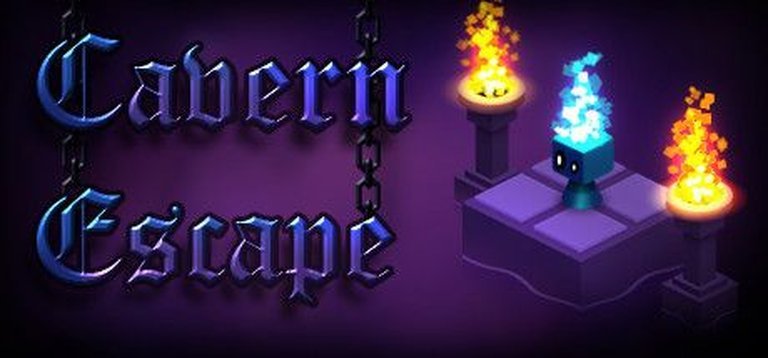
Cavern Escape is an isometric puzzle platformer set in a fantasy environment, challenging players to guide a small character through increasingly difficult levels filled with obstacles and walls to avoid. Developed by White Dog and released in 2017, the game features direct controls and a diagonal-down perspective, offering 10 challenging levels in early access that promise to expand to over 40 levels with dozens of unique puzzles, emphasizing its reputation as an extremely hard and addictive brain teaser.
Where to Buy Cavern Escape
PC
Cavern Escape Patches & Updates
Cavern Escape Guides & Walkthroughs
Cavern Escape: Review
Introduction
In the often oversaturated landscape of indie games, few titles manage to carve out a niche defined almost entirely by a single, unyielding attribute: difficulty. Released on February 20, 2017, Cavern Escape (also marketed as Cavern Escape Extremely Hard game!!!) is precisely such a title. Developed by the enigmatic White Dog Games and published by SA Industry, this Windows-exclusive action puzzle platformer arrived with a bold, almost boastful promise: it was, by its own admission, “VERY HARD,” “EXTREMELY addicting,” and “Almost impossible to beat!” While lacking the narrative depth or widespread acclaim of its contemporaries, Cavern Escape has secured a peculiar, if controversial, place in gaming history as a monument to masochistic design and the enduring appeal of simple yet fiendishly challenging mechanics. This review delves deep into the game’s development, its starkly minimalist design, the polarizing reception it received, and its legacy as a curiosity within the broader puzzle-platformer genre.
Development History & Context
White Dog Games, the sole credited developer, remains a shadowy entity. Little is publicly known about the studio beyond its association with Cavern Escape. Its partner publisher, SA Industry, similarly offers scant information, suggesting a small-scale, perhaps passion-project operation rather than a major industry player. The game emerged in February 2017, a period characterized by the rise of highly accessible indie darlings like Undertale (2015) and Stardew Valley (2016), alongside the continued dominance of complex AAA titles. Against this backdrop, Cavern Escape was a stark counterpoint.
Technically, the game was unremarkable. It utilized an isometric perspective (“Diagonal-down”) with direct mouse control for the core mechanic. Its system requirements were minimal: Windows 7 or better, a 1.5 GHz processor, 512 MB RAM, and a mere 256 MB graphics card, demanding only 70 MB of storage. This technical austerity underscored its focus on pure gameplay challenge over graphical fidelity or complex systems. Crucially, Cavern Escape launched via Steam in Early Access. The promotional material explicitly outlined the plan: the early version contained “10 Challenging levels,” promising the full game would deliver “Over 40 Challenging Levels,” “Dozens of Unique Puzzles,” and the aforementioned difficulty qualifiers. However, the final release settled at “Over 30 Challenging Levels,” suggesting either scaling back ambition or a redefinition of the scope. This early access strategy was common at the time, allowing developers to gauge player response and build community, but it also set specific expectations for the full product that Cavern Escape only partially fulfilled.
Narrative & Thematic Deep Dive
Cavern Escape makes no pretense of storytelling. There are named characters, dialogue, or plot points to analyze. The “narrative” is distilled to its absolute essence: escape. The player is presented with a small, “cute character” trapped within a series of perilous caverns. The goal is unequivocal – reach the “finish” line of each level. This minimalist abstraction is intentional, focusing the player’s entire attention on the physical challenges presented.
The true narrative unfolds in the player’s own struggle. Each failed attempt, each pixel-perfect jump requiring millisecond timing, each collision with an unseen obstacle that sends the character back to the start, writes a story of frustration, perseverance, and ultimately, either triumph or resignation. The underlying themes are stark and universal: the struggle against overwhelming odds, the pursuit of seemingly unattainable goals, and the thin line between challenge and cruelty. The game’s title itself, Cavern Escape, and its subtitle, Extremely Hard game!!!, frame the experience not as a leisurely puzzle but as an ordeal. The “cute” character design creates a poignant contrast with the hostile environment; its vulnerability amplifies the stakes of each failed escape attempt. There is no villain, no grand conflict – only the player, their mouse, and the unyielding geometry of the cavern. This absence of traditional narrative forces the player to project their own sense of struggle and achievement onto the minimalist proceedings.
Gameplay Mechanics & Systems
The core gameplay loop of Cavern Escape is deceptively simple yet brutally executed. The player controls the small character indirectly via mouse-drag. The character moves towards the cursor’s position, but with significant inertia and momentum. This is not a point-and-click teleport; it’s a physics-based drag. The challenge lies in navigating this unresponsive movement through intricate, obstacle-filled levels filled with “walls and other obstacles” that are instantly fatal. Precision is paramount; a single misjudgment of distance, speed, or timing results in instant death and a return to the level’s start.
Core Loop: Drag character -> Avoid obstacles -> Reach finish -> Repeat (often many times).
Character Progression: There is none. The character does not gain abilities, health, or speed. Progression is purely through the player’s mastering of the levels themselves. This lack of power-ups or upgrades reinforces the game’s focus on raw skill and patience.
UI & Interface: The interface is barebones, reflecting the game’s minimalist philosophy. Levels are presented sequentially. There are no menus, no options beyond basic controls, and no narrative text interrupting the flow. The game communicates solely through the visual presentation of the level and the feedback of collision and success/failure.
Innovation & Flaws: The mouse-drag mechanic is the central innovation, albeit a rudimentary one. It introduces a unique layer of imprecision that becomes a core part of the challenge. However, this is also the source of the game’s primary flaw. The controls, particularly the momentum and potential for the character to “catch” on level edges or get stuck in slight animations, can feel unresponsive or even buggy. Coupled with the extreme difficulty, this often leads to frustration that stems from perceived unfairness as much as genuine challenge. The puzzle elements are spatial and timing-based, requiring memorization of obstacle patterns and execution of precise movements. While levels are described as “unique,” the core challenge formula remains consistent across the 30+ levels: navigate the drag-based character through deadly hazards.
World-Building, Art & Sound
The “world” of Cavern Escape is a series of abstract, self-contained levels. There is no overarching setting, no lore, no exploration beyond the single path presented. Each level is a puzzle box, a geometric cage of death. The fantasy setting mentioned in MobyGames specs is purely nominal; there are no fantastical creatures, environments, or items – just walls, platforms, and the finish line.
Visual Design: The art direction is minimalist and functional. The isometric perspective provides a clear view of the level layout, essential for planning the drag path. The character is small and simple, emphasizing vulnerability. Obstacles are typically represented by stark, monochrome blocks or simple shapes. The aesthetic is described by users as “Minimalist,” “Abstract,” and sometimes “Dark.” While not graphically impressive by 2017 standards, the clarity of the visual design serves the gameplay. The lack of detail focuses the player’s attention entirely on the spatial relationships and movement challenges. Screenshots suggest a limited color palette, possibly dominated by grays and browns, reinforcing the cavern environment’s oppressive feel.
Sound Design: The source material provides no specific details on the soundtrack or sound effects. Given the game’s extreme simplicity and focus on visual challenge, it’s reasonable to infer the audio is equally minimal, perhaps consisting only of basic sound effects for movement, collision, and level completion. User tags like “Soundtrack” and “Dark” suggest some atmospheric element might be present, but its role in the core experience appears secondary, if not negligible. The silence, or near-silence, would amplify the tension and focus required, making each misstep feel more jarring.
Reception & Legacy
Cavern Escape arrived to a decidedly mixed reception, a fact starkly illustrated by its Steam user reviews. Out of 122 reviews at the time of analysis, only 50% were positive, earning it a “Mixed” overall rating. The user reviews themselves paint a picture of polarized experiences.
- Positive Reviews: Players who embraced the challenge often praised its “EXTREMELY addicting” nature. They found satisfaction in overcoming the “impossible” levels, describing it as a test of patience and skill. The minimalist approach was seen by some as a strength, stripping away distractions to focus purely on the puzzle-like platforming.
- Negative Reviews: A significant portion of players found the difficulty overwhelming and the controls frustrating. Reviews frequently cited “unfair” level design, “buggy” physics, and the sheer repetition of restarting as major drawbacks. The gap between the promised “Over 40” levels and the final “Over 30” likely disappointed some early backers expecting more content. The price point, while dropping significantly ($4.99 down to $0.49), was still seen as too high for a game offering such a narrow, punishing experience.
Critically, the game flew almost entirely under the radar. Metacritic lists no critic reviews, and MobyGames shows no user reviews. This lack of significant critical attention cemented its status as a niche, curiosity title rather than a landmark release.
Legacy: Cavern Escape holds a specific, albeit minor, legacy. It stands as a prime example of the “rage game” or “masochistic platformer” subgenre, alongside titles like I Wanna Be The Guy (2007) or Super Meat Boy (2010), though without their polish or design nuance. It represents a facet of indie game development: small-scale projects focusing on a single, extreme mechanic, often marketed heavily on difficulty. Its influence is negligible on mainstream design; its true legacy lies in its existence as a cultural artifact. It’s a game discussed in terms of its infamy, its price drop becoming a shorthand for a title that failed to meet expectations. The related games listed on MobyGames (Escape F1rst series, Escape Legacy) suggest a loose “Escape” theme, but no direct design lineage is apparent. Its primary historical significance lies in being a readily available, historically documented example of a certain type of challenging, minimalist, and ultimately polarizing indie release from the mid-2010s Steam era.
Conclusion
Cavern Escape is not a great game by conventional standards. It lacks narrative depth, sophisticated mechanics, or technical polish. Its controls can feel imprecise, its difficulty curve often feels more like a difficulty wall, and its content falls short of its initial early access promises. However, to dismiss it solely on these flaws would be to miss its peculiar essence. It is a pure, unadulterated test of patience, precision, and sheer bloody-mindedness. In an era saturated with games offering narratives, progression systems, and endless content, Cavern Escape offered something starkly different: the focused, punishing, and ultimately personal struggle against insurmountable odds.
Its place in video game history is that of a niche curiosity, a cautionary tale about the risks of overpromising difficulty, and a testament to the enduring niche appeal of masochistic design. While unlikely to be remembered for its gameplay innovations or artistic merit, *Cavern Escape: Extremely Hard game!!!” will endure in the annals of gaming as a title that delivered exactly what it advertised: a brutally difficult, minimalist challenge that divided players and served as a stark reminder that not every game needs to be fun for everyone. It is, quite simply, the digital equivalent of a frustratingly difficult level in a much larger game – an experience defined by struggle, frustration, and the fleeting, hard-won triumph of finally reaching the finish line.