
- Release Year: 2023
- Platforms: Android, iPad, iPhone, Windows
- Genre: Role-playing (RPG), Strategy, Tactics
- Perspective: Diagonal-down
- Gameplay: Exploration
- Setting: Fantasy
- Average Score: 70/100
Description
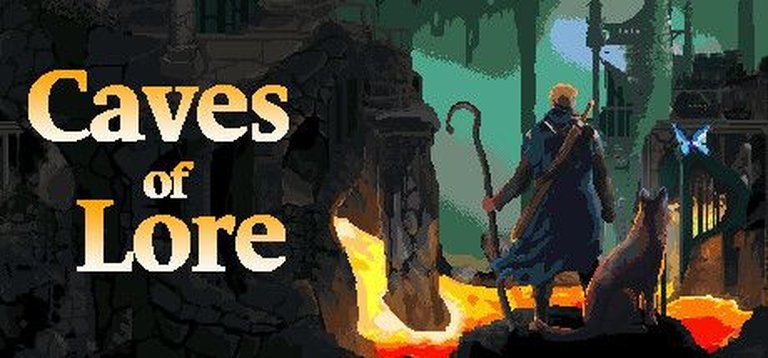
Caves of Lore is a turn-based, pixel-art fantasy CRPG developed by solo creator Michael Robins, set in the immersive world of Solmaria. Players begin as a shepherd tasked with finding a lost sheep in a mist that distorts memories, quickly unfolding into a larger quest against a Dark Lord through exploration of ancient citadels, mutated foes, and the secrets of Emerisk village, featuring tactical grid-based combat, NPC interactions, and charming retro visuals enhanced by modern lighting effects.
Gameplay Videos
Where to Buy Caves of Lore
Caves of Lore Free Download
Caves of Lore Cracks & Fixes
Caves of Lore Guides & Walkthroughs
Caves of Lore Reviews & Reception
metacritic.com (75/100): diamond in the rough
metacritic.com (65/100): Caves of Lore can be addicting for any adventurer looking for variety and diversity in RPG exploring.
reddit.com : it’s quite impressive
ladiesgamers.com : Caves of Lore is a fantastic labour of love
Caves of Lore: A Testament to Tenacity in Modern CRPG Design
Introduction: The Cave’s Echo
In an era dominated by sprawling, multi-million-dollar RPG productions, Caves of Lore emerges like a meticulously crafted gem from the depths of indie development—a game that speaks not through budgetary excess, but through the sheer force of a singular, unwavering vision. Released in 2023 by solo developer Mike Robins, this turn-based, pixel-art fantasy CRPG is a love letter to the classics of the late ’80s and early ’90s, yet it is far from a mere pastiche. It is a complex, thoughtful, and at times frustratingly nuanced experience that embodies the “labor of love” archetype with a palpable authenticity. Caves of Lore succeeds not by replicating the formula of its inspirations— Ultima VI, The Magic Candle, Buck Rogers, and early Final Fantasy—but by distilling their most compelling systemic and atmospheric qualities and recombining them with modern quality-of-life considerations and a deeply integrated world simulation. This review will argue that Caves of Lore is a foundational text for the current wave of “neo-retro” CRPGs, demonstrating that the principles of deep interactivity, environmental storytelling, and player-driven progression can be resurrected not as museum pieces, but as living, breathing, and occasionally awkwardly designed contemporary games. Its legacy is twofold: as a masterclass in sustainable solo development and as a game that profoundly challenges the player to engage with its world on its own intricate terms.
Development History & Context: Six Years in the Dark
The story of Caves of Lore is intrinsically the story of Mike Robins, a self-taught developer who dedicated six years of his life, while holding a full-time job and raising a family, to its creation. His stated methodology—committing to at least five minutes of work every single day—is a direct refutation of the myth of the isolated, overnight indie success. This incremental, disciplined approach resulted in a game of surprising scope and consistency, built piecemeal without a fully realized initial design document. “I built the game piece by piece, not really knowing where I was going or how it would all end,” Robins noted on the Steam store page. This development journey is reflected in the game’s architecture: systems feel deeply interconnected because they were likely built upon one another over years, not designed from a top-down schematic.
Technologically, Caves of Lore utilizes a custom engine, allowing for the distinctive diagonal-down isometric perspective and precise tile-based grid for combat. The constraints were not merely technical but existential—the constraint of time, energy, and a single developer’s bandwidth. This explains certain design choices: the absence of voice acting (relying on concise, effective text), the focused geographic scope (one island, Springhold, and its caverns), and the deliberate pacing. The gaming landscape of 2023 was primed for such a title. The success of Divinity: Original Sin 2 and Baldur’s Gate 3 had broadened the audience for deep CRPGs, while the resurgence of “old-school” aesthetics through games like Sea of Stars and Chained Echoes created a receptive market for pixel art. Caves of Lore entered this space not as a mainstream contender but as a purer, more academically inclined artifact, prioritizing systemic depth over cinematic presentation. Its direct lineage, as acknowledged by its developer, traces back to the foundational isometric RPGs of Origin Systems (Ultima) and Beyond Software (The Magic Candle), games where the world was a simulation first and a narrative second.
Narrative & Thematic Deep Dive: The Fog of Forgetting
The plot of Caves of Lore begins with a classic RPG trope—a shepherd (Lannon, fully renameable) searching for a lost sheep in a mysterious mist, only to fall into a cavern. The twist is immediate and profound: the “mist” is not merely a environmental hazard but a metaphysical force that scrambles memory. This premise is not window dressing; it is the central thematic pillar of the entire experience. The world of Solmaria is suffering from a creeping ontological decay. Books become blank, villagers forget their trades, and history itself is unraveling. The player’s quest—to find a librarian, to decipher a mysterious “Codex”—becomes a race against this total amnesia.
The narrative unfolds through exploration and keyword-based dialogue, eschewing cinematic set-pieces for environmental and textual discovery. The eponymous caves are not just a dungeon but a repository of lost history, with each level, book, and scrap of parchment acting as a cognitive anchor against the prevailing fog. The world-building is delivered through three primary vectors:
1. Lore Books & Notes: As highlighted in multiple reviews, these are not filler. They are essential, varied, and concise. Some grant gameplay bonuses (like temporary skill boosts), others explain the three-moon astronomical system that gates secrets, and most flesh out a tragic history of fallen civilizations and a cataclysmic “Dark Lord.” The RPGHQ review correctly identifies this as a rare case where every in-game text feels worth reading, as it frequently unlocks gameplay secrets.
2. NPC Daily Routines: The village of Emerisk (and its underground counterpart, Kalindraur) feels alive because its inhabitants follow schedules. While this can lead to the chore of “chasing quest-givers,” it reinforces the theme of a society clinging to routine in the face of mental dissolution. Their fragmented, often nonsensical dialogue (“I must remember to… what was I doing?”) sells the horror of the mist more effectively than any monologue.
3. Environmental Storytelling: The caves themselves tell the story. Ruins, altars, and locked portals are not just obstacles but artifacts of a past age. Solving their puzzles—often by aligning them with specific moon phases revealed in lore books—is an act of historical recovery.
Thematically, the game explores memory as the bedrock of identity, civilization, and power. To “know” a monster through the Monster Lore system is to strip it of its fearful mystery and gain power over it. The narrative’s dark, ancient horror is consistently undercut by a quirky, tongue-in-cheek humor (talking dogs, bouncy idle animations, whimsical item names). This tonal balance, noted by the Steam description (“Dark themes and ancient horrors don’t keep this game from remaining upbeat and funny”), is a key part of its charm, preventing the lore from becoming overwhelmingly bleak and aligning it with the playful spirit of early console RPGs.
Gameplay Mechanics & Systems: A Web of Interlocking Rules
The heart of Caves of Lore is a dense web of interlocking systems that prioritize player experimentation and long-term character progression through use.
1. Character Progression – The “Learn-by-Doing” Crucible:
The game employs a hybrid system. Attributes (Strength, Dexterity,etc.) are primarily set at character creation via point-buy, with rare permanent increases from special locations. The true progression lies in Skills, Abilities, and Feats.
* Skills (15 General + Spell/Ability-specific): These improve solely through use. Swinging a sword raises One-Handed Skill; casting a Firebolt raises its specific spell skill. This “Elder Scrolls” style encourages role-playing your build. A character used primarily for healing will naturally excel at restorative magic.
* Mastery: Reaching a skill threshold for a specific spell or ability grants “Mastery.” This provides a unique, often significant, one-time bonus (e.g., a fire spell might gain an area-of-effect increase). Crucially, mastered spells can be cast without the spellbook equipped, freeing up inventory. This creates a powerful incentive to specialize and use favored abilities repeatedly.
* Feats: Gained on level-up (every other level), these are the primary source of broad power increases, from “+10% damage with Swords” to “Moon-Phase bonuses.” Feat points can be saved for higher-tier options.
* The Genius of Monster Lore: This is the system’s most celebrated innovation. Each monster type has a lore entry filled by defeating it in combat, with fill speed modified by the character’s Monster Lore skill. Upon reaching certain thresholds, the monster unlocks a unique Feat that can be purchased with feat points. This mechanically rewards studying and exploiting enemy weaknesses and directly ties meta-knowledge (learning the game’s bestiary) to in-game power. It is, as the RPGHQ review states, “the smoothest challenge-ramping encouragement and reward mechanic I can remember playing with.”
2. Combat – Tactical Grid with Rough Edges:
Combat occurs on a 6×14 grid. Turn order is initiative-based each fight. The core loop is solid: move, act (attack, cast, use item). The 6-character party cap offers significant tactical breadth.
* Strengths: The variety of spells (65+), abilities, traits (65+), and monster types (50+) creates a combinatorial explosion of possibilities. Environmental interaction (chasm-creating spells, terrain-affecting abilities) is encouraged. Combat is generally described as “short and snappy” and rarely boring.
* Weaknesses: The pathfinding and Line-of-Sight (LoS) determination are historically problematic. As detailed in the RPGHQ review, click-to-attack with ranged units could lead to fatal, illogical pathing. Visual LoS blocking (stalactites, statues) is inconsistent. Developer patches have improved this, but it remains a notable friction point. The “wait” command to manipulate turn order is also noted as often useless due to queue mechanics.
* Design Philosophy: Combat leans tactical over twitch. Brute force is often not optimal, encouraging spell combos, positioning, and targeting weaknesses learned through Monster Lore.
3. The Lunar System & Exploration – Time as a Key:
The three moons of Solmaria and the day/night cycle are not mere flavor. Their phases govern the activation of magical runes found throughout the world. These runes can:
* Open secret areas and treasure caches.
* Alter the properties of certain portals (a direct Ultima VI homage).
* Be prerequisites for accessing critical late-game areas.
This creates a “clock” governing exploration. To unlock everything, players must camp (the rest mechanic) to pass time and observe moon combinations. This is both the game’s greatest strength and its most criticized flaw. The satisfaction of deciphering a complex moon-rune puzzle and claiming its treasure is immense. However, the necessity of waiting—often for specific in-game hours and moon phases—can devolve into tedious camping sessions. As one reviewer noted, this “waiting” constitutes a significant portion of playtime and is an inseparable part of the game’s simulationist heart.
4. Inventory & Itemization:
The inventory is a paged grid. Itemization is vast: 40+ weapons, hundreds of items with tens of thousands of enchantment combinations via forging and enchanting. Manatite is the currency for these operations. The system is deep but suffers from a cumbersome interface. Sorting and managing loot is repeatedly cited as a “low-level chore,” though patches have improved the “Sort All” function. The joy of finding a legendary item with perfect enchantments is palpable, but the administrative overhead of managing it is a consistent minor annoyance.
World-Building, Art & Sound: A Masterclass in Atmosphere
Visuals: The pixel art is “charming” and “detailed,” a step above typical indie fare. Character sprites have distinct, personality-filled animations (the famously “bouncy” idle animations, which the developer added a toggle for after player feedback). The environments, particularly the caves, are intricate, with effective use of limited palettes to create depth and mood. The most acclaimed visual feature is the dynamic lighting. The party leader’s torch is the only light source in many areas, creating a genuinely suspenseful, claustrophobic exploration. The light radius expands as you progress, both a gameplay tool (revealing secrets) and a brilliant atmospheric_device.
Audio: The soundtrack and sound design are “atmospheric” and “creepy,” perfectly complementing the dark fantasy setting. Ambient cave drips, monster growls, and tense musical cues during encounters build immersion. It avoids being oppressive, maintaining a sense of adventure.
UI & Controls: Here lies the game’s most persistent criticism, especially on PC. The interface, designed with mobile in mind (hence the point-and-select), is described by the Dutch Gameplay (Benelux) review as “onmogelijk vormgegeven en ingedeel” (clumsily designed and laid out) even by old-school standards. Menu navigation for inventory, skills, and camping can be cumbersome. However, the same review and LadiesGamers praise its intuitive touch controls on mobile/Steam Deck, where it feels natural. This highlights a core tension: a UI optimized for a controller/touchscreen that feels less-than-ideal with a mouse, though functional.
Reception & Legacy: A Cult Classic in the Making
Commercial & Critical Reception: Caves of Lore was a commercial success for a niche indie title, selling steadily on Steam (€9.75) and mobile platforms. It holds a “Very Positive” rating on Steam (93% of 388 reviews positive at the time of writing). Critically, it has no Metascore yet (tbd), but individual critic scores range from 65 (App Trigger) to 75 (GamingTrend), with the latter calling it a “diamond in the rough” marred by UI issues.
Common Praises:
* Exceptional exploration and rewarding secret discovery.
* Deep, rewarding character progression via Monster Lore and mastery systems.
* Authentic, immersive atmosphere and effective pixel art.
* The sheer scope and polish for a solo dev project. Inspirational.
* Strong value proposition (under $10 for 30-50+ hours).
Common Criticisms:
* UI/UX: Clunky inventory management and menu navigation on PC.
* Pathfinding/LoS: Unpredictable and sometimes combat-ruining, though improved post-launch.
* Learn-by-Doing Friction: The skill-use system can force tedious grinding of unwanted skills for mastery or to bring late-joining party members up to par.
* Moon Logic & Waiting: The lunar puzzle system, while brilliant, can lead to frustrating guesswork and substantial time spent camping.
* Pacing: Enemy encounters can feel excessive; the difficulty curve is uneven.
Legacy & Influence: Caves of Lore is not a trendsetter in the mold of Baldur’s Gate 3. Its influence will be quieter but profound. It stands as a proof-of-concept for the modern “neo-retro” CRPG, demonstrating that:
1. A solo developer can create a deep, systemic RPG of significant scope by focusing on interconnected, modular systems rather than grand cinematic ambitions.
2. The “Ultima” style of world simulation—where time, day/night cycles, and environmental interactivity matter—has not been lost and can be implemented meaningfully on a small scale.
3. Player-driven learning (Monster Lore) can be a more compelling progression mechanic than arbitrary XP buckets.
Its direct lineage is visible in the “Lore” series name, connecting it to the classic Knight Lore (1984) and Lands of Lore series, positioning it as a spiritual successor to the isometric adventure-RPG hybrid. More importantly, it joins titles like Pillars of Eternity and Pathfinder: Wrath of the Righteous in proving that there is a robust, hungry audience for games that demand the player’s analyticalengagement with their mechanics and world, not just their time.
Conclusion: An Imperfect Gem in the Rough
Caves of Lore is an achievement. It is a game that unequivocally earns its place in the history of CRPGs not as a landmark title that shifted the industry’s direction, but as a definitive statement of passion. Mike Robins successfully channeled a lifetime of love for the genre into a cohesive, challenging, and deeply rewarding experience. Its strengths—the brilliant Monster Lore system, the satisfying discovery-driven exploration, the atmospheric pixel art and sound, the humor woven into a dark tapestry—are substantial and often exceptional. Its weaknesses—the rough UI, the inconsistent pathfinding, the sometimes-punishing pacing imposed by its own simulationist clock—are the scars of its independent, six-year creation.
To play Caves of Lore is to engage with a game that respects the player’s intelligence but sometimes forgets to respect their patience. It demands you learn its moon cycles, read its lore books, and master its combat nuances. It will frustrate you with a pathfinding glitch or a secret locked behind a 12-hour wait. But when you finally decipher that lunar puzzle, when your custom-built mage unleashes a mastered spell combo for the first time, when you read a dusty tome that changes how you see the entire world—those moments are pure, unadulterated RPG magic.
For the historian, Caves of Lore is a vital artifact: a 2023 game that feels plausibly like a lost classic from 1995, built with 21st-century tools and sensibilities. For the player, it is a challenging, often splendid adventure that offers more depth and surprise per dollar than almost any other title in its price bracket. It is a flawed, bouncing, torch-lit, lore-saturated gem. And like the best gems, its imperfections are part of its character, reminders of the human hands that painstakingly cut it. It comes with a hearty, unreserved recommendation, with the explicit caveat that you must be willing to meet it on its own idiosyncratic terms. For those who are, the caves are full of wonders.
Final Verdict: 8.5/10 – A flawed masterpiece of indie CRPG design.