
- Release Year: 2003
- Platforms: Windows
- Publisher: Epsitec SA
- Developer: Epsitec SA
- Genre: Educational, Puzzle
- Perspective: Diagonal-down
- Game Mode: Single-player
- Gameplay: 3D environment, Autonomous learning, Interactive debugger, Multimedia, Object-oriented, Programming
Description
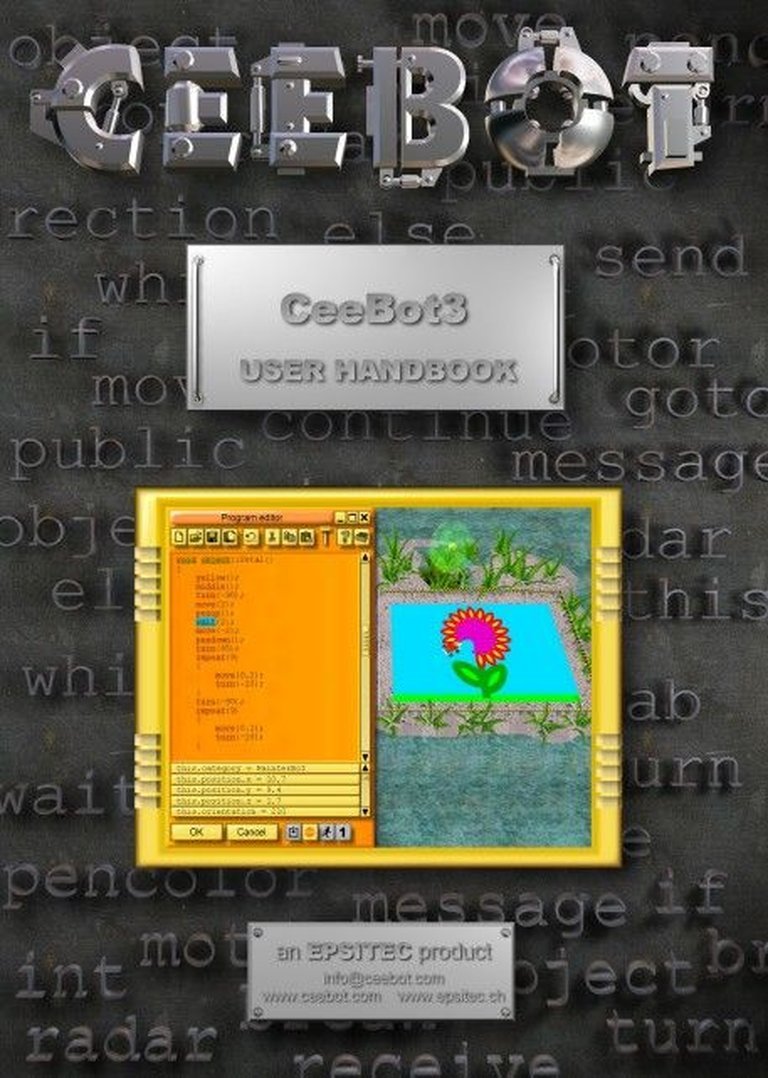
CeeBot3 Educational Programming Software is designed to teach programming to students aged 11 and older through a modern, interdisciplinary approach set in a vibrant 3D environment. Players program a robot to create still images, animations, and soundtracks using a Java-compatible object-oriented language. The game introduces foundational concepts like loops and functions, with advanced tools such as arrays and class definitions available for more experienced learners. The demo version includes 6 of 25 chapters, while the full version offers over 100 exercises and an interactive debugger to support autonomous learning and algorithmic problem-solving.
CeeBot3 Educational Programming Software Cracks & Fixes
CeeBot3 Educational Programming Software Guides & Walkthroughs
CeeBot3 Educational Programming Software Reviews & Reception
retro-replay.com : CeeBot3 transforms programming education into an exciting journey for students aged 11 and up.
CeeBot3 Educational Programming Software: Review
Introduction
In the vast and ever-evolving landscape of educational software, few titles have left as indelible a mark as CeeBot3. Developed by Epsitec SA, this software stands as a testament to the power of interactive learning, particularly in the realm of programming. CeeBot3 is not just another educational tool; it is a revolutionary approach to teaching programming concepts to students aged 11 and above. The software’s modern pedagogical approach, which emphasizes autonomous learning, creativity, and interdisciplinarity, is staged in a colorful 3D environment. Students are tasked with programming a robot that draws still images and animations with a soundtrack. This review will delve into the various aspects of CeeBot3, exploring its development history, narrative and thematic depth, gameplay mechanics, world-building, art, and sound design, reception and legacy, and ultimately, its place in video game history.
Development History & Context
Epsitec SA, the studio behind CeeBot3, has a rich history in educational software development. The company’s vision was to create a tool that would make learning programming accessible and engaging for young students. The technological constraints of the era, which included the use of CD-ROMs and the limitations of keyboard and mouse inputs, were significant challenges. However, Epsitec SA managed to overcome these obstacles by leveraging the capabilities of the time, such as the compatibility with Java-compatible languages. The gaming landscape at the time of CeeBot3’s release was characterized by a growing interest in educational games, with titles like “Joy of Programming: Software Engineering Simulator” and “Programming Proverbs” gaining traction. CeeBot3 was released on July 20, 2003, and it quickly established itself as a leading educational programming software.
Narrative & Thematic Deep Dive
Plot
CeeBot3 does not follow a traditional narrative structure. Instead, it presents a series of exercises and challenges that students must complete to progress. The plot is intrinsically tied to the learning process, with each exercise building upon the previous one to reinforce programming concepts. The overarching theme is the journey of learning, with the student acting as the protagonist who navigates through the challenges and exercises.
Characters
The main character in CeeBot3 is the student themselves. The robot that the student programs is a reflection of their understanding and creativity. The dialogue is minimal, with the software providing feedback and guidance through interactive elements and visual cues.
Dialogue
The dialogue in CeeBot3 is functional and instructional. It is designed to guide the student through the exercises and to provide feedback on their performance. The underlying themes revolve around the concepts of learning, creativity, and problem-solving. The software encourages students to think critically and to approach problems with a creative mindset.
Gameplay Mechanics & Systems
Core Gameplay Loops
The core gameplay loop in CeeBot3 revolves around the completion of programming exercises. Students are presented with a series of challenges that they must solve using the programming concepts they have learned. The exercises are designed to be progressively more difficult, with each one building upon the previous to reinforce the concepts.
Combat
There is no traditional combat in CeeBot3. Instead, the challenges and exercises serve as the primary source of conflict and engagement. Students must “fight” against the difficulty of the exercises and the complexity of the programming concepts.
Character Progression
Character progression in CeeBot3 is tied to the student’s understanding and mastery of programming concepts. As students complete exercises and challenges, they gain a deeper understanding of the material and become more proficient in programming.
UI
The user interface in CeeBot3 is designed to be intuitive and easy to navigate. The software provides a variety of tools and resources to help students learn and practice programming concepts. The UI is clean and uncluttered, with a focus on functionality and usability.
Innovative or Flawed Systems
One of the innovative systems in CeeBot3 is the interactive debugger. This tool helps students understand the first programming concepts and debug the most advanced algorithms. The software also features a complete object-oriented Java-compatible language, which allows students to draw cartoon-like animations. However, the system is not without its flaws. The software’s reliance on CD-ROMs and the limitations of keyboard and mouse inputs can be seen as outdated and restrictive.
World-Building, Art & Sound
Setting
The setting of CeeBot3 is a colorful 3D environment. The world is designed to be engaging and visually appealing, with a focus on making the learning process enjoyable. The environment is interactive, with students able to manipulate objects and elements to create their programs.
Atmosphere
The atmosphere of CeeBot3 is one of creativity and exploration. The software encourages students to experiment and to approach programming with a sense of curiosity and wonder. The sound design complements this atmosphere, with a soundtrack that is both engaging and instructional.
Visual Direction
The visual direction of CeeBot3 is characterized by its use of 3D graphics. The software’s colorful and interactive environment is designed to be visually appealing and engaging. The art style is modern and pedagogical, with a focus on making the learning process enjoyable.
Sound Design
The sound design in CeeBot3 is used to enhance the learning experience. The soundtrack is engaging and instructional, with a focus on making the learning process enjoyable. The sound effects are used to provide feedback and guidance, with a focus on making the software intuitive and easy to use.
Reception & Legacy
CeeBot3 was released to critical and commercial acclaim. The software was praised for its innovative approach to teaching programming and for its engaging and interactive learning environment. The critical reception was largely positive, with reviewers highlighting the software’s strengths and its potential impact on the field of educational programming. The commercial reception was also strong, with the software becoming a popular choice for schools and educators.
The legacy of CeeBot3 can be seen in its influence on subsequent games and the industry as a whole. The software’s innovative approach to teaching programming has inspired a new generation of educational games, with titles like “FREM Sprite32! Programming Sandbox” and “Sunbathing 101” building upon its foundations. The industry has also seen a growing interest in educational programming, with more developers and publishers investing in this genre.
Conclusion
In conclusion, CeeBot3 Educational Programming Software is a groundbreaking title that has left an indelible mark on the field of educational programming. Its innovative approach to teaching programming, its engaging and interactive learning environment, and its influence on subsequent games and the industry as a whole make it a standout title in video game history. The software’s strengths, such as its use of 3D graphics, its interactive debugger, and its complete object-oriented Java-compatible language, have made it a popular choice for schools and educators. However, its flaws, such as its reliance on CD-ROMs and the limitations of keyboard and mouse inputs, have also been noted. Despite these flaws, CeeBot3 remains a testament to the power of interactive learning and a pioneering title in the field of educational programming.