
- Release Year: 2011
- Platforms: Windows
- Publisher: Falco Software
- Developer: Falco Software
- Genre: Action
- Perspective: 1st-person
- Game Mode: Single-player
- Gameplay: Shooter
- Setting: Fantasy
- Average Score: 65/100
Description
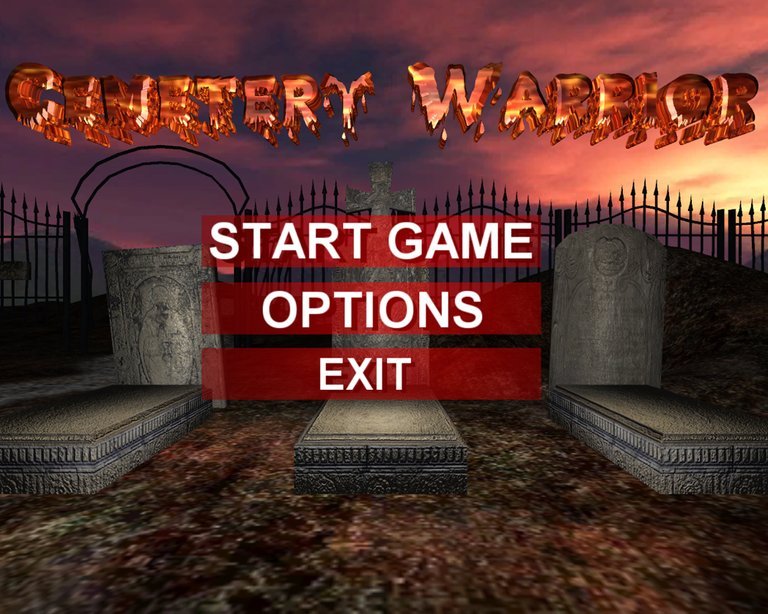
Cemetery Warrior is a fast-paced first-person shooter set in a gothic horror cemetery at night, where players must battle waves of rising zombies using a machine gun with infinite ammo, a rocket launcher, and a plasma gun that require ammo pickups. The game features three connected areas culminating in a boss fight, with no save system—death restarts the player from the beginning.
Gameplay Videos
Cemetery Warrior Reviews & Reception
Cemetery Warrior: Review
Introduction
In the shadowed corners of video game history, where forgotten freeware gems flicker like will-o’-the-wisps amid the digital graveyard of abandoned downloads, Cemetery Warrior (2011) stands as a defiant tombstone of pure, unadulterated arcade shooting. Developed and published by the prolific Falco Software, this first-person shooter hurls players into a nightmarish cemetery overrun by the undead, armed only with an arsenal of makeshift firepower and sheer survival instinct. As the inaugural entry in a surprisingly enduring series that spans over a decade, Cemetery Warrior embodies the raw, unpolished spirit of early 2010s indie freeware—a love letter to classics like Doom and Quake, stripped to their skeletal essence. My thesis: While its brevity and technical austerity mark it as a relic of browser-era excess, Cemetery Warrior endures as a masterclass in minimalist horror-shooter design, proving that sometimes, the simplest graves yield the most thrilling resurrections.
Development History & Context
Falco Software, a Russian-based studio known for churning out hundreds of low-fi, free-to-play titles during the freeware boom of the late 2000s and early 2010s, birthed Cemetery Warrior on November 1, 2011, exclusively for Windows as a downloadable executable. Operating in an era dominated by Flash portals like Newgrounds and Armor Games, alongside Steam’s nascent indie influx, Falco epitomized the “garage developer” ethos: solo or small-team efforts leveraging accessible engines (likely a custom build or early Unity precursor, given the direct-control interface and lightweight footprint) to flood the market with bite-sized experiences. No sprawling budgets here—just a vision of gothic zombie-slaying distilled into a single-level gauntlet.
The gaming landscape of 2011 was a battlefield of contrasts. AAA juggernauts like Battlefield 3 and Modern Warfare 3 pushed graphical frontiers, while indie darlings such as Minecraft and Amnesia: The Dark Descent redefined horror through atmosphere. Cemetery Warrior carved its niche in the freeware underbelly, echoing the shareware revolution of the 1990s (Wolfenstein 3D, Doom) but adapted for dial-up denizens and office-break browsers. Technological constraints were its muse: no saves, permadeath restarts, and ammo scarcity enforced replayability on potato hardware. Falco’s vision? A “send them back to hell” power fantasy, unencumbered by narrative bloat, perfectly timed for zombie fatigue post-Left 4 Dead but pre-Dying Light. This context birthed a game unapologetically arcade, prioritizing dopamine hits over depth—a snapshot of democratization, where anyone with a mouse could play god (or grim reaper).
Narrative & Thematic Deep Dive
Cemetery Warrior‘s story is a whisper in the wind: “You find yourself in a cemetery when the dead begin to rise. Fortunately, you came armed. Send them back to hell!” No cutscenes, no voiced protagonist, no lore dumps—just emergent horror from a silent everyman thrust into undeath’s maw. The plot unfolds linearly across three interconnected areas on a single foggy night level, culminating in a boss arena. Characters? Absent. The zombies are faceless hordes—shambling ghouls with jerky animations evoking early Quake fiends—while the player is a voiceless avatar, defined solely by recoil and reloads.
Yet, beneath this minimalism lies profound thematic resonance. Gothic Horror Archetypes: The cemetery setting channels Victorian ghost stories and Universal Monsters, with night-shrouded tombs amplifying existential dread. Themes of resurrection and retribution dominate: the undead’s rise mirrors humanity’s repressed sins clawing free, while the player’s arsenal symbolizes defiant mortality. No dialogue, pure action underscores isolation—dying resets you to the start, a Sisyphean loop critiquing futile resistance against chaos. Subtly, weapon progression (machine gun for fodder, rockets/plasma for elites) allegorizes escalating damnation, from petty sins to infernal bosses.
Deeper still: Freeware Existentialism. In an industry obsessed with epics (Skyrim launched that month), Cemetery Warrior rejects heroism for grim pragmatism. No victory fanfare; survival is pyrrhic. The boss fight—a hulking demon-lord—embodies hubris, its arena a coliseum of judgment. Compared to series successors (Cemetery Warrior V‘s “powerful masters challenge the demon”), the original’s purity amplifies horror: you’re no chosen one, just lucky with a gun.
Gameplay Mechanics & Systems
At its core, Cemetery Warrior is a taut loop of move-shoot-survive, distilled into FPS fundamentals with clever resource twists. Direct control (WASD/mouse) delivers responsive aiming, evoking Doom‘s fluidity despite dated physics.
Core Loops & Combat
- Wave-Based Arenas: Three zones demand horde-clearing before gates unlock. Zombies spawn predictably but swarm dynamically, forcing kiting and positioning. Combat shines in escalation: early MG sprays handle basics; later, ammo-starved rockets/plasma demand precision.
- Weapon Trio:
Weapon Ammo Role Machine Gun Infinite Sustained fire, fodder Rocket Launcher Pickups AoE crowds, elites Plasma Gun Pickups High-damage sniping Infinite MG prevents frustration, but scarcity for heavies enforces strategy—hoard for bosses or burn on mobs?
Progression & UI
No RPG elements; “progression” is spatial (zone-to-zone). UI is spartan: crosshair, ammo counters, health bar. Flaw: Cluttered HUD obscures gothic vistas. No saves amplify tension—death’s full reset punishes sloppiness, rewarding muscle memory (runs clock ~10-20 minutes).
Innovations & Flaws: “Rush Impact” precursors (strafe-dodge) innovate mobility; boss QTE-like patterns demand adaptation. Flaws? Janky collision, unfair spawns, no difficulty scaling. Yet, this rawness fosters mastery—replays hone paths, turning frustration into flow.
World-Building, Art & Sound
The eponymous cemetery is a masterstroke of constrained immersion: fog-shrouded graves, crooked crypts, and moonlit mausoleums craft nocturnal dread on a singular plane. Visuals—low-poly models, flat-shaded textures—scream 2011 freeware, akin to Browser Doom clones, but purposeful: shadows hide spawns, tombs block sightlines, fostering paranoia.
Atmosphere via Economy: Night enforces visibility limits; particle fog mutes distance, heightening claustrophobia. Art direction prioritizes gothic silhouettes—ragged zombies lurch amid iron fences—evoking Resident Evil‘s restraint over excess.
Sound design amplifies: guttural zombie moans, echoing gunfire, and a throbbing synth-industrial track build pulse-pounding urgency. No voicework needed; weapon barks (MG chatter, rocket whooshes, plasma zaps) punctuate chaos. Collectively, these forge a cohesive hellscape: visuals claustrophobic, audio visceral, turning a flat level into a pressure cooker where every corner whispers “more come.”
Reception & Legacy
Launched sans fanfare, Cemetery Warrior garnered zero critic reviews on MobyGames (n/a score), no Metacritic aggregate, and scant player feedback—befitting freeware obscurity. Forums silent, it flew under radars amid 2011’s deluge (Dark Souls, Portal 2). Commercial? “Success” via downloads, spawning Cemetery Warrior II (2013, Mac port), III (2014), 4 (2019, browser/Steam), and V (2021, 65% mixed Steam score from 35 reviews: “Garbage” to “addictive arena shooter”).
Evolving Reputation: Retrospectives (PCGamingWiki, CrazyGames) hail it as Doom-lite progenitor. Influence? Subtle—paved Falco’s niche (hundreds of titles), echoed in browser FPS revivals (Krunker, Shell Shockers). Series legacy: Evolved to Steam viability, blending roguelike loot/perma-death in V, but original’s purity inspires modders chasing “pure shooter” highs. In history, it’s a footnote to freeware’s golden age, preserving arcade FPS amid live-service dominance.
Conclusion
Cemetery Warrior is no masterpiece—its brevity (~30-minute runs), jank, and silence scream “prototype.” Yet, in dissecting its gothic pulse, weapon parsimony, and atmospheric thrift, it reveals genius: a perfect horror-shooter microcosm, untainted by bloat. Falco Software etched a legacy of resilience, birthing a series amid indifference. Verdict: Essential for FPS historians (8/10 freeware scale), a digital crypt worth raiding for Doom souls in 2025. Unearth it; the dead await.