
- Release Year: 2005
- Platforms: Windows
- Publisher: IncaGold plc
- Developer: InterActive Vision Mind Beacon Sp. z o.o.
- Genre: Strategy, Tactics
- Perspective: Diagonal-down
- Game Mode: Single-player
- Gameplay: Real-time
- Setting: Historical events, World War II
- Average Score: 67/100
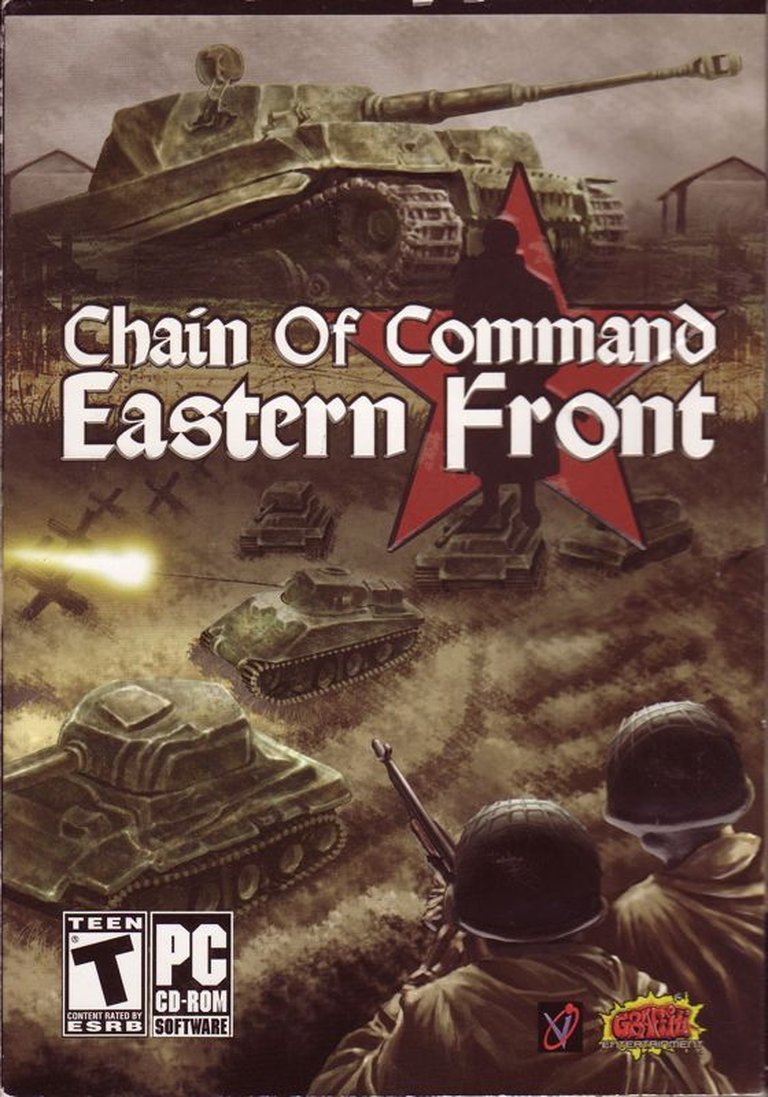
Description
Chain Of Command: Eastern Front is a real-time tactics game set during World War II, where players command Soviet troops through 16 missions spanning from the Battle of Stalingrad to the advance on Berlin. The gameplay revolves around strategic movement and combat, requiring players to secure marked objectives by eliminating enemy forces. With 20 unique units per side, each possessing distinct strengths and vulnerabilities, the game emphasizes tactical unit management. Controls adhere to genre conventions, utilizing mouse-driven commands and keyboard shortcuts for specialized actions.
Where to Buy Chain Of Command: Eastern Front
PC
Chain Of Command: Eastern Front Cracks & Fixes
Chain Of Command: Eastern Front Reviews & Reception
gamepressure.com (72/100): The second part of Chain of Command is characterized by an average audiovisual setting and, like its predecessor, does not surprise players with any graphic fireworks, spectacular cutscenes or extensive storyline.
mobygames.com : Since Chain of Command: Ostfront 1943-1945 was released about two weeks after its predecessor it is not surprising that it is the same game with new missions.
gamingnexus.com (50/100): Been there, done that. Chain of Command: Eastern Front brings nothing new to the RTS genre, nor is it even that much fun to play. Pass on this one.
darkzero.co.uk : Chain of Command: Eastern Front is a real-time strategy game set during World War II. It’s also a complete waste of time for absolutely anyone involved with it.
Chain Of Command: Eastern Front Cheats & Codes
Order of Battle: World War II
Hold Shift and C to open the console, then enter one of the following codes.
| Code | Effect |
|---|---|
| #johnconnor | disable AI |
| #iamback | enable AI |
| #igotnukes | instant victory |
| #whiteflag | instant defeat |
| #warbonds | +500 resources |
| #orbitalcommand | disable fog of war |
| #warbonds |
Given you |
| #income |
Given you |
| #overtime |
Given you |
| #landcp |
Given you |
| #navalcp |
Given you |
| #aircp |
Given you |
Chain Of Command: Eastern Front: Review
Introduction
In the pantheon of World War II strategy games, Chain of Command: Eastern Front stands as a curious artifact, a title that, despite its historical setting and real-time tactics gameplay, failed to leave a lasting impact. Released in December 2005, this game was developed by InterActive Vision Mind Beacon Sp. z o.o. and published by IncaGold plc, Graffiti Entertainment, LLC, and Like Dynamite GmbH. Chain of Command: Eastern Front is a sequel to the 2004 title Chain of Command, sharing its core mechanics but offering new missions set on the Eastern Front. This review will delve into the game’s development history, narrative depth, gameplay mechanics, world-building, reception, and legacy, ultimately providing a definitive verdict on its place in video game history.
Development History & Context
The Studio
InterActive Vision Mind Beacon Sp. z o.o. was a collaborative effort between the Danish company Interactive Vision and the Polish studio Mind Beacon. The studio was known for its work on various strategy and simulation games, leveraging the RenderWare 3D engine to create immersive environments. The development team behind Chain of Command: Eastern Front included a mix of experienced and emerging talents, with key figures such as Maciej Stachurski (Alkor) serving as both project manager and programmer, and Maciej Witkowski (Bushi) handling design and screenplay.
The Creators’ Vision
The vision for Chain of Command: Eastern Front was to provide a traditional real-time tactics experience set during World War II, focusing on the Soviet campaign from Stalingrad to Berlin. The game aimed to offer a blend of historical accuracy and engaging gameplay, with a strong emphasis on unit management and tactical decision-making. However, the rapid development cycle and the decision to reuse the core mechanics from its predecessor limited the game’s potential for innovation.
Technological Constraints
The game was developed using the RenderWare 3D engine, which was a popular choice for real-time strategy games at the time. However, the engine’s limitations became apparent in the game’s visual presentation and performance. The developers faced challenges in optimizing the game for a wide range of hardware configurations, leading to a mixed bag of system requirements and performance issues.
The Gaming Landscape
In 2005, the real-time strategy genre was dominated by titles like Company of Heroes, Command & Conquer: Generals, and StarCraft. These games set high standards for graphics, gameplay depth, and multiplayer features. Chain of Command: Eastern Front, released as a budget title, struggled to compete in this crowded and demanding market. Its lack of innovation and polished presentation made it an easy target for criticism.
Narrative & Thematic Deep Dive
Plot
Chain of Command: Eastern Front follows the Soviet campaign on the Eastern Front during World War II, from the Battle of Stalingrad to the fall of Berlin. The game features 16 missions, each with a specific objective that typically involves moving troops to a marked point on the map and eliminating all enemy units. The narrative is linear and straightforward, with no branching storylines or significant character development.
Characters
The game does not feature individual characters with distinct personalities or backstories. Instead, players command a variety of Soviet units, each with its own strengths and weaknesses. The lack of character development is a notable omission, as it limits the player’s emotional investment in the game’s narrative.
Dialogue
Dialogue in Chain of Command: Eastern Front is minimal and functional, serving primarily to convey mission objectives and briefings. The voice acting is adequate but unremarkable, failing to add depth or immersion to the game’s narrative.
Themes
The game explores themes of war, sacrifice, and the struggle for survival in the face of overwhelming odds. However, these themes are not deeply integrated into the gameplay or narrative, making them feel more like background noise than central elements of the player’s experience.
Gameplay Mechanics & Systems
Core Gameplay Loops
Chain of Command: Eastern Front features a traditional real-time tactics gameplay loop. Players start each mission with a pre-defined set of units and are given specific objectives to complete. The core gameplay involves moving units across the map, engaging enemy forces, and achieving mission goals. The game’s controls follow established genre standards, with the mouse used for movement and attack orders, and key combinations or on-screen menus for special functions.
Combat
Combat in Chain of Command: Eastern Front is straightforward but lacks depth. Units have different strengths and weaknesses, and players must strategize accordingly. However, the AI is rudimentary, with enemy units often charging directly at the player’s forces, making combat feel more like a button-mashing exercise than a tactical challenge.
Character Progression
There is no character progression in Chain of Command: Eastern Front. Players do not earn experience points or unlock new abilities as they progress through the game. This lack of progression is a significant drawback, as it limits the player’s incentive to engage with the game’s mechanics and narrative.
UI
The user interface in Chain of Command: Eastern Front is functional but uninspired. It provides the necessary information for gameplay, such as unit health, ammunition, and mission objectives, but lacks the polish and intuitiveness found in more modern strategy games. The UI’s design and layout are straightforward, but they do not enhance the player’s experience or immersion.
Innovative or Flawed Systems
One of the game’s most notable flaws is its implementation of fog of war. The game includes fog of war but does not visually represent it, leading to enemy units seemingly appearing out of thin air. This broken mechanic detracts from the gameplay experience, making it difficult for players to plan and execute their strategies effectively.
World-Building, Art & Sound
Setting
Chain of Command: Eastern Front is set on the Eastern Front during World War II, a historically significant and visually rich setting. The game features three environment types: desert, forested hills, and snow-covered landscapes. Each environment is designed to provide a unique tactical challenge, with different cover options and line-of-sight considerations.
Atmosphere
The game’s atmosphere is somewhat lacking, with a drab and washed-out visual presentation that fails to capture the grit and intensity of the Eastern Front. The environments are functional but uninspired, with generic buildings and landscapes that do not evoke a strong sense of place or immersion.
Visual Direction
The visual direction in Chain of Command: Eastern Front is unremarkable, with a focus on functionality over aesthetics. The game’s graphics are adequate for the time but lack the polish and detail found in more modern strategy games. The unit models are well-designed but lack animation variety, making combat feel stale and repetitive.
Sound Design
The sound design in Chain of Command: Eastern Front is adequate but uninspired. The game features realistic sound effects, such as the sound of running water in the first mission, but these effects are often poorly implemented, with obvious loop points and unrealistic audio placement. The background music is atmospheric but does not add depth or immersion to the gameplay experience.
Reception & Legacy
Critical and Commercial Reception
Chain of Command: Eastern Front received mixed reviews upon its release, with critics praising its historical setting and real-time tactics gameplay but criticizing its lack of innovation and polished presentation. The game’s budget release status did not help its commercial prospects, as it struggled to compete with more polished and innovative strategy titles.
Evolution of Reputation
Over time, Chain of Command: Eastern Front has largely faded from the public consciousness, remembered primarily by strategy game enthusiasts and historians. Its lack of innovation and polished presentation has relegated it to the status of a curiosity, a game that, despite its historical setting and real-time tactics gameplay, failed to leave a lasting impact.
Influence on Subsequent Games
Chain of Command: Eastern Front had little influence on subsequent games in the strategy genre. Its lack of innovation and polished presentation meant that it did not set new standards or trends in the genre. However, its historical setting and real-time tactics gameplay have been explored in other titles, such as Company of Heroes and Theatre of War.
Conclusion
Chain of Command: Eastern Front is a curious artifact in the pantheon of World War II strategy games. Its historical setting and real-time tactics gameplay offer a glimpse into the challenges and sacrifices of the Eastern Front, but its lack of innovation, polished presentation, and engaging narrative limit its appeal and impact. The game’s development history, narrative depth, gameplay mechanics, world-building, and reception all point to a title that, despite its potential, failed to leave a lasting legacy. In the end, Chain of Command: Eastern Front serves as a reminder of the importance of innovation, polish, and engaging narrative in the strategy genre, and a cautionary tale of the dangers of relying too heavily on established formulas and mechanics.