
- Release Year: 2009
- Platforms: Macintosh, Windows
- Publisher: Eidos Interactive Limited, Noviy Disk, Virtual Programming Ltd.
- Developer: Beautiful Game Studios
- Genre: Simulation, Sports, Strategy, Tactics
- Perspective: Diagonal-down, Text-based / Spreadsheet
- Game Mode: Single-player
- Gameplay: Business simulation, Managerial
- Setting: Football, Soccer
Description
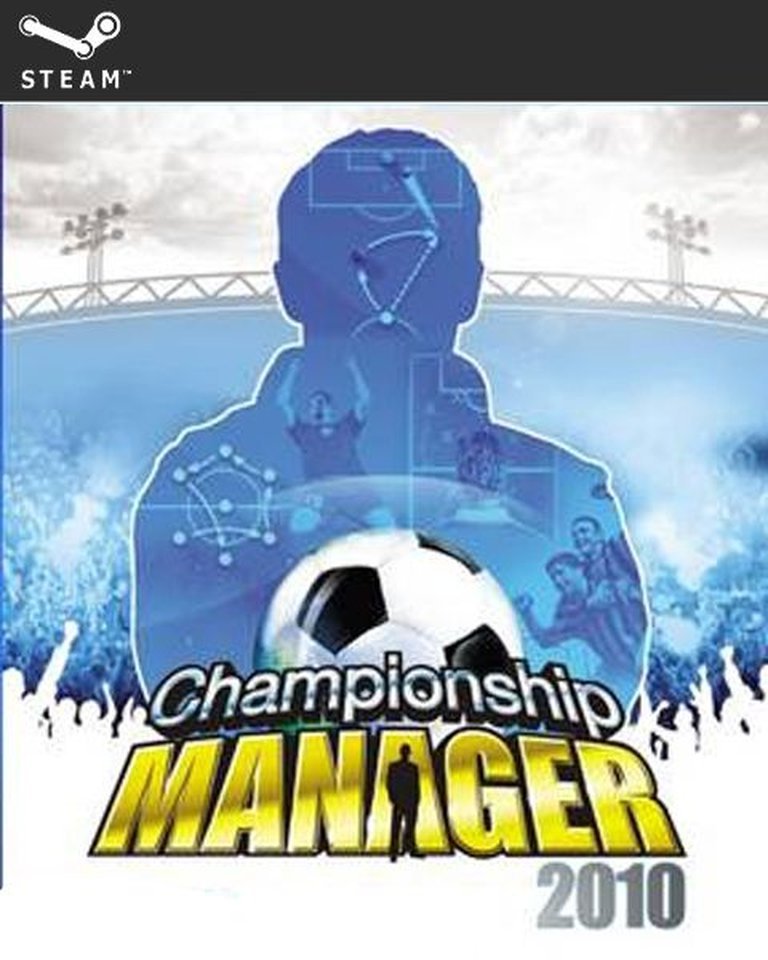
Championship Manager 2010 is a football management simulation game that tasks players with overseeing all aspects of a soccer club, including training, transfers, scouting, and tactical strategy. As the latest seasonal update in the series, it introduces a groundbreaking ‘pay-what-you-want’ pre-order model, features revamped intuitive interface design, and enhances realism with real-time 3D match visualization across five camera angles.
Gameplay Videos
Championship Manager 2010 Free Download
Championship Manager 2010 Cracks & Fixes
Championship Manager 2010 Patches & Updates
Championship Manager 2010 Guides & Walkthroughs
Championship Manager 2010 Reviews & Reception
fullerfm.com : Surprisingly, it is still on the Steam store, costing as little as 89p during the last winter sale. So, what better time to revisit CM10 and see if it really was all that bad?
pocketgamer.com : A deep but muddled mix-up of an existing game, Championship Manager 2010 is broadly the same as last year’s effort, but with an even more confusing set of controls.
Championship Manager 2010: Review
Introduction
In the annals of football management gaming, few franchises carry the weight of history like Championship Manager. Yet by 2009, the series was a shadow of its former self, having been eclipsed by its estranged sibling, Sports Interactive’s Football Manager. Into this stepped Championship Manager 2010, developed by Beautiful Game Studios (BGS) under Eidos Interactive. Heralded as a “strong alternative” to its rival, this title boasted two years of development, a revolutionary “pay-what-you-want” pricing model, and ambitious features like a fully 3D match engine and set-piece editor. As the last meaningful Championship Manager release for PC and Mac, it stands as both a swan song and a cautionary tale—a game that redefined ambition but ultimately succumbed to execution. This exhaustive review dissects its development, gameplay, reception, and legacy to determine its true place in gaming history.
Development History & Context
Championship Manager 2010 emerged from a crucible of crisis. After the 2003 split between Eidos and Sports Interactive (SI)—which retained the game’s engine and database—BGS was tasked with rebuilding Championship Manager from scratch. Previous releases like Championship Manager 5 (2005) and 2006 were critically savaged for bugs, missing features, and an inability to match Football Manager’s depth. Eidos openly admitted the franchise had “lost direction,” making CM2010 a make-or-break effort.
The development cycle stretched to two years—a first for the series—allowing BGS to overhaul systems. Originally slated for April 2009 as Championship Manager 2009, it was delayed to September 2009 to polish its 3D match engine and implement new features. Technologically, it required a 3GHz processor, 1GB RAM, and DirectX 9 compatibility, reflecting late-2000s PC gaming standards. The team, led by General Manager Roy Meredith and including 255 credited staff, prioritized innovation over incremental updates.
The gaming landscape was dominated by the annual Football Manager vs. Championship Manager duel. FM2009 (2008) had set a high bar for realism, forcing CM2010 to differentiate itself. Eidos’ bold “pay-what-you-want” pre-order model—allowing players to pay as little as 1p plus a £2.50 fee—was a historic first, aiming to rebuild trust. This strategy succeeded commercially, with the game topping PC retail charts for two weeks. Yet its release coincided with Football Manager 2010 (November 2009), reigniting the rivalry and highlighting CM2010’s uphill battle for relevance.
Narrative & Thematic Deep Dive
Though a simulation, CM2010 weaves an emergent narrative centered on the player’s managerial journey. The opening—”Welcome to your new job. I’m afraid there is no money. LOL”—sets a tone of wry realism, immersing players in the pressures of club management. Themes of ambition, financial constraint, and redemption permeate the experience.
The game’s “characters” are its players, each endowed with a 5-attribute profile (Technical, Mental, Physical, Temperament, Goalkeeping). Temperament attributes like “Versatility” and “Consistency” introduce unpredictability, where a star striker might thrive one week and falter the next, creating micro-dramas in the squad. Man-management features allow players to address player concerns—e.g., a winger demanding more first-team action—through dialogue choices, with promises or placations affecting morale. However, this system is superficial; reviews noted a lack of nuance in team talks (limited to praise/criticism) and contradictory advice from the assistant manager.
The overarching narrative is one of rise from obscurity to greatness. Managing from England’s 7th-tier leagues to European powerhouses, players navigate board expectations, fan pressure, and media scrutiny. The dynamic news ticker and real-time league tables foster immersion, simulating a living football world. Yet this narrative frays under the game’s flaws: illogical injuries, baffling AI transfers (e.g., Michael Owen rejecting Manchester United for Chivas), and a match engine that prioritizes slapstick over realism. The result is a tragicomic saga—capturing football’s chaos but undermining the drama with technical inconsistencies.
Gameplay Mechanics & Systems
CM2010’s gameplay is a tapestry of interconnected systems, each ambitious yet unevenly executed.
Squad Management: The database spans 32 nations, including lower English leagues (Northern/Southern Premier) and expanded Croatian/Romanian leagues. Players are rated 1–100 across five categories, adding depth but overwhelming newcomers. The “Temperament” attribute introduces welcome unpredictability, though it often feels arbitrary.
Tactics: The standout innovation is the set-piece editor, allowing managers to design free-kick/corner routines step-by-step—assigning runs, passes, and defensive coordination. This feature, previewed in practice drills, offered tactical depth unseen in prior Championship Manager titles. However, implementation was flawed; tactics often failed to manifest in matches, with AI ignoring instructions during gameplay.
Match Engine: The fully 3D engine, with 500+ motion-captured animations and seven camera angles, was a technical leap. Yet it was plagued by bugs: goalkeepers flapping at crosses, defenders making suicidal passes, and goals reliant on luck over tactics. AI managers were hyper-reactive, making substitutions within 10 minutes and changing formations erratically. This rendered matches more frustrating than strategic.
Transfers & Scouting: A flexible transfer system allowed direct negotiations with players/clubs, including percentage-based future fee clauses. Scouting featured a world map view for tracking talent, though AI-generated transfers often defied logic (e.g., Rivaldo joining Birmingham at 37). Negotiations were realistic but undermined by nonsensical outcomes.
Training & UI: Training drills (shooting, crossing) visualized in 3D aimed to improve squad weaknesses. The UI was sleek but marred by clunky dropdown menus and fragmented player profiles (attributes separated from wages). A dynamic display window provided live league updates, enhancing immersion.
Overall, CM2010 offered a forgiving alternative to Football Manager but sacrificed realism for accessibility. Its systems were innovative yet inconsistent, creating a game of highs and frustrating lows.
World-Building, Art & Sound
CM2010’s world-building is a triumph of scope, capturing global football’s breadth. With leagues across 32 nations—including niche lower tiers—it offers unparalleled managerial freedom. Authentic stadia, real player names, and club histories ground the simulation in reality, while a dynamic news ticker fosters immersion through real-time match results and transfer rumors.
Artistically, the 3D match engine was a landmark. Motion-captured animations lent fluidity to player movement, and detailed stadiums with animated crowds created atmosphere. Camera angles (including a “director’s view”) allowed cinematic replays. Yet visuals were inconsistent: player models lacked polish, and glitches like clipping or misplaced balls broke immersion. Outside matches, the UI was clean and modern, using widgets for live data, but poor navigation hampered usability.
Sound design was functional rather than evocative. Text-based commentary during matches was descriptive, and crowd/noise effects provided ambience, but neither stood out. Press conferences featured voice acting, adding realism to media interactions. The audio-visual blend succeeded in creating a “living” football world, yet the match engine’s flaws often shattered this illusion, reducing dramatic moments to farce.
Reception & Legacy
Championship Manager 2010 enjoyed a warmer reception than its predecessors, with critics praising its ambition. Aggregating scores show a 74% critic average (22 reviews), with Eurogamer awarding 8/10, calling it “for the first time, a viable alternative to Football Manager.” The Guardian (4/5) commended its return to form, while MSN UK noted its addictive, forgiving nature. However, critiques targeted the match engine’s instability and UI flaws, with GameSpot UK (6/10) lamenting its “signs of promise” but unfulfilled potential. Games TM (4/10) dismissed it as “not a viable alternative.”
Commercially, the “pay-what-you-want” model boosted sales, topping PC charts for two weeks before dropping to #2. Long-term, it fell out of the top 10 after four months. Player sentiment evolved positively; Steam’s 177 reviews now yield an 81/100 “Very Positive” score, reflecting its cult appeal at budget prices.
Legacy-wise, CM2010 is a transitional title. Its set-piece editor and player interactions foreshadowed genre innovations, but its flaws cemented Football Manager’s dominance. It marked the end of PC Championship Manager, as Eidos shifted to mobile games (e.g., Champ Man), discontinuing the brand in 2018. Yet it remains historically significant for its business model and as a cautionary tale of ambition versus execution.
Conclusion
Championship Manager 2010 is a flawed masterpiece—a testament to BGS’s ambition and the series’ tragic decline. Its two-year development yielded groundbreaking features: a 3D match engine, set-piece editor, and global database that pushed football management forward. The “pay-what-you-want” model was revolutionary, and its immersive world-building offered unparalleled depth. Yet these achievements were undermined by inconsistent execution: a buggy match engine, illogical AI, and a UI that prioritized style over substance.
Critically, it was seen as the series’ strongest showing since its heyday, but it could not dethrone Football Manager. Commercially, it was a fleeting success, overshadowed by its rival’s November release. Its legacy is dual: as the last meaningful Championship Manager on PC, it symbolizes the franchise’s swan song; as a cult classic, it proves that ambition can resonate even when imperfect.
For modern players, CM2010 offers a nostalgic, budget-friendly alternative to contemporary sims, warts and all. Historically, it stands as a pivotal entry—innovative yet flawed, a noble effort that redefined ambition but ultimately succumbed to the weight of expectation. In the pantheon of football management games, Championship Manager 2010 is not the greatest, but it is undeniably unforgettable.
Final Verdict: A valiant, ambitious effort that marks the end of an era. Essential for franchise historians and masochists, but ultimately overshadowed by its rival.