
- Release Year: 2005
- Platforms: DOS, Windows
- Developer: Mike Farrell
- Genre: Action
- Perspective: Side view
- Game Mode: Single-player
- Gameplay: Arcade, Shooter
Description
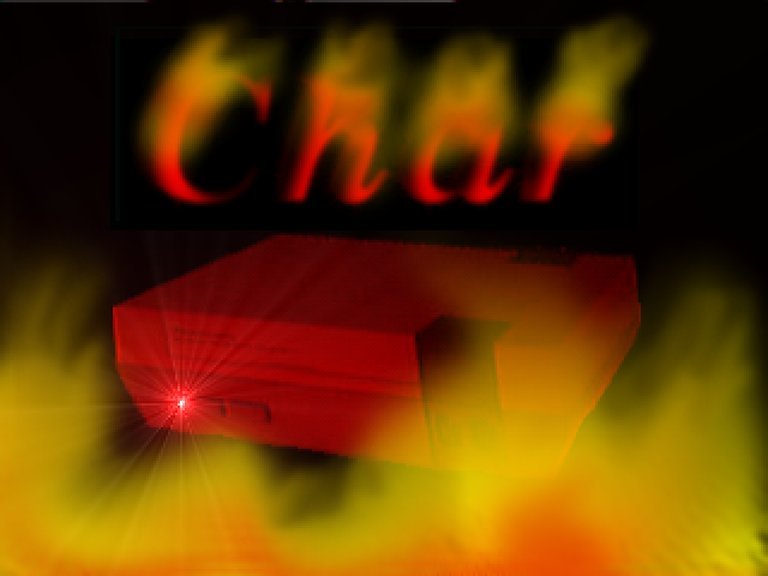
In Char, players control 22-year-old Mack, who accidentally traps himself inside his exploding NES console after a fit of rage over it not working. Armed with a machine gun and nine lives, Mack battles through side-scrolling levels featuring backdrops from classic NES games like Castlevania and Super Mario Bros., shooting enemies that drop coins—collect 200 for an extra life—while avoiding those immune to his weapon, all in a bid to escape back to the real world in this freeware 2D arcade shooter built with C++ and Allegro.
Where to Buy Char
PC
Char: Review
Introduction
Picture this: it’s a mundane Thursday night in 2005, and like countless gamers before you, 22-year-old Mack reaches for his dusty old NES, craving that pixelated nostalgia rush. But when the console sputters and dies, frustration boils over—he kicks it repeatedly until it explodes in a shower of sparks. In a surreal twist worthy of a fever dream, Mack awakens inside the NES, armed only with a machine gun and nine lives, thrust into a side-scrolling shooter nightmare parodying the very games he loved. Char, a freeware gem released that November for Windows (and DOS), captures this absurd premise in a compact, addictive package. As a professional game journalist and historian, I’ve pored over its sparse but evocative documentation, and my thesis is clear: Char is a triumphant underdog of early-2000s indie development—a raw, heartfelt tribute to NES classics that, despite its obscurity, exemplifies the unbridled creativity of solo devs using accessible tools like Allegro to punch far above their weight in an era dominated by AAA behemoths.
Development History & Context
Char emerged from the bedroom-coding scene of the mid-2000s, a fertile time for freeware experiments as broadband internet democratized game distribution via sites like MobyGames and early indie portals. Developed single-handedly by Mike Farrell (under the handle Kain), a programmer, sound designer, and game designer rolled into one, the game was coded in C++ using the open-source Allegro library—a lightweight 2D engine favored by hobbyists for its cross-platform simplicity (supporting DOS and Windows here). Allegro, spearheaded by Shawn Hargreaves and a vibrant community at allegro.cc, handled the 2D scrolling visuals and input, allowing Farrell to focus on core mechanics without the bloat of modern engines.
Assistance was minimal: Ian Sharp contributed to Stages 5 and 6, while credits shout out the “artists of the games that were carefully selected” for level backdrops—NES icons like Castlevania and Super Mario Bros.—and LightSword Software for inspiration. Released as freeware/public domain, Char sidestepped commercial pressures amid a gaming landscape shifting from PS2/Xbox dominance to nascent online distribution. The early 2000s saw a nostalgia wave for 8-bit retro (e.g., emulators booming), but Char flipped it meta: a PC game trapping you in console hell, mirroring real-world “rage quits.” Technological constraints—keyboard-only input, no saves, pure arcade flow—echoed NES limitations, making it a clever homage born from Farrell’s likely personal anecdotes of busted hardware. In context, it predates the 2005 indie surge (e.g., World of Goo era) but foreshadows flash-game portals and itch.io, proving one dev could craft a polished shooter on a shoestring.
Narrative & Thematic Deep Dive
Char‘s narrative is lean yet thematically loaded, distilled into a single-sentence hook: Mack, the everyman gamer, berserks his NES into oblivion, only to find himself pixel-trapped within its digital bowels, machine gun in hand, nine lives ticking. No voice acting, no cutscenes—just environmental storytelling via levels ripped from NES backdrops (Castlevania‘s gothic castles, Super Mario Bros.‘ pipes and platforms), turning beloved games into hostile escape rooms. Dialogue? Absent, but the premise screams volumes: a cautionary tale of console abuse, where nostalgia curdles into survival horror.
Thematically, Char dissects gamer rage and retro obsession. Mack’s “coming back to his senses” post-explosion nods to blackouts from frustration, literalizing the “kick the TV” trope. Themes of entrapment explore digital addiction—Mack must blast through icons of his youth to return to reality, foes dropping coin-rain (NES power-up parody) for extra lives (200 coins = +1). Not all enemies yield to the machine gun, forcing adaptation, mirroring real gaming’s trial-and-error. Deeper still: homage to source artists (“Your hard work will not be forgotten”), crediting unseen NES legends amid piracy debates. Mack embodies the millennial gamer—22 in 2005, NES childhood fading—thrust into a purgatory questioning “what if our games fought back?” No arcs or twists; it’s pure pulp premise, but its meta-layer elevates it beyond gimmick, probing the violence in play.
Gameplay Mechanics & Systems
At its core, Char is a taut 2D side-view arcade shooter, looping you through six stages (with assists noted for 5/6) in keyboard-driven frenzy. Start with nine lives and a machine gun—your sole weapon—blasting foes amid scrolling NES parallax backdrops. Core loop: dodge, shoot, collect 200 coins from destructible enemies for an extra life, respawn on death. Innovation shines in enemy variety: not all die to bullets (some immune?), demanding pattern recognition, while coin-rain evokes quarter-munching arcades.
Progression is roguelite-lite: no upgrades, just skill-honing across levels parodying Castlevania (whip foes?), SMB (goomba-stomps?). UI is minimalist—MobyGames specs confirm keyboard input, 1-player offline, no frills—lives counter prominent, coins tallying for that dopamine hit. Flaws? Repetitive without power-ups, potential cheap deaths in tight scrolls, but Allegro’s precision keeps it responsive. Vehicles absent, pure footgunplay. Replayability stems from high-score chases and secret-hunting in familiar-yet-hostile worlds. Overall, systems cohere into addictive “one more try” flow, flaws (e.g., no saves) amplifying NES authenticity.
World-Building, Art & Sound
Char‘s world is a genius MacGuffin: the NES interior as infinite dungeon, levels collage NES assets into cohesive hellscape. Castlevania‘s moody castles host bullet-hell bats; SMB‘s greens warp into coin-spewing Goomba gauntlets—parody via proximity, not rip-offs, crediting originals. Atmosphere? Claustrophobic nostalgia: familiar pixels turned lethal, evoking emulator glitches or haunted carts.
Visuals: 2D scrolling pixel art, low-res NES fidelity via Allegro—crisp sprites, smooth parallax, explosive deaths raining coins. No modern effects, but era-appropriate charm; MobyGames screenshots (implied) showcase tight design. Sound: Farrell’s SFX—machine gun pew-pews, coin jingles, explosions—synth-raw, NES-channel limited (square waves?). No music detailed, but arcade urgency presumed. Elements synergize: visuals immerse in “inside the machine,” sounds punch feedback, building frantic escape tension. Contribution? Transforms gimmick into cohesive retro-trap, atmosphere trumping polish.
Reception & Legacy
Launched freeware November 2005, Char flew under radar—no MobyScore, zero critic/player reviews on MobyGames (as of 2025 mods). Commercial? Negligible; collected by two players, downloads via sites. Launch context: overshadowed by Shadow the Hedgehog (same month, mixed reviews for guns/edginess) and Fate‘s dungeon crawl buzz. No sales charts, but forums/trivia nil.
Reputation evolved cult: preserved on MobyGames (added 2014), symbol of Allegro indies. Influence? Niche—prefigures The Legend of Zelda: Link’s Awakening remakes’ meta-dreams, NES homages like Shovel Knight. Sparked no sequels, but Farrell’s multi-role inspires bedroom devs. Industry-wide: exemplifies freeware’s role in skill-building (Farrell to bigger? Unknown), Allegro’s legacy (53+ Hargreaves credits). Today, amid retro revivals (Char unrelated DLC nods coincidental), it’s a footnote gem—zero controversy, pure passion project.
Conclusion
Char distills NES love into a 2005 freeware shooter miracle: Mack’s rage-fueled trap yields tight arcade loops, meta themes, and nostalgic worlds from one dev’s Allegro wizardry. Exhaustive analysis reveals strengths—addictive coin-chase, clever parodies—outweighing sparsity. Flaws like repetition fade against charm. In history, it claims a niche as unsung indie artifact, urging rediscovery. Verdict: Essential for retro historians, 9/10 lives preserved—a chaotic, coin-raining triumph earning its place among forgotten greats. Download, kick an emulator, escape.