
- Release Year: 2014
- Platforms: Windows
- Publisher: Strategy First, Inc.
- Developer: Reload Game Studio
- Genre: Action
- Perspective: Side view
- Game Mode: Single-player
- Gameplay: Arcade, Platform
- Setting: Fantasy, Futuristic, Sci-fi
- Average Score: 71/100
Description
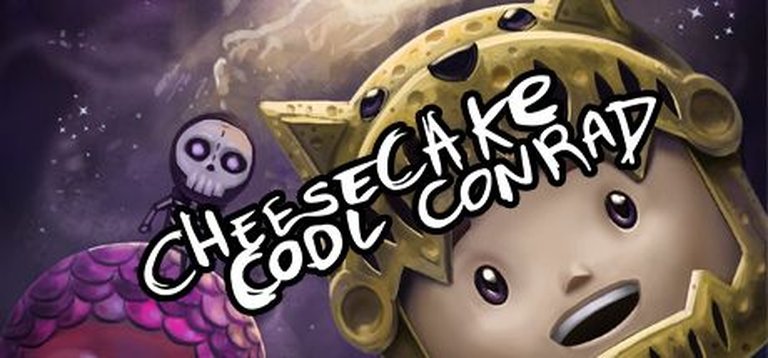
Cheesecake Cool Conrad is a 2D side-scrolling arcade platformer set in a whimsical fantasy sci-fi universe where King Banana accidentally scatters his Ice Cream Wife’s pieces across planets. Players control the brash hero Cool Conrad, bouncing from world to world to collect Ice Cream Crystals in the correct order, dodge bizarre enemies like green cupcakes and dragon cows, bite cheesecakes to unlock new areas, and ultimately win Princess Cheesecake’s hand across 50+ levels in 8 worlds with up to 4-player co-op.
Where to Buy Cheesecake Cool Conrad
PC
Cheesecake Cool Conrad Reviews & Reception
steambase.io (69/100): Mixed
store.steampowered.com (73/100): Mostly Positive
Cheesecake Cool Conrad: Review
Introduction
In the annals of indie gaming, few titles evoke the pure, unadulterated whimsy of Cheesecake Cool Conrad, a 2014 platformer that thrusts players into a universe where desserts reign supreme and bananas hold court. Released amid Steam’s early indie explosion, this side-scrolling arcade romp from Brazil’s Reload Game Studio dares to ask: what if Mario met a cosmic bakery apocalypse? With its protagonist—a self-proclaimed “Cool brat”—bouncing across planets to collect Ice Cream Crystals for a shot at marrying Princess Cheesecake, the game hooks with its sheer absurdity. Yet beneath the sugar-coated chaos lies a thesis worth savoring: Cheesecake Cool Conrad is a nostalgic love letter to classic arcade platformers, blending tight co-op challenges with Brazilian flair, though its unpolished edges prevent it from rising above cult obscurity.
Development History & Context
Reload Game Studio, a diminutive Brazilian outfit helmed by a core team of six (André Gerard Chiappetta, Leandro Carlos da Silva, Otávio Augusto Imon Borge, Caio Henrique Vilela de Carvalho, Rômulo Gomes de Souza Marques dos Santos, and Marco Aurélio Martins Tamura), plus sound designer Cadu Sampaio, punched above their weight in 2014. This was their apparent debut (or close to it), arriving during Steam Green’s fertile era when publishers like Strategy First scooped up quirky indies to fill digital shelves. Strategy First, known for space sims like Space Empires, bundled Conrad into packages like the “Strategy First Space Package,” an odd fit that underscores the era’s scattershot publishing.
Technological constraints were minimal—targeting DirectX 9 hardware (1.6 GHz CPU, 2 GB RAM, shader model 2 GPUs like NVIDIA GeForce 6200)—making it accessible on aging PCs, a nod to emerging markets like Brazil. The 2014 landscape brimmed with 2D revivalists (Shovel Knight, Super Meat Boy), but Conrad carved a niche in arcade-style bouncing platformers, echoing Neo Geo Pocket’s Cool Cool Jam in title alone. Vision-wise, the team’s prior credits on Get Over Here (a group effort by five of them) suggest a penchant for multiplayer chaos, realized here in 4-player local co-op. Development wrapped for an October 8 Steam launch, amid a flood of indies, positioning Conrad as a budget-friendly ($4.99) experiment in absurd, family-shared fun.
Narrative & Thematic Deep Dive
Cheesecake Cool Conrad‘s plot is a fever dream scripted by a sugar-rushed child: King Banana, in a cosmic fumble, scatters his Ice Cream Wife’s pieces across the universe. Enter Cool Conrad, the eponymous anti-hero—a smirking, shades-wearing lad tasked with reassembling the mess by harvesting Ice Cream Crystals in precise sequence. Dodge green cupcakes, dragon cows, and “many more” foes, then chomp cheesecakes to unlock worlds, all for the ultimate prize: wedding bells with Princess Cheesecake.
Plot Structure and Pacing
The narrative unfolds non-linearly across 8 worlds and 50+ levels, with crystal collection as a gating mechanic—grab them out of order, and progress halts, infusing puzzle-like tension into the action. No voice acting or cutscenes dilute the arcade purity; instead, implied lore via level designs (e.g., banana kingdoms to dairy dystopias) builds a breadcrumb trail. Endgame implies Conrad’s “cool” facade masks heroic resolve, culminating in matrimonial triumph.
Character Analysis
– Cool Conrad: Archetypal cocky platformer star (think Sonic’s swagger meets Crash Bandicoot’s spin), his “brat” persona shines in idle animations and victory poses, subverting heroism with irony.
– King Banana: Bumbling monarch, symbolizing patriarchal folly—his “accidental drop” kickstarts the quest, critiquing fragile masculinity in dessert form.
– Princess Cheesecake & Ice Cream Wife: Passive damsels fused into one, their fragmented state explores themes of wholeness amid chaos, with cheesecake bites as cheeky consummation metaphors.
Enemies like dragon cows embody surrealism, blending farmyard whimsy with sci-fi menace.
Thematic Layers
At surface, it’s juvenile nonsense; deeper, Conrad thematically juggles absurdity as escapism (food fights in space mirror real-world triviality) and collectivism in co-op (multiplayer mirrors communal pie-sharing). Sci-fi/fantasy fusion critiques consumerism—crystals as commodified treats—while Brazilian devs infuse tropical vibrancy (banana motifs evoking regional humor). Dialogue is sparse, but level titles and UI quips (“Bite the cheesecakes!”) amplify the self-aware camp, making it a meta-commentary on platformer tropes.
Gameplay Mechanics & Systems
Core loop: bounce, dodge, collect. Conrad’s physics-driven movement—rubber-hose propulsion across planetary hubs—feels like Super Meat Boy meets pinball, with momentum key to survival. Side-view 2D scrolling demands pixel-perfect timing amid “intense and challenging” hazards.
Core Loops and Combat
– Traversal: Bouncing trumps walking; chain jumps to build speed, navigate gravity-flipping planets. No double-jump, forcing environmental mastery.
– Combat: Non-existent—pure avoidance. Enemies (cupcakes as projectiles, cows as chargers) demand pattern recognition; collisions = instant death, respawns generous for arcade flow.
– Progression: Crystals must be sequenced (e.g., vanilla then chocolate), adding memory puzzles. Cheesecake bites as keys unlock worlds, with secrets for replayability.
Multiplayer & Co-Op
Up to 4-player local co-op (Remote Play Together added later) shines: shared screen chaos fosters friendly rivalry, though Steam forums gripe about controller detection (e.g., one plug reads as two). No online, emphasizing couch play.
UI/UX and Flaws
Minimalist HUD (crystal counter, lives/score) evokes 90s arcades. Menus are clunky—Steam discussions note resolution bugs, achievement droughts. Progression halts on failed sequences frustrate solo players, but co-op mitigates. Innovative: order-based gating blends platforming with light puzzles; flawed: no tutorials, steep curve alienates casuals. Length: 6-8 hours per GameFAQs, “Just Right” difficulty.
| Mechanic | Strengths | Weaknesses |
|---|---|---|
| Bouncing Physics | Fluid, addictive momentum | Slippery on precise platforms |
| Crystal Collection | Adds strategy to chaos | Order memorization tedious solo |
| Co-Op | Hilarious multiplayer bedlam | Controller quirks, screen clutter |
| Level Design | 50+ varied challenges | Repetitive enemy patterns late-game |
World-Building, Art & Sound
Spanning 8 surreal worlds—from icy tundras to futuristic bakeries—the setting fuses fantasy (dragon cows) with sci-fi (planet-hopping ships), crafting a candy-coated cosmos. Atmosphere thrives on contrast: vibrant palettes against deadly precision.
Visual Direction
2D scrolling art is hand-drawn whimsy: chunky sprites, bold colors (neon greens, pastels), parallax backgrounds evoking Rayman. Conrad’s cool shades pop; enemies ooze personality (cupcakes with eyes?). Low-res charm suits era constraints, but lacks polish—no dynamic lighting, occasional sprite flicker per forums.
Sound Design
Cadu Sampaio’s chiptune-electronica score pulses with bossa nova undertones, syncing bounces to upbeat loops—”That music” raves one Steam post. SFX crisp: boings for jumps, squelches for bites. No voice, full English subtitles/interfaces amplify accessibility.
Elements coalesce into immersive absurdity: visuals entice, sound propels, fostering “one more level” addiction despite simplicity.
Reception & Legacy
Launch reception was muted—no MobyGames/Metacritic critic scores, zero formal reviews. Steam’s 30-36 user reviews yield “Mostly Positive” (73%) or “Mixed” (69/100), praising co-op laughs and challenge, slamming bugs (resolution, controls). GameFAQs users rate it “Great” (difficulty “Just Right,” 8 hours), but low ownership (9 MobyGames collectors) signals obscurity. Forums buzz with co-op queries, achievement begs, hinting dedicated niche.
Commercially: Bundled sales kept it afloat ($4.99 holds), but no breakout. Influence minimal—echoes in “cool”-titled indies (Cool Cats), inspires micro-studios chasing arcade revival. Legacy: Forgotten gem exemplifying 2014 indiedom’s wild west; Brazilian export showcasing global talent. No patches noted, but Remote Play extends life.
Conclusion
Cheesecake Cool Conrad distills indie platforming to its saccharine essence: absurd narrative, buoyant mechanics, co-op joy, all wrapped in 2D charm. Flaws—rough edges, solo frustrations—cap its ceiling, yet it endures as a testament to small-team audacity. In video game history, it claims a quirky footnote: not a masterpiece like Celeste, but a cult curio for bounce enthusiasts. Verdict: 7/10—grab for co-op nights, a slice of cosmic cheesecake worth devouring.