
- Release Year: 2019
- Platforms: Linux, Macintosh, Nintendo Switch, PlayStation 4, PlayStation 5, Windows
- Publisher: DEVGRU-P, Ratalaika Games S.L.
- Developer: ds-sans
- Genre: Adventure
- Perspective: 1st-person
- Game Mode: Single-player
- Gameplay: Visual novel
- Setting: Anime, Manga
- Average Score: 43/100
Description
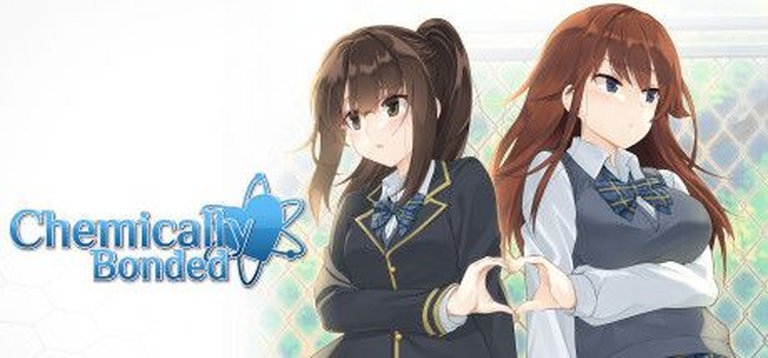
Chemically Bonded is a romantic visual novel set in a high school environment, blending anime/manga-inspired art with a first-person perspective. Players navigate menu-driven choices to explore relationships and unlock multiple endings, following protagonist Ceridwen Erwood and her interactions with classmates. Developed in Ren’Py, the game features a fixed/flip-screen visual style, piano-driven soundtrack, and a 9-10 hour narrative praised for its charming characters and vibrant aesthetics, though some critics note repetitive writing and underdeveloped romantic progression.
Gameplay Videos
Where to Buy Chemically Bonded
PC
Chemically Bonded Cracks & Fixes
Chemically Bonded Mods
Chemically Bonded Guides & Walkthroughs
Chemically Bonded Reviews & Reception
opencritic.com (45/100): Getting from point A to B in Chemically Bonded takes only the effort of reading and little else.
monstercritic.com (45/100): Getting from point A to B in Chemically Bonded takes only the effort of reading and little else.
metacritic.com (40/100): Chemically Bonded found our weak spot and jammed fingernails into it for three hours.
keengamer.com : What tends to hold Chemically Bonded back as a visual novel is the lack of nuance attributed to its story and characters.
Chemically Bonded: A Bruised Heart’s Journey Through Anime Tropes
An Unassuming Visual Novel That Captivates Despite Its Scars
Introduction
In a genre saturated with tales of wistful school romances and improbable sci-fi melodramas, Chemically Bonded arrives as a quiet anomaly. Released in 2019 by indie developer ds-sans after a tumultuous two-year development cycle funded via Kickstarter, this visual novel stakes its claim not through subversive innovation but through earnest, if flawed, storytelling. Our thesis: Chemically Bonded is a poignant but uneven ode to teenage vulnerability—a game whose sincerity outweighs its technical limitations, yet whose ambitions often crumble under the weight of genre conventions. Though it failed to revolutionize visual novels, its emotional core lingers like a half-remembered summer crush.
Development History & Context
The Underdog Vision of ds-sans
Ds-sans—a UK-based developer with a background in geography and prior small-scale projects like Lost Impressions and Sounds of Her Love—crafted Chemically Bonded as a passion project. With a modest £5,497 raised from 271 backers in 2017, the game weathered development hiatuses, scope reductions (notably, an abandoned interactive phone system), and voice-acting reshuffles. Built in Ren’Py, the engine of choice for indie visual novels, the team leaned into anime aesthetics to compete with Japanese contemporaries while targeting Western audiences hungry for slice-of-life narratives.
A Crowded Genre at a Crossroads
Launching in late 2019, Chemically Bonded entered a visual novel landscape dominated by titans like Doki Doki Literature Club! (2017) and Hades (2018 Early Access). Its realistic high-school drama stood in stark contrast to genre peers flirting with metafiction or fantasy. Yet, this was a double-edged sword: While its relatable setting appealed to niche fans, the lack of mechanical novelty risked obscurity in a Steam marketplace flooded with low-effort “rom-com” clones.
Narrative & Thematic Deep Dive
A Tale of Fractured Bonds
Players assume the role of Satoru (default name), a transfer student whose existential ennui collides with the fractured friendship between two archetypal heroines: Kiyoko Ishikawa, a socially maligned science prodigy masking insecurities with bubbly enthusiasm, and Naomi Sato, a tsundere athlete whose venomous exterior hides loneliness. The plot orbits their estrangement—a rift born from academic scandal and misinterpreted betrayal—as Satoru navigates dual roles: mediator and potential romantic partner.
Themes of Maturation and Miscommunication
Chemically Bonded’s strongest moments dissect adolescent idealism. Kiyoko’s faith in logic-as-armor clashes with Naomi’s performative toughness, echoing broader themes of identity as performance. The narrative dares to ask: Can trauma-induced self-delusion be repaired through vulnerability? Sadly, nuanced exploration is undermined by rushed pacing—key revelations crammed into the final act—and repetitive dialogue (e.g., incessant uses of “tranquil” to describe scenes).
Characterization: Tropes vs. Authenticity
Kiyoko’s manic pixie scientist schtick charms, but Naomi’s tsundere persona often veers into caricature. As KeenGamer notes, her abrupt tonal shifts (“flipping a switch from mean girl to weepy confessor”) strain credibility. Side characters like Sae (a sly classmate) inject levity but exist primarily as narrative props. Ultimately, the writing’s heart shines brightest in quiet moments: a science-club experiment gone awry, or Naomi’s hesitant admission that “being disliked is easier than being forgotten.”
Gameplay Mechanics & Systems
Illusion of Choice in a Linear Framework
Positioned as a branching narrative, Chemically Bonded offers “multiple routes and endings” tied to Satoru’s alignment with Kiyoko or Naomi. In practice, choices rarely alter the plot’s trajectory. Selecting between club activities (science vs. athletics) superficially influences affinity meters, but all paths funnel toward one of four conclusions:
– Kiyoko’s Good/Bad End
– Naomi’s Good/Bad End
Achieving the “good” outcomes requires minimal effort—avoiding overtly hostile dialogue—while “bad” endings feel punitive rather than narratively earned.
Interface Quirks and Pacing Issues
The menu-driven UI functions adequately, but technical hicalms mar immersion:
– An unskippable 60-second cutscene at launch frustrates replayability.
– The hyped “interactive phone” mechanic was scrapped mid-development, leaving date-planning menus feeling vestigial.
Playtime spans 6–10 hours, though diminishing returns set in after the first playthrough due to recycled dialogue and minimal variation.
World-Building, Art & Sound
Aesthetic Fidelity to Anime Conventions
Visuals are Chemically Bonded’s crowning achievement. Jun Project’s character designs balance moé appeal with subtle expressiveness—Kiyoko’s oversized lab coat telegraphing her childish zeal, Naomi’s athletic wear masking her fragility. Background artist mB0sco renders sun-dappled classrooms and寂しい (sabishii, “lonely”) train stations with painterly care. However, the limited 12 CGs repeat poses across heroines, betraying budget constraints.
Sound Design: Uneven Harmonies
Composers L. Dougherty and Red Robotix deliver a wistful synth-and-piano score that amplifies emotional beats—a standout being the melancholic leitmotif accompanying Kiyoko’s soliloquies. Voice acting, however, falters: while Amber Barile imbues Naomi with believable vulnerability, N i i’s Kiyoko suffers from stilted line reads and awkward pauses. Side characters fare worse, with some deliveries suggesting rushed recording sessions.
Reception & Legacy
Critical Divide
Reviews crystallize the game’s strengths and flaws:
– Operation Rainfall (90%) praises its “astonishing romantic spectacle” and descriptive writing.
– KeenGamer (55%) lambasts “repetitive writing” and “below-average vocal performances.”
– Steam users (90% positive) laud its emotional resonance despite imperfections.
Commercially, the game found niche success, later ported to consoles via Ratalaika Games in 2023—a testament to underserved visual novel audiences.
Influence on the Genre
Chemically Bonded didn’t redefine visual novels, but its Kickstarter-to-release journey inspired indie devs to pursue personal projects. Its focus on platonic reconciliation (witness Satoru’s role as healer rather than harem protagonist) subtly challenged romance tropes, foreshadowing later titles like Sunshine Girls (2022). Yet, its legacy remains muted—a stepping stone in ds-sans’ evolution rather than a genre landmark.
Conclusion
Chemically Bonded is a bittersweet elegy—a game that tugs at heartstrings while tripping over its own ambitions. Its storytelling, though marred by uneven pacing and formulaic characters, radiates sincerity. For visual novel aficionados, it offers fleeting moments of poignancy and technical polish; for critics, it’s a case study in how passion battles limitations. While far from a masterpiece, its existence reaffirms the indie scene’s vitality. In the alchemy of game development, ds-sans proved even imperfect bonds can forge something memorable.
Final Verdict: A flawed yet affecting 6.5/10—a cult curiosity for rom-com devotees, skippable for genre skeptics.
This review synthesizes data from MobyGames, Steam, VNDB, Operation Rainfall, KeenGamer, WWGDB, and critical aggregates. Playtime: 8 hours across all routes.