
- Release Year: 2023
- Platforms: Windows
- Genre: Adventure, Horror
- Perspective: 1st-person
- Game Mode: Single-player
- Gameplay: Puzzle elements
- Setting: Europe, Ukraine
Description
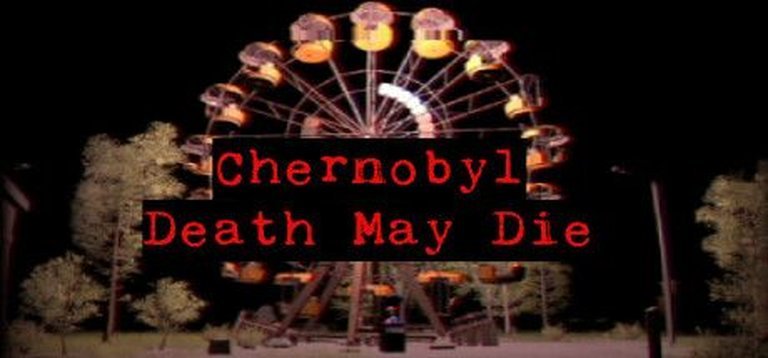
Set in the hauntingly irradiated landscapes of Chernobyl, Ukraine, ‘Chernobyl: Death May Die’ places players in a first-person psychological horror adventure where they awaken alone in a hospital with amnesia, desperate to uncover the area’s dark secrets. The game combines exploration of a vast open world with puzzle-solving elements, hidden object challenges, and a distinctive VHS aesthetic, requiring players to navigate radiation hazards, decipher clues from old videos, and survive as they unravel multiple storylines leading to an unpredictable ending.
Gameplay Videos
Where to Buy Chernobyl: Death May Die
PC
Chernobyl: Death May Die Guides & Walkthroughs
Chernobyl: Death May Die: Review
Introduction
In the saturated landscape of indie horror, Chernobyl: Death May Die emerges as a brazen yet deeply flawed experiment in psychological terror. Developed solo by Philip Efimov and released in February 2023, this title promises an immersive descent into the irradiated heart of Ukraine’s most infamous disaster zone. Armed with a stark premise—amnesiac protagonist awakening in a Chernobyl hospital, driven by an insatiable quest for truth—the game positions itself as a walking simulator infused with VHS nostalgia and environmental dread. Yet despite its ambitious setting, Chernobyl: Death May Die ultimately collapses under the weight of its own ambition. This review dissects its fragmented narrative, jarring mechanical inconsistencies, and polarizing reception, arguing that while its atmospheric potential flickers like a dying Geiger counter, the game remains a cautionary tale of untapped potential in the horror genre.
Development History & Context
Philip Efimov’s lone-wolf development of Chernobyl: Death May Die reflects a growing trend of solo developers leveraging accessible tools like Unity to forge niche experiences. Released amid a surge of Chernobyl-themed games—from 2012’s Chernobyl Commando to 2024’s Chernobyl Again—this title carves a distinct, albeit troubled, niche. Efimov’s vision, as articulated in Steam’s store page, aimed to blend “psychological horror,” “puzzle-solving,” and an “open world” into a “weird, crazy, and unique” experience. Technologically, the game is modest, targeting Windows 10 with modest specs (Intel Dual-Core 2.4 GHz, 4GB RAM), prioritizing accessibility over graphical fidelity. Its 2023 release placed it in a crowded indie horror market dominated by narrative-driven successes like The Talos Principle and What Remains of Edith Finch, yet Efimov’s work struggled to compete with AAA polish or even polished indies. The absence of a dedicated studio or publisher highlights both the autonomy and isolation of solo development, contributing to the game’s inconsistent execution.
Narrative & Thematic Deep Dive
The narrative framework of Chernobyl: Death May Die is a tapestry of intriguing threads and frayed ends. Players awaken as an unnamed protagonist in a desolate hospital, grappling with amnesia and a singular goal: uncover the truth hidden within Chernobyl’s “walls.” This premise taps into potent themes of memory, isolation, and the ethical weight of historical catastrophe. The game’s “several storylines” promise nonlinear depth, but in practice, these remain underdeveloped, conveyed through fragmented notes and cryptic VHS tapes rather than robust character interactions. Dialogue is sparse and functional, serving mainly as puzzle clues rather than emotional anchors. The “unpredictable ending” referenced in the Steam description feels less like a twist and more like an abrupt unresolved conclusion, failing to deliver catharsis or thematic resonance. Thematically, the game grapples with radiation as both physical and metaphorical poison—a “living target” whose health degrades in hot zones—yet this mechanic never evolves beyond a superficial hazard. Ultimately, the narrative’s potential to explore real-world trauma or alternate history squanders itself in vagueness, leaving players adrift in a half-told story.
Gameplay Mechanics & Systems
Chernobyl: Death May Die’s core loop is a walking simulator layered with rudimentary puzzle-solving, but its mechanics reveal a profound disconnect between ambition and execution. Movement and interaction are clunky, with a “direct control” interface that feels unresponsive. The “open world” is a misnomer; while expansive, it’s populated by repetitive environments and sparse, unengaging activities. Puzzles revolve around inventory management and note-reading, requiring players to “study evidence in detail”—yet solutions often feel illogical or obtuse, relying on trial-and-error rather than clever design. The radiation system, a promising survival element, devolves into a monotonous health drain, forcing players to “move more” to avoid decay without adding strategic depth. A glaring flaw is the absence of meaningful progression; the player remains a passive observer, with no meaningful character development or skill acquisition. The VHS filter, while a visual novelty, serves no gameplay purpose beyond aesthetics. Achievements are minimal (just one on Steam), and the community’s plea for “add achievements pls” underscores the game’s lack of meaningful goals. Crafting elements tagged by users never materialize in a functional system, leaving the advertised “open world” feeling hollow and unexplored.
World-Building, Art & Sound
The game’s world-building is its strongest asset, albeit one held hostage by technical limitations. Efimov’s recreation of the Chernobyl Exclusion Zone is a masterclass in environmental storytelling. Abandoned hospitals, crumbling apartment blocks, and overgrown forests evoke a sense of profound decay. The VHS aesthetic—complete with phosphor trails and CRT screen bleeding—imbues the world with a gritty, nostalgic dread, elevating the “psychological horror” aspirations. Textures, while low-resolution, capture the oppressive stillness of the zone: rusted machinery, peeling paint, and flickering lights all contribute to a palpable sense of dread. Sound design, however, is a critical weakness. No detailed audio descriptions exist in the sources, but user complaints and the game’s sparse audio logs suggest a reliance on generic ambient noise (dripping water, distant wind) without the layered, immersive soundscapes seen in peers like Soma. The absence of a dynamic score or directional audio robs key moments of tension, making exploration feel sterile rather than haunting. Despite these flaws, the game’s atmosphere occasionally shines—moments of stumbling upon a decaying VHS tape in a darkened room offer fleeting glimpses of the horror Efimov aimed for.
Reception & Legacy
Chernobyl: Death May Die’s reception is a stark reflection of its execution. On Steam, it holds a “Mostly Negative” rating with just 27% positive reviews out of 11 (later expanded to 13 across platforms). User critiques highlight “unpredictable” bugs, a “boring” world, and a “half-finished” narrative. One user lamented, “Пройти, увы, не удалось” (“Unfortunately, I couldn’t finish it”), citing technical issues and unfulfilled potential. Metacritic lists no critic reviews, resulting in a “tbd” score, while Steambase aggregates a paltry 31/100 Player Score. Commercially, its $0.99 price tag on Steam suggests a niche, budget-conscious audience, but low concurrent player counts (peaking at 1) indicate minimal lasting engagement. Legacy-wise, the game occupies a footnote in the Chernobyl gaming subgenre, overshadowed by more polished titles like Chernobyl: Road of Death (2019). Its tag cloud—”Atmospheric,” “Alternate History,” “Hidden Object”—hints at ambitions it never realized. While it may inspire future developers to leverage VHS aesthetics more effectively, Chernobyl: Death May Die itself is unlikely to be remembered for innovation, serving instead as a case study in unrealized potential.
Conclusion
Chernobyl: Death May Die is a game of fragments: a compelling setting, a promising premise, and a unique aesthetic shackled by inadequate design and execution. Efimov’s solo effort deserves credit for its audacity, but its lack of polish, inconsistent mechanics, and incomplete narrative prevent it from rising above the glut of indie horror. The game’s open world feels sparse, its puzzles perfunctory, and its themes unexplored. In the annals of video game history, it will likely be remembered as a curiosity—a Chernobyl-themed title that, like its setting, is more fascinating in theory than in practice. For horror enthusiasts, it offers a few atmospheric hours of irradiated dread, but its legacy is one of missed opportunities. As the game’s own cryptic title suggests, “Death May Die,” but this particular experiment in interactive terror ultimately feels more like a near-death experience for the player than a compelling journey into the abyss. Verdict: A Flawed Curiosity.