
Description
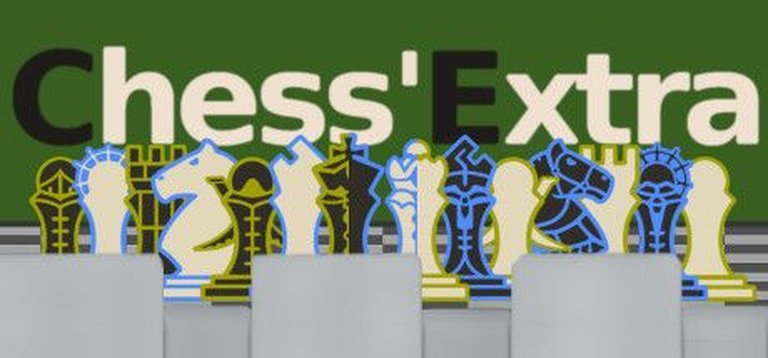
Chess’Extra is a free digital chess variant that innovates on the classic game by expanding the board to 10×10 and introducing two new pieces—the Priest and Assassin—along with additional game modes such as Traps, Reinforcements, Fog of War, and Random positions. Set in a customizable medieval-themed environment with a top-down, fixed-screen visual style, players can compete against AI or in multiplayer lobbies while unlocking visual customizations for boards and piece colors.
Where to Buy Chess’Extra
PC
Chess’Extra Guides & Walkthroughs
Chess’Extra: A Deep Dive into Modern Chess Variant Design
Introduction: The 10×10 Revolution
In the vast ecosystem of video games, few design spaces are as seemingly exhaustively explored as the ancient game of chess. From the 8-bit era onward, developers have re-skinned, simplified, and 3D-ified the classic strategy title countless times. Into this crowded field stepped Chess’Extra, a 2020 free-to-play release from the diminutive studio JulFlux (also credited as JFxGames). At first glance, it appears to be just another entry in the long line of digital chess clients. Yet, beneath its simple, cute aesthetic lies a surprisingly ambitious project that dares to alter the fundamental geometry of the board and introduce novel pieces, all while wrapping the experience in a light meta-game of cosmetic unlocks. This review posits that Chess’Extra is a fascinating, if deeply flawed, case study in indie innovation—a game that prioritizes playful experimentation over polish, creating a unique strategic sandbox that is ultimately hamstrung by its own technical limitations and a struggling community. It represents a pure, unfiltered vision from a solo/small-team developer, offering both a glimpse into the potential of chess variant design and the harsh realities of sustaining a niche multiplayer title.
Development History & Context: A Passion Project in Unity
Chess’Extra was developed and published by JulFlux, a pseudonym for what appears to be a very small, likely solo, development effort. There is no record of a larger studio; the MobyGames and Steam credits list only “JulFlux/JFxGames.” This context is crucial. The game was built in Unity, a staple engine for indie developers due to its accessibility and rapid prototyping capabilities. The technological constraints of the era were not about pushing hardware limits but about efficiently implementing a complex ruleset with a small team.
The release date, November 4, 2020, placed it during the COVID-19 pandemic, a period that saw a surge in interest for digital board games and abstract strategy. However, it also meant competing with titans like Chess.com and Lichess.org, which offered unparalleled online infrastructure, vast player bases, and robust learning tools. Chess’Extra’s strategy was not to compete directly but to carve a niche: offering a completely free, novel ruleset with local and online multiplayer, funded by optional “Dev Support” DLC for cosmetic customization. The post-release update history, meticulously documented on Steam, reveals a dedicated developer patching bugs, adding requested modes (like “Random Positions” and “Fog of War”), and even working on an ambitious, ultimately unreleased “Adventure Mode” expansion—a node-based RPG using chess-like tactical battles. This history paints a picture of a developer deeply engaged with their tiny community, iterating based on feedback but operating with limited resources, leading to persistent, unfixed issues.
Narrative & Thematic Deep Dive: The Absence of Story as a Feature
As a pure board game adaptation, Chess’Extra possesses no traditional narrative, characters, dialogue, or plot. Its “story” is conveyed entirely through its mechanics and aesthetic framing. Thematically, the game is an exercise in ludic expansion—the idea that a classic system can be enriched by altering its foundational parameters. The shift from an 8×8 to a 10×10 grid is not merely a cosmetic change; it fundamentally alters piece mobility, king safety, and endgame dynamics. The introduction of the Priest and Assassin is a thematic statement about augmenting the medieval “army” with new, fantastical unit archetypes.
- The Priest embodies a supportive, conversion-oriented role. Its ability to capture a pawn and convert it to its own color, placing it on its previous square, introduces a powerful tactical mechanic of reinforcement and territorial gain that is absent from standard chess. It’s a piece about change and allegiance, mechanically rewriting the board’s composition.
- The Assassin represents a predatory, precise threat. Its unique capture method (as depicted in the store images, showing a leap-and-strike animation) allows it to eliminate key pieces from a distance, embodying sudden, asymmetric violence.
The game’s “themes,” therefore, are innovation, accessibility, and playful experimentation. The free-to-play model and simple “cute” aesthetic thematicly lower the barrier to entry, inviting players to tinker with a classic. The lack of a story isn’t a failure but a feature; the game’s narrative is the player’s exploration of its altered rule-space. The announced but never materialized “Adventure Mode” hinted at a desire to graft a traditional RPG storyline onto this tactical core, but its absence leaves the base game as a pure, abstract systems playground.
Gameplay Mechanics & Systems: Innovation Marred by Execution
This is the heart of Chess’Extra and where its ambition is most clear, alongside its most significant flaws.
Core Alterations:
* The 10×10 Board: This is the single most impactful change. The increased space provides more room for maneuvering, delays early clashes, and makes the opening phase more open and exploratory. It also makes the board feel less cramped, which complements the new pieces. However, it also lengthens games and can make king safety a more complex, prolonged concern.
* New Pieces:
* Assassin: Based on store visuals and community discussion, it moves in a non-standard pattern (likely a form of extended knight-like leap or a fixed-distance strike) and captures in a unique way, possibly ignoring piece shields or moving through pieces. Its power is high, creating intense tactical threats.
* Priest: Its defining trait is pawn conversion. Capturing an opponent’s pawn not only removes it but adds a new pawn to the captor’s army at the Priest’s former location. This is a massive swing mechanic, allowing for dramatic comebacks or reinforcing a strong pawn chain. It turns pawns from static value into dynamic, capturable resources.
Game Modes:
The game transcends basic chess with four additional rule-sets:
1. Traps: Introduces predetermined or placable trap squares on the board that neutralize pieces.
2. Reinforcements: Starts each player with four extra pawns in selectable, non-standard starting positions.
3. Fog of War: Hides portions of the board, adding a layer of uncertainty and reconnaissance.
4. Random Positions: Randomizes the starting piece layout, akin to Chess960 (Fischer Random) but on a 10×10 board with the new pieces.
Systems & Flaws:
* AI: The artificial intelligence is a frequent point of criticism in user reviews. A noted glitch (discussed in Steam forums) reveals a critical flaw: when in double check, the AI sometimes captures the checking piece instead of moving the king, leaving its monarch in check. This indicates a shallow or buggy evaluation function, undermining its utility as a serious training tool. Players describe it as either too weak or exploitable.
* User Interface & Meta-Game: The UI is functional but minimal. The “cute” 2D top-down art is simple. The meta-game involves earning currency against AI or online opponents to unlock custom board designs and piece color variations. This is a standard free-to-play engagement loop, but with no gameplay-affecting purchases, it’s relatively benign. The two paid DLCs (“Castle Customization,” “Pieces Full Design”)expand these cosmetic options, supporting the developer.
* Multiplayer: The online infrastructure is basic, using a lobby system. The most crippling issue, repeatedly cited in reviews, is the chronic lack of online players. With a small, niche audience, finding a match can be difficult, rendering the online component largely theoretical for many. Local multiplayer (shared/split screen) is a saving grace for social play.
* Rules & Clarity: The game does not always explain its new mechanics intuitively. The Priest’s conversion and the Assassin’s capture are shown via static images in the store description but lack in-game tutorials. This creates a barrier to entry for a game already targeting a niche “chess variant” audience.
Verdict on Mechanics: Chess’Extra offers a genuinely fresh and thought-provoking strategic canvas. The 10×10 board and two new pieces create a deep, unfamiliar game that demands new heuristics and patterns. However, the experience is undermined by a shaky AI, a derelict online ecosystem, and a lack of robust in-game teaching tools. It’s a brilliant sandbox with shaky foundations.
World-Building, Art & Sound: Minimalist Medieval Aesthetic
The game’s world is not a narrative setting but a presentational frame. The visual style is consistently described by user tags as “Cute,” “2D,” and “Top-Down.” The pieces and boards are simple, flat vector-style graphics with a friendly, almost toy-like aesthetic. The castles (rooks) have animated ballistae (as noted in patch notes), adding a charming, anachronistic detail that fits the “extra” theme. This aesthetic choice is deliberate—it signals accessibility and fun over hardcore simulation.
The sound design is sparse, likely consisting of basic click sounds for movement and simple audio cues for captures and checks. There is no orchestral score or immersive soundscape. The atmosphere is one of quiet, focused concentration, broken only by the mechanical sounds of play.
This minimalist approach contributes to the experience by removing distraction. The focus is purely on the board state. However, it also limits immersion and visual feedback. The “cute” style may appeal to a family-friendly audience (as tagged) but can feel cheap compared to more polished commercial chess products. The lack of dynamic animations for the new pieces’ special moves (beyond the static images) is a missed opportunity to make their mechanics more intuitively understandable and visually satisfying.
Reception & Legacy: A Cult Success with Limitations
Chess’Extra was released to a niche audience and has maintained a small but dedicated community.
- Critical Reception: There are no critic reviews on major aggregators like Metacritic or OpenCritic. Its evaluation is entirely through user reviews on Steam, where it holds a “Very Positive” rating (88% positive) from 203 reviews. This is a strong score, indicating those who play it generally enjoy it.
- Commercial Reception: It is free-to-play. Its “commercial” success is measured in DLC sales and player engagement. The developer’s announcements show they view the 9,000+ players (as of March 2021) and DLC sales as a success for a small project. The ongoing Steam discount events for the DLCs show an effort to monetize the cosmetically-focused player base.
- Community Sentiment: Deep analysis of review summaries (as provided by Niklas Notes/Steambase) reveals a clear dichotomy:
- Positives: Unique gameplay mechanics (new pieces/modes) is the top praise point. Fun with friends and good for beginners are also frequently cited. The free price point is universally appreciated.
- Negatives: The lack of online players is the single biggest complaint, directly impacting the game’s core multiplayer promise. Limited game modes (compared to huge chess servers), basic graphics, and bugs (like the AI check glitch) are recurring criticisms. The AI’s difficulty balance is noted as inconsistent.
- Legacy & Influence: Chess’Extra is unlikely to influence the mainstream chess world. Its changes are too radical for standard adoption. However, within the niche world of chess variants (ChessV) and experimental board game design, it serves as a contemporary example of a 10×10 variant with two new pieces. Its most significant legacy may be as a “what-if” case study: a game that successfully implemented several major rule changes in an accessible package but failed to build a sustainable ecosystem around it due to the network effect problem of online multiplayer. The abandoned “Adventure Mode” also stands as a monument to the scope-creep and resource limitations that can beset small indie projects.
Conclusion: A Flawed Gem of Ludic Curiosity
Chess’Extra is not a great video game by conventional metrics. Its AI is flawed, its online community is ghost-town quiet, its graphics are basic, and its feature set is thin. However, as a strategic design document made playable, it is an exceptionally interesting artifact. The core innovation—expanding the board to 10×10 and introducing the Priest and Assassin—is not a gimmick. It creates a genuinely different, deeper, and more open chess experience that feels both familiar and alien. The additional modes like “Traps” and “Fog of War” further demonstrate a creative mind playing with the format’s boundaries.
For the hardcore chess variant enthusiast, Chess’Extra is a must-try curiosity. Its mechanics offer dozens of hours of exploration against a local opponent or a patient AI. For the casual player looking for a fun, quirky chess experience with friends on the same screen, it delivers admirably and for free.
Its ultimate failure is one of context and execution. Released into an era dominated by gargantuan, free chess platforms, its lack of players was a death knell for its online ambitions. The technical bugs that remain unfixed suggest a developer who moved on to other projects (like Spiky) or was unable to sustain deep maintenance.
In the grand canon of video game history, Chess’Extra will be a footnote. But in the specific subsection of interactive system design and board game digitization, it stands as a passionate, Players who engage with it on its own terms—focusing on local play and embracing its novel rules—will find a rewarding, innovative strategic title. Those seeking a polished, competitive, or fully-featured digital chess experience will be left wanting. Its true verdict is a paradox: it is both a brilliantly innovative board game and a deeply flawed video game. The former makes it worth your time; the latter makes it essential viewing for anyone interested in the challenges of bringing non-digital games into the digital sphere.