
- Release Year: 2018
- Platforms: Windows
- Publisher: RewindApp
- Developer: RewindApp
- Genre: Driving, Racing
- Perspective: Diagonal-down
- Game Mode: Single-player
- Setting: Christmas
- Average Score: 56/100
Description
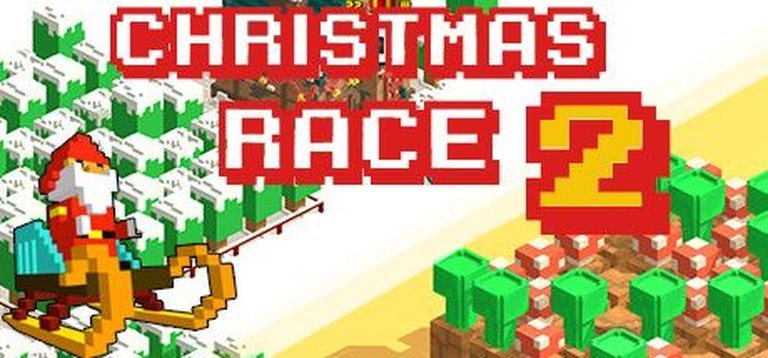
Christmas Race 2 is a festive racing game set in a winter wonderland, where players compete in high-speed races across snowy tracks filled with holiday-themed obstacles and power-ups. Developed by RewindApp and released in 2018, the game features isometric visuals and a diagonal-down perspective, offering a lighthearted and seasonal twist on the racing genre. With simple controls and a cheerful atmosphere, it’s designed for quick, enjoyable gameplay sessions, perfect for the holiday season.
Where to Buy Christmas Race 2
PC
Christmas Race 2 Guides & Walkthroughs
Christmas Race 2 Reviews & Reception
thegamerslibrary.com : Christmas Race 2 is not a in-depth game. It is a simple game that can be picked up and played for two or twenty minutes.
store.steampowered.com (63/100): 63% of the 11 user reviews for this game are positive.
steambase.io (52/100): Christmas Race 2 has earned a Player Score of 52 / 100.
niklasnotes.com (53/100): 53% Mixed
Christmas Race 2: A Festive, Flawed, and Forgotten Racing Oddity
Introduction: The Curious Case of a Holiday Racing Game
Christmas Race 2 is a game that defies easy categorization. Released in 2018 by the obscure indie studio RewindApp, it is a sequel to the equally unknown Christmas Race (2017), yet it carves out its own niche in the oversaturated world of casual racing games. At first glance, it appears to be a simple, festive time-waster—a digital stocking stuffer for gamers looking for a quick, seasonal distraction. But beneath its cheerful, Lego-like aesthetic lies a game that is both fascinatingly minimalist and frustratingly repetitive, a product of its time that reflects the rise of mobile-inspired design in PC gaming.
This review will dissect Christmas Race 2 in exhaustive detail, exploring its development, gameplay mechanics, artistic choices, and legacy. We will examine why it exists, how it functions, and whether it succeeds in its modest ambitions. By the end, we will determine whether this game is a hidden gem, a forgettable trifle, or something stranger altogether—a relic of an era where games were designed to be played in short bursts, monetized through microtransactions, and discarded just as quickly.
Development History & Context: The Rise of the Casual Holiday Game
The Studio Behind the Game: RewindApp’s Obscure Legacy
RewindApp is a name that will be unfamiliar to most gamers. The studio has no notable hits, no cult classics, and no high-profile collaborations. Instead, it operates in the shadows of the indie game scene, producing small, often seasonal titles that cater to niche audiences. Christmas Race 2 is one of many such games, part of a broader trend in the late 2010s where developers capitalized on holiday themes to create quick, marketable products.
The studio’s approach is emblematic of the “shovelware” phenomenon, where games are produced rapidly, often with minimal innovation, to capitalize on seasonal trends. However, Christmas Race 2 is not entirely without merit. It is a polished, if simplistic, experience that demonstrates a clear understanding of mobile game design principles—even if it struggles to translate them effectively to a PC audience.
Technological Constraints and Design Philosophy
Christmas Race 2 was built using the Unity engine, a popular choice for indie developers due to its accessibility and cross-platform capabilities. The game’s isometric, diagonal-down perspective is a deliberate stylistic choice, evoking classic arcade racers while maintaining a modern, cartoonish aesthetic. The decision to use Unity also allowed RewindApp to port the game to mobile platforms, though the PC version remains the most widely discussed.
The game’s design is heavily influenced by mobile gaming trends of the late 2010s, particularly the rise of “hyper-casual” games—titles that prioritize simplicity, short play sessions, and monetization through microtransactions. Christmas Race 2 embodies this philosophy, with its one-button controls, endless procedural tracks, and in-game currency system. However, its transition to PC is uneven, as the game lacks the depth or replayability to justify its existence outside of a mobile ecosystem.
The Gaming Landscape in 2018: A Crowded Market
2018 was a year of both innovation and saturation in the gaming industry. AAA titles like God of War, Red Dead Redemption 2, and Celeste dominated critical discussions, while indie darlings like Hollow Knight and Dead Cells proved that smaller studios could still make a significant impact. Amidst this competitive landscape, Christmas Race 2 arrived with little fanfare, overshadowed by more ambitious projects.
The game’s release in December 2018 was strategic, capitalizing on the holiday season’s commercial potential. However, it faced stiff competition from other seasonal titles, as well as the broader trend of battle royale games and live-service models. In this context, Christmas Race 2 was never destined to be a breakout hit. Instead, it exists as a curiosity—a game that is neither terrible nor exceptional, but rather a product of its time, designed to fill a specific, fleeting niche.
Narrative & Thematic Deep Dive: A Game Without a Story
The Absence of Plot: A Deliberate Choice?
Christmas Race 2 is, at its core, a game without a narrative. There is no story, no characters with depth, and no overarching goal beyond collecting presents and unlocking cosmetic items. This absence of narrative is not necessarily a flaw—instead, it reflects the game’s design philosophy. Christmas Race 2 is not meant to be a storytelling experience; it is a mechanical one, a test of reflexes and persistence.
The game’s premise is simple: players control Santa (or one of several unlockable characters) as they sled down an endless, procedurally generated hill, collecting presents while avoiding obstacles. The lack of narrative allows the game to focus entirely on its core gameplay loop, but it also robs the experience of any emotional or thematic weight. There is no stakes, no character development, and no world-building beyond the visual aesthetics.
Themes: Holiday Cheer and Consumerism
While Christmas Race 2 lacks a traditional narrative, it is not entirely devoid of themes. The game’s festive setting and emphasis on gift-collecting evoke the commercialized spirit of Christmas, where the holiday is reduced to a series of transactions. The in-game shop, where players spend collected presents to unlock new characters and sleds, reinforces this theme, turning the act of gift-giving into a mechanical, repetitive process.
This focus on consumerism is not necessarily critical—it is simply a reflection of the game’s design. Christmas Race 2 does not seek to comment on the holiday’s deeper meanings; instead, it embraces the superficial, commercialized version of Christmas that dominates modern media. In this sense, the game is a product of its cultural moment, a digital representation of the holiday season as seen through the lens of capitalism.
Characters and World-Building: Aesthetic Over Substance
The game features a roster of unlockable characters, each tied to a different thematic world. The default setting is a winter wonderland, but players can unlock alternate universes inspired by Mario, Pac-Man, and other pop culture icons. These alternate worlds are purely cosmetic, offering no mechanical changes to the gameplay. They exist solely to provide visual variety, a testament to the game’s emphasis on aesthetics over substance.
The characters themselves are similarly shallow. Santa is the default protagonist, but players can unlock other figures, such as a snowman, a reindeer, or a generic “Christmas elf.” None of these characters have personalities, backstories, or even unique animations—they are merely skins, interchangeable avatars that serve no purpose beyond visual customization.
This lack of depth is not necessarily a criticism—it is a deliberate design choice. Christmas Race 2 is not a game that aspires to narrative complexity. Instead, it is a game that prioritizes accessibility and immediacy, offering players a simple, visually appealing experience that can be enjoyed in short bursts.
Gameplay Mechanics & Systems: Simplicity as a Double-Edged Sword
Core Gameplay Loop: The Art of the Endless Sled Ride
Christmas Race 2 is built around a single, unchanging gameplay loop: sled down a hill, collect presents, avoid obstacles, and repeat. The controls are minimalistic—players use a single button (or key) to steer left or right, depending on the input method. The game’s physics are intentionally slippery, making precise movements difficult and adding a layer of challenge to the otherwise simple mechanics.
The procedural generation of the track ensures that no two runs are identical, but the core experience remains the same. Players will encounter the same types of obstacles—trees, rocks, and other environmental hazards—arranged in different configurations. The randomness of the track layout keeps the game from feeling entirely stale, but it also means that there is no progression in terms of difficulty or complexity. Each run is a self-contained challenge, with no overarching structure or goals beyond accumulating presents.
Progression and Unlockables: The Illusion of Depth
The game’s progression system is tied to its in-game currency: presents. Players collect presents during their runs, which can then be spent in the shop to unlock new characters and sleds. The shop offers a wide variety of cosmetic items, with over 50 unlockables in total. However, the majority of these items are purely aesthetic, offering no mechanical benefits or changes to the gameplay.
This focus on cosmetic unlocks is a common tactic in mobile games, designed to encourage repeated play sessions and monetization. In Christmas Race 2, the unlockables serve as the primary incentive to keep playing, but their lack of functional impact undermines their appeal. Unlocking a new sled or character does not change how the game plays—it only changes how it looks.
The game also features a “free presents” system, where players receive a random number of presents every hour, even when not playing. This mechanic is another mobile gaming staple, designed to encourage daily logins and sustained engagement. While it is a nice touch, it also highlights the game’s reliance on extrinsic motivators rather than intrinsic enjoyment.
Difficulty and Replayability: The Problem of Repetition
Christmas Race 2’s difficulty is inconsistent. The slippery controls and random obstacle placement can make the game feel unfair at times, with players losing runs due to factors beyond their control. However, the game’s simplicity also means that mastery is achievable with practice. Experienced players can learn to anticipate obstacle patterns and navigate the track with greater precision.
The game’s replayability is its biggest weakness. While the procedural generation and unlockables provide some incentive to keep playing, the core gameplay loop is too repetitive to sustain long-term engagement. Most players will likely tire of the experience after a few hours, as the lack of mechanical depth or narrative progression makes each run feel increasingly hollow.
UI and Accessibility: A Mixed Bag
The game’s user interface is functional but unremarkable. The shop is easy to navigate, and the in-game HUD provides clear information about the player’s current score and present count. However, the game’s lack of options—such as the ability to rebind controls or adjust difficulty—limits its accessibility. The absence of an exit button, as noted by players in the Steam forums, is a particularly egregious oversight, highlighting the game’s rough edges.
World-Building, Art & Sound: A Festive Facade
Visual Design: Lego Meets Christmas
Christmas Race 2’s art style is its most distinctive feature. The game’s environments and characters are rendered in a blocky, Lego-like aesthetic, giving the game a charming, toy-like quality. The winter wonderland setting is festive and colorful, with snow-covered trees, twinkling lights, and a cheerful, cartoonish atmosphere.
The alternate worlds—such as the Mario and Pac-Man themes—are similarly well-designed, offering a fun visual change of pace. However, these worlds are purely cosmetic, with no mechanical or narrative significance. They exist solely to provide variety, a testament to the game’s emphasis on aesthetics over substance.
Sound Design: Repetitive but Effective
The game’s soundtrack is simple but effective. Each world has its own musical theme, ranging from cheerful holiday tunes to chiptune-inspired melodies. The music is repetitive, as befits a game designed for short play sessions, but it is also catchy and well-produced. The sound effects—such as the jingle of collected presents or the crash of a failed run—are similarly polished, adding to the game’s overall charm.
Atmosphere: A Digital Christmas Card
Christmas Race 2’s greatest strength is its atmosphere. The game’s visual and auditory design combine to create a festive, lighthearted experience that captures the spirit of the holiday season. The blocky, toy-like aesthetic evokes childhood nostalgia, while the cheerful music and sound effects reinforce the game’s joyful tone.
However, this atmosphere is also the game’s greatest limitation. Christmas Race 2 is a game that prioritizes style over substance, offering a pleasant but shallow experience that lacks depth or lasting appeal. It is a digital Christmas card—a brief, festive diversion that is enjoyable in the moment but quickly forgotten.
Reception & Legacy: A Game That Slipped Through the Cracks
Critical and Commercial Reception: Mixed but Overlooked
Christmas Race 2 received little critical attention upon its release. The game has no Metacritic score, and professional reviews are scarce. The few player reviews that exist are mixed, with a Steam rating of 52/100 based on 27 reviews. Players praise the game’s simplicity and festive atmosphere but criticize its repetitive gameplay and lack of depth.
Commercially, the game has similarly faded into obscurity. It is available on Steam for a modest price (often discounted to as low as $0.55), but it has not achieved significant sales or cultural impact. The game’s lack of marketing and the oversaturated nature of the indie market have contributed to its obscurity.
Legacy: A Footnote in Gaming History
Christmas Race 2 is not a game that will be remembered as a classic or a groundbreaking innovation. Instead, it is a footnote—a minor entry in the long history of casual racing games. Its legacy, if any, lies in its reflection of broader trends in the gaming industry, particularly the rise of mobile-inspired design and the commercialization of holiday themes.
The game’s influence on subsequent titles is negligible. It has not spawned imitators or sequels (beyond its own predecessor), and it has not left a lasting mark on the racing genre. Instead, it exists as a curiosity—a game that is neither terrible nor exceptional, but rather a product of its time, designed to fill a specific, fleeting niche.
Conclusion: A Festive Distraction, Nothing More
Christmas Race 2 is a game that knows exactly what it is: a simple, festive distraction. It is not a masterpiece, nor is it a disaster. It is a competent, if unremarkable, example of casual game design, offering a brief, enjoyable experience that is easy to pick up and just as easy to put down.
The game’s greatest strength is its accessibility. The one-button controls and endless procedural tracks make it easy to jump into, while the unlockable characters and sleds provide a modest incentive to keep playing. The festive atmosphere and charming visual design add to its appeal, creating a lighthearted, holiday-themed experience that is perfect for short play sessions.
However, Christmas Race 2’s simplicity is also its greatest weakness. The repetitive gameplay loop and lack of mechanical depth make it difficult to sustain long-term engagement. The game’s reliance on cosmetic unlocks and mobile-inspired monetization tactics further undermines its appeal, particularly for players seeking a more substantial experience.
Final Verdict: 6/10 – A Festive Time-Waster
Christmas Race 2 is a game that will appeal to a very specific audience: players looking for a simple, festive distraction that can be enjoyed in short bursts. It is not a game for those seeking depth, challenge, or narrative complexity. Instead, it is a digital stocking stuffer—a small, cheerful gift that is enjoyable in the moment but quickly forgotten.
For what it is, Christmas Race 2 succeeds. It is a competent, polished example of casual game design, offering a brief but enjoyable holiday-themed experience. However, its lack of ambition and repetitive gameplay prevent it from rising above its station. It is a game that is easy to recommend with caveats—a festive distraction, nothing more.
Final Score: 6/10 – A charming but forgettable holiday diversion.