
- Release Year: 2017
- Platforms: Macintosh, Windows
- Publisher: Big Fish Games, Inc
- Developer: Elephant Games AR LLC
- Genre: Adventure
- Perspective: 1st-person
- Gameplay: Hidden object, Puzzle elements
- Setting: Fantasy
Description
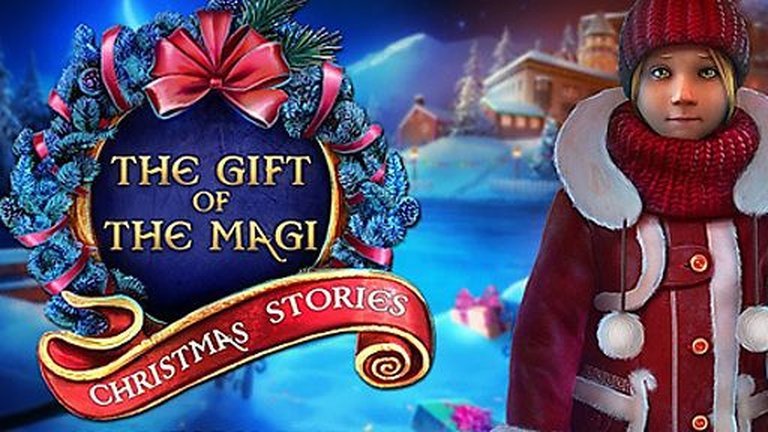
Christmas Stories: The Gift of the Magi (Collector’s Edition) is a hidden object adventure game set in a magical, fantasy-inspired Christmas world. Players help their little sister secure a second chance after she mistakenly ends up on Santa’s naughty list, solving puzzles and exploring festive scenes in first-person, point-and-click gameplay.
Gameplay Videos
Where to Buy Christmas Stories: The Gift of the Magi (Collector’s Edition)
PC
Christmas Stories: The Gift of the Magi (Collector’s Edition) Guides & Walkthroughs
Christmas Stories: The Gift of the Magi (Collector’s Edition): Review
Introduction: A Holiday Genre Defined
In the sprawling ecosystem of casual video games, few niches are as perennial or as plentiful as the holiday-themed Hidden Object Puzzle Adventure (HOPA). Yet, within this crowded field, Elephant Games’ Christmas Stories: The Gift of the Magi (Collector’s Edition) stands not merely as another festive entry but as a crystallization of the form’s potential at its 2016 peak. Released on December 3rd, 2016, for Windows and later for Macintosh, this title represents the sophisticated, narrative-driven zenith of the “casual” adventure—a game that understands its audience’s desire for comfort and ritual while surprising them with genuine mechanical depth and a heartfelt, thematically rich story. Its thesis is a quiet rebellion against the genre’s often-derided simplicity: a HOPA can be a vehicle for genuine emotion, coherent storytelling, and puzzles that challenge the mind without frustrating the soul. By masterfully weaving O. Henry’s classic tale of selfless giving into a magical realist adventure, it elevates the seasonal cash-in into an enduring piece of interactive holiday literature.
Development History & Context: The Elephant in the Room
To understand The Gift of the Magi, one must understand its creator, Elephant Games. Founded in the mid-2000s, the studio carved its niche not with blockbuster action but with a relentless, almost工业, output of high-quality casual games, particularly HOPAs and time management titles. By 2016, they were seasoned veterans of the “Big Fish Games” model—a pipeline of polished, story-centric, holiday and mystery-themed adventures released with metronomic regularity. The Christmas Stories series itself, which began with A Christmas Carol in 2013, was their flagship holiday franchise, a direct competitor to Playrix’s Christmas Tale series and Oberon’s various seasonal titles.
The technological and market context of 2016 is crucial. This was the twilight of the dominant “downloadable casual game” era, before the hyper-casual mobile boom and the consolidation of Steam’s “hidden object” category. PCs with 1GB RAM and 2.5 GHz processors were the target, meaning the game’s visuals, while beautifully painterly, were consciously designed to be accessible. The “Collector’s Edition” model was the industry standard for premium casual games—a $9.99-$14.99 package bundling the main game with a bonus chapter, strategy guide, concept art, and replayable mini-games. It was a value proposition for dedicated fans who would buy these games sight-unseen based on series loyalty and the promise of a cozy, 4-6 hour experience.
Elephant’s vision, as seen in beta-tester feedback cited by distributors like BigAntGames, was explicitly about “charming” artwork, “gorgeous settings,” and a storyline they called “one of my all-time favorite[s].” They weren’t aiming for subversion but for perfection of a formula: a warm, family-friendly narrative with a female protagonist, supported by a web of intuitive but engaging puzzles. The constraint of the HOPA genre—static scenes, lists of items—became a creative engine, pushing them to invent more inventive ways to hide objects and integrate them into the story’s logic.
Narrative & Thematic Deep Dive: More Than a Nice List
The game’s premise is a clever inversion of the Santa mythos: “Everybody knows that Santa gives presents to nice children, but who visits the naughty ones?” This immediately establishes a dualistic world where holiday magic has a shadow counterpart. The antagonist, Berta the evil Christmas spirit, and her “mean elves” are not just villains but a necessary counterbalance, a system of consequence that gives the story its central conflict. The protagonist’s motivation—saving her little sister Chloe after a unspecified “bad” act—is potent in its universality. It taps into a childhood anxiety (and adult memory) of falling from grace, making the quest deeply personal.
The narrative structure is a three-act “perform three good deeds” mission, each deed rescuing a different family’s Christmas. This isn’t a lazy fetch-quest framework; each family’s story is a self-contained vignette exploring different facets of the holiday spirit:
1. The Dillinghams: Focuses on financial hardship and pride. The player helps a family on the brink of losing their home, with debt notices and a repaired heirloom (the ballerina figurine) at the core. The theme is dignity in poverty.
2. The Wilsons: Centers on lost joy and memory. Mr. Wilson is a toymaker who has lost his creative spark and his wife’s heirloom brooch. Restoring his workshop and the brooch (a complex, multi-stage “broken brooch” puzzle chain) is about rekindling love and legacy.
3. The Memorial/Backyard Plot: This act ties the personal to the mythic, involving the restoring of a memorial and a boy’s cherished truck. It’s about commemoration and childhood wonder.
The Jack Frost character is a crucial ally, a classic trickster figure who aids the player but also embodies the playful, transformative side of winter. His presence softens the threat of Berta, keeping the game’s tone from ever becoming truly dark. The story’s resolution, where the sister is redeemed and the “Globe of Good Deeds” is completed, directly mirrors O. Henry’s The Gift of the Magi—a parable of self-sacrifice where the value lies in the love acted upon, not the material gift. The game’s collectibles (glass snowflakes, magical creatures) and the final “Christmas album” reinforce this: the true treasure is the memory and the act of giving.
Dialogue is functional but often warm, with character interactions designed to elicit empathy rather than wit. The “bonus chapter” at the Cat Ball, while fluff, extends the world’s whimsy, showing that even the story’s antagonists’ minions have their own joyous cultural event. Thematically, the game argues that Christmas magic is a participatory force, maintained through community, empathy, and tangible acts of kindness—a potent, if saccharine, message perfectly calibrated for its audience.
Gameplay Mechanics & Systems: The Intricate Heart of the HOPA
Here is where The Gift of the Magi transcends its genre. While the core loop is standard HOPA—explore a scene, find items from a list, use them to solve environmental puzzles—the density and interconnection of its systems are remarkable.
1. The “Globe of Good Deeds” & Non-Linear Progression: The game’s central hub is a magical globe where glowing orbs represent the three families’ plights. Progress is gated by collecting “Magic Stars” from completed HOPs and puzzles, which are slotted into the globe. This creates a gentle non-linearity; the player can choose which family’s crisis to address next, a freedom rare in tightly scripted HOPAs.
2. Item Combination and Transformation: The inventory is a vibrant workshop of possibility. Raw items are rarely used as-is. The walkthrough is a testament to this: a “Box” and “Magic Star” combine repeatedly (10+ times) to create new tools. A “Broken Brooch” becomes a “Carnival Hat” via a sequence of finding an Iron Pattern, Gold Spray, Flower on Chain, Tongs, Diamond, and Emerald. A “BROKEN BROOM” + “ELECTRICAL TAPE” = “BROOM.” This alchemical system is the game’s true gameplay—it teaches the player to think in terms of composite objects and journeying parts, not isolated nouns.
3. Puzzle Diversity and Integration: The game moves far beyond simple “find X object” tasks.
* Restoration Puzzles: Reassembling shattered figurines (the ballerina, nutcracker, tin soldier), restoring torn certificates and photos, and piecing together sketches are recurring mechanics that visually and narratively reward the player for healing broken things.
* Logic and Sequence Puzzles: The “goody light string” puzzle (untangling lights), the mosaic sun/moon puzzles, the placement of animal figurines (bears, wolves, lions) on pedestals, and the numerical star-selection puzzles require genuine spatial and logical reasoning.
* Environmental Manipulation: Using items on the scene to alter it—lighting a fire to melt ice, using a magnet on a fishing line to retrieve objects from a river, applying solvent and cotton to clean something, using a wind-up mouse on a mechanism—makes the world feel responsive and the player’s actions consequential.
* The “Goody” Character: The magical mouse-like helper “Goody” is both a gameplay tool (used to interact with specific objects) and a cute mascot, reducing frustration by providing a consistent interaction method.
4. UI and Flow: The point-and-click interface is smooth. The inventory is always accessible, and item hover descriptions are clear. The “Strategy Guide” included in the CE is not just a hint system but a full walkthrough, acknowledging the player might get genuinely stuck on one of the game’s many multi-layered puzzle chains. The “Replay HOPs and mini-games” feature caters to the completionist.
Flaws? The sheer complexity can occasionally lead to “pixel hunts” where the next item’s use is obscure, breaking the narrative flow. The hidden object scenes, while beautifully rendered, sometimes suffer from tiny, camouflaged items—a genre staple that can induce frustration. However, the depth of the puzzle logic generally compensates, making breakthroughs feel earned.
World-Building, Art & Sound: A Cozy, Magical Realm
The game’s aesthetic is a masterclass in cozy, painterly fantasy. Using a style common to Elephant Games’ output, the environments are soft-focus, warmly lit, and densely packed with Christmas clutter that feels authentic, not generic. The Dillinghams’ cozy, book-filled living room; the Wilsons’ bustling, toy-strewn workshop; the snowy memorial and backyard—each location tells a story through its details: forgotten letters, half-eaten cookies, worn-out slippers. The art direction prioritizes atmosphere over sharpness, bathing everything in a gentle, candlelit glow that reinforces the intimate, magical realist tone.
Character designs are expressive and archetypal: the worried sister, the weary but kind toymaker, the mischievous Jack Frost, the grimly elegant Berta. Their animations, though simple, are full of personality—a shrug, a shiver, a wave.
The sound design is where the game truly envelops the player. A gentle, melodic piano-and-strings score, often with music box or celesta tones, underscores every scene. It is never intrusive but constantly present, a soothing auditory blanket. Sound effects are crisp: the clink of glass snowflakes, the rustle of paper, the pop of a firework cracker, the cheerful jingle of bells. The voice acting, limited to key lines, is competent and suitably warm, avoiding the over-acted camp that plagues some casual games. Together, the visuals and audio create a world that feels simultaneously magical and tactile—a place you want to step into and explore, not just solve puzzles in.
Reception & Legacy: A Beloved Staple of a Fading Era
At launch, The Gift of the Magi was met with the kind of enthusiastic, quiet acclaim that defined the casual game scene. Its “Big Fish Editor’s Choice Award” (cited by BigAntGames and Absolutist) was a significant stamp of quality within its distribution channels. User reviews on Steam, though numerically small (26 at the time of analysis), are overwhelmingly positive (88%), with praise heaped on its “gorgeous setting,” “interesting storyline,” and “great puzzles.” The criticisms are genre-standard: it’s “too easy” for hardcore gamers (a misreading of its target audience) or “short” (a feature, not a bug, for a 4-6 hour cozy experience).
Its legacy is twofold. First, as a high-water mark for the narrative HOPA. In an era where many competitors were simplifying puzzles and stories, Elephant Games doubled down on interconnected item chains and thematic storytelling. It demonstrated that a casual game could have a plot with emotional stakes and a structure (three acts, each with a self-contained moral) that felt substantial.
Second, it is a preserved artifact of a specific gaming culture. The “Collector’s Edition” bundles, the reliance on portals like Big Fish, GameHouse, and iWin, the fixed price point—this was the dominant model for premium PC casual games before the free-to-play and subscription models (like Apple Arcade or Netflix Games) reshaped the landscape. Its continued availability on Steam and GOG ensures it remains a touchstone for players nostalgic for that specific era of “downloadable cozy adventures.”
Its influence is visible in the gentle puzzle-adventures that followed, from other Elephant Games titles (the Christmas Stories series continued through 2022 with Taxi of Miracles) to games like the Mystery Case Files series, which increasingly incorporated similar item-combination depth. It proved that the audience for thoughtful, story-rich puzzles was loyal and hungry for quality.
Conclusion: A Timeless Tinsel Classic
Christmas Stories: The Gift of the Magi (Collector’s Edition) is not just a good hidden object game; it is a definitive, exemplary one. It perfectly calibrates the essential elements of its genre—soothing aesthetics, satisfying discovery, gentle challenge—and amplifies them with a genuinely affecting story and a deliciously intricate web of item-based puzzles. Its world feels alive with small stories, its magic system has internal logic, and its central theme of redemption through good deeds is rendered with sincerity, not sentimentality.
For the casual player, it is a perfect, immersive holiday ritual. For the historian, it is a pristine artifact of the casual game industry’s creative peak—a time when “simple” games were crafted with immense care, rich content, and respect for the player’s intelligence. Its mechanics, while not revolutionary in isolation, are woven together with a confidence that feels almost artisanal. In a landscape saturated with ephemeral mobile titles, this Collector’s Edition feels like a preserved, beautifully wrapped gift. It is a game that understands the true spirit of its namesake: that the greatest magic lies not in what is received, but in the thoughtful, interconnected work of giving. A foundational text for the genre and a timeless piece of interactive holiday art.