
- Release Year: 2007
- Platforms: Windows
- Publisher: AxySoft
- Developer: AxySoft
- Genre: Action, Puzzle
- Perspective: Diagonal-down
- Game Mode: Single-player
- Gameplay: Arcade, Tile matching puzzle
- Average Score: 55/100
Description
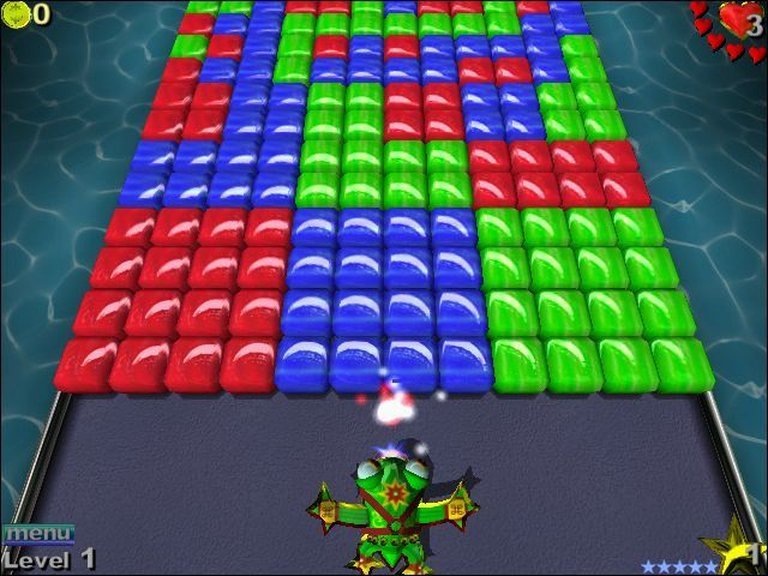
In ‘Chroma Ways’, players control a flying frog navigating a vertical grid packed with colored tiles, aiming to clear levels by strategically exploding groups of three or more matching colors. Inspired by 80s arcade classics, the game combines fast-paced action with puzzle-solving, featuring powerups, three distinct 15-level episodes, and immersive 3D graphics with digitized sound effects.
Chroma Ways Cheats & Codes
PC v1.10
Unzip/Unrar trainer into your game directory, then start trainer with “pztrain.exe”, and finally start the game. During gameplay toggle trainer options by pressing the following key combinations:
| Code | Effect |
|---|---|
| 1 | Infinite Health |
| 2 | Infinite Lives |
| 3 | No Gun Heat |
| 4 | Infinite Nukes |
| 0 | Disable All Options |
Chroma Ways: A Forgotten Puzzle-Arcade Hybrid in the Shadow of the 2000s Indie Boom
Introduction
In the mid-2000s indie gaming landscape—a nascent realm before the Steam explosion—Chroma Ways (2007) emerged as a curious artifact: a tile-matching arcade experiment buoyed by 3D ambitions and a bizarre amphibian protagonist. Developed by Ukraine-based AxySoft, a studio known for budget-friendly curiosities like AxySnake and MoneyMania, Chroma Ways fused Collapse!’s destructible grid puzzles with arcade evasion tactics, all wrapped in garish pre-Unity-engine 3D. This review argues that while mechanically derivative and technologically modest, Chroma Ways epitomizes the scrappy ingenuity of post-Soviet indie developers navigating the shareware wilderness—a relic deserving scrutiny for its bridging of puzzle purity and kinetic action.
Development History & Context
AxySoft: The Indie Underdogs
AxySoft, founded by programmer Vladimir Savin and 3D artist Egor Saenko (credited as “Geo Soy Weird”), operated in an era when Eastern European studios like GSC Game World (S.T.A.L.K.E.R.) drew global attention. Yet AxySoft’s output typified a humbler tier: low-cost shareware titles (e.g., Agent 2002, SkyMaze) targeting casual audiences. With Chroma Ways, their vision was straightforward—to modernize 80s arcade staples like Taito’s Qix or Puzzle Bobble with early-2000s 3D spectacle, leveraging the BASS sound engine and pre-fab textures from TileTextures.com.
Technological Constraints & Ambitions
Released March 7, 2007—a year after Legend of Zelda: Twilight Princess and months before Portal—Chroma Ways’ modest specs (128MB RAM, DirectX 7) clashed with AAA trends. Its diagonal-down perspective rendered grids in basic 3D, bypassing complex physics for mouse-driven tile detonations. The decision to foreground a “Flying Frog” protagonist (a surreal touch likely inspired by Frogger) reflected AxySoft’s DIY ethos, prioritizing whimsy over narrative coherence.
Narrative & Thematic Deep Dive
Minimalist Storytelling, Maximalist Absurdity
Chroma Ways eschews lore or backstory—no apocalypses, no frog mythologies. Its “plot” is functional: guide the unnamed frog through 45 levels (15 per episode) by clearing chromatic grids. Where contemporaries like Peggle injected theatrical crescendos, Chroma Ways opts for arcade purity. Thematically, it echoes classic puzzle-game abstractions: chaos vs. order, entropy vs. control. The frog’s flight—constantly menaced by jumping tiles—introduces urgency, framing each level as a race against encroaching disorder.
Character as Mechanic
The frog isn’t a narrative entity but a gameplay vector. It’s both avatar and obstacle: players must strategically detonate tiles while piloting it away from danger—a dual-task design later refined in games like Monaco: What’s Yours Is Mine. This creates tension absent in static puzzlers; the frog isn’t just scoring points but surviving.
Gameplay Mechanics & Systems
Core Loop & Innovation
The loop follows four phases:
1. Tile Rearrangement: Manipulate colors via explosions to create chainable clusters.
2. Frog Evasion: Navigate the frog away from retaliating tiles.
3. Power-Up Acquisition: Collect boosts like Color Bombs (clear all matching tiles), Fire Kits (burn rows), or Grenades (area-of-effect clears).
4. Gate Rush: Reach the level’s exit before time/mobility deplete.
Unlike Bejeweled’s turn-based calm, Chroma Ways demands real-time reflexes, blending puzzle-solving with arcade survival.
Flaws & Quirks
- Mouse-Only Controls: Limits precision; no keyboard support feels archaic.
- Repetition: With 45 near-identical levels, novelty wanes post-Episode 1.
- “Relax” Mode: An easy-difficulty Band-Aid for frustrated players—admirable but underdeveloped.
World-Building, Art & Sound
Aesthetic Ambition, Technical Limitation
Chroma Ways’ diagonal-down 3D grids exude early-2000s shareware charm—think 3D Ultra Minigolf meets Microsoft Space Simulator. Textures are flat, colors oversaturated, and the frog’s animations stiff. Yet there’s nostalgic appeal in its pre-kinetic Unreal Engine razzle-dazzle, like a Flash game inflated to three dimensions.
Sound Design
Vladimir Tugay’s score channels chiptune energy via MIDI synths, complemented by digitized explosions from E-Studios. It’s functional, if forgettable—a far cry from retro masterpieces like VVVVVV’s OST.
Reception & Legacy
2007 Launch: Obscurity & Niche Appeal
With zero critic reviews archived on MobyGames or IGN, Chroma Ways drowned in 2007’s deluge of AAA titans (Halo 3, BioShock) and indie darlings (World of Goo). Its shareware model ($10 unlock fee) attracted scant attention, though player reviews on portals like FreeDownloadManager.org praised its “engaging gameplay” amidst critiques of “steep difficulty.”
Posthumous Influence
Chroma Ways’ DNA surfaced in later hybrids like Puzzle Quest (RPG/puzzle fusion) and Luftrausers (arcade evasion). Its frog-evasion mechanic prefigured bullet-hell puzzlers like Petal Crash, while AxySoft’s collapse-before-attacked design inspired mobile hits like Gems of War. Yet the game remains a footnote, unmentioned in industry retrospectives.
Conclusion
Chroma Ways is no lost masterpiece. Its 3D is crude, its longevity hamstrung by repetition, and its legacy dwarfed by contemporaries. Yet as a time capsule of 2000s indie tenacity, it fascinates—a mosaic of arcade nostalgia, experimental hybridization, and Eastern European resourcefulness. Play it not for revelatory depth, but as an archeological curiosity: proof that before indie gaming’s renaissance, developers like AxySoft were tinkering in the shadows, stitching frogs to tile grids in pursuit of something joyfully nonsensical.
Final Verdict: A cult oddity for puzzle historians; a modest diversion for retro enthusiasts. Its true legacy? A reminder that innovation thrives not just in polish, but in daring imperfection.