
- Release Year: 2017
- Platforms: Android, iPad, iPhone, Windows
- Publisher: 咸鱼工作室
- Developer: 咸鱼工作室
- Genre: Strategy, Tactics
- Perspective: Top-down
- Game Mode: Online PVP, Single-player
- Gameplay: Cards, Random cards, Tiles, Turn-based strategy
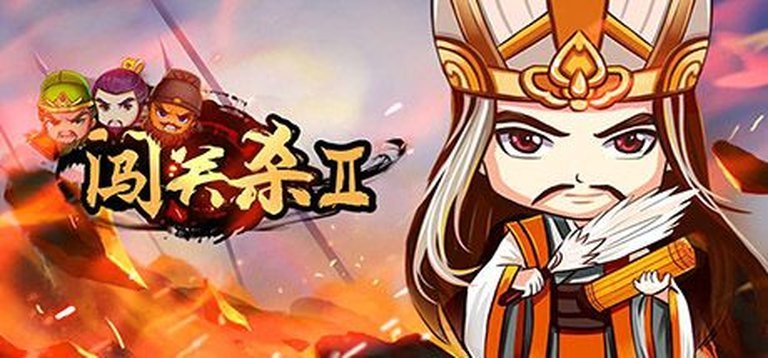
Description
Chuangguan Sha II is a turn-based tactical strategy game featuring a top-down perspective and anime-inspired art style. It distinguishes itself by replacing traditional set attacks with a system of random cards that players draw each turn, introducing dynamic and unpredictable elements to strategic combat. The game supports both AI opponents and multiplayer modes, allowing for flexible and engaging tactical gameplay across various platforms including iPhone, Android, iPad, and Windows.
Chuangguan Sha II: Review
Introduction: The Ghost in the Machine
In the vast digital archives of gaming history, some titles exist as spectral presences—known by name and fragment, but elusive in substance. Chuangguan Sha II (闯关杀II), developed and published by the enigmatic 咸鱼工作室 (Xianyu Studio), is precisely such a ghost. Released on mobile platforms in May 2017 and later on Windows in 2018, this turn-based tactical strategy game attempts a novel fusion of grid-based movement, Three Kingdoms-themed hero collection, and a random card-drawing combat system. Its very obscurity, documented by a mere single collector on MobyGames and an almost total absence of critical discourse, makes it a fascinating case study. This review will argue that Chuangguan Sha II represents not a failed masterpiece, but a poignant artifact of indie game development’s ephemeral nature—a game whose legacy is defined less by its executed design and more by the intriguing gaps in its historical record, highlighting the challenges of preserving niche, regionally-targeted digital experiences.
Development History & Context: The Studio of the Dried Fish
The developer, 咸鱼工作室, translates to “Xianyu Studio” or more poetically “Dried Fish Studio.” This name itself suggests a small, possibly part-time or passion-project collective, common in the burgeoning Chinese independent game scene of the mid-2010s. The era was defined by a surge of low-cost mobile strategy games, often drawing on the immense popular culture reservoir of the Romance of the Three Kingdoms. Unlike the polished, narrative-driven historical simulations of Koei Tecmo’s Dynasty Warriors or Romance of the Three Kingdoms series, the mobile landscape was saturated with free-to-play gacha titles and simplified strategy adaptations.
Chuangguan Sha II’s stated mechanics—”a turn-based tactical strategy game with the addition of random cards instead of set attacks”—position it as a hybrid. It attempts to blend the deterministic, chess-like planning of a tactical RPG (think Disgaea or Final Fantasy Tactics) with the reactive, hand-management tension of a deck-building or card-crafting system (akin to Slay the Spire or Hand of Fate), all wrapped in the familiar trappings of Three Kingdoms hero collecting. The technological constraints of 2017 mobile hardware would have necessitated a lightweight engine, likely a custom solution or a simple framework like Unity (though no engine is publicly credited). The decision to release first on iPhone, Android, and iPad before a later Windows port suggests a primary focus on the mobile market’s accessibility and potential for microtransaction-based revenue, though the game’s current Steam listing shows a price of $0.00, indicating a shift to a free or donation model.
The gaming landscape of 2017 was also seeing a rise in “roguelite” elements in strategy games. The rawg.io entry hints at this, noting “关卡用了rugelike的元素,每个关卡的敌人都是随机生成” (levels use roguelike elements, with enemies randomly generated per stage). This was a smart design choice to increase replayability in a content-light title, allowing for emergent narratives through player agency rather than scripted plot.
Narrative & Thematic Deep Dive: An Unwritten Epic
Here, the historical record fails us completely. The provided source material contains zero information regarding the game’s specific narrative, characters, dialogue, or themes. The MobyGames description is functionally plotless, and no reviews or developer diaries exist in the provided corpus to illuminate a story.
We must therefore infer from genre conventions and the game’s title/subtitle context. “闯关杀” can be loosely translated as “Breakthrough Kill” or “Charge Through and Slay,” a common trope in Chinese mobile game titles emphasizing action and conquest. The “II” denotes a sequel. Presumably, players select a faction (Wei, Shu, Wu, or “Qun” [Other]) from the Three Kingdoms period and recruit historical or semi-mythological generals (武将). The rawg.io guide mentions “4个魏,蜀,吴,群4个国家” (4 factions: Wei, Shu, Wu, Qun) and “30多位三国武将” (over 30 Three Kingdoms generals), with each having “自己独有的3-4种专属技能” (3-4 unique skills).
Without narrative documentation, any analysis of plot or character would be pure speculation. Thematic depth, therefore, cannot be assessed. The game may use the Three Kingdoms setting purely as an aesthetic skin for abstract tactical puzzles, or it might attempt a minimalist storytelling through mission briefings, unit quotes, or unlockable bios—none of which are documented. This absence is itself significant: it marks Chuangguan Sha II as a “system-first” game, where mechanics are the primary—and perhaps sole—vehicle for player engagement, a common trait in the utilitarian world of mobile strategy game development.
Gameplay Mechanics & Systems: A Framework in the Void
Our sources provide a clearer, though still incomplete, picture of the game’s mechanical skeleton.
Core Loop: The rawg.io entry is the most informative, outlining a progression system: select a lord/general, recruit a team of generals, and embark on a series of stages (“闯关”). The design philosophy emphasizes synergy: “武将之间的相互配合才能通关卡” (only the coordination between generals can clear stages). There is no SSR/Rarity tier system; instead, “每名武将平衡的设计” (each general is balance-designed), promoting strategic composition over collection power fantasy.
Combat System: This is the game’s proposed innovation. Fights occur on a top-down, grid-based map (confirming MobyGames’ “Perspective: Top-down”). Instead of fixed ability commands, players draw from a deck of random cards each turn. The rawg.io guide categorizes these: “基础牌、计谋牌、装备牌” (Basic Cards, Strategy Cards, Equipment Cards), totaling “50+种” (50+ types). This system introduces a significant luck-to-skill ratio. Success depends not only on positioning and unit stats but on having the right card at the right time for a specific tile (“在适当的地方和时机释放”). This creates a dynamic, often unpredictable, tactical puzzle where planning must be flexible.
Additional Systems:
* Roguelike Stages: Enemy composition and possibly map features are randomized per run, increasing replay value.
* Support Structures: The player can deploy and upgrade “箭塔,障碍,援军,村落” (arrow towers, obstacles, reinforcements, villages), adding a tower-defense-lite layer to the tactical planning.
* Environmental Hazards: Random “火焰,瘴气,风暴” (flames, miasma, storms) can appear on the map, requiring adaptive strategy.
* Branching Content: “丰富支线” (rich side quests) with specific mission themes (“兵贵神速,两面受敌,单骑救主,营救村民” – prioritise speed, fight on two fronts, rescue the lord single-handedly, rescue villagers), suggesting designed scenarios beyond simple annihilation.
* Special Bosses: “朱雀,玄武,白虎神兽” (Vermilion Bird, Black Tortoise, White Tiger mythical beasts) serve as boss encounters, likely requiring pattern recognition and specific counter-strategies.
* Troop System: Each general leads one of “接近50多种兵种” (nearly 50 troop types), which modify their abilities, adding another layer of customization.
UI & Accessibility: No source describes the interface. Given the mobile-first release, touch controls and a clean, card-centric UI were almost certainly priorities. The translation from mobile touch to Windows mouse/keyboard in the 2018 port would be a critical point of failure or success, but there is no data.
Innovation vs. Flaw: The core innovation is the random-card-on-grid system. The potential flaw is the randomness itself; if card draws are too unmanageable, the game feels unfair, negating tactical depth. The balance between “random card” and “tactical grid” is a finely tuned knife-edge. Without patch notes or designer commentary, we cannot know if this balance was achieved.
World-Building, Art & Sound: Aesthetic Minimalism
The sources confirm the art style is “Anime / Manga” (MobyGames) and the game features “三国武将” (Three Kingdoms generals), implying a stylized, likely chibi or semi-realistic anime aesthetic common in Chinese mobile games (e.g., Three Kingdoms: The Last Warlord). There is no information on visual fidelity, animation quality, or artistic coherence.
Sound design is a complete black hole. No composer, sound effects, or voice acting (common in higher-budget Three Kingdoms titles) is mentioned. Given the developer’s scale, the audio was almost certainly minimal, using synthesized tracks or stock sounds, with no budget for professional voice acting.
The world-building is entirely conveyed through the lens of the gameplay systems and the Three Kingdoms setting. The “atmosphere” would be purely functional: the tension of the card draw and the tactical grid. There is no evidence of environmental storytelling, detailed level art, or a cohesive visual identity beyond the generic “anime strategy” template. The setting is a pure mechanical sandbox, not an immersive world.
Reception & Legacy: The Silence of the Archives
This section is defined by an almost total vacuum.
Critical Reception: There are zero critic reviews listed on the MobyGames review page (“Be the first to add a critic review!”). Metacritic has no entry for the title. No major outlet (IGN, GameSpot, PC Gamer, Destructoid, etc.) is cited in the provided material. The rawg.io entry states “Not rated yet” with “0 reviews.” This indicates the game existed entirely below the radar of Western and even mainstream Chinese gaming press.
Commercial Reception: Inferred to be minimal. It did not chart on any global platforms. Its presence on Steam as a free title with only one recorded collector suggests negligible sales or player engagement.
Community & Cultural Impact: None detectable. There are no forum discussions, wiki pages, or fan creations referenced. The Steam guide provided in the sources is a general history of the Three Kingdoms period, completely unrelated to Chuangguan Sha II‘s specific mechanics or lore; its inclusion is likely a coincidence of search terms. The game left no discernible mark.
Influence on the Industry: None. There is no evidence any developer cited it, or that its specific card-on-grid hybrid was adopted elsewhere. It is a dead-end prototype in the public record.
Preservation Status: The game is critically endangered. It is not held in any digital preservation initiative like the Internet Archive. Its official website (http://www.chuangguansha.com/) is not linked in sources and may be defunct. The Steam version remains available, but as a free, obscure title with no user reviews or discussion, it is one click away from being lost forever if the developer removes it. Its singular status—with only one person on MobyGames having “collected” it—symbolizes the fate of countless small-scale regional releases.
Conclusion: A Document of Absence
Chuangguan Sha II is not a game that can be judged on its artistic merits, its narrative power, or its mechanical brilliance, because the evidence for any of these does not exist in the accessible historical record. Instead, it serves as a stark, textual monument to obscurity. It demonstrates the limits of contemporary game documentation for non-Western, non-blockbuster indie titles.
From the skeletal data, we can sketch a game with an intriguing core conceit: the fusion of tactical grid movement with a随机卡牌 (random card) economy, set within the well-trodden but perpetually popular world of the Three Kingdoms. Its design philosophy seems to prioritize balanced general synergies over gacha-powered power spikes, and it incorporates roguelike structure for replayability. These are smart, if unoriginal, ideas for a low-budget strategy game.
However, its execution, reception, and legacy are null. It failed to penetrate any critical consciousness, build a community, or influence its field. Its primary significance now is as a preservation warning. In an age where digital storefronts act as gatekeepers and APIs like MobyGames rely on community contribution, a game like Chuangguan Sha II—with one collector and zero reviews—is already halfway to being a forgotten ghost. Its review is, ultimately, a review of a void. It earns its historical not through achievement, but through its demonstration of how easily a complete creative work can vanish into the silent, uncaring archive of history, leaving behind only a name, a genre tag, and a profound silence where analysis should be.