
Description
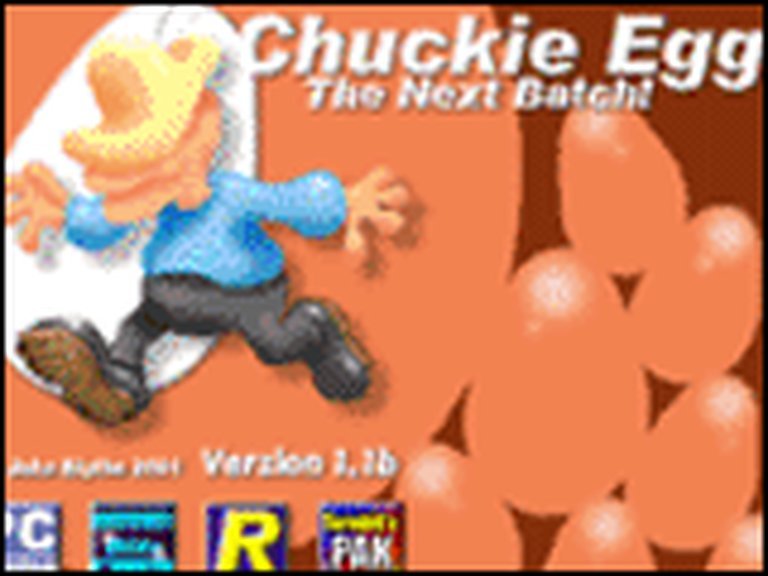
Chuckie Egg: The Next Batch is a freeware remake of the 1983 arcade classic, where players guide a farmer through a large henhouse to collect all eggs while avoiding angry birds and a flying duck. The game expands on the original with modern graphics, enhanced sounds, precise controls, and new gameplay elements, all while staying true to the core objective of navigating platforms and ladders to gather eggs and optionally collect grain for bonus points.
Gameplay Videos
Chuckie Egg: The Next Batch Free Download
Chuckie Egg: The Next Batch Reviews & Reception
squakenet.com : A great little blast from the past.
Chuckie Egg: The Next Batch Cheats & Codes
PC
During game play press [C] and the word message will appear.
| Code | Effect |
|---|---|
| scramble | Effect not specified in source |
| poached | Effect not specified in source |
| hardboil | Effect not specified in source |
| omlette | Effect not specified in source |
| aardvark | Effect not specified in source |
| silby | Effect not specified in source |
| kooldog | Effect not specified in source |
Chuckie Egg: The Next Batch: Review
1. Introduction
In the pantheon of 1980s computer gaming, few titles embody the golden age of British bedroom coding quite like Chuckie Egg. Created by teenage prodigy Nigel Alderton, this frantic platformer became a defining experience for ZX Spectrum and BBC Micro owners, its addictive simplicity cementing its status as a cult classic. Decades later, the freeware remake Chuckie Egg: The Next Batch (2001) emerges not merely as a nostalgia trip, but as a fascinating artifact of retro-game preservation and evolution. Developed by John Blythe under the RetroSpec banner, this Windows-exclusive title strives to bridge the chasm between 8-bit constraints and early 2000s PC capabilities. Yet, does it honor its legacy while innovating, or does it falter in the shadow of its predecessor? This review deconstructs the game through historical, mechanical, and cultural lenses to determine whether The Next Batch truly hatches a new generation of gameplay or merely rehashes the past.
2. Development History & Context
Chuckie Egg: The Next Batch emerged from the fertile ground of the late 1990s/early 2000s freeware scene, a period when retrogaming communities flourished and tools like Blitz Basic democratized game development. John Blythe, already a veteran of remakes (notably Cybernoid II), spearheaded the project with a clear mission: to authentically translate the 1983 original’s core design while leveraging modern hardware. The original Chuckie Egg was a marvel of its time—a 16-year-old Alderton’s month-long labor of love, published by fledgling A&F Software. Its success stemmed from its purity: single-screen levels, punishingly precise controls, and escalating difficulty across 40+ loops. By 2001, the gaming landscape had shifted dramatically. The 8-bit era’s hardware limitations (monochrome sprites, rudimentary sound) were replaced by Windows 95’s multimedia capabilities, enabling richer visuals and audio. RetroSpec faced a delicate balancing act: retain the original’s unforgiving arcade DNA while addressing contemporary expectations for smoother controls and visual flair. The team’s technical constraints were minimal—Blitz Basic allowed for robust development—but the creative constraint was paramount: how to “modernize” a game revered for its austerity. The result was a 1.8MB freeware package that deliberately echoed its origins while subtly expanding its boundaries.
3. Narrative & Thematic Deep Dive
As with the original, The Next Batch eschews explicit narrative, relying instead on environmental storytelling and thematic resonance. The player assumes the role of Henhouse Harry, a farmer venturing into a hostile chicken coop. The objective is deceptively simple: collect all eggs on a single-screen level before a timer expires. Yet beneath this simplicity lies a subtle allegory of industrialized agriculture. Harry’s quest for eggs mirrors resource extraction, while the “angry birds” (hens and a duck) function as guardians of their progeny, transformed from doc farm animals into relentless adversaries. This tension—human vs. nature, intruder vs. territory—is amplified by the game’s escalating loops. After clearing the initial 8 levels (recreated from the 1983 version), the caged duck is freed, pursuing Harry across subsequent playthroughs. The duck’s evolution from passive observer to active hunter symbolizes the game’s core theme: the inescapable cycle of predation and survival. Dialogue is nonexistent, but the visuals and mechanics communicate a silent drama. The grain piles Harry collects—temporary respites from the timer—reflect fleeting rewards in a high-stakes environment, while the game’s progression (from hens to duck to “speed run” levels) underscores the relentless pressure of productivity. Ultimately, The Next Batch uses its minimalist narrative as a vessel for universal themes: greed, evasion, and the futility of escaping one’s past (represented by the recurring level layouts).
4. Gameplay Mechanics & Systems
The gameplay loop remains faithful to the original: traverse platforms, climb ladders, dodge enemies, and collect eggs. However, Blythe’s implementation introduces critical refinements and expansions.
- Core Mechanics: Harry’s movement is fluid and responsive, a stark contrast to the original’s twitchy controls. Jump arcs and ladder-climbing feel precise, reducing frustration. The timer mechanic persists, but grain piles now halt its countdown, adding strategic depth. Eggs are scattered non-linearly, demanding route optimization.
- Enemy AI: Hens patrol predictable paths but accelerate upon spotting Harry, creating emergent tense encounters. The duck introduces aerial unpredictability—its homing behavior in later loops forces players to rethink horizontal positioning, transforming levels from mazes to gauntlets.
- Level Design: Beyond the 8 original levels, 7 new stages introduce innovative elements: moving lift platforms that warp between screen edges, hazardous gaps, and multi-tiered layouts. These additions prevent monotony, though some new levels feel overly labyrinthine.
- Progression: The 15-level structure (8 original + 7 new) leads to “secret” levels for completionists, rewarding dedication. Lives start at five, with extra lives awarded at 10,000 points—a nod to classic arcade design.
- Innovations & Flaws: The inclusion of online hi-scores (via Tomaz Kac’s system) fosters community competition, a forward-thinking feature. Yet, the omission of multiplayer (a staple in some 8-bit versions) feels like a missed opportunity. The difficulty curve is steep but fair, though late-game speed-run loops may feel punitive to modern players accustomed to checkpoints.
5. World-Building, Art & Sound
The Next Batch reimagines the original’s functional graphics into a cohesive, charming world. The henhouse is rendered in vibrant 16-bit colors, with cartoonish details like clucking hens and the duck’s iridescent feathers. Platforms and ladders retain their geometric simplicity but gain texture, evoking a whimsical farmyard aesthetic. Sound design is equally pivotal: the original’s bleeps are replaced by jaunty MIDI tracks (“Lars” and “Snipper” from the Blitz Resource Library) that inject energy without overshadowing the gameplay. Enemy sounds—hen squawks and duck quacks—provide auditory cues, enhancing spatial awareness. The fixed/flip-screen layout preserves the original’s claustrophobic tension, but higher resolutions allow for finer details, like grain piles shimmering or eggs glowing. This visual polish transforms the henhouse from a abstract challenge space into a lived environment, where Harry’s desperation feels palpable. The art direction strikes a balance: nostalgic yet modern, ensuring the game appeals to both veterans and newcomers. The duck, in particular, exemplifies this—its menacing silhouette against pastel backdrops blends menace with humor, embodying the game’s tonal duality.
6. Reception & Legacy
Upon release in December 2001, The Next Batch received lukewarm critical attention. MobyGames aggregates a 50% score from two reviews: Clubic (60%) praised its “sympa” graphics, while VictoryGames.pl (40%) deemed it an “udany remake” but noted its dated feel. Players rated it 2.8/5, reflecting its niche appeal. Commercially, as freeware, it avoided traditional metrics but gained traction in retrogaming circles. Its legacy, however, lies elsewhere. As one of the earliest high-profile PC remakes of a UK 8-bit classic, it demonstrated how fan communities could preserve gaming history. RetroSpec’s work, alongside projects like Mario VGA, prefigured modern remastering trends. Influences are subtle: its emphasis on precision platforming and enemy patterns echo in titles like Super Meat Boy, while its freeware ethos anticipated indie game preservation efforts. The game’s greatest impact, though, is cultural: it kept Chuckie Egg’s name relevant, inspiring later ports (e.g., the 2017 Super Chuckie Egg for mobile) and proving that remakes need not be cynical cash-ins. Its flaws—dated UI, niche appeal—prevent it from being a landmark, but its existence underscores how retro-game remasters can serve as digital time capsules.
7. Conclusion
Chuckie Egg: The Next Batch is a fascinating anomaly: a labor of love that succeeds as preservation more than revolution. John Blythe’s remake honors the original’s punishing elegance while smoothing its rough edges, resulting in a game that feels both timeless and of its moment. Its refined mechanics, charming visuals, and thematic depth elevate it beyond a mere clone, yet it never transcends the shadow of its 1983 progenitor. For veterans, it’s a polished revisit; for newcomers, it’s a masterclass in minimalist design. Its mixed critical reception and modest player scores reflect its niche appeal, but its legacy as a touchstone in retro-game remaking is undeniable. In the end, The Next Batch doesn’t hatch a new genre, but it ensures that Chuckie Egg—a quintessential piece of 8-bit heritage—remains accessible, playable, and relevant. For historians, it’s a vital artifact; for gamers, it’s a challenging, charming footnote in platformer history. It is, in short, a faithful egg-cellent tribute.