
- Release Year: 2020
- Platforms: Windows
- Publisher: Drillimation Systems Co., Ltd.
- Developer: Drillimation Systems Co., Ltd.
- Genre: Action
- Perspective: Top-down
- Gameplay: Shooter
- Average Score: 85/100
Description
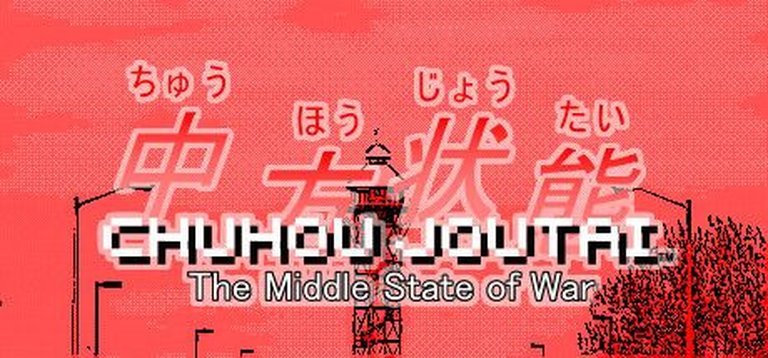
Chuhou Joutai is a top-down 2D scrolling shooter developed by Drillimation Systems Co., Ltd., released in May 2020. Designed as a beginner-friendly entry into the danmaku (bullet hell) genre for Western audiences, the game is set in the fictional region of Kozankyo and features characters like Susumu Takajima and Kagami Ochiai, with art and narrative influences drawn from the Touhou Project and Kyoto Animation’s slice-of-life anime. Its development evolved from early concepts including a Pokémon doujinshi series and a platformer, ultimately shaping into an accessible shooter experience.
Gameplay Videos
Where to Buy Chuhou Joutai
PC
Chuhou Joutai Guides & Walkthroughs
Chuhou Joutai Reviews & Reception
dvd-fever.co.uk (70/100): The shoot em up aspect was fun.
Chuhou Joutai: Review
Introduction
In the saturated landscape of independent bullet-hell shooters, Chuhou Joutai emerges as an audacious, if unconventional, entry. Debuting in May 2020 amidst the global upheaval of the COVID-19 pandemic, this title from Pennsylvania-based Drillimation Systems Co., Ltd. promised a gateway into the notoriously complex danmaku genre for Western audiences. As the inaugural installment of the Drillimation Danmaku Universe trilogy, Chuhou Joutai positions itself not as a competitor to legendary Japanese franchises like Touhou Project or Cave, but as a accessible, humor-infused alternative. Its thesis is clear: to distill the core tension of “pattern memorization vs. reflexes” into a format approachable for newcomers while retaining sufficient depth for veterans. Yet, this humble ambition is shadowed by developmental constraints and artistic compromises, raising questions about its place in gaming history. Does Chuhou Joutai achieve its goal, or does it falter under the weight of its own ambitions?
Development History & Context
Chuhou Joutai is the product of Drillimation Systems’ evolution from a GoAnimate-centric collective into a fledgling game studio. Founded in 2014 by the pseudonymous “Prophet Driller” (real name: Susumu Takajima), the studio’s initial output revolved around Mr. Driller-centric videos. Transitioning to games in 2017, Drillimation aimed to fill a perceived niche: a beginner-friendly danmaku shooter for Western players unfamiliar with genre conventions. This vision was crystallized by frustration with Touhou 15: Legacy of Lunatic Kingdom’s punishing one-hit deaths, leading the team to design a game emphasizing “simplified gameplay for newcomers” (Steam Store).
Technologically, the game was developed in GameMaker Studio, leveraging Tiled for level design and tools like GIMP and Adobe Photoshop for assets. However, early development was hampered by severe hardware limitations. The initial build relied on an underpowered Dell laptop with only 8GB of RAM, causing performance issues during danmaku-intensive sequences—problems exacerbated by the team’s lack of experience with complex game engines. Legal constraints further complicated development; to avoid infringing on Touhou Project’s IP, early drafts eschewed direct references, though Team Shanghai Alice’s loosened fangame policies later allowed for greater thematic integration. The game’s name, Chuhou Joutai (lit. “The Middle State of War”), was serendipitously chosen after the founder encountered the term “Middle States Commission on Higher Education” during his high school’s accreditation process.
Contextually, Chuhou Joutai released during a period when danmaku shooters were largely a niche Japanese preserve. Western titles were rare, often overshadowed by their more polished Eastern counterparts. Its release—coinciding with a global pandemic—meant it arrived without traditional marketing, relying instead on digital storefronts like Steam and itch.io for visibility.
Narrative & Thematic Deep Dive
Chuhou Joutai’s narrative is a patchwork of geopolitical satire, anime tropes, and absurdist humor, anchored by the Kozanese Civil War. The fictional nation of Kozan, a constitutional monarchy, is besieged by SPASDOT (Shintoist Province and Scarlet Devil of Team Crimson), a left-wing extremist group inspired by ISIS but reimagined with Shintoist ideology and Maoist doctrines. Players assume the roles of Susumu “Driller” Takajima—a Japanese-American boy with a troubled past—and Kagami Ochiai, a local idol princess. Their mission: defeat SPASDOT’s enigmatic leader, Frederic Sam Fawkes, and restore peace to the capital, Kozankyo.
The plot unfolds across eight stages punctuated by 30 cutscenes—a record for an arcade-style shooter, as claimed by Drillimation. Character interactions drive the narrative, blending earnest dialogue with meta-humor. Driller’s internal monologues often break the fourth wall, referencing pop culture from Doctor Strange to Mario & Luigi, while Kagami’s tsundere personality adds levity. Thematic threads explore monarchy vs. extremism, but with deliberate tonal dissonance; SPASDOT’s terrorism is treated as a backdrop for slapstick rather than grim realism. This approach stems from the creators’ desire to avoid “overused” damsel-in-distress tropes and instead foster a “co-op danmaku game” where characters unite across ethnic backgrounds (Drillimation Development Blog).
The narrative’s weaknesses are evident, however. SPASDOT’s motivations remain thinly sketched, reducing its ideological conflict to a faceless antagonistic force. Meanwhile, the introduction of Crown Princess Konata in later stages feels abrupt, her royal backstory tenuously linked to the Lucky Star-inspired Ochiai clan. Despite these flaws, the game’s humor—shaped by Angry Video Game Nerd and MCU influences—serves as a vital counterweight, ensuring the never story remains engaging without sacrificing accessibility.
Gameplay Mechanics & Systems
At its core, Chuhou Joutai is a top-down scrolling shooter emphasizing danmaku navigation. Players traverse vertically scrolling stages, dodging colorful bullet patterns while firing at enemies. The game’s mechanics are designed around accessibility: a health system replaces traditional lives, allowing newcomers to sustain multiple hits before a game over. This “Chuhou Joutai mode” is an explicit anti-frustration feature, though it also dilutes the genre’s signature tension.
Two playable characters offer distinct playstyles: Driller (green-themed) balances firepower and speed, while Kagami (blue-themed) excels in focused, piercing shots. A local co-op mode enables shared-screen play, doubling the chaos and camaraderie. Key systems include:
– Focus Fire: Slowing movement to navigate tight bullet patterns, a staple of the genre.
– Bomb Mechanic: Limited screen-clearing bombs to escape dire situations, with strategic use encouraged.
– Stages: Eight linear stages set in Kozankyo, each culminating in a boss battle. Bosses like Hearthcliffe (a villainous nod to Mario & Luigi’s Fawful) introduce unique danmaku patterns, though their thematic ties to SPASDOT feel underdeveloped.
Innovatively, the game integrates RPG-lite elements—dialogue choices and character interactions—without traditional leveling or inventories, a nod to the Mario & Luigi series. However, gameplay depth suffers from repetition; enemy patterns and stage designs, while colorful, lack the intricate complexity of genre benchmarks. The tutorial, initially lengthy, was streamlined post-launch based on player feedback, reflecting Drillimation’s responsiveness to criticism (itch.io Release Announcements).
World-Building, Art & Sound
Chuhou Joutai’s world-building is a fascinating fusion of American and Japanese influences. Kozankyo, modeled after Erie, Pennsylvania, during the Heisei Era, serves as a “fantasy counterpart culture” where humanoids and youkai (renamed “youkai-borns”) coexist. The Federal Kingdom of Gensokyo—a monarchy ruled by the Kirisame Dynasty—draws inspiration from Lucky Star, blending royal intrigue with slice-of-life anime aesthetics. This duality extends to SPASDOT’s design: its grunts evoke Pokémon Team Rocket, while its ideology—a blend of Shintoism and Maoism—avoids direct Islamic references to respect cultural sensitivities.
Artistically, the game adopts a pixel-art aesthetic reminiscent of 16-bit era arcade titles. Character designs, initially crude and “Bart Simpson-esque” for Driller, evolved under Touhou Project and Kyoto Animation influences (e.g., K-On!). Princess Kagami’s navy-to-black gradient ensemble exemplifies this hybrid style. While backgrounds and sprites convey urban Kozankyo’s vibrancy, the art suffers from “Only Six Faces” syndrome, where character models (often generated via VRoid Studio) lack distinctiveness, a critique leveled at Drillimation’s broader output (TV Tropes).
Sound design leans heavily into chiptune nostalgia, with PC-98 style soundtracks and sound effects lifted from the Mario & Luigi series. Tracks like “Kozankyo Streets” blend retro melodies with modern synth layers, enhancing the game’s lighthearted tone. Yet, audio fidelity is inconsistent; some tracks loop abruptly, while others lack the dynamic range expected in the genre. Despite these shortcomings, the art and sound collectively establish a cohesive retro-anime atmosphere, even if they rarely transcend functional adequacy.
Reception & Legacy
Upon release, Chuhou Joutai garnered modest attention, with 6 Steam user reviews (all positive) and niche coverage on platforms like DVDfever. Critics praised its accessibility, with one noting: “Lots of unique danmaku and good looking pixelart!” (Steambase). However, it was criticized for its art style’s simplicity and narrative superficiality. DVDfever awarded it a 7/10, applauding its “fun hour or so of entertainment” but lamenting its “infinite lives” and “silly story.” Commercially, it priced at $4.99—deliberately affordable to appeal to its target demographic.
Its legacy is intrinsically tied to the Chuhou Joutai trilogy. The sequel, Paraided! (2021), amplified difficulty and expanded cutscenes, while the third installment, Three Nights of Scarlet Abscess (2022), introduced ensemble storytelling. Collectively, they established Drillimation’s “Danmaku Universe,” influencing subsequent titles like Touhou Kourinden ~ Mythos of Phantasmagoria. The original game’s greatest impact lies in its role as a gateway: it demystified bullet-hell for Western players, proving the genre could thrive outside its Japanese niche. Yet, its technical constraints and artistic limitations prevent it from being a landmark title—instead, it remains a cult curiosity, admired for its ambition more than its execution.
Conclusion
Chuhou Joutai is a product of its creator’s passion and its era—a pandemic-born indie shooter that dared to reimagine a Japanese-centric genre for a Western audience. As the foundation of Drillimation’s ambitious trilogy, it succeeds in its core mission: to offer an accessible, humorous entry point into danmaku. Its health system, local co-op, and pop-culture-infused narrative lower the genre’s notoriously high barrier to entry, even if they dilute its traditional challenge. The world-building, a vibrant blend of American and Japanese influences, and retro-anime aesthetic provide charm, while the chiptune soundtrack evokes nostalgic warmth.
Yet, the game’s flaws are equally telling. Its narrative feels disjointed, its art lacks originality, and its gameplay, while enjoyable, rarely surprises. These shortcomings prevent Chuhou Joutai from ascending beyond a footnote in the genre’s history. Nevertheless, its legacy endures as a testament to indie ingenuity—a flawed but earnest attempt to bridge cultural divides in gaming. For players seeking a danmaku primer, it remains a viable, if imperfect, starting point. For historians, it stands as a curious artifact of a unique moment: when a small American studio, armed with GameMaker and a dream, brought the “middle state of war” to a global stage.