
- Release Year: 2018
- Platforms: Macintosh, Nintendo Switch, Windows
- Publisher: Belka Digital Lab Srl., Strelka Games
- Developer: Strelka Games, Yonder
- Genre: Action, Sports
- Perspective: Top-down
- Gameplay: Arcade, Mini-games
- Average Score: 50/100
Description
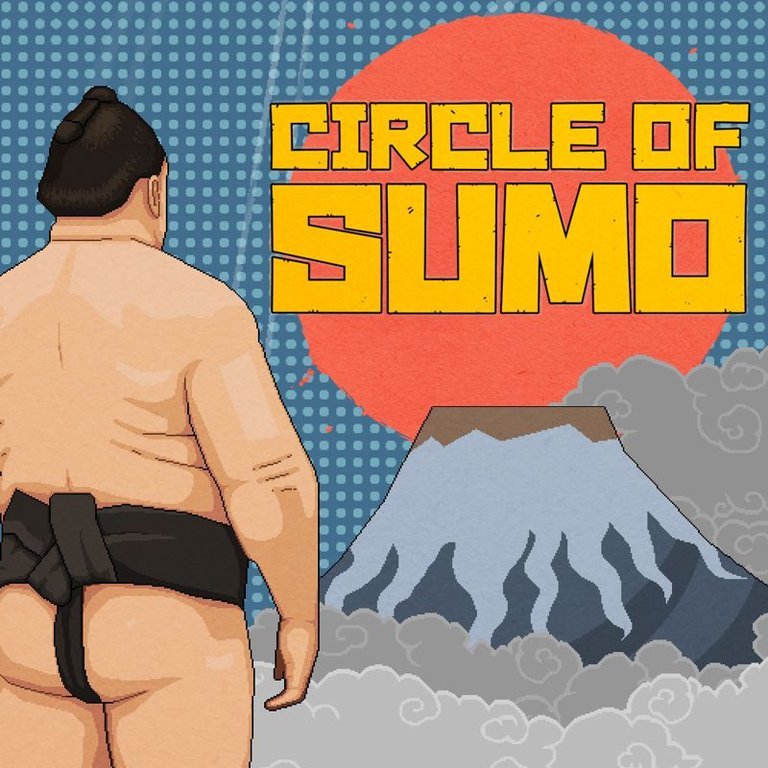
Circle of Sumo is a fast-paced, competitive multiplayer game where players control sumo wrestlers in diverse arenas, battling for ring supremacy. Set in imaginative locations ranging from traditional dohyo to unconventional stages, it offers a variety of challenges with multiple characters, arenas, and mini-games, emphasizing precision, reflexes, and strategy for up to four local players, making it ideal for social game nights and inclusive fun.
Gameplay Videos
Where to Buy Circle of Sumo
PC
Circle of Sumo Guides & Walkthroughs
Circle of Sumo Reviews & Reception
nintendoworldreport.com (50/100): Overall, Circle of Sumo is a simplistic and uninspired multiplayer experience.
Circle of Sumo: Apex of the Party Game Ring or a Brief Flourish in the Crowd?
Introduction: The Simple Thrill of the Shove
In the golden age of the Nintendo Switch’s local multiplayer renaissance, a deluge of party games flooded the eShop, each vying for a place on the coffee table. Among them was Circle of Sumo, a title that promised the pure, physical comedy of sumo wrestling distilled into a pick-up-and-play formula. Developed by the Italian studio Yonder in collaboration with Strelka Games, it arrived in November 2018 with a clear pitch: a minimalist, physics-driven brawler where up to four friends battle across two-dozen circular arenas. Its legacy, however, is not one of seminal industry-shifting influence, but of a competent, charming, and ultimately limited design that crystallizes both the strengths and the constraints of the indie party game boom. This review will argue that Circle of Sumo is a fascinating case study in focused design—a game that executes its core loop with satisfying precision but fails to build a compelling ecosystem around it, resulting in an experience that shines brightly in brief social gatherings but flickers out under sustained scrutiny. Its true historical value lies not in its mechanics, which are elegantly simple, but in its position as a snapshot of a specific moment: when accessibility and local chaos were king, and depth was often sacrificed at the altar of immediate fun.
Development History & Context: From Roman Indieroots to Switch Spotlight
Circle of Sumo emerged from Yonder, a Rome-based independent studio founded in 2013. Their first release, Red Rope: Don’t Fall Behind (2016), was a cooperative puzzle-platformer that garnered niche acclaim and award nominations (including Best Game Design at the Drago d’oro Italiano). This established Yonder’s design philosophy: prioritize physical, often clumsy, player interaction and local multiplayer cohesion. Circle of Sumo represents a pivot from cooperative to competitive, but retains that same focus on tangible, physics-based player connection.
The game’s development was publicly visible through platforms like itch.io, where demos for Windows, Mac, and Linux were released as early as 2017. This “alpha” phase was crucial for gathering community feedback on the core shoving mechanics. The official launch, however, was a Nintendo Switch exclusive in November 2018—a strategic move that aligned perfectly with the console’s “play anywhere” social ethos. The Switch’s Joy-Con capability made the “controllers required” mandate not a barrier but a feature, enabling immediate, impromptu sessions. The game was built in the Unity engine, a workhorse for indies, allowing for the 2D pixel-art aesthetic and the consistent, if not always spectacular, physics simulation across the Switch’s modest hardware and later PC ports (released in May 2020).
This places Circle of Sumo squarely within the post-Zelda: Breath of the Wild, pre-(global pandemic) Switch hardware boom. The console was awash with local multiplayer titles (Overcooked! 2, Super Mario Party, Smash Ultimate). Circle of Sumo differentiated itself by offering a purer, more stripped-down competitive experience than Mario’s minigame collection or Smash’s deep brawling. It was a “back-to-basics” party game, eschewing complex rulesets for the universal language of pushing opponents to their doom.
Narrative & Thematic Deep Dive: The Silence of the Dohyo
To speak of a “narrative” in Circle of Sumo is to engage with its most striking omission: there is none. There is no story mode, no lore, no character backstories, and no dialogue. The eight selectable Sumotori (four male, four female) are defined solely by their statistical spreads in Sprint, Power, and Acceleration. Their identities are visual—distinct pixel-art designs ranging from traditional rikishi in mawashi to more fantastical figures—but utterly bereft of personality or context.
This void is, in fact, the game’s first and most profound thematic statement. Circle of Sumo exists in a perpetual, abstract present. The “arenas” are wildly imaginative—traditional dohyo, a spinning carousel, a golf course, a desert island, a traffic roundabout—but they are not locations with history; they are thematic playing fields. The “circle” is the only unifying leitmotif, a pure geometric shape that represents the arena of conflict. This abstraction strips competition down to its primal, mathematical core: body vs. body, force vs. force, within a bounded space.
The thematic resonance, therefore, is purely phenomenological. It’s about the feeling of the shove, the last-moment dodge, the collective gasp as someone skids perilously close to a magma moat. The game is a caultoscopy of competition—it observes and simulates the chaotic moment-to-moment of a physical contest without any narrative wrapper. This will be a strength for those seeking pure, unadulterated gameplay, and a fatal weakness for those expecting even the barest scaffolding of a “world” to invest in. The silence of the dohyo is total; the only story told is the one written by the players’ collisions.
Gameplay Mechanics & Systems: Elegant Simplicity, Limited Palette
The core gameplay loop is instantly graspable: push opponents out of the circle. Players control their Sumotori with an analog stick, using a chargeable sprint attack (with brief invincibility frames) to shove, and a dodge roll for evasion and positioning. A simple physics model governs momentum and collisions—being hit from the side causes rotation and loss of traction, while a direct frontal charge is most powerful.
-
Character Progression: There is none. The eight characters have fixed stats (e.g., one excels in Power but is slow, another has high Acceleration but low Sprint). The game’s tagline, “It is not the Sumotori that chooses the arena but the arena chooses the Sumotori,” is a prescriptive design note. The onus is on the player to select a wrestler whose attributes complement (or counter) a given arena’s hazards. This is a static, pre-match metagame, not a persistent progression system. There is no unlockable content for individual characters.
-
Arena Design & “The Circle”: This is the game’s crown jewel. The base game includes 4 arenas, with 21 more unlocked through play (purportedly 25 total, per different sources). Each arena introduces one or two unique mechanics: spinning platforms, collapsing floors, conveyor belts, fog of war, etc. They are creative and force players to adapt their pushing tactics. The “card collection” system for unlocking them provides a minor sense of achievement. However, the “fixed/flip-screen” perspective means arenas are self-contained bouts; there is no overarching stage or journey.
-
Game Modes:
- Main Mode: Best-of-7 rounds (first to 5 wins). Pure, unadulterated free-for-all or team-versus-team sumo.
- Extra Games (Mini-games): The game’s attempt at variety. Sources cite 4 “crazy extra-games” (Steam store) or “5 extra games” (itch.io). These include reimaginings of sports like hockey and football using sumo controls, and tributes to classics like Pong and Frogger (as per developer descriptions). They are, by critical consensus, uninspired and pale in comparison to the main mode. They feel like proof-of-concept sketches rather than fully-realized alternatives.
- Single-Player Mini-games: Two perfunctory time-attack challenges (a log-float and a Frogger-like crossing). They lack tutorials, have no leaderboards worth mentioning, and are universally panned as shallow filler. Their inclusion seems designed to tick a “single-player content” box on a store page.
-
Systems & Flaws: The lack of AI opponents is the game’s most glaring omission. It is 100% reliant on human players. There is no way to practice or play alone. The physics, while “accurate” for a simple arcade game, can be imprecise and frustrating—collisions can feel unpredictable, and knockback sometimes feels arbitrary. The UI is minimal to the point of being sparse, showing only round count and player positions. This is stylish but offers little feedback. The game’s mantra of “easy to learn, hard to master” is partially true; mastering the dodge timing and arena hazards requires skill, but the strategic ceiling is low due to the simple move set and lack of character customization or deeper systems.
World-Building, Art & Sound: Cohesive But Unadorned
Circle of Sumo presents a world through its aesthetic, not its writing. The visual direction is bright, chunky pixel art with a cheerful, cartoonish sensibility. Characters are exaggerated, environments are colorful and clearly readable (magma is red and spiky, ice is blue and slippery). This clarity is paramount for a game where spatial awareness is everything. The top-down, 2D scrolling perspective works perfectly, keeping all players visible on a single screen. The “fixed/flip-screen” descriptor likely refers to how arenas are distinct screens rather than a scrolling world.
The artistic through-line is the circle. Every arena, from a round desert island to a circular traffic junction, reinforces the core geometric concept. It’s a smart, minimalist branding choice that makes the game instantly recognizable in screenshots.
Sound design is functional and complementary. Effects are solid: satisfying thuds on impact, comical squeaks on ice, dramatic gongs for round starts/ends. The music is a series of short, upbeat, loops that are inoffensive but forgettable. It serves its purpose—adding energy—but lacks the iconic memorability of, say, Mario Party‘s main themes. The overall package is cohesive, cheerful, and professional for its indie budget, but it lacks the “wow” factor of more stylized indie darlings. It looks and sounds like a very competent, polished student project—which, in the best sense, it essentially is.
Reception & Legacy: The Niche of “Good Enough”
Circle of Sumo’s critical reception was mixed to negative. On Metacritic, its Switch metascore is a bland “tbd” based on a few scores (60 from Nintendo Enthusiast, 72 from Everyeye.it, 50 from NintendoWorldReport). The consensus is damningly consistent:
* Strengths cited: Accessible controls, fun for a few rounds with the right crowd, creative arena variety, pure couch co-op joy.
* Weaknesses cited: Severe lack of single-player content, uninspired extra minigames, no AI, shallow strategic depth, repetitive gameplay, technical hiccups on PC (as per one Steam user’s “unplayable” report).
User scores on Steam and Metacritic are similarly polarized, averaging around 5.4/10. Reviews swing from “phenomenal couch co-op experience” to “simplistic and uninspired.” The price point ($6.99 on Steam, likely $9.99-$14.99 on eShop) is frequently noted as its saving grace—it’s hard to feel ripped off for a few hours of chaos.
Its commercial performance was niche. It did not become a breakout hit like Jackbox Party Pack or a staple like Mario Party. Its legacy is that of a cult favorite for a specific subset of players: those who prioritize simple, physical, local-only competition and have a regular group of friends to play with. It is persistently compared to games like Nidhogg (for its pure dueling focus but with more players) and Super Smash Bros. (for its arena combat, but with far less depth).
The “Online Rumble!” update (2020) was a necessary evolution, adding netcode and 1v1 ranked play. However, for a game designed for the communal Switch experience, online felt like an afterthought and didn’t significantly alter its core identity. It remains a game defined by local, shared-screen, physical presence.
Conclusion: A Worthy Contender in a Crowded Ring?
Circle of Sumo is not a forgotten classic, nor is it a catastrophic failure. It is a competently designed, tightly scoped, and ultimately limited party game that perfectly exemplifies a certain indie design ethos. Its genius is in its core loop—the tactile joy of a well-timed charge that sends a friend flying into a trapdoor is undeniable and repeatable. Its fatal flaw is its failure to expand that loop into a compelling package. The absence of AI, a proper single-player challenge, or deeply engaging extra modes means the game’s lifespan is entirely at the mercy of the player’s social calendar.
Historically, it will be remembered as a solid entry in the late-2010s Switch multiplayer wave. It demonstrated that a small team could create a fun, polished, and succinct competitive experience without the bloat of excessive modes or RPG mechanics. However, it also proved that “simple” can too easily become “shallow” if not buttressed by systems that give the core mechanic reasons to be explored beyond its first ten minutes.
Final Verdict: 6.5/10 – Circle of Sumo is a must-play for die-hard local multiplayer enthusiasts who crave another pure physical contest, and it’s an easy skip for anyone seeking depth, solo content, or lasting innovation. It’s a game that delivers exactly on its narrow promise: a few hours of Pushy Fun™ with friends. In the vast, crowded arena of party games, it steps into the ring, throws a few solid shoves, and then steps out again—memorable for its clarity of purpose, but not for its championship reign. Its place in history is as a well-executed footnote, a reminder that sometimes, the circle is enough, but the ring it creates is smaller than we might hope.