
- Release Year: 2018
- Platforms: PlayStation 4, Windows, Xbox One
- Publisher: Toplitz Productions GmbH
- Developer: Caipirinha Games GmbH
- Genre: Action, Driving, Racing, Simulation
- Perspective: Third-person
- Game Mode: Single-player
- Setting: Crime, Urban
- Average Score: 33/100
Description
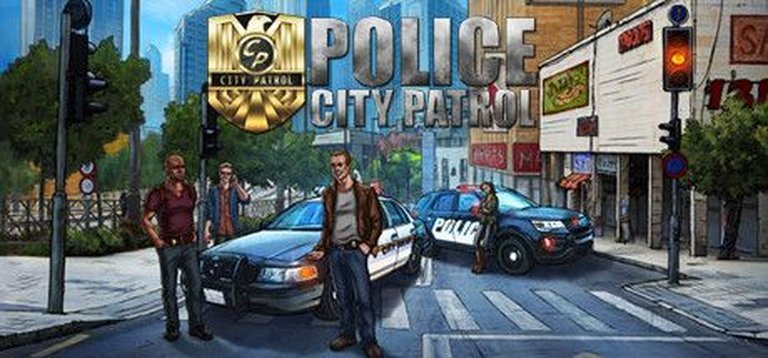
City Patrol: Police, also known as Police Chase, is an action and driving simulation game that places players in the role of a law enforcement officer tasked with patrolling an urban city, chasing criminals, and performing police duties. Built on the Unreal Engine 4, the game features third-person behind-view gameplay centered on crime-themed narratives, though it has faced criticism for its limited missions, technical issues, and inconsistent design elements.
Gameplay Videos
Where to Buy City Patrol: Police
PC
City Patrol: Police Free Download
City Patrol: Police Cracks & Fixes
City Patrol: Police Guides & Walkthroughs
City Patrol: Police: Review
Introduction
In the crowded landscape of police simulation and racing games, few titles have achieved the singular distinction of becoming a byword for ambition squandered and potential unrealized. City Patrol: Police (also known as Police Chase), released in 2018 by Caipirinha Games GmbH and published by Toplitz Productions, stands as a monument to this dichotomy. Marketed as a spiritual successor to the beloved Crash Time series and built on Unreal Engine 4, it promised a thrilling blend of open-world policing, high-octane chases, and narrative-driven crime-fighting. Yet, the game that emerged was a fractured, bewildering experience, derided by critics and players alike for its technical instability, baffling design choices, and profound identity crisis. This review delves into the depths of City Patrol: Police, examining its tangled development, hollow narrative, flawed mechanics, and the peculiar legacy it has carved as a “curiosity” for collectors of the so-bad-it’s-good. The central thesis is that City Patrol: Police serves less as a cohesive game and more as a cautionary artifact—a snapshot of a studio grappling with technology and ambition, ultimately producing a title that is fascinating not for what it achieves, but for the magnitude of its failure.
Development History & Context
City Patrol: Police emerged from the studios of Caipirinha Games GmbH, a German developer whose prior work, notably Island Flight Simulator, had already established a reputation for technical jank and unfulfilled promises. Their vision for City Patrol was explicitly rooted in nostalgia and technological ambition. As revealed in a Steam Community FAQ by developer “bk_toplitz,” the project was conceived as a “state-of-the-art” reimagining of Crash Time 4: The Syndicate, a series beloved for its arcade-style driving and campy cop-show narratives. Caipirinha Games, including key personnel from the original Crash Time developer, aimed to leverage Unreal Engine 4 to overhaul the framework, promising “improvements on map design, physics, models” and a “new story featuring hand-painted comic scenes.” This context is crucial: the studio was not starting from scratch but attempting a modern revival of a niche but fondly remembered formula.
Technologically, Unreal Engine 4 presented both an opportunity and a constraint. It allowed for theoretically impressive visuals and physics, yet the game’s execution faltered badly. The gaming landscape of 2018 was saturated with open-world titles and driving simulators, from the polished realism of Forza Horizon 3 to the emergent wave of indie “simulator” games. City Patrol arrived positioned awkwardly between these poles—promising simulation depth (cited planned features like “enter/exit cars to free roam in first person mode” and randomized quests for “parking violators” and “stolen vehicles”) but delivering a core experience dominated by arcade-style racing. This fundamental dissonance, compounded by the studio’s limited resources and apparent lack of polish, doomed the project from the outset. The game’s release on May 8, 2018, for Windows (with a broader Steam launch on November 29, 2018, and subsequent ports to PlayStation 4 and Xbox One in 2019) coincided with heightened expectations for Unreal Engine titles, making its technical shortcomings all the more glaring. The development history reveals a studio attempting to ride the coattails of a previous success while burdened by technological overreach and an unfocused design philosophy.
Narrative & Thematic Deep Dive
The narrative aspirations of City Patrol: Police are as underwhelming as their execution is baffling. Official descriptions introduce players to the “City Patrol Special Unit,” led by the “dauntless cops Patrick and Tom,” tasked with averting a “terrorist threat” and “defeating criminal influences.” This premise, on paper, could support a compelling police procedural or action-thriller. However, the game delivers a story so threadbare and incoherent it borders on parody. The plot unfolds through 15 campaign missions that leap erratically between mundane traffic stops and supposedly high-stakes scenarios like thwarting terrorism. Yet, the narrative framing is paper-thin; missions lack context, cutscenes are rudimentary, and the hand-painted comic scenes mentioned in development logs appear to be either absent or so poorly implemented as to be irrelevant. There is no narrative momentum, no sense of escalating stakes, and no meaningful character development for Patrick or Tom beyond one-dimensional archetypes.
The dialogue, where it exists, is stilted, unnatural, and often comically inept. While specific lines are scarce in the provided sources, the overall tone suggests a translation error or a deliberate attempt at camp that falls flat. The themes of law enforcement, duty, and public safety are invoked repeatedly in the marketing (“Enforce the law!”) but are utterly absent from the gameplay. Players are never asked to make meaningful choices or engage with the moral complexities of policing; instead, they are simply directed from one waypoint to the next, issuing tickets or crashing into cars. The profound thematic dissonance stems from the game’s core identity crisis: it wants to be a serious police simulation but plays like a mindless racing game, resulting in a narrative that feels both trivial and nonsensical. The lack of any meaningful informant interactions or undercover work (beyond superficial mentions) further underscores the hollowness of its storytelling ambitions. In essence, City Patrol: Police offers a narrative not as a driving force for gameplay, but as a flimsy justification for its repetitive racing missions—a thematic failure that epitomizes the game’s overall inadequacy.
Gameplay Mechanics & Systems
The gameplay of City Patrol: Police is a masterclass in contradiction and poor execution, built around a core loop that feels simultaneously overburdened and underdeveloped. At its heart, the game offers three distinct modes that fail to cohesively integrate: a campaign of 15 missions, a racing mode with 15 tracks, and a free-play mode promising 80 side quests. The campaign, which constitutes the primary “narrative” experience, tasks players with progressing through 10 ranks (from Officer to Captain III) by completing missions. However, these missions are remarkably homogeneous and lack depth. They typically involve driving to a location, engaging in a simplistic race or chase, and then repeating the process. The promised “undercover investigations” and “time-sensitive missions” devolve into monotonous point-to-point driving, exacerbated by the game’s insistence on framing trivial tasks like issuing parking tickets as core gameplay—a feature more tedious than immersive.
The racing mechanics are the most polished, yet deeply flawed element. Players can choose from a “wide range of detailed vehicles,” including transporters, SUVs, and muscle cars, each with varying “HP” (likely a placeholder for durability or speed). The physics engine, built on Unreal Engine 4, promises “realistic” handling but delivers a floaty, unpredictable experience. Vehicles feel weightless and prone to sliding uncontrollably, especially when navigating the game’s “large, open 3D world.” The traffic simulation, touted as “dense and authentic,” is a primary source of frustration. AI-driven cars behave erratically, either ignoring the player or inexplicably swerving into their path, creating chaotic and unfair collisions. The use of “lightbar, siren, and nitro boost” adds superficial action but feels gimmicky rather than integral to a deep simulation.
Progression is equally shallow. Unlocking new vehicles and tracks offers little variation, as the core driving mechanics remain unchanged. The free-play mode, intended to offer “sim-like features,” falls flat due to the lack of meaningful interactions. While randomized quests are mentioned (catching speeders, finding stolen vehicles), they are repetitive and lack consequence, failing to create the emergent gameplay promised during Early Access. Critically, the game is rife with technical flaws that cripple the experience. Frequent crashes, VR mode auto-launching on some systems (as noted in Steam discussions), and general instability were widespread complaints. Performance issues plagued even recommended hardware, with one critic sarcastically noting the “PS4 Pro isn’t apparently powerful enough… quel gag!” This technical instability renders even the most basic gameplay loops unreliable.
Innovations are few, and flaws abound. The UI is cluttered and unintuitive, and the lack of a cohesive identity—racing game or simulator—makes every aspect feel half-baked. The career progression system is a mere numbers game (10 missions per rank), devoid of meaningful choices or narrative payoff. Ultimately, the gameplay systems of City Patrol: Police represent a classic case of ambition without execution, where each mechanic is either underdeveloped, broken, or both.
World-Building, Art & Sound
The world-building of City Patrol: Police is its most significant and unintentionally compelling feature, though not for the reasons intended. The game’s “large, open 3D world” is described as encompassing “highways, country roads, and industrial estates,” offering a decently sized sandbox to explore. However, this world feels less like a living city and more like a collection of assets loosely strung together. The setting is geographically and culturally ambiguous, drawing comparisons to German locales (per user feedback) but lacking any distinct personality. The most damning critique comes from the Jeuxvideo.com review, which notes baffling incoherences like “cops in civilian clothes in patrol cars” and a “police station that looks like a real estate agency”—details that shatter any semblance of immersion. The world is devoid of life beyond static traffic and pedestrians, creating a sterile, artificial environment that fails to engage.
The art direction is a study in wasted potential. Built on Unreal Engine 4, the game theoretically boasts “detailed vehicles” and “cinematic special effects,” but the visual execution is uniformly poor. Textures are low-resolution, models are blocky and generic, and lighting is flat and uninspired. The environments, particularly the city streets, suffer from repetitive architecture and a lack of environmental storytelling. The promised hand-painted comic scenes, if they exist, are either absent or so poorly integrated as to be irrelevant. The overall aesthetic is drab and dated, failing to leverage the power of its engine, resulting in a world that looks more akin to a low-budget mobile title than a 2018 PC release.
Sound design fares no better. The game features “full audio” in multiple languages (English, German, French, Italian, Spanish), but the implementation is lackluster. Vehicle sounds are generic and unconvincing, lacking the weight or variety expected of a simulation. The siren and nitro boost effects are flat and fail to convey a sense of urgency or power. Environmental ambience is minimal, and the sparse dialogue (if present) is delivered without emotion or nuance. One user on Steam noted the game’s “great dialogues” in comparison to the German series Alarm für Cobra 11, implying that City Patrol‘s audio is similarly stilted but without the camp charm of its inspiration. The soundscape ultimately contributes to the game’s pervasive sense of emptiness and disconnection, failing to enhance the atmosphere or provide feedback to the player. In summary, the world, art, and sound of City Patrol: Police coalesce into an experience that is not just technically deficient but artistically impoverished, creating a world that players will likely flee from rather than immerse themselves in.
Reception & Legacy
The reception of City Patrol: Police upon its release was, to put it mildly, catastrophic. Critically, it was universally panned. The sole critic score available, from Jeuxvideo.com for the PlayStation 4 version, awarded a brutal 20%. The review scathingly dismissed the game as a “curiosity” for “collectors of nanars” (so-bad-it’s-good films), highlighting its “ridiculous story mode,” “inconsistencies,” “limited missions,” and crashes. The review’s sarcastic jab—that a PS4 Pro couldn’t handle the game—became a defining meme, encapsulating the technical failure at the heart of the experience. Player reviews on platforms like Steam and MobyGames were equally unkind, with an average player score of just 2.2 out of 5 on MobyGames and a Mixed rating on Steam (40% positive from 22 reviews). Complaints centered on crashes, poor driving physics, a lack of content, and the fundamental disconnect between the promised simulation and the actual racing gameplay. One Steam user bluntly asked, “Are you a police officer or a race car driver?”—a question that haunted the game’s marketing.
Commercially, the game seems to have been a low-budget, low-impact release. Its price point (often steeply discounted, as low as $3.74) suggests it targeted the bargain-bin or “curiosity purchase” market rather than serious simulation fans. Its legacy, however, has evolved in unexpected ways. While it has failed to inspire any positive influence on subsequent games (no developer has cited it as an inspiration), it has achieved a certain notoriety within gaming communities as a prime example of “asset flip” mentality or *”simulator” fraud—a title that promises depth but delivers a shallow, broken experience. It is frequently discussed alongside other notorious failures like *Big Rigs: Over the Road Racing, serving as a cautionary tale about overpromising and underdelivering. Paradoxically, this infamy has given it a perverse longevity. It is occasionally referenced in discussions of the “worst games ever made” and remains a staple of YouTube “so bad it’s good” playthroughs, where its technical glitches and narrative absurdities provide unintentional entertainment.
The game’s relationship to its predecessors is also a key part of its legacy. As noted in developer FAQs, it was explicitly designed as a non-remake successor to Crash Time 4, yet it failed to capture any of the charm or functional fun of that series. Meanwhile, user comparisons to Alarm für Cobra 11 (with one Steam user insisting City Patrol was a “copy” of that game) highlight how it languished in the shadow of its more competent and beloved inspirations. In the broader industry context, City Patrol: Police stands as a symbol of the risks associated with Early Access development and the challenges faced by small studios attempting to compete in the simulation genre without the resources or polish of larger developers. Its legacy is not one of innovation or influence, but of infamy—a broken monument to a dream unrealized.
Conclusion
City Patrol: Police is a profoundly frustrating and fascinating artifact of modern game development. It represents the ultimate tragicomedy: a title built on a solid foundation of nostalgia and technological promise, yet collapsed under the weight of its own incompetence. From its disjointed narrative and hollow themes to its broken gameplay mechanics and sterile world-building, every aspect of the game suffers from a fundamental lack of polish, focus, and passion. The Unreal Engine 4 backbone, theoretically a strength, becomes a cruel irony, highlighting the gulf between technological capability and creative execution. Its reception was justly brutal, with critics and players united in their condemnation of its technical flaws and design failures.
Yet, in its spectacular failure, City Patrol: Police has secured a peculiar place in video game history. It is not a good game by any measure, but it is an undeniably interesting one—a testament to the perils of ambition without discipline, and a cautionary tale for developers and players alike. While it has left no positive legacy on the games that followed, it endures as a cultural touchstone for the “so bad it’s good” community, a symbol of the depths to which a promising concept can sink. For the historian and journalist, City Patrol: Police is less a game to be played and more a specimen to be studied—an object lesson in what happens when vision outstrips capability. In the final analysis, its verdict is clear: a broken, incoherent, and deeply disappointing experience that will be remembered not for what it achieved, but for the magnitude of its fall.