
- Release Year: 2014
- Platforms: Android, iPad, iPhone, Windows
- Publisher: Catmoon Productions Ltd.
- Developer: Catmoon Productions Ltd.
- Genre: Simulation, Vehicular
- Perspective: Top-down
- Game Mode: Single-player
- Gameplay: Vehicle simulator
- Average Score: 100/100
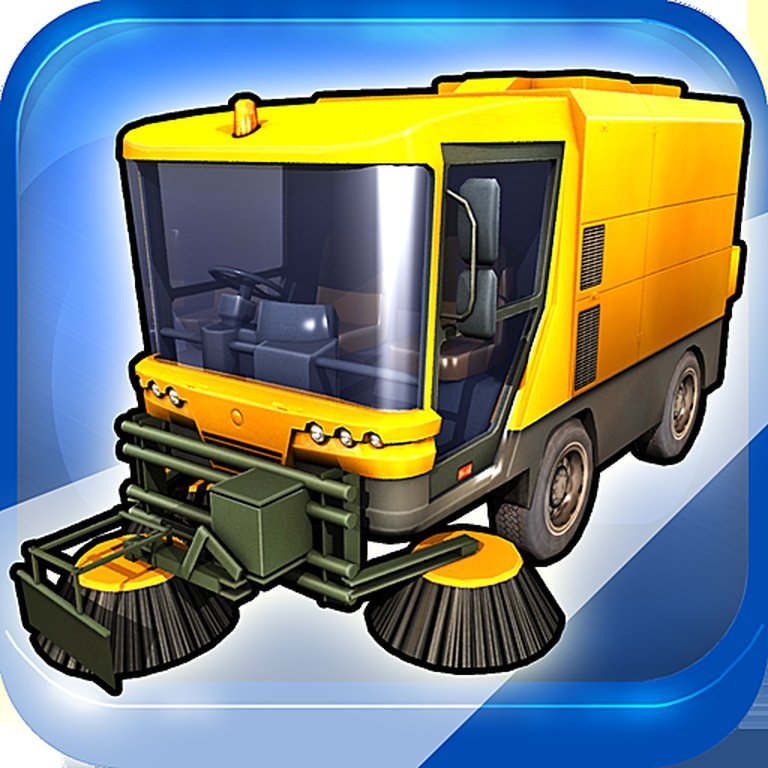
Description
City Sweeper is a simulation game where players take on the role of a street sweeper, navigating through urban environments to clean up debris and maintain the city’s cleanliness. The game features a top-down or diagonal-down perspective, offering direct control over the vehicle as players maneuver through various challenges and obstacles. Released on multiple platforms including Android, iOS, and Windows, City Sweeper combines elements of vehicle simulation with a lighthearted, task-oriented gameplay experience.
Where to Buy City Sweeper
PC
City Sweeper Reviews & Reception
store.steampowered.com : Love the game great fun. If you love street sweepers you will love this one. Thanks again for the game.
steambase.io (100/100): City Sweeper – Clean it Fast! has earned a Player Score of 100 / 100.
City Sweeper: A Niche Simulator That Swept Under the Radar
Introduction
In the vast, often chaotic landscape of video game history, where blockbuster franchises and AAA titles dominate the cultural conversation, there exist quiet, unassuming gems that carve out their own peculiar niches. City Sweeper, released in 2014 by Catmoon Productions Ltd., is one such title—a game so singular in its premise that it defies easy categorization. It is not a game about saving the world, conquering kingdoms, or outrunning the law. Instead, it is a game about cleaning streets. And yet, within this mundane premise lies a surprisingly engaging, almost meditative experience that speaks to the often-overlooked beauty of simulation games.
At its core, City Sweeper is a vehicular simulator that tasks players with operating a street sweeper in a 3D urban environment. The goal is simple: clean the streets efficiently, manage resources like fuel and waste capacity, and upgrade your vehicle to tackle larger, more complex cleaning challenges. But beneath this straightforward objective lies a game that is as much about strategy and planning as it is about the act of sweeping itself. It is a game that forces players to think like municipal workers, to consider the logistics of urban maintenance, and to find satisfaction in the methodical, almost therapeutic process of making a city cleaner, one street at a time.
This review seeks to explore City Sweeper in exhaustive detail, examining its development context, its unique gameplay mechanics, its understated art and sound design, and its place in the broader landscape of simulation games. It is a game that, by all conventional metrics, should not work. And yet, it does—quietly, persistently, and with a charm that is entirely its own.
Development History & Context
The Studio: Catmoon Productions Ltd.
City Sweeper was developed and published by Catmoon Productions Ltd., a studio that, as of 2024, remains relatively obscure in the broader gaming industry. Little is known about the studio’s origins, its team, or its broader catalog, but its decision to focus on a street sweeper simulator speaks volumes about its willingness to explore unconventional ideas. In an era dominated by open-world epics, battle royales, and narrative-driven experiences, Catmoon’s choice to center a game around municipal sanitation is nothing short of bold.
The studio’s approach to City Sweeper suggests a deep understanding of the appeal of niche simulation games. Rather than attempting to compete with the spectacle of mainstream titles, Catmoon leaned into the mundane, crafting a game that celebrates the often-invisible labor that keeps cities functional. This philosophy aligns with a broader trend in indie and simulation gaming, where titles like Euro Truck Simulator, Farming Simulator, and PowerWash Simulator have found dedicated audiences by focusing on the intricate, methodical aspects of everyday tasks.
Technological Constraints and Design Philosophy
City Sweeper was released in 2014, a year that saw the launch of the PlayStation 4 and Xbox One, as well as a continued emphasis on high-fidelity graphics and complex gameplay systems in AAA titles. Yet, City Sweeper eschewed these trends, opting instead for a simple, accessible design that prioritized gameplay over graphical spectacle. Built using the Unity engine—a choice that reflects both the studio’s indie roots and the game’s cross-platform ambitions—City Sweeper is a game that embraces its limitations.
The Unity engine, known for its flexibility and ease of use, allowed Catmoon to focus on the core mechanics of street sweeping without the need for a massive budget or team. The game’s 3D environments are functional rather than flashy, with a clean, almost minimalist aesthetic that serves its purpose without distraction. This design philosophy extends to the game’s controls, which are straightforward and intuitive, allowing players to dive into the experience without a steep learning curve.
The Gaming Landscape in 2014
To understand City Sweeper’s place in gaming history, it is essential to consider the broader landscape of 2014. That year was marked by the release of several high-profile titles, including Dark Souls II, Dragon Age: Inquisition, Middle-earth: Shadow of Mordor, and Destiny. These games were characterized by their ambition, their scale, and their emphasis on player agency within vast, open worlds.
Against this backdrop, City Sweeper’s release on Android, iPhone, and iPad in September 2014—followed by a Windows release in 2018—seems almost quaint. It was not a game designed to compete with the industry’s heavyweights. Instead, it was a game that catered to a specific, often overlooked audience: players who found joy in the methodical, the repetitive, and the strangely satisfying.
The mobile gaming market in 2014 was already saturated with casual titles, free-to-play experiments, and endless runners. City Sweeper’s decision to offer a premium, simulation-focused experience was a gamble, but one that paid off in its own small way. The game’s presence on Steam in 2018 further underscored its appeal to PC gamers who appreciated its niche charm.
The Vision Behind City Sweeper
At its heart, City Sweeper is a game about systems. It is not about storytelling, character development, or high-stakes drama. Instead, it is about the interplay between time, resources, and efficiency. The game’s official description on Steam captures this ethos perfectly:
“Not all vehicles are fast. Not all of them look streamlined. But there is a particular vehicle type, that is slow and looks very differently: it’s called street sweeper. Try it and believe me: cleaning was never such a fun!”
This statement is both a mission statement and a challenge to the player. City Sweeper does not promise adrenaline-pumping action or emotional narratives. Instead, it promises something far more unusual: the joy of mastery over a seemingly mundane task.
The game’s focus on strategic planning—where to begin cleaning, how to optimize routes, when to return to base to empty waste or refuel—reflects a design philosophy that values player engagement through mechanics rather than spectacle. It is a game that rewards patience, foresight, and attention to detail, qualities that are often sidelined in favor of more immediate gratification.
Narrative & Thematic Deep Dive
The Absence of Narrative
One of the most striking aspects of City Sweeper is its complete lack of traditional narrative. There are no characters to meet, no dialogues to parse, no overarching plot to uncover. The game does not even feature a tutorial in the conventional sense. Instead, players are dropped into a city and given a simple objective: clean the streets.
This absence of narrative is not a flaw but a deliberate design choice. City Sweeper is not about telling a story; it is about creating one through gameplay. The “story” of City Sweeper is the story of the player’s own journey—from a novice street sweeper, fumbling with controls and struggling to manage resources, to a seasoned professional who can navigate the city’s streets with precision and efficiency.
In this sense, City Sweeper aligns with a tradition of simulation games that prioritize emergent storytelling over scripted narratives. Games like Euro Truck Simulator 2, Microsoft Flight Simulator, and SnowRunner similarly eschew traditional storytelling in favor of player-driven experiences. The appeal of these games lies not in their plots but in the sense of progression and mastery they offer.
Themes: Labor, Efficiency, and the Invisible Work of Cities
While City Sweeper may lack a traditional narrative, it is rich in thematic depth. The game is, at its core, a meditation on labor—specifically, the kind of labor that is often taken for granted. Street sweeping is not glamorous work. It is not the stuff of heroic legends or cinematic set pieces. And yet, it is essential. Cities function because of the countless invisible tasks performed by workers who are rarely acknowledged.
City Sweeper forces players to confront this reality. As they navigate the city’s streets, they must consider the logistics of their work: How much fuel do they have left? Is the waste collector full? Should they take a longer route to clean more streets, or return to base to avoid running out of resources? These are not the questions of a hero saving the world; they are the questions of a worker doing their job.
In this way, City Sweeper is a game about respect—respect for the labor that keeps societies running, and respect for the player’s time and intelligence. It does not patronize its audience with unnecessary hand-holding or exaggerated stakes. Instead, it trusts players to find their own satisfaction in the act of doing a job well.
The City as a Character
If City Sweeper has a “character,” it is the city itself. The game’s 3D urban environment is not just a backdrop but an active participant in the gameplay experience. The layout of the streets, the placement of obstacles, the distribution of dirt and debris—all of these elements shape the player’s experience.
The city in City Sweeper is not a living, breathing metropolis in the vein of Grand Theft Auto or Watch Dogs. It is a functional space, designed to test the player’s ability to navigate and optimize. And yet, there is a strange beauty in its simplicity. The city is not a place of chaos or conflict; it is a place of order, a grid waiting to be cleaned.
This focus on the city as a functional space rather than a narrative one is another example of City Sweeper’s commitment to its core mechanics. The game is not interested in telling the city’s story; it is interested in letting players interact with the city, to understand its rhythms and challenges.
Gameplay Mechanics & Systems
Core Gameplay Loop
At its heart, City Sweeper is built around a simple but compelling gameplay loop:
- Select a Mission: Players choose from a variety of cleaning missions, each with its own objectives and challenges.
- Plan Your Route: Before setting out, players must decide the most efficient path to clean the streets, taking into account fuel consumption and waste capacity.
- Clean the Streets: Using the street sweeper, players navigate the city, collecting debris and dirt. The game employs a tilt or directional arrow control scheme, allowing for precise movement.
- Manage Resources: Fuel depletes quickly, and the waste collector fills up just as fast. Players must decide when to return to base to refuel and empty the collector, balancing efficiency with the need to maximize cleaning time.
- Upgrade Your Vehicle: As players earn money from completed missions, they can purchase larger, more efficient sweepers, each with its own strengths and weaknesses.
This loop is repeated across the game’s 36 missions, with each new mission introducing slight variations in objectives, city layouts, and environmental challenges. The simplicity of the loop is deceptive; what makes City Sweeper engaging is the way it forces players to think strategically about resource management and route optimization.
Vehicular Simulation and Controls
City Sweeper is, first and foremost, a vehicular simulator. The street sweeper is not a fast or agile vehicle, and the game embraces this limitation. Players must contend with the sweeper’s slow speed, wide turning radius, and the need to align the vehicle properly to collect debris.
The game offers two control schemes:
– Tilt Controls: Players tilt their device to steer the sweeper, a scheme that works well on mobile platforms but can feel imprecise.
– Directional Arrows: A more traditional control method, allowing for finer control over the sweeper’s movement.
Neither control scheme is perfect, but both serve the game’s purpose: to make the act of sweeping feel deliberate and methodical. The sweeper is not a race car; it is a tool, and the game treats it as such.
Resource Management: Fuel and Waste
The most compelling aspect of City Sweeper’s gameplay is its resource management system. Fuel and waste capacity are not just minor inconveniences; they are central to the game’s challenge.
- Fuel: The sweeper’s fuel depletes rapidly, forcing players to plan their routes carefully. Running out of fuel mid-mission results in a failure, so players must constantly monitor their fuel levels and decide when to return to base.
- Waste Collector: As the sweeper collects debris, its waste collector fills up. Once full, the sweeper can no longer pick up debris, requiring players to return to base to empty it.
The tension between these two resources creates a constant risk-reward dynamic. Should players take a longer route to clean more streets, knowing they might run out of fuel? Or should they return to base early, sacrificing efficiency for safety? These decisions are what make City Sweeper more than just a simple driving game.
Mission Design and Progression
City Sweeper features 36 missions, each set in a different part of the city. The missions vary in complexity, with later missions introducing tighter streets, more obstacles, and greater resource constraints.
The game’s progression system is straightforward: complete missions to earn money, then use that money to upgrade to better sweepers. Each new sweeper offers improvements in speed, fuel efficiency, or waste capacity, allowing players to tackle more challenging missions.
While the mission design is not particularly innovative, it is effective. The game’s challenge comes not from enemy encounters or puzzle-solving but from the player’s ability to optimize their approach. In this sense, City Sweeper is a game about mastery—mastery of the controls, mastery of the resources, and mastery of the city’s layout.
User Interface and Feedback
City Sweeper’s UI is minimalist but functional. The screen displays the player’s current fuel and waste levels, as well as a mini-map that shows the city layout and the player’s position. The UI does not distract from the gameplay but provides enough information to keep players informed.
One of the game’s strengths is its feedback system. As players clean the streets, they can see the debris disappearing, providing a tangible sense of progress. The sound of the sweeper’s brushes and the visual effect of the streets becoming cleaner offer immediate, satisfying feedback.
World-Building, Art & Sound
The City: A Functional Aesthetic
City Sweeper’s city is not a sprawling, detailed metropolis. It is a functional space, designed to facilitate the gameplay rather than to impress with its visuals. The city’s streets are laid out in a grid pattern, with occasional obstacles like parked cars, construction sites, and pedestrian zones.
The art style is simple but effective. The buildings are generic, the streets are clean (ironically), and the debris is abstracted into simple shapes. This minimalist approach ensures that the gameplay remains the focus. There are no distractions, no unnecessary details—just the player, the sweeper, and the streets.
Sound Design: The Symphony of Sweeping
Given the game’s focus on the act of sweeping, it is perhaps unsurprising that its sound design is one of its strongest elements. The game features a variety of ambient sounds—traffic noise, distant chatter, the hum of the sweeper’s engine—but the star of the show is the sound of the sweeper itself.
The brushes of the sweeper create a rhythmic, almost hypnotic sound as they collect debris. The pitch and intensity of the sound change depending on the type of debris being collected, providing auditory feedback that complements the visual cues. This attention to sound design is crucial, as it reinforces the game’s meditative, methodical nature.
The game also features a subtle but effective musical score. The music is unobtrusive, serving to enhance the atmosphere without drawing attention to itself. It is the kind of soundtrack that fades into the background, allowing the player to focus on the task at hand.
Atmosphere: The Joy of Mundanity
City Sweeper’s greatest achievement is its ability to make the mundane feel meaningful. The game does not rely on spectacle or drama to engage the player. Instead, it creates an atmosphere of quiet focus, where the act of cleaning becomes a form of meditation.
This atmosphere is reinforced by the game’s lack of pressure. There are no time limits (beyond the implicit constraint of fuel), no enemies, no failures beyond the player’s own miscalculations. The game is not about overcoming external challenges but about mastering internal ones—the player’s own patience, planning, and precision.
In this sense, City Sweeper is a game about presence. It asks players to be fully engaged in the moment, to pay attention to the small details, and to find satisfaction in the completion of a task well done. It is a rare game that celebrates the beauty of the ordinary.
Reception & Legacy
Critical and Commercial Reception
City Sweeper’s reception was, perhaps predictably, muted. The game did not receive widespread critical attention, and its commercial performance was likely modest. On MobyGames, the game has no critic reviews and only one player has added it to their collection—a testament to its obscurity.
And yet, the game’s lack of mainstream success does not diminish its significance. City Sweeper is a game that was never meant to be a blockbuster. It was designed for a specific audience: players who appreciate the niche appeal of simulation games, who find joy in the methodical and the mundane.
In this sense, City Sweeper’s legacy is not one of commercial triumph but of quiet resilience. It is a game that exists outside the hype cycle, outside the endless chase for bigger, louder, more spectacular experiences. It is a game that is content to be what it is—a street sweeper simulator—and to find its audience among those who appreciate its unique charm.
Influence on the Simulation Genre
While City Sweeper may not have had a direct influence on the broader gaming industry, it is part of a larger trend in simulation games that celebrate the ordinary. Titles like PowerWash Simulator, House Flipper, and Lawn Mowing Simulator have all found success by focusing on mundane tasks, proving that there is an audience for games that prioritize relaxation and methodical gameplay over action and drama.
City Sweeper’s emphasis on resource management and route optimization also aligns with the design philosophy of games like Euro Truck Simulator 2 and Farming Simulator, where the appeal lies in the mastery of systems rather than the completion of narratives.
In this sense, City Sweeper is a precursor to a growing subgenre of simulation games that find beauty in the everyday. It may not be remembered as a groundbreaking title, but it is a game that understood its audience and delivered an experience tailored to their tastes.
Conclusion: The Quiet Triumph of City Sweeper
City Sweeper is not a game that will appear on “best of” lists or be remembered as a landmark title in gaming history. It is not a game that will inspire sequels, spin-offs, or cultural phenomena. And yet, it is a game that deserves to be celebrated—for its boldness, its simplicity, and its unapologetic embrace of the mundane.
In an industry that often equates value with scale, City Sweeper is a reminder that small, focused experiences can be just as meaningful as sprawling epics. It is a game that finds joy in the act of cleaning, that celebrates the invisible labor that keeps cities running, and that trusts players to find their own satisfaction in the mastery of a simple task.
City Sweeper is not a game for everyone. But for those who appreciate its quiet charm, it is a game that offers something rare: a sense of calm, of focus, and of quiet triumph. It is a game that proves that even the most ordinary tasks can be extraordinary when approached with care, attention, and a willingness to see the beauty in the everyday.
Final Verdict: 7.5/10 – A niche gem that sweeps away the noise of modern gaming, offering a meditative, methodical experience for those willing to embrace its mundane charm.