
- Release Year: 2021
- Platforms: Windows
- Genre: Simulation, Strategy, Tactics
- Perspective: Diagonal-down
- Game Mode: Single-player
- Gameplay: City building, construction simulation, Managerial
- Setting: Contemporary
- Average Score: 67/100
Description
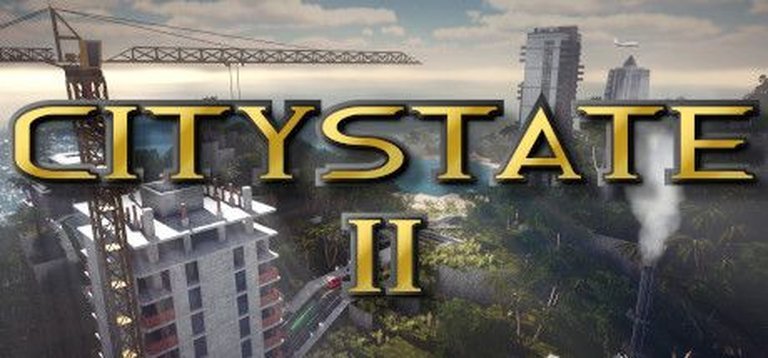
Citystate II is a modern city-building simulation where players construct and manage their own nation, balancing realistic economics, political systems, and social dynamics. Inspired by SimCity 4, the game features intricate customization options including social classes, mixed-use buildings, and events like riots, allowing experimentation with societal visions from capitalist utopias to anarchist settlements amidst contemporary urban challenges.
Gameplay Videos
Where to Buy Citystate II
PC
Citystate II Free Download
Citystate II Cracks & Fixes
Citystate II Guides & Walkthroughs
Citystate II Reviews & Reception
gamevalio.com (74/100): Opinions on this game are quite divided. Some players loved it, others found it mediocre. Worth doing more research and watching gameplay before deciding, as experiences can vary significantly.
steamcommunity.com : Overall, I am a bit torn whether to recommend Citystate II as it is right now or recommend getting it later.
Citystate II: Review
Introduction
In the crowded pantheon of city-building simulations, few titles dare to venture beyond the familiar paradigms of traffic management and resource allocation. Citystate II, released on September 23, 2021, stands as a bold, if polarizing, entry in the genre. Developed solo by Andy Sztark as a sequel to Citystate (2018), it rejects the casual accessibility of Cities: Skylines in favor of a brutally intricate socio-economic simulation. The game positions itself as a sandbox for experimenting with political ideologies and macroeconomic forces, inviting players to build nations from the ground up. Yet its ambition is matched by its complexity, creating a niche experience that is both intellectually stimulating and maddeningly opaque. This review deconstructs Citystate II through its design philosophy, systems, and legacy, revealing a game that is as much a political treatise as it is a city builder.
Development History & Context
Citystate II emerged from the mind of Andy Sztark, a solo developer operating under the banner of his namesake studio. Its genesis lies in the reception of the original Citystate, which, despite its niche appeal (62% positive Steam reviews at launch), faced criticism for its punishing learning curve and overt political commentary. Sztark’s vision for the sequel was clear: to refine the economic and political systems while enhancing accessibility. Built on the Unity engine, the game aimed to deliver “realistic urban simulation systems centered on civic and economic matters,” explicitly inspired by the depth of SimCity 4’s chaotic, emergent gameplay.
Technologically, Citystate II was constrained by its one-man development cycle. Sztark candidly admitted to struggling with Unity’s learning curve, forcing compromises like modular buildings and simplified zoning. These limitations were compounded by the challenges of balancing a system where variables like inflation and unemployment could spiral into uncontrollable recessions. The gaming landscape in 2021 was dominated by polished, accessible titles like Cities: Skylines, making Sztark’s commitment to hardcore simulation a significant commercial gamble. This context explains the game’s post-release evolution: 11 major updates and 17 patches addressed bugs, added features (e.g., mixed-use zoning, waste management), and refined UI, yet the core philosophy remained unchanged. By 2023, Sztark’s postmortem revealed a sobering realization: his target audience—a hybrid of political simulators and city builders—was “too narrow or unreachable,” prompting a pivot toward the more sandbox-focused Citystate Metropolis (announced for 2026).
Narrative & Thematic Deep Dive
Citystate II eschews traditional narrative in favor of emergent storytelling through systemic interaction. There are no characters or scripted events; instead, the game’s narrative emerges from the player’s policy choices and economic outcomes. The core theme is the tension between ideological purity and practical governance. Players navigate 51 policies with 204 options spanning the political spectrum—from anarchist open borders to authoritarian surveillance—each with tangible consequences. For instance, lax immigration policies flood cities with low-wage workers but may strain services, while stringent birth-rate controls could trigger demographic collapse.
The dialogue is confined to news headlines and policy descriptions, which deliver dry, economic jargon (“inflation rate,” “trade balance”) rather than character-driven exchanges. Yet this abstraction is intentional. The game treats society as a complex organism, where systems like the “social ladder” (tracking wealth distribution) and “corruption” mechanics reflect real-world inequalities. A recurring theme is the fragility of utopian visions: even meticulously planned cities can collapse under riots, slums, or bankruptcy. Sztark’s self-awareness is evident in the disclaimer: “This game depicts political ideologies in an arbitrary and subjective way.” This honesty underscores Citystate II’s purpose—not to preach, but to provoke thought on how policy shapes urban life. Ultimately, its narrative is one of systemic cause and effect, where every zoning decision or tax tweak becomes a chapter in the player’s personal socio-economic saga.
Gameplay Mechanics & Systems
Citystate II’s gameplay is defined by its three interconnected pillars: city construction, economic simulation, and political governance.
Core Building Loop:
Players zone residential, commercial, and industrial areas across 512×512 tile maps, constructing over 300 buildings—from schools to arcologies. Infrastructure includes 8 road types, railways, and subways, though road-building tools were criticized for their rigidity. Unique features like “mixed-use zones” (blending housing with retail/offices) reduce traffic but demand higher land value, adding strategic depth.
Economic Simulation:
This is the game’s crown jewel. A “closed-loop economy” tracks variables like unemployment, inflation, and trade balance. Players manipulate immigration policies (filtering by education or origin) to control population growth, while decisions like printing money or adjusting interest rates trigger cascading effects—e.g., excessive money printing devalues currency. The “social ladder” system links income levels to building development, but its complexity often alienated players who dismissed it as mere “stat modifiers.”
Political Systems:
The policy menu offers granular control, from religious freedom to birth-rate incentives. A “policy creator” allows custom laws, but most options function as binary toggles with immediate statistical impacts. Events like riots or fires force reactive management, though critics noted these lacked narrative weight. The game’s difficulty stems from its lack of clear objectives; success is self-defined, making mastery feel elusive.
UI & Innovation:
The UI prioritizes data over aesthetics, with graphs and spreadsheets dominating screens. While functional, it overwhelmed newcomers. The “Grand State Auto” driving mode—a first-person car tour—served as a rare moment of levity but felt disconnected from the core simulation. Despite post-release QoL improvements (e.g., tooltips, road auto-connection), the interface remained a barrier to entry.
Flaws:
Balancing issues plagued early versions, with economies frequently spiraling into recession. Pathfinding bugs caused traffic gridlock, and save-file corruption was a persistent complaint. The game’s “hardcore” design also punished experimentation; bankruptcy was a common outcome, discouraging casual play.
World-Building, Art & Sound
Citystate II’s world-building is grounded in contemporary realism, with maps inspired by modified real-world heightmaps. Cities sprawl across diverse terrains—from coastal plains to mountain valleys—though environmental details are sparse. The game’s art direction leans functional over stylish, adopting a diagonal-down perspective reminiscent of SimCity 2000. Buildings range from humble shanties to 200m skyscrapers, but their uniform, blocky aesthetic lacks visual flair.
Post-release updates introduced more varied terrain and props (e.g., beaches, tennis courts), yet the overall aesthetic remains utilitarian. Color palettes are muted, favoring grays and browns to evoke urban grit. This style reinforces the game’s somber tone, aligning with its themes of inequality and decay. Pollution heatmaps and decaying slums visually underscore systemic failures, but the absence of day/night cycles or weather limits atmospheric depth.
Sound design is similarly pragmatic. Ambient ocean and nature sounds create a sense of place, while vehicle effects (garbage trucks, police cars) add life. The soundtrack, updated in patches, blends minimalist electronic tracks with occasional dissonant notes during crises. However, audio cues for critical events (e.g., riots) were often drowned out, undermining their urgency.
Reception & Legacy
Citystate II launched to a polarized reception. On Steam, it achieved a “Mostly Positive” rating (73–74% across 1,000+ reviews), with players divided between praise for its ambition and criticism for its opacity. Early reviews noted bugs and balancing flaws, but Sztark’s responsiveness to feedback—addressing 90% of reported issues via patches—earned grudging respect.
Critics lauded its economic depth but lamented its presentation. Gameplay (Benelux) called it “boeiend” (engaging) but “unpolished,” while IGN’s sparse coverage reflected its niche status. Player reviews echoed these sentiments:
“The policies are just stat modifiers.” – Arc_1996
“I never had to worry about my budget with riots all over.” – Joshi Kosei
These critiques underscore a core disconnect: the game’s simulation brilliance was lost on players expecting a Cities: Skylines clone. Sales plateaued post-launch, and concurrent player counts dwindled to double digits by 2023.
Yet Citystate II left a mark. Its focus on socio-economic mechanics influenced indie titles like Kapital: Sparks of Revolution. Sztark’s postmortem became a landmark industry reflection on simulation design vs. marketability. Most significantly, it paved the way for Citystate Metropolis, which promises to prioritize sandbox creativity over systemic depth. For a dedicated few, Citystate II remains a cult classic—a flawed masterpiece that dared to ask what a city is, beyond its roads and power lines.
Conclusion
Citystate II is a game of contradictions: a hardcore simulation trapped in a niche genre, a political manifesto disguised as a city builder. Its strength lies in its audacious ambition, weaving economics, policy, and urbanism into a cohesive, if intimidating, whole. Yet its weaknesses—opaque UI, punishing difficulty, and a lack of narrative scaffolding—prevent it from reaching broader appeal. It is not a game for everyone, but for the patient strategist, it offers unparalleled depth.
As a historical artifact, Citystate II represents a bold experiment in simulation design, even as its developer’s pivot toward Citystate Metropolis acknowledges the limits of its vision. It stands as a testament to the power of solo passion projects and the enduring tension between realism and accessibility in gaming. For those willing to weather its complexities, Citystate II is a rewarding, if frustrating, journey into the soul of the modern metropolis. For the industry, it serves as a cautionary tale and an inspiration—a reminder that even the most niche simulations can shape the future of the genre.