
- Release Year: 2017
- Platforms: Windows
- Publisher: Strategy First, Inc., Totem Games
- Developer: Totem Games
- Genre: Strategy, Tactics
- Perspective: Third-person
- Game Mode: Single-player
- Gameplay: Naval, Turn-based, watercraft
- Setting: Historical events
Description
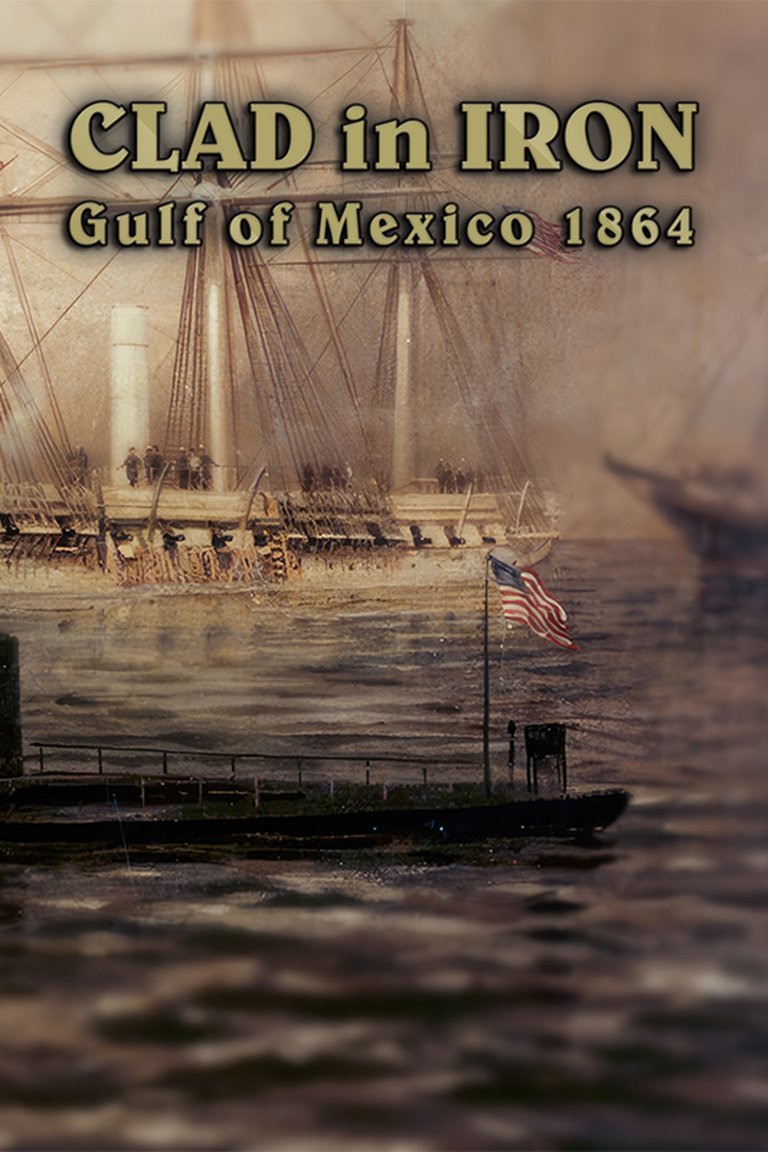
Clad in Iron: Gulf of Mexico 1864 is an alternate history naval strategy game set during the American Civil War in the Gulf of Mexico region. Players combine turn-based strategic fleet and army management with real-time naval battles to blockade enemy trade routes, conduct amphibious assaults, and struggle for sea dominance in this reimagined 1864 conflict.
Gameplay Videos
Where to Buy Clad in Iron: Gulf of Mexico 1864
PC
Clad in Iron: Gulf of Mexico 1864 Cracks & Fixes
Clad in Iron: Gulf of Mexico 1864 Guides & Walkthroughs
Clad in Iron: Gulf of Mexico 1864 Reviews & Reception
store.steampowered.com : Play in the strategic mode can be interesting when players get into the rhythm of the mechanics and grasp a strategy but the real time battles drag the game out too long. At $9.95 USD, serious gamers should try the challenge.
Clad in Iron: Gulf of Mexico 1864: Review
Introduction: The Last Renaissance of the Ironclad Wargame
In the quiet, often-overlooked corners of digital distribution lies a genre that has all but vanished from the mainstream: the hardcore, historical naval wargame. Once the domain of grand publishers and bustling development teams, this niche was increasingly ceded to modding communities and a handful of dedicated studios by the 2010s. Into this landscape stepped Totem Games, a Russian developer with a clear and passionate vision, releasing Clad in Iron: Gulf of Mexico 1864 in September 2017. It is not merely a game but a meticulously crafted, if deeply challenging, historical thought experiment—a digital diorama of a pivotal, yet purely hypothetical, moment in naval history. My thesis is this: Clad in Iron is a flawed masterpiece of niche game design. It succeeds as a rigorous simulation for the devotee but stumbles as an accessible experience, ultimately serving as a poignant monument to a specific, demanding type of strategy gaming that values authenticity over accessibility, and systemic depth over cinematic spectacle. Its true legacy may be as one of the final gasps of a grand-strategy subgenre before it was entirely subsumed by more streamlined, “approachable” designs.
Development History & Context: Totem’s Grand Experiment
Totem Games emerged not from the Western power centers of game development but from Russia, carrying forward a tradition of complex, simulation-heavy strategy titles. The studio’s lineage is crucial to understanding Clad in Iron; it is the progenitor of a tightly focused series. This game is the first in the “Clad in Iron” series, which would go on to tackle the Spanish-American War (Philippines 1898), the Russo-Japanese War (Sakhalin 1904), and other 19th-century conflicts. This pattern reveals a developer with a singular obsession: the Age of Steam and the ironclad revolution. Their vision was to create a unified game system capable of simulating any naval conflict from approximately 1850 to 1910, with separate games acting as historically and geographically specific data packs and scenarios.
The technological constraints of 2017 were paradoxically both liberating and limiting. Using the Havok physics engine (a notable inclusion, suggesting ambitions for robust real-time physics) and targeting DirectX 9.0c, the game was designed to run on minimal hardware (a Pentium 4 and 1GB RAM). This was a pragmatic choice for a niche market often populated by enthusiasts with older systems, but it also locked the game into a visual style that was already dated. The low-poly ship models, simple water, and UI reminiscent of early-2000s strategy games are not aesthetic choices but necessities born from a small budget and a focus on backend simulation over frontend gloss.
The gaming landscape of 2017 was dominated by the long shadows of Total War: Shogun 2 and Fleet Command, but naval combat had increasingly been relegated to smaller-scale, more arcade-focused titles like World of Warships or relegated to a minor component in grand strategy games like Hearts of Iron IV. There was a palpable gap for a serious, single-player, operational-level naval simulation. Totem Games aimed to fill that gap with a hybrid model, standing in a tradition that includes Jane’s WWII Fighters, Harpoon series, and Ironclads: High Seas, but with a specific focus on the transitional period of sail-to-steam and wood-to-iron. Its release was quiet, primarily through Steam and the publisher Strategy First, with little marketing fanfare, destined for discovery by those already initiated into the cult of complex sims.
Narrative & Thematic Deep Dive: The “What If” as Core Mechanic
Clad in Iron has no traditional narrative with characters and dialogue. Instead, its narrative is the alternate history scenario itself, which functions as the game’s primary thematic and mechanical engine. The source material meticulously outlines the premise:
Historical Foundation: In our timeline, by summer 1864, Mobile, Alabama, was the Confederacy’s last major Gulf port. Union Admiral David Farragut, fresh from his famous “Damn the torpedoes” victory at Mobile Bay (which the game’s title directly references), was poised to seal the Confederacy’s fate. The fall of Mobile would cement Union control of the Gulf, threatening European colonial interests in Mexico and Cuba.
The Alternate “What If”: France, Britain, and Spain—ostensibly to defend the Confederacy from Northern “aggression”—launch a preemptive intervention. This is not a vague backdrop; it is the casus belli that shapes every strategic decision. The player is not reliving history but actively rewriting it.
This thematic focus manifests in several profound ways:
1. Geopolitical Stakes: The Gulf of Mexico becomes a microcosm of global imperial rivalry. Seaports are not just supply hubs; they are flashpoints where the Monroe Doctrine collides with European gunboat diplomacy.
2. Faction Identity: The player commands either the Union/United States or the Confederacy/European Coalition. The Coalition is not a monolithic “bad guy” but a tense alliance of Britain, France, and Spain, each with their own potential ships and strategic interests, implying internal diplomatic friction not modeled in the base game but ripe for modding.
3. The Ironclad as Symbol: The title “Clad in Iron” is deeply symbolic. It references the literal iron armor of ships like the CSS Tennessee or USS Monitor, but also the “iron” of industrial might and determination. The game forces you to manage this new, expensive, and temperamental technology versus squadrons of still-relevant, nimble wooden ships. The theme is one of revolution versus tradition, industry versus agrarian power, perfectly encapsulated in the naval technology of the era.
4. Absence of Human Drama: The story is told through the systems—the blockade runner’s desperate dash, the ironclad’s slow but inexorable advance, the logistics of coal supply dictating operational radius. The “characters” are the ship classes, the ports, and the brutal arithmetic of powder, shot, and armor penetration. This is a narrative of logistics and tonnage, making it a purely strategic and tactical experience.
Gameplay Mechanics & Systems: A Dual-Layered Beast
The game’s core innovation—and its primary source of friction—is its dual-layered gameplay system, explicitly outlined in all descriptions: a strategic turn-based layer and a tactical real-time layer. Understanding their interplay is key.
1. Strategic Layer (Turn-Based):
This is the game’s operational brain. Players manage squadrons across a map of the Gulf of Mexico, from Key West to Veracruz. Key actions include:
* Fleet Management: Organizing ships into squadrons, assigning admirals (who provide minor stat boosts), and managing repairs/crew experience at ports.
* Movement & Fog of War: Squadrons move along sea lanes. Enemy positions are obscured by a fog of war that is lifted only by having scouts (usually lighter vessels) in adjacent regions. This creates a tense, chess-like cat-and-mouse game.
* Logistics: Coal is a critical resource. Ironclads are coal-hungry. Running out of coal in open sea is a death sentence. This forces players to plan naval bases and coaling stations, making control of specific ports (like Havana or Tampico) strategically vital beyond their economic value.
* Economic Warfare: Blockading enemy ports destroys trade value, reducing the enemy’s income. Raiding enemy commerce with raiders or fast cruisers is a viable asymmetric strategy.
* Amphibious Operations: The game includes army units. Players can transport troops to execute amphibious assaults on ports, initiating a simple, auto-resolved “harbour siege” minigame to capture them.
2. Tactical Layer (Real-Time):
When two opposing squadrons meet in the strategic layer, the game transitions to a real-time naval battle simulator.
* Formations & Control: Players pre-set formations (line ahead, column, etc.) for their squadrons. However, direct control is hands-off; ships follow AI commands based on the formation and general orders (engage target, retreat, etc.). This creates a feeling of command delegation rather than direct helm-on-deck piloting, aligning with an admiral’s perspective.
* Physics & Ballistics: The game emphasizes its “realistic ship models and characteristics” and “advanced ballistics.” This manifests in distinct ship handling (turn rates, speed), armor models (beyond simple hit points, with different immunity ranges for various shell calibers), and gun arcs. Firing solutions require leading targets and understanding engagement ranges.
* The Flaw: Pacing & Drag: The most consistent criticism in user reviews is that “the real time battles drag the game out too long.” This is the critical systemic flaw. Without a fast-forward or battle resolution option (or with one that is ineffective), every ship-on-ship engagement, even a minor skirmish, must play out in real-time at normal speed. A campaign of 10-20 such battles becomes a massive time sink, breaking the strategic layer’s pacing. The Wargamer review snippet perfectly captures this: the strategy is interesting “when players get into the rhythm,” but the tactical mode is a wearying chore.
3. Progression & UI:
* Progression: It is fleet-based, not individual. Ships gain experience through combat, improving crew efficiency (faster loading, better accuracy). Admirals gain experience. There is no tech tree; new ships are acquired by spending accumulated victory points at the end of scenarios/campaigns, representing a new construction/delivery cycle. This reinforces the operational, not strategic, scale.
* UI: The interface is functional but dated, with a top-down strategic map and a 3D tactical view. The infamous lack of an interactive tutorial (“ATTENTION! In the game there is no interactive training, only a textual manual”) is a major barrier to entry. The manual is the sole teacher, forcing players to learn complex mechanics through trial, error, and reading—a quintessential “old-school” design choice that severely limits its audience.
Innovation vs. Flaw: The hybrid system was innovative for its niche, attempting to marry the planning of Field of Glory with the tactical spectacle of Sea Battles: Midway. However, the failure to implement a satisfying time-acceleration in battles turned its strength—realistic, unhurried naval combat—into a crippling weakness, making the overall experience disproportionately slow.
World-Building, Art & Sound: Authenticity Over Ambition
The game’s atmosphere is one of functional historical simulation. It does not seek to immerse the player in a cinematic story but to place them in the chair of a 19th-century naval staff officer.
* Visual Direction: The 3D ship models are low-to-medium poly but historically accurate in silhouette and armament layout. The water is a simple blue plane. The environments lack atmospheric flourish. The value is in recognizability: you can tell a Hartford-class sloop from a Miantonomoh-class monitor at a glance. The tactical camera is free, allowing the classic “admiral’s eye” view from above or dynamic angles during battle. The aesthetic is pure utility, prioritizing clarity of information (which ships are firing, their damage states) over beauty.
* Sound Design: Gunfire is appropriately booming and metallic. The creak of rigging and the chuff of steam engines are present but subdued. The soundscape is effective in communicating battle but unmemorable. There is no musical score that I can discern from the sources, which aligns with the sterile, professional tone.
* Atmosphere Contribution: The art and sound serve the simulation’s integrity. There is no “drama” outside of what the player creates through their strategic decisions. The feeling is one of cold calculation, where the visual and auditory feedback provides the necessary data points (a ship listing, the sound of a shell hitting armor) to inform your next command. It builds a world of paperwork, coal smoke, and telegraph cables, not of heroism or melodrama.
Reception & Legacy: The Niche’s Verdict
Critical Reception: It is virtually non-existent in the mainstream press. Metacritic shows no critic reviews. The absence is telling. This was not a game for outlets like IGN or GameSpot. Its reception was confined to specialist forums, hardcore wargaming communities, and the Steam store page.
Commercial & User Reception: On Steam, it has 17 reviews, all positive, for a 100% rating. This is an extremely small sample size, indicative of its obscurity. The positive reviews consistently praise its historical accuracy, deep strategy, and successful capture of the era’s feel. The negative… there are none on Steam, but the Wargamer quote is a starkly mixed appraisal from a niche-focused outlet, highlighting the “drags the game out” issue as a core flaw. Its price point has fluctuated (mentioned as $24.99 originally, $4.99-$9.95 in some contexts), reflecting its deep-discount bin status common for specialized simulations.
Influence & Legacy: Clad in Iron‘s legacy is threefold:
1. Series Pedigree: It established the “Clad in Iron” series engine and design philosophy. Totem Games continued with five more titles using the same core systems, demonstrating a commitment to this specific slice of history and a sustainable, low-cost development model for a dedicated audience.
2. Custodian of a Niche: It stands as one of the very few modern, standalone commercial releases dedicated to the “ironclad” era of naval warfare. It sits alongside the modding project Ironclads: American Civil War and the earlier Ironclads series by Strategy First (which Totem’s series spiritually succeeds). It kept a flame alive.
3. A Cautionary Tale: Its most significant legacy may be as a case study in the trade-offs of hardcore simulation. The passion for “advanced ballistics” and “realistic ship models” was undermined by the absence of a quality-of-life feature (battle acceleration) that would have made that depth palatable. It demonstrated that without modern pacing concessions, even brilliant systemic design can become an endurance test.
Conclusion: A Monument for the Few
Clad in Iron: Gulf of Mexico 1864 is not a game for everyone, or even for most strategy fans. It is an acquired taste, a challenging and often slow-moving beast that demands patience, historical curiosity, and a tolerance for archaic UI decisions. Its genius lies in its unwavering dedication to a complex, dual-layered simulation that makes you feel the weight of history—the coal in the bunkers, the iron on the hull, the miles of ocean between your supply base and your fleet. Its failure lies in its inability or unwillingness to respect the player’s time once contact is made.
In the grand canon of video game history, it is a footnote—a well-researched, expertly intended footnote, but a footnote nonetheless. Yet, for the historian of gaming genres, it is an essential one. It represents a deliberate, almost defiant, stand against the streamlining tide. It asks: “What if we simulated everything?” and then answers by showing both the breathtaking intellectual engagement that such an approach can yield and the profound gameplay aridity it can also create. Its 100% positive Steam rating is not evidence of universal acclaim, but of a perfect score from a tiny, self-selecting group of enthusiasts for whom its specific brand of historical rigor is the highest praise.
Final Verdict: 7.5/10 – A Specialist’s Treasure. Clad in Iron: Gulf of Mexico 1864 is a must-play for the hardcore naval historian and simulation junkie, a fascinating and authentic “what if” sandbox. For the broader audience, it is a primitive, frustrating, and glacially paced curiosity. It is a game not judged by entertainment value, but by fidelity—and in that rarefied metric, it is remarkably, frustratingly successful. It is, therefore, an important and honest artifact of a bygone design philosophy, preserved and playable on Steam, waiting for the next quartermaster who wants to log the coal consumption of a monitor off the coast of aalternate-history Mobile.