
- Release Year: 2018
- Platforms: Windows
- Publisher: Strategy First, Inc., Totem Games
- Developer: Totem Games
- Genre: Strategy, Tactics
- Perspective: 3rd-person
- Game Mode: Single-player
- Gameplay: Real-time, Turn-based
- Setting: Historical events
- Average Score: 96/100
Description
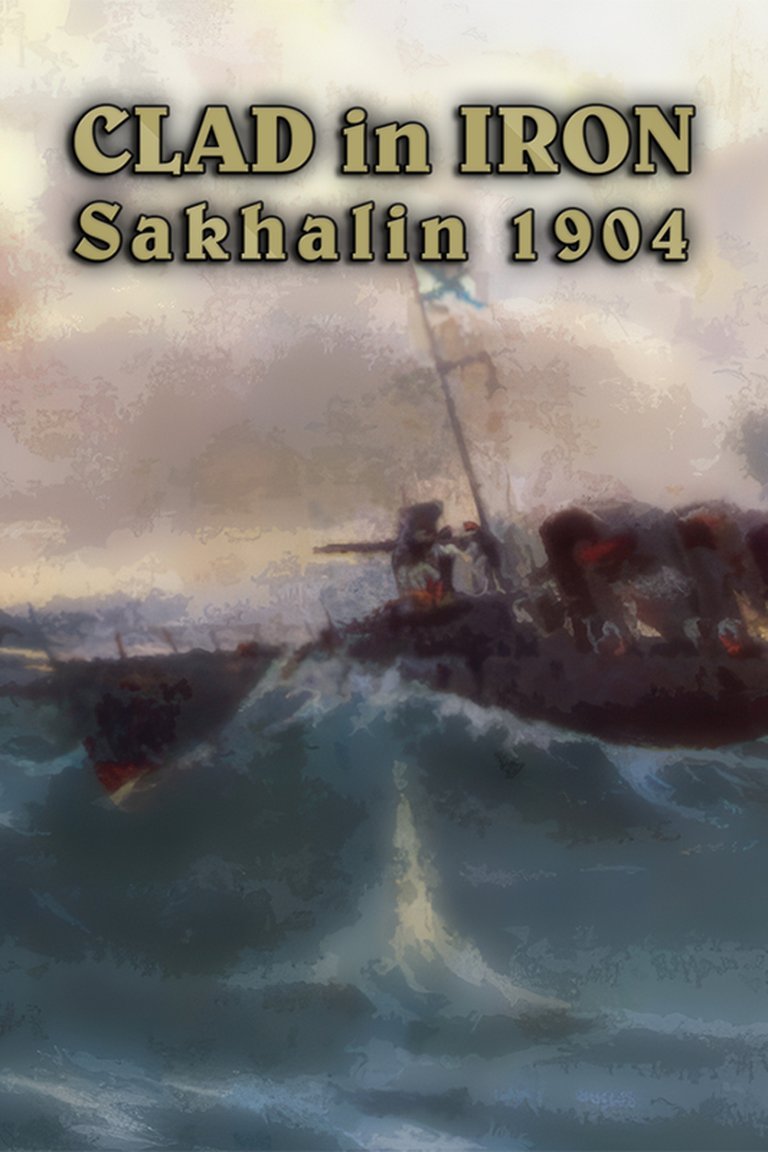
Clad in Iron: Sakhalin 1904 is a historical naval strategy game set during the Russo-Japanese War of 1904, focusing on the conflict in the Sea of Okhotsk. Players command either Russian or Japanese forces in a blend of turn-based strategic management and real-time tactical naval combat, engaging in fleet operations, blockades, and amphibious assaults to dominate the contested waters of Sakhalin Island and the Kuril Islands.
Gameplay Videos
Where to Buy Clad in Iron: Sakhalin 1904
Clad in Iron: Sakhalin 1904 Guides & Walkthroughs
Clad in Iron: Sakhalin 1904: A Deep Dive into Historical Naval Warfare
Introduction
In the vast, often overlooked corners of video game history, few genres are as niche yet historically resonant as hard naval wargames. Clad in Iron: Sakhalin 1904, the 2018 offering from Russian developer Totem Games, stands as a testament to this specialized craft. Set against the backdrop of the Russo-Japanese War’s lesser-known Sea of Okhotsk theater, the game masterfully blends turn-based strategy with real-time tactical simulation, immersing players in the high-stakes chess match of early 20th-century naval conflict. As the third entry in the developer’s “Clad in Iron” series following Philippines 1898 and preceding Chincha Islands 1866, Sakhalin 1904 represents both a refinement of Totem Games’ signature formula and a poignant reminder of the era’s geopolitical tensions. This review will dissect the game’s multifaceted design, from its meticulous historical recreation to its innovative yet demanding gameplay loops, arguing that while its technical roughness may challenge modern sensibilities, its unwavering dedication to authenticity and strategic depth secures it a unique place in the annals of wargaming.
Development History & Context
Totem Games, a small independent studio known for its unwavering focus on historical naval simulations, developed Sakhalin 1904 as part of a deliberate series dedicated to pivotal 19th-century maritime conflicts. The studio’s vision was clear: to create granular, experience-driven naval wargames that prioritized historical verisimilitude over mainstream accessibility. Released on November 4, 2018, via Steam and published by Strategy First, the game emerged during a period of modest resurgence for hardcore strategy titles. While the industry was dominated by open-world epics and competitive shooters, a dedicated niche of players remained hungry for intellectually demanding experiences. Technologically, Totem Games operated under significant constraints, leveraging the Havok™ physics engine and DirectX 9.0C compatibility to ensure broad accessibility on modest hardware, with minimum requirements as low as a Pentium 4/Athlon 1.1 GHz processor and 2GB RAM. This decision reflected the studio’s pragmatic approach: prioritize reach and performance over graphical spectacle. The gaming landscape of 2018 saw titles like Total War: Three Kingdoms and Crusader Kings II dominating strategy discussions, but Sakhalin 1904 carved its own space by doubling down on pure naval mechanics and historical specificity, appealing to purists who found mainstream titles overly simplified. The absence of an interactive tutorial—a stark choice noted in the Steam store description—underscored the studio’s confidence in its audience’s willingness to engage with complexity, relying instead on a textual manual and community-driven support forums.
Narrative & Thematic Deep Dive
Clad in Iron: Sakhalin 1904 eschews traditional character-driven narratives in favor of a deeply rooted geopolitical simulation. The game’s plot is drawn directly from history: the 1904 struggle for dominance in the resource-rich Sea of Okhotsk, where Japan sought to expand its influence against a Russian Empire stretched thin by conflict. The narrative unfolds through two distinct lenses: the strategic overview and the tactical reality. At the strategic level, players assume command of either the Russian or Japanese fleets, receiving scenario briefings that contextualize the conflict’s stakes—the protection of Sakhalin Island for Russia and the defense of the Kuril Islands for Japan. These texts, devoid of cutscenes or dialogue, serve as the primary narrative vehicle, emphasizing the war’s operational realities over personal drama. Characters are reduced to abstract fleet commanders (e.g., Admiral Tōgō for Japan), their legacies embodied by the ships and crews under their command. The dialogue is minimal, confined to tactical commands like “Fire!” or “Form line ahead,” which paradoxically enhances immersion by mirroring the terse, high-pressure nature of naval command. Thematically, the game explores the collision of imperial ambition and geographical inevitability. The Sea of Okhotsk becomes a microcosm of Great Power rivalry, with its treacherous currents and limited baselines amplifying strategic dilemmas. A recurring theme is the tension between offensive aggression and defensive attrition: Japan’s numerical advantage must be leveraged against Russia’s fortified positions, while Russia must prolong the conflict to await hypothetical reinforcements. The absence of ship-building in the scenario (as clarified by developer dev.totemgames) underscores another potent theme: the fragility of logistics in a distant theater, where even a minor vessel requires a year of construction, rendering naval replenishment a near-myth. This design choice transforms the game into a tense exercise in resource stewardship, where the “characters” are the ships themselves, each with unique crews whose experience levels (gained through combat) symbolize the human cost of industrial warfare.
Gameplay Mechanics & Systems
The game’s core innovation lies in its dual-layered gameplay structure: a turn-based strategic map governing fleet movements and a real-time tactical simulation resolving engagements.
Strategic Layer (Turn-Based): Players begin with a stylized map of the Sea of Okhotsk, cluttered with ports, shipping lanes, and territorial markers. Movement is point-and-click, executed by selecting a ship or squadron and designating a destination port or sea zone. The interface, minimalist yet functional, relies heavily on tooltips that appear when hovering over units—revealing ship class, armament, crew experience, and damage status. Key strategic actions include:
– Blockade: Establishing naval superiority to cut enemy supply lines, visually represented by “lock” icons in ports.
– Harbor Sieges: Coordinating fleet movements to neutralize coastal defenses before landings.
– Amphibious Assaults: Transporting infantry via armed transports to seize enemy ports, a multi-phase process requiring dominance both at sea and ashore.
– Fleet Management: Prioritizing repairs in friendly ports and hiding damaged squadrons to conserve strength. Crucially, the game enforces a “one turn = one action” constraint, forcing players to weigh offensive strikes against defensive preservation.
Tactical Layer (Real-Time): When opposing forces converge, the game transitions to a real-time 3D battle environment. Here, players command squadrons in formation, issuing orders via a radial menu. Ships handle with ponderous realism, governed by momentum and wind conditions. Combat is brutal and unforgiving:
– Ballistics: Shell trajectories follow parabolic arcs, requiring leading of targets and accounting for range and armor thickness.
– Crew Experience: Veteran crews reload faster and aim more accurately, creating a progression system where survival begets lethality.
– Damage Modeling: Hits can cripple steering, guns, or magazines, leading to cascading failures. A single well-placed shot can turn the tide of an engagement.
The UI, criticized for its opacity, demands mastery. New players often rely on community resources like Robert III d’Artois’ tutorials, as the game offers no interactive guidance. Systems like the elusive “projects” tab (for building new ships) are contextually disabled in the scenario, reinforcing the theme of finite resources. Flaws include occasional targeting bugs and pathfinding quirks, yet these are mitigated by the game’s depth. The absence of a campaign structure beyond the single scenario limits replayability, but the asymmetry between Russian defensive advantages and Japanese numerical strength ensures varied strategies.
World-Building, Art & Sound
Sakhalin 1904 excels in recreating a meticulously researched historical atmosphere. The Sea of Okhotsk, rendered with muted blues and grays, evokes the region’s harsh, unforgiving climate. Ports like Korsakov are modeled with period accuracy, featuring wooden docks, coastal artillery emplacements, and smoke-belching factories. Ship models, though low-poly, capture the distinct profiles of pre-dreadnoughts like the Mikasa-class battleships and torpedo boats, complete with rigging and gun placements. The free-camera system allows for cinematic views of battles, emphasizing the scale of ironclad formations.
Art direction prioritizes functionality over flair. The strategic map uses a top-down, board-game aesthetic, with clear icons for ports, squadrons, and zones, ensuring clarity amidst complexity. In contrast, the tactical battles employ a more dynamic style, with billowing smoke and splintering wood punctuating the action. Despite its age, the Havok™ physics engine delivers satisfying collisions and realistic mast collapses.
Sound design is minimalist yet evocative. The absence of orchestral scores is replaced by the ambient roar of waves, the clang of tools during repairs, and the distant thud of guns. Battle sounds are sharply mixed: the deep boom of main guns contrasts with the sharper crack of secondary batteries. Crew voice commands are sparse but authentic, using period-appropriate naval terminology. While the audio lacks polish, it reinforces the game’s documentary-like tone, immersing players in the sensory reality of early 20th-century naval warfare.
Reception & Legacy
Upon release, Clad in Iron: Sakhalin 1904 garnered a modest but fervently positive reception. On Steam, it holds a 96% “Positive” rating from 27 reviews (as of 2025), with players praising its depth and authenticity. A typical review lauded it as “a diamond in the rough for naval wargamers,” though some lamented its steep learning curve. Commercially, the game achieved niche success, often bundled with other Clad in Iron titles to attract series newcomers. Its greatest legacy lies in its influence on the developer’s subsequent work. Elements like the turn-based/real-time hybrid and crew experience systems evolved in later entries like Clad in Iron: War of The Pacific 1879, refining the formula while retaining its core philosophy.
Critically, the game is remembered for its uncompromising vision. Wargaming communities like Grogheads and Dogs of War Vu celebrated its dedication to historical accuracy, even as mainstream outlets overlooked it. Over time, Sakhalin 1904 has gained cult status as a gateway to hardcore naval simulations, cited alongside titles like Naval Action and Ironclads for its focus on mechanics over narrative. Its role in preserving obscure conflicts—like the Okhotsk theater, often overshadowed by Port Arthur—has earned it respect among historians and preservationists. The game’s enduring presence on Steam, with consistent player activity despite its age, underscores a dedicated fanbase that values substance over spectacle.
Conclusion
Clad in Iron: Sakhalin 1904 is not a game for the faint of heart. It demands patience, intellectual rigor, and a tolerance for technical imperfections. Yet, for those willing to engage with its dense systems, it offers unparalleled insight into the strategic and tactical realities of early 20th-century naval conflict. Totem Games’ creation stands as a monument to historical simulation, where the weight of history is felt in every shell trajectory and fleet maneuver. While its lack of polish, absence of tutorials, and narrow focus may limit its appeal, its authenticity and depth remain unmatched. In the ever-shifting landscape of video games, Sakhalin 1904 endures as a vital artifact—a reminder that the most compelling experiences often come from the most specialized corners of the medium. For the discerning strategist and history enthusiast, it is not merely a game to be played, but a conflict to be understood.