
- Release Year: 2022
- Platforms: Windows
- Publisher: RVL Games
- Developer: RVL Games
- Genre: Adventure, Horror
- Perspective: 1st-person
- Game Mode: Single-player
- Setting: Contemporary
- Average Score: 67/100
Description
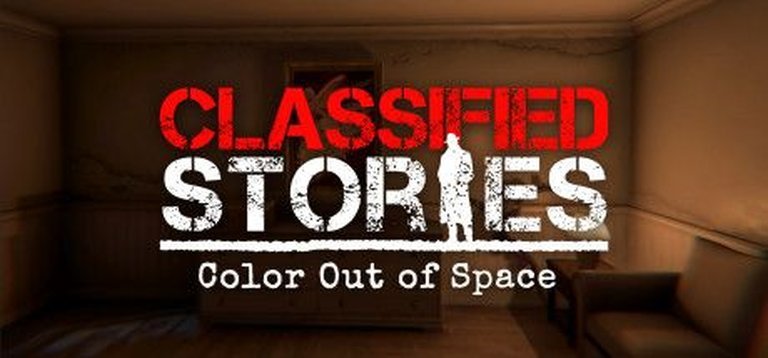
Classified Stories: Color Out of Space is a first-person horror adventure game set in a contemporary, isolated town, inspired by Lovecraft’s ‘The Color Out of Space’. Players investigate the mysterious disappearance of several girls, uncovering supernatural events and an otherworldly presence that corrupts the environment. As the second entry in the Classified Stories series, the game blends investigative gameplay with eerie atmospheric tension and a narrative steeped in cosmic horror.
Gameplay Videos
Where to Buy Classified Stories: Color Out of Space
PC
Classified Stories: Color Out of Space Guides & Walkthroughs
Classified Stories: Color Out of Space Reviews & Reception
steambase.io (67/100): Mixed reception with a 67/100 player score.
store.steampowered.com (67/100): Mixed overall with 67% positive reviews.
Classified Stories: Color Out of Space: A Lovecraftian Micro-Adventure Struggling to Emerge from the Shadows
Introduction
In the vast, eldritch ocean of indie horror, Classified Stories: Color Out of Space emerges as a curious anomaly—a bite-sized homage to H.P. Lovecraft’s cosmic horror, built by a two-person team with ambitions larger than its 20-minute runtime. Released in 2022 by Bucharest-based RVL Games, this free-to-play “micro-adventure” represents a modern indie paradox: a passion project that wears its Lovecraftian inspirations proudly, yet stumbles under the weight of technical constraints and unfulfilled potential. As the second entry in the loosely connected Classified Stories series, it seeks to translate Lovecraft’s existential dread into an interactive vignette but ultimately serves as a case study in how brevity and budgetary limitations can both elevate and undermine a horror experience.
Development History & Context
A Duo’s Dark Vision
Founded in 2009 by Raul Gogescu, RVL Games operates as a true indie outsider—a two-person studio driven by a philosophy of creating “games they are passionate about and would like to play themselves.” Color Out of Space was developed in Unity, a pragmatic choice that allowed rapid iteration but also tethered the project to the engine’s well-documented limitations for small teams (e.g., optimization challenges, asset reuse visible in sister title The Tome of Myrkah). Released on July 8, 2022, the game arrived amid a Lovecraftian renaissance in indie games (The Sinking City, Call of the Sea), though its scope positioned it closer to experimental Steam curios than premium narratives.
The Economy of Indie Horror
RVL’s decision to release Color Out of Space for free reflects a shrewd understanding of the saturated horror market. By framing it as a “first chapter” and funneling interest toward their commercial predecessor (The Tome of Myrkah), they embraced a “gateway drug” model—using accessibility to build goodwill while openly soliciting support. Yet development timelines hint at struggles: Steam forums reveal plans for “more chapters in the following year” (2023), but as of 2025, no substantive updates materialized, suggesting the studio’s ambitions outpaced their capacity to deliver.
Narrative & Thematic Deep Dive
A Redacted Descent into Madness
Faithfully adapting Lovecraft’s 1927 short story about a meteorite corrupting rural New England, Color Out of Space transposes the terror to a modern, anonymously redacted town (“[REDACTED] county”). Players arrive as an investigator searching for missing twins—a gender-swapped nod to Lovecraft’s Nahum Gardner family—only to uncover an alien chromatic infestation warping reality. The narrative thrives on implication: journals detail creeping mental decay, while shimmering environmental distortions evoke the “unnameable hue” of the source material.
Limitations as (Unintended) Themes
Paradoxically, the game’s short length amplifies its cosmic horror themes: just as the characters glimpse unfathomable truths before sanity crumbles, players experience fleeting, disjointed horror. Yet this synergy feels accidental rather than designed. Key plot beats—like the corruption’s origin—are gestured at through minimalist text logs and environmental decay (mold-ridden walls, desiccated corpses), but the lack of voice acting or cutscenes mutes their impact. Thematically, it captures Lovecraft’s “fear of the unknown” but struggles to translate his dense prose into interactive stakes.
Gameplay Mechanics & Systems
Puzzles and Exploration: A Skeletal Framework
Designed as a “first-person micro-adventure” with exclusive focus on “exploration and puzzle-solving,” the game reduces mechanics to rudimentary interactions:
- Environmental Puzzles: Basic item hunts (find keys, rotate objects) with solutions telegraphed through visual clutter.
- Atmospheric Navigation: Linear paths through dimly lit interiors—farmhouses, basements—with ghostly visual filters implying otherworldly presence.
- No Combat or Stealth: Pure walking-simulator design, prioritizing mood over challenge.
Technical shortcomings sour the experience. Steam forums brim with complaints: unadjustable mouse sensitivity, absent controller support, and bugs causing progression halts (one user notes, “Interaction prompts vanish mid-puzzle”). The UI—minimalist to a fault—lacks inventory depth or map functionality, leaving players to brute-force obscure sequences.
A Micro-Length Double-Edged Sword
With an average playtime of 1 hour (per HowLongToBeat), the brevity undercuts its ambition. Puzzles resolve too quickly to feel rewarding (“rotate three symbols” tasks), while the abrupt ending—a flickering chromatic explosion—feels less like cosmic awe and more like development truncation. This isn’t P.T.’s curated terror; it’s a demo masquerading as a chapter.
World-Building, Art & Sound
Budget Constraints Meet Lovecraftian Mood
Built in Unity, the game’s visual identity oscillates between surprisingly effective ambiance and jarringly low-detail assets. The titular “Color” manifests as a warping purple-pink haze infiltrating wood-paneled walls—a clever, low-cost abstraction of Lovecraft’s indescribable horror. Yet environments feel claustrophobic not by design, but due to constrained geometry and repetition (copy-pasted furniture, sparse textures). Corpses litter key areas, their stiff models undermining the intended grotesquery.
Sound Design: Potential Unrealized
While reviews cite “atmospheric” soundscapes, specifics are scarce. Steam users note an absence of dynamic audio—footsteps lack weight, jumpscares rely on stock stings—suggesting ambience was an afterthought. Silence dominates, a risky choice that occasionally amplifies unease but often highlights mechanical flaws (e.g., looping placeholder buzzes near electrical equipment).
Reception & Legacy
Mixed Reactions in a Crowded Market
Steam reviews (131 total; 67% positive) paint a conflicted picture:
– Praise: “Free, moody, decent Lovecraft vibes.”
– Criticism: “Barely a game,” “Feels unfinished,” “Puzzles make no sense.”
Larger outlets ignored it—no reviews on IGN or Metacritic—underscoring its status as a niche curio. Unlike peers (Anatomy, Layers of Fear) that leveraged short-form horror for viral impact, Color Out of Space vanished into Steam’s algorithmic abyss. Even its Lovecraftian bona fides drew skepticism, with players noting the superior Conarium (2017) as a more authentic adaptation.
A Flickering Legacy
RVL’s promised “expanded universe” never materialized, leaving the game a footnote in the Classified Stories series. Yet its existence speaks to broader trends: micro-horror as a low-risk indie strategy, and free-to-play as a visibility tool. It also inadvertently highlights the perils of early access-style chapter releases—without sustained momentum, potential evaporates.
Conclusion
Classified Stories: Color Out of Space is less a game than an eerie artifact—a digital haunted house erected on shaky foundations. Its successes—moments of genuine Lovecraftian ambiance, economical storytelling—are undermined by technical jank, overly simplistic design, and the uneasy sense that it’s less a complete experience than a proof-of-concept. For RVL Games, it demonstrates passion constrained by resources; for players, it’s a curious but non-essential diversion. In the annals of horror history, it occupies a twilight zone between ambition and execution—a color that flickers, fades, and leaves only faint traces behind.
Verdict: A fleeting, flawed experiment in cosmic horror, recommendable only to Lovecraft completists or those seeking a free 20-minute atmospheric tease—with tempered expectations.