
- Release Year: 2017
- Platforms: Windows
- Publisher: Luminark
- Developer: Luminark
- Genre: Action
- Perspective: Diagonal-down
- Game Mode: Single-player
- Average Score: 29/100
Description
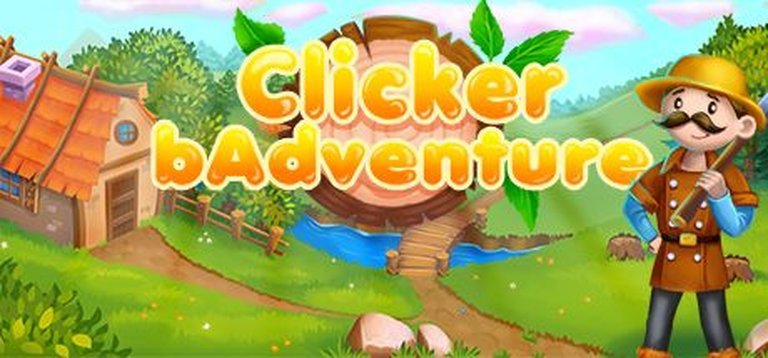
Clicker bAdventure is a 3D action clicker game set in an open world where players rapidly click to defeat increasingly powerful enemies, protecting their chest while navigating a forest to collect bonuses. The game features unique mechanics like tree-cutting without health bars (using color indicators), evolving weapons and enemies, and unconventional defense strategies such as using a hat for protection. With randomized elements, dynamic dialogues, adjustable difficulty, and an emotional story accompanied by music, it emphasizes innovation and replay value.
Gameplay Videos
Where to Buy Clicker bAdventure
PC
Clicker bAdventure Patches & Updates
Clicker bAdventure Guides & Walkthroughs
Clicker bAdventure Reviews & Reception
metacritic.com : This game is a joke. Avoid even if free.
Clicker bAdventure: A Flawed Gem in the Clicker Genre’s Pantheon
Introduction
In the ever-expanding universe of clicker/idle games—a genre defined by its minimalist yet addictive feedback loops—Clicker bAdventure emerges as a bold, if deeply flawed, experiment. Released on December 27, 2017, by French indie studio Luminark, this title dared to subvert the 2D conventions of its predecessors by thrusting players into a 3D open world. It promised a fusion of rapid-fire clicking, emergent gameplay, and tangible progression—a “new kind of gameplay” in the words of its creator. Yet, despite its ambitious premise, Clicker bAdventure remains a curio, remembered primarily for its technical hiccups and polarizing reception. This review deconstructs the game’s legacy, dissecting its place in the clicker genre’s evolution and its ultimate failure to deliver on its revolutionary promises. While it stands as a testament to indie ingenuity, it also serves as a stark reminder of the chasm between vision and execution.
Development History & Context
Clicker bAdventure was the brainchild of Sébastien Josserand, a French IT engineer who founded Luminark in September 2017. Operating as a solo developer with occasional contributions from freelance artists, Josserand envisioned a studio focused on “innovative and educational projects” themed around ecology and social awareness—a vision symbolized by Luminark’s logo, an hourglass-winged dragon representing “time as a source of wisdom.” Technologically, the game leveraged Unreal Engine 4, a choice that allowed for 3D environments but constrained development to Windows (with no macOS or Linux ports). The timing of its release—late 2017—placed it amid a saturated clicker market dominated by titles like Clicker Heroes (2014) and Cookie Clicker (2013). While the genre thrived on browser-based simplicity, Clicker bAdventure gambled on immersive 3D mechanics, a high-risk move for a small studio. Josserand’s aspirations for “originality and replay value” clashed with the reality of Unreal Engine’s complexity, resulting in a product that felt both overambitious and undercooked.
Narrative & Thematic Deep Dive
The game’s narrative, as described in its Steam store page, promises an “emotional story with a nice voice quality” set in an open world where players protect a chest from waves of enemies. However, the narrative remains elusive, with no explicit plot details or character development provided. Dialogue is randomized and context-driven, allegedly creating unique interactions per playthrough, but this system feels mechanical rather than organic. Thematic elements are similarly abstract. The core conflict—defending a chest while harvesting trees for resources—symbolizes a tension between growth and preservation: rapid clicking enables progress (tree-cutting for bonuses) but invites escalating threats (enemy waves). Weapons evolve from “sticks to spears,” mirroring a cycle of escalation, while the hat-as-shield mechanic adds a layer of ironic improvisation. Yet, these themes never coalesce into a coherent narrative, leaving the game’s “emotional” claim hollow. Its educational ambitions, echoed in Luminark’s later projects like A Percent of a Pirate (2019), are absent here, reducing the story to a minimalist backdrop for its clicker mechanics.
Gameplay Mechanics & Systems
At its core, Clicker bAdventure reimagines the clicker formula through three interconnected loops:
1. Resource Gathering: Players click trees to clear paths and collect bonuses. Trees lack health bars; instead, their color indicates the time required to cut them—a clever, if unintuitive, visual shorthand.
2. Combat: Enemies spawn progressively, with damage dealt proportional to click speed. Combat is passive, relying on rapid clicking rather than active skill, though the hat-as-shield adds a layer of defensive strategy.
3. Progression: Weapons (sword/axe) evolve visually based on usage, transforming from basic sticks to elaborate spears. Enemies similarly evolve, creating a dynamic challenge curve.
The open world promises exploration but feels constrained by repetitive enemy waves and static environments. Randomized tree health and dialogue aim for replayability, but these systems feel superficial rather than transformative. The UI, minimalist and diagonal-down, prioritizes functionality over clarity, with cluttered upgrade menus and an absence of meaningful feedback. Critically, the gameplay loop suffers from a fatal flaw: clicking feels unrewarding. Upgrades offer marginal gains, and the “3D” aspect adds little beyond cosmetic depth. Bugs—documented in Steam discussions, from crashes to achievement glitches—further undermine the experience, turning potential innovation into frustration.
World-Building, Art & Sound
The game’s setting—a lush, open-world forest—evokes a sense of untamed wilderness, yet the environment feels static and underutilized. Tree-cutting creates temporary paths, but the world lacks interactivity beyond resource harvesting. Visual direction, powered by Unreal Engine 4, is inconsistent: character models and animations are rudimentary, while weapon evolution provides fleeting visual novelty. Enemy designs, though evolving, suffer from repetitive textures and uninspired palettes. Sound design, meanwhile, leans heavily on the Steam store’s promise of “wonderful music and emotional voice acting.” In practice, the soundtrack is generic orchestral fare, and voice lines—randomized and sparse—fail to anchor the narrative. The 3D perspective, intended to immerse players, instead highlights technical limitations, with jarring camera angles and pop-in textures. Overall, the art and sound fail to elevate the world beyond a functional backdrop for its clicker mechanics.
Reception & Legacy
Upon release, Clicker bAdventure garnered a resoundingly negative reception. Steam reviews, compiled from 91 entries, brand it “Mostly Negative” (29/100 Steambase Player Score), with only 18% positive feedback. Criticisms centered on repetitive gameplay, poor optimization, and misleading “open world” claims. A Metacritic user review dismissed it as a “joke,” criticizing its price point ($2.99) as unjustified for a “rushing upgrade” experience. Commercially, it flopped; MobyGames records just 13 players collecting the title, and its Steam community hub is littered with bug reports (e.g., crashes, VR-launch errors).
Historically, the game’s legacy is negligible. It did not influence subsequent clicker titles, which largely stuck to 2D or idle mechanics. Instead, it stands as a cautionary tale of overreach—a indie experiment that prioritized novelty over polish. Its only enduring relevance lies in its place within the broader indie ecosystem: a symbol of ambition undone by execution. Luminark itself pivoted to educational games post-2017, leaving Clicker bAdventure as a footnote in the studio’s history.
Conclusion
Clicker bAdventure is a fascinating failure, a game that epitomizes the double-edged sword of indie innovation. Its 3D clicker premise, weapon evolution, and randomized systems were ahead of their time, yet they were shackled by technical flaws, shallow gameplay, and an underdeveloped narrative. While it dared to reimagine a genre known for its simplicity, it ultimately failed to provide the addictive satisfaction of its 2D peers. As a historical artifact, it reminds us that ambition alone cannot bridge the gap between concept and completion. For clicker purists, it is a curiosity best avoided; for game historians, it is a poignant study in unfulfilled potential. In the pantheon of clicker games, Clicker bAdventure is not a masterpiece, but it is undeniably a unique one—a flawed gem that, for all its shortcomings, embodies the spirit of creative risk-taking that defines indie development.