
- Release Year: 2014
- Platforms: Macintosh, Windows
- Publisher: Gaslamp Games, Inc.
- Developer: Gaslamp Games, Inc.
- Genre: Simulation
- Perspective: Diagonal-down
- Game Mode: Single-player
- Gameplay: Business simulation, Managerial
- Setting: Steampunk
- Average Score: 50/100
Description
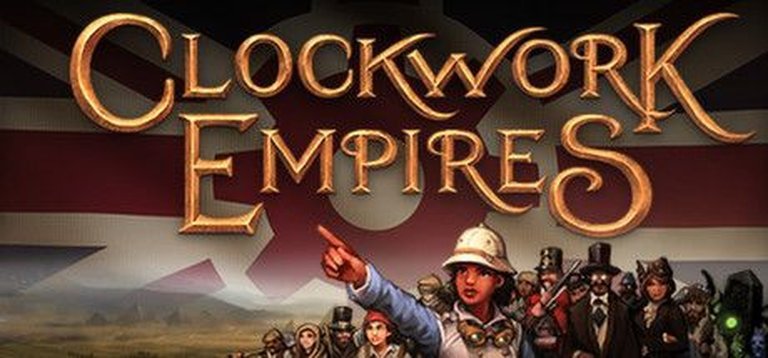
Clockwork Empires is a steampunk-themed managerial simulation game where players oversee a colony of the Clockwork Empire, tasked with building and sustaining a settlement in distant, often hostile lands. Blending elements of Dwarf Fortress with Lovecraftian horror, the game challenges players to manage resources, fend off supernatural threats like cults and merman invasions, and navigate the quirks of a deeply detailed but sometimes frustrating interface. Set in a whimsical yet dark Victorian-inspired world, the game emphasizes survival, exploration, and the absurdities of colonial ambition, all while battling environmental disasters and the ever-looming madness of the unknown.
Gameplay Videos
Clockwork Empires Cracks & Fixes
Clockwork Empires Patches & Updates
Clockwork Empires Mods
Clockwork Empires Guides & Walkthroughs
Clockwork Empires Reviews & Reception
steamcommunity.com : Tricky, because everyone has different tolerance levels for crashes and bugs, but in my opinion it’s very playable.
metacritic.com (58/100): Clockwork Empires is broken, buggy, and frustrating, but manages to provide something very fun and satisfying for the right kind of player.
rockpapershotgun.com : My struggles strictly relate to how powerfully frustrating Clockwork Empires is to play.
steambase.io (43/100): Clockwork Empires has earned a Player Score of 43 / 100.
gamepressure.com : The game is designed to make players enjoy even failures.
Clockwork Empires Cheats & Codes
PC (Steam)
Use the trainer with customizable hotkeys. Press F1 to activate, then use the specified keys.
| Code | Effect |
|---|---|
| Numpad 1 | Super Civilization – Citizens never grow tired, never get hungry, have infinite stamina, are immune to most attacks, and never sleep. |
Clockwork Empires: A Steampunk Nightmare of Ambition and Flaw
Introduction: The Promise and Peril of a Lovecraftian Colony Simulator
Clockwork Empires is a game that dares to blend the rigid bureaucracy of Victorian industrialism with the creeping dread of Lovecraftian horror, all wrapped in the brass-and-gear aesthetic of steampunk. Developed by Gaslamp Games—the studio behind the beloved Dungeons of Dredmor—it positions itself as a spiritual successor to Dwarf Fortress, promising deep simulation, emergent storytelling, and a world where progress and madness walk hand in hand. Yet, for all its ambition, Clockwork Empires remains a cautionary tale of unfulfilled potential, a game that tantalizes with its vision but frustrates with its execution.
At its core, Clockwork Empires is a colony management simulator where players assume the role of a Junior Bureaucrat tasked with establishing a frontier outpost for the eponymous Clockwork Empire. The goal? To exploit resources, expand industry, and maintain order—all while contending with the whims of a stratified society, the encroaching horrors of the unknown, and the sheer, maddening complexity of its own systems. The game’s premise is intoxicating: a fusion of Anno-style city-building, Dwarf Fortress-inspired depth, and a narrative tone that oscillates between dry imperial propaganda and eldritch terror. But beneath its gleaming surface lies a morass of technical issues, opaque design choices, and a development history that ultimately left it stranded in a state of perpetual incompletion.
This review will dissect Clockwork Empires in exhaustive detail, exploring its development, narrative depth, mechanical intricacies, artistic vision, and legacy. It is a game that deserves to be remembered—not just for what it achieved, but for what it could have been.
Development History & Context: The Rise and Fall of Gaslamp Games
The Studio Behind the Gears
Gaslamp Games was founded in 2010 by Daniel Jacobsen and Nicholas Vining, veterans of the gaming industry with a penchant for blending humor, complexity, and niche appeal. Their debut title, Dungeons of Dredmor (2011), was a roguelike that embraced absurdity, offering players a dungeon-crawling experience brimming with satirical writing, bizarre mechanics, and a delightfully anachronistic tone. The game was a critical and commercial success, earning praise for its wit and depth, and it established Gaslamp as a studio unafraid to marry genre conventions with subversive humor.
With Clockwork Empires, Gaslamp sought to expand their ambitions. Inspired by Dwarf Fortress—the notoriously complex colony simulator by Bay 12 Games—they aimed to create a more accessible yet equally rich experience. The game entered Steam Early Access in July 2014, a time when the platform was still finding its footing as a viable model for game development. Early Access was meant to allow players to shape the game’s evolution, but for Clockwork Empires, it became a double-edged sword.
The Early Access Gambit
The decision to launch in Early Access was driven by both financial necessity and a desire for community feedback. Gaslamp’s vision for Clockwork Empires was sprawling: a game where every colonist had a personality, where the world reacted dynamically to player choices, and where the tension between industrial progress and cosmic horror could play out in unpredictable ways. However, the realities of development soon clashed with these lofty goals.
From the outset, Clockwork Empires was plagued by technical instability. Players reported frequent crashes, pathfinding issues, and a user interface that bordered on impenetrable. The game’s systems—while deep—were often opaque, with critical information buried beneath layers of menus. Gaslamp’s updates were frequent but incremental, addressing some issues while introducing others. The studio’s transparency was commendable; their development blogs were filled with self-deprecating humor and acknowledgments of the game’s flaws. Yet, as the months turned into years, it became clear that Clockwork Empires was struggling to coalesce into a polished product.
The Gaming Landscape of 2014-2016
Clockwork Empires emerged during a renaissance of colony and city-building games. Titles like Banished (2014), Stonehearth (2015), and RimWorld (2013, in Early Access) were redefining the genre, each offering a distinct take on survival, management, and emergent storytelling. RimWorld, in particular, shared Clockwork Empires’ emphasis on individual colonist personalities and dynamic events, but its cleaner UI and more intuitive systems gave it a leg up in accessibility.
The steampunk aesthetic, too, was having a moment. Games like Frozen Synapse (2011) and Sunless Sea (2015) explored Victorian-era themes with a twist, while BioShock Infinite (2013) brought steampunk to the mainstream. Clockwork Empires’ blend of industrialism and Lovecraftian horror was unique, but its mechanical roughness made it a tough sell in an increasingly competitive market.
The Collapse of Gaslamp Games
By 2019, the writing was on the wall. Gaslamp Games had ceased development on Clockwork Empires, and the game was removed from digital storefronts. The studio’s official website went dark, and its social media presence dwindled. Rumors circulated about financial troubles and internal strife, though the exact reasons for Gaslamp’s dissolution remain unclear. What is certain is that Clockwork Empires was left in a state of limbo—neither abandoned nor completed, a relic of a development cycle that had stretched too far.
The game’s community, however, refused to let it die. Modders and fans took it upon themselves to patch bugs, improve performance, and even expand its content. The CECOMMPATCH, a community-driven overhaul, became essential for anyone attempting to play the game in its post-launch state. Yet, even with these efforts, Clockwork Empires remains a fragment of what it could have been—a testament to the perils of Early Access and the fragility of independent game development.
Narrative & Thematic Deep Dive: Industry Meets the Ineffable
The World of the Clockwork Empire
Clockwork Empires is set in an alternate 19th century where the British Empire has embraced steampunk technology with zealous abandon. The world is ruled by the Clockwork Empire, a hegemonic power driven by industrial expansion, scientific hubris, and a quasi-religious reverence for machinery. At the helm of this empire is l’Auto-Dictateur, a sentient analytical engine that governs with cold, calculating logic—a nod to the era’s fascination with automation and the dehumanizing effects of industrialization.
The player’s role is that of a Junior Bureaucrat, a mid-level functionary tasked with establishing a colonial outpost on the fringes of the empire. The game’s premise is steeped in satire, lampooning the excesses of Victorian imperialism, the blind faith in progress, and the dehumanizing effects of industrial capitalism. The empire’s propaganda is dripping with irony, extolling the virtues of industry while ignoring the human cost. One in-game newspaper describes polluted rivers as “beloved scarlet effluvia,” a darkly comedic euphemism for environmental devastation.
Themes: Progress, Madness, and the Cost of Empire
At its heart, Clockwork Empires is a meditation on the dangers of unchecked ambition. The game’s central tension lies in the conflict between order and chaos, between the empire’s rigid bureaucracy and the creeping horrors that lurk beyond its understanding. This tension is embodied in the game’s two most prominent factions:
-
The Clockwork Empire: Representing order, industry, and the illusion of control. The empire’s doctrine is one of relentless expansion, where nature is to be tamed, resources exploited, and dissent crushed. The player is expected to uphold these values, but the game subtly undermines them at every turn. The empire’s demands are often unreasonable, its rewards hollow, and its ideology revealed to be a thin veneer over a rotten core.
-
The Cult of Quag’garoth: Representing chaos, the unknown, and the allure of forbidden knowledge. The cult is a Lovecraftian menace, worshipping an eldritch entity that promises power at the cost of sanity. Cultists emerge from the colony’s disaffected, those who have seen too much or been pushed too far. The game’s treatment of the cult is fascinating—it is both a threat and a dark mirror of the empire’s own dogma. The cult’s rituals may drive colonists mad, but they also offer a perverse kind of freedom, a rejection of the empire’s oppressive structures.
The game’s narrative is not delivered through traditional cutscenes or dialogue trees but through emergent events, environmental storytelling, and the colonists’ own experiences. Each colonist has a detailed history, tracking their traumas, friendships, and descent into madness. A scientist might uncover an Artifact of Doom while excavating a mine, only to be driven insane by its revelations. A laborer might snap after years of oppression, forming a cult in the woods. These moments are Clockwork Empires at its best, offering glimpses of a world where the personal and the cosmic collide.
Humor and Horror: A Delicate Balance
Clockwork Empires walks a tightrope between comedy and horror, often within the same breath. The game’s writing is steeped in dry, British wit, with newspaper headlines and in-game descriptions dripping with satire. One moment, you’re reading a dispatch from The Times extolling the virtues of a new, untested steam engine; the next, you’re watching as that same engine explodes, turning your colonists into “Ludicrous Gibs.”
Yet, the horror is never far from the surface. The game’s Lovecraftian influences are evident in its eldritch events—meteor showers that drive colonists mad, ghostly apparitions that haunt your streets, and the ever-present threat of the Fish People, a race of amphibious horrors that emerge from the sea to wreak havoc. These events are not just random encounters but narrative beats, reinforcing the game’s central theme: that the empire’s pursuit of progress is a folly, and that the unknown will always push back.
The Fish People and Other Horrors
The Fish People are Clockwork Empires’ most iconic antagonists, a race of sentient, bipedal fish that embody the game’s blend of absurdity and horror. They are both a military threat and a dark comedy staple—colonists can harvest their eggs for caviar, a delicacy that the empire demands, but doing so risks provoking their wrath. The Fish People are not merely monsters; they are a reflection of the empire’s exploitation, a force that resists being reduced to a resource.
Other horrors abound: the Obleskians, sentient floating stones that may or may not be eldritch constructs; the occasional Sea Monster that drags colonists into the depths; and the ever-present risk of cults summoning Eldritch Abominations that can wipe out an entire colony. These elements ensure that Clockwork Empires is never just a management sim—it is a survival horror game in disguise, where the real enemy is the player’s own hubris.
Gameplay Mechanics & Systems: The Gears That Grind
Core Gameplay Loop: Building, Surviving, and Descending into Madness
Clockwork Empires is, at its core, a colony management game with a focus on construction, resource gathering, and survival. The player must establish a functioning settlement, ensuring that colonists have food, shelter, and purpose while contending with external threats and internal strife. The game’s systems are deeply interconnected, with each decision rippling through the colony in unpredictable ways.
The basic loop follows these steps:
1. Establish Basic Infrastructure: Build housing, farms, and workshops to ensure survival.
2. Expand Industry: Construct factories, mines, and laboratories to produce advanced goods and unlock new technologies.
3. Manage Colonists: Assign roles, monitor happiness, and mitigate crises (starvation, madness, cults).
4. Defend Against Threats: Repel Fish People raids, quash cult uprisings, and survive natural disasters.
5. Balance Empire Demands: Fulfill (or ignore) the empire’s requests, which can range from resource quotas to suppressing heretical movements.
This loop is familiar to fans of Dwarf Fortress or RimWorld, but Clockwork Empires distinguishes itself with its emphasis on construction and bureaucracy. Unlike other colony sims, where buildings are often pre-fabricated, Clockwork Empires requires players to design structures from the ground up, placing individual walls, floors, and furnishings. This system offers unparalleled creative freedom but also introduces a layer of complexity that can be overwhelming.
Construction: A Double-Edged Sword
The game’s construction system is both its greatest strength and its most glaring weakness. Players are given complete control over the design of their buildings, from the layout of a humble farmhouse to the grandeur of a multi-story factory. Each structure must be built piece by piece, with colonists hauling materials and assembling components in real-time.
This system allows for incredible creativity—players can craft sprawling industrial complexes or quaint Victorian villages—but it is also painfully slow and prone to bugs. Colonists often ignore build orders, get stuck on terrain, or fail to prioritize critical tasks. The lack of a direct “priority” system means that players must cancel all other orders to ensure that a vital structure (like a hospital or food storage) is completed in time. This leads to a constant battle against the game’s own mechanics, where the player’s vision is perpetually at odds with the colonists’ inefficiency.
Resource Management: A Web of Dependencies
Clockwork Empires features a deep resource chain, where raw materials must be processed through multiple stages before becoming useful. For example:
– Wood must be cut into planks at a carpenter’s shop.
– Planks can then be crafted into furniture, tools, or structural components.
– Iron ore must be smelted into ingots, which are then forged into machinery or weapons.
This system is reminiscent of Minecraft’s crafting tree but scaled to a colonial level. The interdependencies can be satisfying for players who enjoy logistical puzzles, but they also create bottlenecks that can cripple a colony. A shortage of planks might halt construction, which in turn prevents the building of a new farm, leading to starvation. The game’s UI does little to alleviate these issues, often failing to highlight missing resources or stalled production lines.
Colonist Management: Personalities and Pitfalls
Each colonist in Clockwork Empires is a unique individual with their own traits, memories, and potential for madness. The game tracks a colonist’s experiences, from mundane interactions (like drinking at a tavern) to traumatic events (witnessing a death or being attacked by a Fish Person). These experiences shape their behavior, influencing their work ethic, social interactions, and susceptibility to cult recruitment.
The class system is another layer of complexity:
– Lower Class: Laborers who perform menial tasks but demand little in terms of comfort.
– Middle Class: Skilled workers (carpenters, scientists, soldiers) who require better housing and amenities.
– Upper Class: Nobles and capitalists who contribute nothing but expect luxury.
Managing these classes is a delicate balancing act. Providing upper-class colonists with subpar accommodations will tank their happiness, leading to strikes or even sabotage. Conversely, pampering them too much can drain resources needed elsewhere. The game’s satire is at its sharpest here, critiquing the rigid hierarchies of Victorian society while forcing the player to uphold them.
Combat and Defense: A System in Need of Polish
Combat in Clockwork Empires is rudimentary at best. Colonists can be armed and assigned to a militia, but battles are resolved through simple attrition rather than tactical depth. Fish People raids, cult uprisings, and monster attacks are handled by sending armed colonists to the fray, with little input from the player beyond initial positioning.
The lack of tactical combat is a missed opportunity. While the game’s focus is on management, the presence of Lovecraftian horrors and militarized Fish People suggests a need for more engaging conflict resolution. As it stands, combat feels like an afterthought, a series of skirmishes that interrupt the game’s core loop without adding meaningful depth.
The Empire’s Demands: A Bureaucratic Nightmare
The Clockwork Empire is not a benevolent overseer. Throughout the game, the player receives missives from the empire, demanding resources, suppressing dissent, or expanding into dangerous territories. These demands are framed as “optional,” but ignoring them can lead to penalties, such as reduced prestige or even military intervention.
The empire’s requests are often absurd, reflecting the game’s satirical tone. One moment, you’re tasked with delivering a shipment of caviar (harvested from Fish People eggs); the next, you’re ordered to suppress a cult that the empire itself may have inadvertently created. These moments reinforce the game’s central critique: that the empire is a bloated, hypocritical machine, incapable of recognizing its own contradictions.
Modding and Community Support: A Lifeline for a Dying Game
Given the game’s unfinished state, the modding community has been instrumental in keeping Clockwork Empires alive. The CECOMMPATCH, a community-created overhaul, fixes many of the game’s most egregious bugs, improves performance, and even adds new content. Mods have introduced quality-of-life improvements, such as better UI elements, streamlined construction, and enhanced pathfinding.
Yet, even with these efforts, Clockwork Empires remains a niche experience. Its steep learning curve, technical issues, and lack of polish make it inaccessible to all but the most dedicated players. For those willing to endure its flaws, however, it offers a uniquely rewarding experience—a game where every success feels hard-won, and every failure is a story worth telling.
World-Building, Art & Sound: The Aesthetic of Industry and Insanity
Visual Design: Steampunk Meets the Sublime
Clockwork Empires’ art direction is a triumph, blending the ornate aesthetics of Victorian industrialism with the grotesque horrors of Lovecraftian cosmicism. The game’s isometric perspective and detailed sprites evoke the charm of classic management sims like The Settlers or Anno, but with a darker, more oppressive atmosphere.
The environments are richly detailed, from the soot-stained chimneys of factories to the eerie glow of laboratories where scientists tinker with forbidden knowledge. The game’s color palette is muted, dominated by browns, grays, and sickly greens, reinforcing the sense of a world choked by industry and decay. When eldritch events occur—such as a meteor shower or a ghostly apparition—the visual contrast is striking, with vibrant, otherworldly hues clashing against the drab colonial architecture.
Character designs are equally impressive. Colonists are rendered with a mix of caricature and realism, their expressions shifting to reflect their emotional states. A laborer might slump in exhaustion, while a noble might sneer in disdain. The Fish People, with their bulbous eyes and gaping mouths, are a masterclass in unsettling design, straddling the line between ridiculous and terrifying.
Sound Design: The Hum of Machinery and the Whisper of Madness
The game’s audio design complements its visuals, creating an immersive soundscape that enhances the colonial experience. The ambient noise of a bustling settlement—the clatter of machinery, the murmur of colonists, the distant hum of steam engines—creates a sense of life and industry. When disaster strikes, the sound design shifts dramatically: the shrieks of Fish People, the thunderous roar of a meteor impact, or the eerie chanting of a cult ritual.
The game’s soundtrack, composed by Matthew Steele, is a mix of orchestral and industrial themes, evoking both the grandeur of empire and the creeping dread of the unknown. The music swells during moments of triumph (such as completing a major construction project) but grows discordant and unsettling during eldritch events. It’s a subtle but effective tool for reinforcing the game’s tonal shifts.
Atmosphere: A World on the Brink
Clockwork Empires excels in creating a sense of place—a world where the veneer of civilization is perpetually threatened by chaos. The game’s writing, from newspaper clippings to in-game events, reinforces this atmosphere. One moment, you’re reading a dispatch from the empire praising your colony’s productivity; the next, you’re investigating a laboratory where a scientist has gone mad after uncovering an Artifact of Doom.
The game’s humor is a crucial part of its atmosphere. The satire is biting but never mean-spirited, poking fun at the absurdities of imperialism and industrialization while acknowledging their very real horrors. A colonist might complain about the lack of tea in a letter home, even as Fish People lay siege to the settlement. This juxtaposition of the mundane and the monstrous is Clockwork Empires at its best, a game that understands the power of dark comedy in the face of existential dread.
Reception & Legacy: A Game Caught Between Genius and Folly
Critical Reception: Mixed Reviews and Unfulfilled Potential
Clockwork Empires’ reception was, in a word, divisive. Critics praised its ambition, humor, and unique blend of genres but were universally frustrated by its technical issues and opaque design. On Metacritic, the game holds a score of 58/100, with reviews ranging from cautious optimism to outright disdain.
Positive Aspects Highlighted by Critics:
– Unique Concept: The fusion of steampunk, Lovecraftian horror, and colony management was widely praised as fresh and innovative.
– Rich Lore and Humor: The game’s writing, particularly its satirical take on Victorian imperialism, was a standout feature.
– Emergent Storytelling: When the game’s systems worked, they created memorable, unpredictable narratives.
Negative Aspects Criticized:
– Technical Issues: Frequent crashes, pathfinding errors, and stalled build orders plagued the experience.
– Opaque UI: The user interface was widely panned for burying critical information and lacking intuitive controls.
– Unfinished State: Many features, such as late-game content and multiplayer, were either missing or underdeveloped.
Notable Review Excerpts:
– Rock, Paper, Shotgun: “I like the game at CE’s heart, but interacting with it is simply unpleasant. Were it slick and reliable perhaps I could bear its extreme micro-management and unhelpful UI, but the fact is that it’s currently strewn with technical errors.”
– Hooked Gamers: “No, I do like it, but it is a crying shame that it lacks the polish it deserves. As it stands, the interface throws up too much of an obstacle for Clockwork Empires to shine as it might have.”
– Quarter to Three: “If I was to make a game that I didn’t want anyone to actually play, it would look a lot like Clockwork Empires.”
Player Reception: A Cult Following in the Face of Abandonment
On Steam, Clockwork Empires holds a Mixed rating, with 43% positive reviews out of nearly 800 total. Players who loved the game did so passionately, praising its depth, humor, and emergent gameplay. Those who disliked it cited its bugs, lack of polish, and steep learning curve.
Common Player Praise:
– Depth and Complexity: Fans of Dwarf Fortress and RimWorld appreciated the game’s intricate systems and the stories that emerged from them.
– Atmosphere and Writing: The game’s tone, blending satire and horror, resonated with players who enjoyed its unique narrative voice.
– Creative Freedom: The construction system, despite its flaws, allowed for incredible customization and creativity.
Common Player Criticisms:
– Performance Issues: Crashes and slowdowns, especially in larger colonies, were a frequent complaint.
– Lack of Polish: Many felt that the game was released too early, with core mechanics feeling unfinished.
– Abandonment by Developers: The studio’s collapse left the game in a state of limbo, with no official support or updates.
Legacy: A Game That Refuses to Die
Despite its flaws and the collapse of Gaslamp Games, Clockwork Empires has endured, thanks in large part to its dedicated community. Modders have kept the game alive, fixing bugs, improving performance, and even expanding its content. The CECOMMPATCH remains essential for anyone attempting to play the game in its current state.
The game’s influence can be seen in later titles that blend management sims with narrative depth and emergent storytelling. RimWorld, in particular, shares Clockwork Empires’ focus on individual colonist personalities and dynamic events, though it executes these ideas with greater polish and accessibility. Other games, like Against the Storm and Farthest Frontier, have also drawn inspiration from Clockwork Empires’ mix of survival, management, and atmospheric world-building.
Yet, Clockwork Empires remains a unique artifact—a game that dared to merge the mundane with the monstrous, the industrial with the ineffable. Its legacy is one of what could have been, a reminder of the risks and rewards of ambitious game design.
Conclusion: A Masterpiece in Fragments
Clockwork Empires is a game of contradictions. It is brilliant in its conception but flawed in its execution, a labor of love that was ultimately abandoned by its creators. It is a game that rewards patience and perseverance but punishes those who seek a polished, accessible experience. It is, in many ways, a microcosm of the struggles faced by independent developers in an industry that often prioritizes marketability over innovation.
For those willing to endure its rough edges, Clockwork Empires offers a deeply rewarding experience. Its blend of steampunk aesthetics, Lovecraftian horror, and biting satire creates a world that is as fascinating as it is frustrating. The emergent stories that arise from its systems—whether it’s a colonist driven mad by an eldritch artifact or a full-scale Fish People invasion—are the kind of moments that stick with players long after the game is turned off.
Yet, it is impossible to ignore the game’s glaring flaws. The technical issues, the opaque UI, and the lack of polish make Clockwork Empires a difficult game to recommend to all but the most dedicated fans of the genre. It is a game that demands not just time and effort, but a willingness to forgive its many shortcomings.
In the end, Clockwork Empires is a testament to the power of ambition and the perils of overreach. It is a game that could have been a masterpiece, had it been given the time, resources, and support it deserved. As it stands, it remains a fascinating relic—a glimpse into a world where industry and insanity collide, and where the cost of progress is measured in blood, gibs, and the slow unraveling of the human mind.
Final Verdict: 7/10 – A Flawed Gem, Worth Excavating for the Dedicated
Clockwork Empires is not a game for everyone. It is messy, unfinished, and often infuriating. But for those who can look past its flaws, it offers a experience unlike any other—a darkly comedic, deeply atmospheric journey into the heart of a steampunk nightmare. It is a game that deserves to be remembered, if only as a cautionary tale of what happens when ambition outpaces execution. And perhaps, with the continued efforts of its community, it may yet find the polish it so desperately needs.
For now, it stands as a monument to the madness of creation—a game that, like its colonists, teeters perpetually on the brink of collapse, yet refuses to succumb entirely to the void.